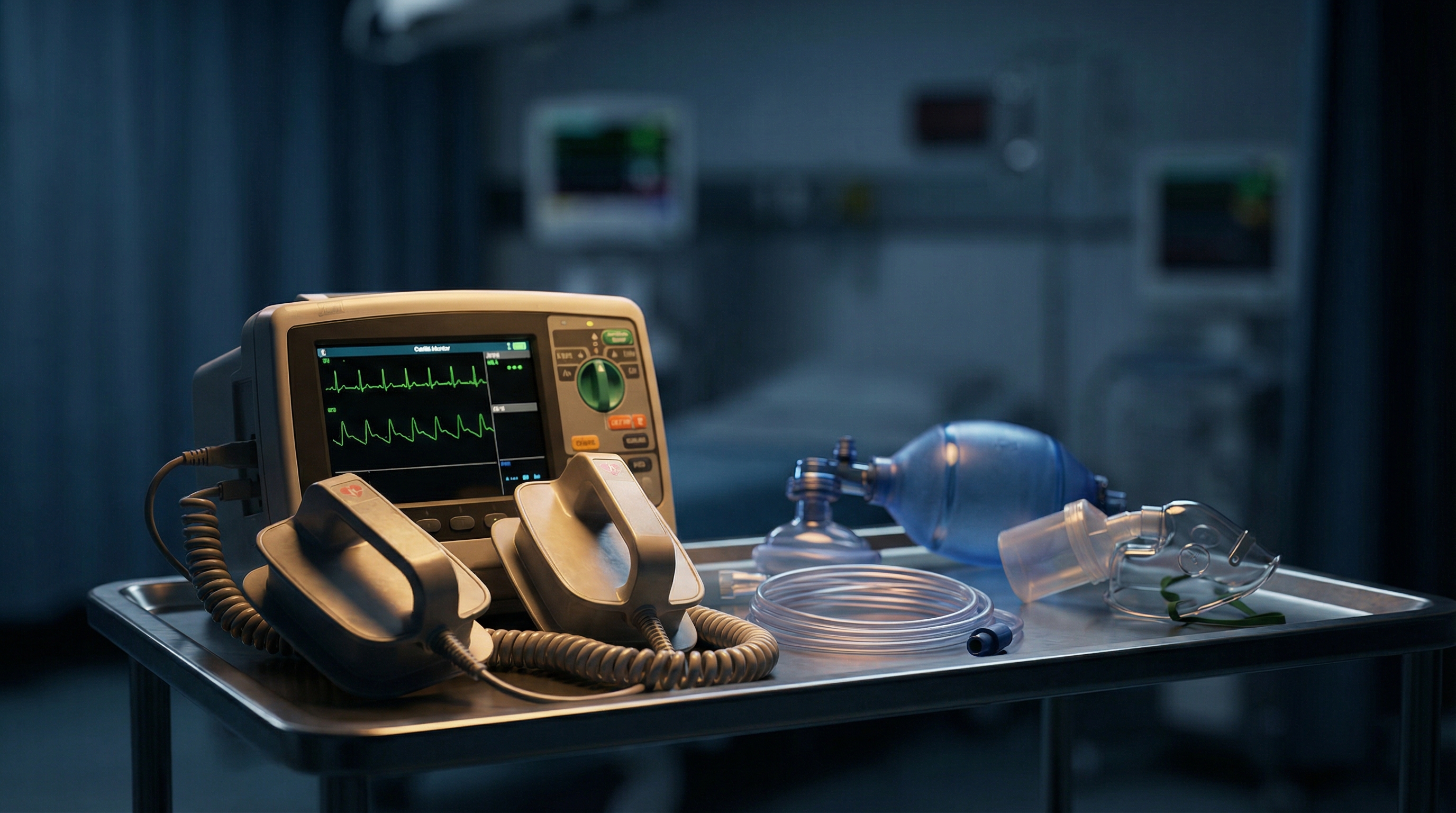
Picture this: a 62-year-old dialysis patient arrives in PEA arrest. You're running your algorithm — epinephrine is in, CPR is excellent, airway is secured. Two minutes pass, then four. The team looks at you. You review the Hs and Ts mentally, and it hits you: this patient missed dialysis for three days. Hyperkalemia. You call for calcium, and within sixty seconds of administration the monitor shows organized electrical activity and you have a pulse.
That scenario plays out in emergency departments and ICUs every week — and in many of those cases, calcium is administered late, at the wrong dose, or not at all. Despite being a cornerstone of two of ACLS's most critical reversible-cause treatments, calcium remains one of the least consistently used drugs in resuscitation. This article is written by emergency physicians for emergency providers: here is what you need to know about calcium in ACLS, when it is indicated, how to dose it correctly, and why the evidence matters.

Calcium is not a standard first-line drug in undifferentiated cardiac arrest — and that distinction is clinically important. Multiple trials and systematic reviews have confirmed that empiric calcium administration in out-of-hospital cardiac arrest without a specific indication is associated with no improvement in outcomes and potential harm. A systematic review analyzing over 27,000 cardiac arrest patients found calcium provided no benefit when given routinely during CPR.
But the operative phrase is "without a specific indication." When the clinical context is right — when you have documented or strongly suspected hyperkalemia, hypocalcemia, or toxicological exposure to calcium channel or beta blockers — calcium becomes a potentially life-saving intervention. This is a drug that demands diagnostic precision. The provider who recognizes the right scenario and reaches for calcium at the right moment is the provider practicing ACLS at the highest level.
Understanding how to integrate calcium into your resuscitation approach starts with understanding the reversible causes of cardiac arrest — the Hs and Ts. Two of those reversible causes — hyperkalemia (an H) and toxins (a T) — are where calcium earns its place on the medication tray.
To appreciate why calcium is effective in these specific scenarios, you need to understand its primary mechanism of action in acute cardiac emergency: cardiac membrane stabilization. The resting membrane potential of cardiac cells is maintained by the delicate balance of sodium, potassium, and calcium ion gradients across the cell membrane.
In hyperkalemia, elevated extracellular potassium depolarizes the resting membrane potential, making the cell partially depolarized at rest. This reduces the voltage difference available for the action potential, slowing conduction, widening the QRS, and ultimately leading to ventricular fibrillation or asystole. Calcium administration raises the threshold for membrane depolarization — in effect, it resets the membrane potential to a more normal state and restores electrical conduction. This is purely a membrane-stabilizing effect; calcium does not shift potassium into or out of cells.
In calcium channel blocker (CCB) toxicity, the mechanism is more direct: exogenous calcium competes with and partially overcomes the drug's blockade of L-type calcium channels in cardiac and vascular smooth muscle. Restoring calcium influx into these channels improves myocardial contractility and partially reverses vasodilation. The effect is dose-dependent and may require repeated high-dose administration.
Hyperkalemia-induced cardiac arrest is among the most treatable forms of cardiac arrest — if you recognize it and act on it quickly. The patient population at highest risk includes end-stage renal disease patients on hemodialysis (especially those who have missed sessions), patients on ACE inhibitors or angiotensin receptor blockers, patients with significant tissue crush injury or rhabdomyolysis, and patients with severe acidosis of any cause. Understanding the full spectrum of pulseless electrical activity and its reversible causes is essential background for every ACLS provider.
The ECG evolution of hyperkalemia follows a predictable pattern that every ACLS provider should recognize. As potassium rises above 5.5 mEq/L, peaked T waves appear. As it climbs above 6.5 mEq/L, PR prolongation and QRS widening emerge. Above 7.0 to 8.0 mEq/L, the QRS widens into a sinusoidal pattern and the rhythm degenerates into ventricular fibrillation or asystole. According to research published in the European Journal of Emergency Medicine, hyperkalemia occurs in up to 10% of hospitalized patients and is the electrolyte abnormality most commonly linked to cardiac arrest. When you see a wide, bizarre QRS with a slow rate in a dialysis patient or a patient with known renal disease, treat for hyperkalemia until proven otherwise — even during active resuscitation.

Calcium is not a permanent fix for hyperkalemia — it does not remove potassium from the body. Its role is to buy time: stabilize the myocardium while you initiate therapies that actually lower serum potassium. Following calcium, the standard approach includes insulin plus dextrose (to shift potassium intracellularly), nebulized albuterol (another transcellular shift agent), and sodium bicarbonate in acidotic patients. A comprehensive systematic review and meta-analysis in the Resuscitation Journal evaluated pharmacological interventions for acute hyperkalemia treatment and reinforced the central role of calcium as the first step in cardiac protection. For patients with renal failure, dialysis is the only definitive treatment.
One of the most common sources of confusion in clinical practice is the choice between calcium chloride and calcium gluconate, and whether you are giving an adequate dose. These are not interchangeable on a milligram-per-milligram basis, and getting the dosing right can mean the difference between a therapeutic effect and a missed opportunity. The StatPearls reference on calcium gluconate provides an excellent clinical overview of pharmacokinetics and dosing for both formulations.
Calcium Chloride (10% solution): Each 10 mL ampule contains approximately 1 gram of calcium chloride, which delivers 13.6 mEq (270 mg) of elemental calcium. For cardiac arrest associated with hyperkalemia, the standard dose is 1 gram IV by rapid bolus. For non-arrest hyperkalemia with ECG changes, give 1 gram IV over 2 to 5 minutes. This can be repeated every 10 to 20 minutes if ECG changes persist. Calcium chloride is three times more concentrated in elemental calcium than calcium gluconate — making it the preferred agent when speed and potency are paramount, such as in cardiac arrest.
Calcium Gluconate (10% solution): Each 10 mL ampule contains approximately 1 gram of calcium gluconate, delivering only 4.56 mEq (93 mg) of elemental calcium. To achieve an equivalent dose to 1 gram of calcium chloride, you need 2 to 3 grams (20 to 30 mL) of calcium gluconate. Despite the lower potency per mL, calcium gluconate is less caustic to veins and peripheral tissue, making it the preferred choice when peripheral IV access is your only option. Calcium chloride can cause significant tissue necrosis if it extravasates — it should ideally be given through a central line or a confirmed, well-functioning large peripheral IV.
For cardiac arrest scenarios — where central access may not be immediately available and speed is critical — calcium chloride is the preferred agent when a reliable large-bore IV or central line is in place. When in doubt about IV integrity, calcium gluconate through a peripheral line is safer than risking a calcium chloride extravasation injury. Reviewing the ACLS medications cheat sheet covering dosages, routes, and indications is an excellent way to keep these distinctions sharp.
Calcium channel blocker (CCB) overdose represents one of the most hemodynamically devastating toxicological emergencies seen in the emergency department, and it is a scenario where ACLS providers need a structured, aggressive approach from the first moment. Verapamil and diltiazem (non-dihydropyridines) cause the most severe cardiovascular toxicity, producing profound bradycardia, heart block, myocardial depression, and vasodilation. Amlodipine and other dihydropyridines tend to cause predominant vasodilation with less myocardial depression, though massive overdoses of any CCB can be lethal.
Calcium salts are considered a first-line antidote in CCB toxicity. The standard initial dose of calcium chloride for CCB overdose is 1 gram IV repeated every 10 to 20 minutes, up to 3 to 4 grams total; alternatively, calcium gluconate 3 grams IV can be given and repeated. Critically, in severe CCB toxicity, you may need significantly higher doses than in hyperkalemia — the drug-receptor blockade can require higher serum calcium concentrations to overcome. Reviewing how toxicological exposures produce distinct ECG patterns helps build the pattern recognition skills needed in these fast-moving cases.
Calcium is rarely sufficient as monotherapy in serious CCB overdose. A systematic review of treatment modalities in calcium channel blocker overdose confirms that current evidence-based practice requires a multi-modal approach:
While calcium is not the primary antidote for beta-blocker (BB) overdose — high-dose insulin, glucagon, and vasopressors hold that role — calcium may still provide benefit in severe cases. In beta-blocker overdose, the cardiodepressant effects are mediated through beta-adrenergic blockade. Since calcium signaling is downstream of beta-receptor activation in the cardiac contractility pathway, calcium supplementation may improve contractility independent of beta-receptor status. The evidence here is far weaker than for CCB toxicity, and calcium should be viewed as an adjunct rather than a primary intervention in BB overdose. The approach to any serious toxicological cardiac arrest benefits from the same methodical framework applied in the ACLS cardiac arrest algorithm.
True symptomatic hypocalcemia as a cause of cardiac arrest is less common than hyperkalemia but does occur — and is frequently overlooked. At-risk populations include patients with hypoparathyroidism (including post-thyroidectomy or post-parathyroidectomy), critically ill patients (especially with sepsis, massive transfusion, or pancreatitis), patients receiving large volumes of citrate-containing blood products, and patients with severe hypomagnesemia. In massive transfusion protocols, citrate preservative in stored blood chelates free ionized calcium — after several units of packed red blood cells, plasma ionized calcium may fall to critically low levels. Any patient receiving massive transfusion should receive empiric calcium replacement.
The clinical presentation of severe hypocalcemia includes prolonged QT interval (setting the stage for Torsades de Pointes and ventricular fibrillation), hypotension, bronchospasm, and tetany. When hypocalcemia is identified or strongly suspected as a contributor to cardiac arrest or hemodynamic instability, calcium administration is clearly indicated. Calcium's role in arrhythmias like Torsades de Pointes is distinct from its role in hyperkalemia but equally important to understand.
This point deserves its own section because it is clinically significant and frequently misunderstood. Do not give calcium empirically in undifferentiated cardiac arrest. Multiple retrospective and prospective studies have failed to show benefit, and several have raised the concern that indiscriminate calcium use may worsen outcomes by increasing intracellular calcium loading in ischemic cells — a process called calcium-mediated reperfusion injury.
The ANZCOR Guideline 11.5 on Medications in Adult Cardiac Arrest reflects this: calcium is not recommended for routine use in cardiac arrest outside of specific indications. The key phrase in understanding appropriate calcium use is found in the ACLS framework for managing reversible causes — context and diagnosis drive the decision, not reflex. If you cannot identify a calcium-specific indication (hyperkalemia, hypocalcemia, CCB or BB toxicity), calcium has no role in the resuscitation.
When you are running a resuscitation and considering calcium, a rapid mental checklist can keep you disciplined and purposeful. Work through these questions:
If any of these apply, calcium administration is indicated. Document your reasoning clearly — both for clinical handoff and for the medical record. The same evidence-based mindset that guides epinephrine and vasopressin decisions should govern every drug you give during a code.
The dialysis patient in cardiac arrest deserves special mention because this population presents unique clinical challenges — and calcium is central to the management approach. Dialysis patients who miss treatments can accumulate potassium rapidly. In the 48 to 72 hours between missed sessions, serum potassium can rise from a baseline of 4 to 5 mEq/L to 8 to 9 mEq/L — a range where fatal arrhythmias are almost certain. These patients present frequently to emergency departments in bradycardic PEA or asystole.
In the dialysis arrest, your initial pharmacologic intervention alongside epinephrine should include calcium chloride 1 gram IV push, followed immediately by insulin 10 units IV with 50 mL of 50% dextrose. Sodium bicarbonate 50 to 100 mEq IV can be given as an adjunct. Continue CPR and reassess — the goal is to see electrical activity normalize and, with sufficient interventions, achieve ROSC. Even if ROSC is not achieved in the field, continued resuscitation through emergent hemodialysis has produced neurologically intact survivors in documented case reports.
After ROSC in a suspected hyperkalemic arrest, immediately obtain a 12-lead ECG, electrolytes, a BMP or CMP, and point-of-care iSTAT if available. Do not wait for formal lab results before repeating calcium if ECG changes persist. Arrange emergent hemodialysis consultation in all ROSC patients with confirmed or suspected hyperkalemia.
One of the most consistent findings from simulation-based resuscitation research is that providers default to familiar algorithms under stress. When calcium is infrequently used, it falls out of active clinical memory — and that is precisely when patients who need it do not receive it in time. Building calcium into your mental ACLS framework starts with systematic review of reversible causes at every resuscitation and regular simulation training that includes hyperkalemic and toxicological arrest scenarios.
Keeping your ACLS certification current ensures you are practicing according to the latest evidence-based guidelines. The timing and sequencing of ACLS drug delivery is a topic covered extensively in quality certification curriculum, and calcium is no exception. At Affordable ACLS, courses are developed by board-certified emergency physicians and are fully AHA/ILCOR compliant — covering medication indications, dosing, and reversible-cause identification in depth. The online, self-paced format means you can complete your recertification on your schedule without sacrificing clinical hours.
Whether you are an RN, paramedic, physician, PA, or NP, building the clinical reasoning skills to recognize calcium-appropriate scenarios — and act on them decisively — is exactly the kind of advanced clinical competency that ACLS training is designed to develop. Certification at Affordable ACLS is available for just $109 (or $99 on renewal), with unlimited retakes and immediate digital certification upon completion.
Calcium is not a drug for every arrest — but when the clinical picture calls for it, it is one of the most powerful tools in the resuscitation room. Used correctly in hyperkalemic arrest, it can restore electrical conductivity within minutes. Used in CCB toxicity, it can buy time for more definitive therapies and prevent deterioration to cardiac arrest. Used in massive transfusion or surgical hypocalcemia, it corrects a physiologically critical deficiency before it becomes fatal.
The key is discipline: base your calcium decision on the specific clinical context — the Hs and Ts, the patient's medication history, the known comorbidities, and the ECG findings. Know the difference between calcium chloride and calcium gluconate, how to dose each correctly, and which IV access route is required for each formulation. And above all, keep your ACLS skills sharp enough that these decisions come quickly and confidently when a patient's life depends on them.
For healthcare providers ready to sharpen their resuscitation knowledge and keep their certification current, reviewing the latest ACLS guideline updates is an excellent complement to the clinical deep dives you will find throughout our blog. Start your certification or recertification today at Affordable ACLS — because the patient who needs calcium in their arrest deserves a provider who already knows exactly when and how to give it.
.jpg)