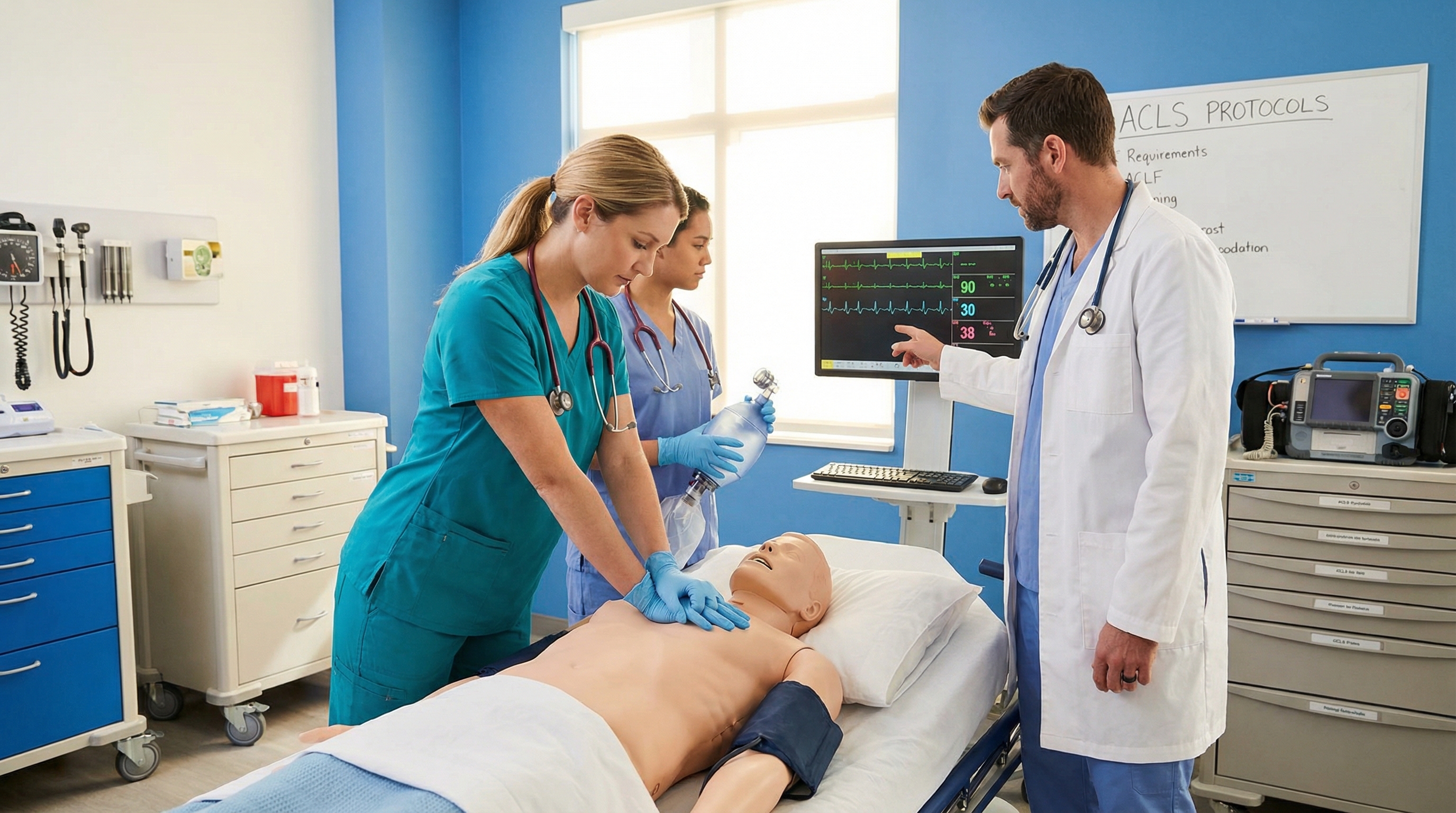
Veterinary medicine and human healthcare share more common ground than many realize. When a dog goes into cardiac arrest on the operating table or a cat stops breathing during a routine procedure, veterinary professionals face the same life-or-death urgency that emergency room physicians encounter daily. Yet for decades, veterinary medicine lacked the standardized, evidence-based resuscitation protocols that have saved countless human lives. This gap is why a growing number of veterinary technicians, veterinary nurses, and animal healthcare workers are pursuing Advanced Cardiovascular Life Support (ACLS) certification designed for human medicine.
The benefits extend far beyond professional development. Understanding human ACLS principles provides veterinary professionals with a deeper comprehension of cardiovascular physiology, resuscitation science, and emergency response protocols that translate remarkably well across species. According to the RECOVER Initiative's 2024 veterinary CPR guidelines, survival rates for dogs and cats experiencing cardiopulmonary arrest remain distressingly low—less than 6% for dogs and under 20% for cats—while human survival rates exceed 20% thanks to standardized training and protocols.
This article explores why veterinary professionals increasingly recognize the value of human life support training, how ACLS knowledge enhances veterinary emergency care, and why cross-training between human and animal medicine creates better healthcare providers overall. Whether you're a veterinary technician looking to expand your skill set, a practice manager seeking professional development opportunities for your team, or a veterinarian interested in advanced emergency training, understanding the connection between human and veterinary life support can transform how you approach critical care.
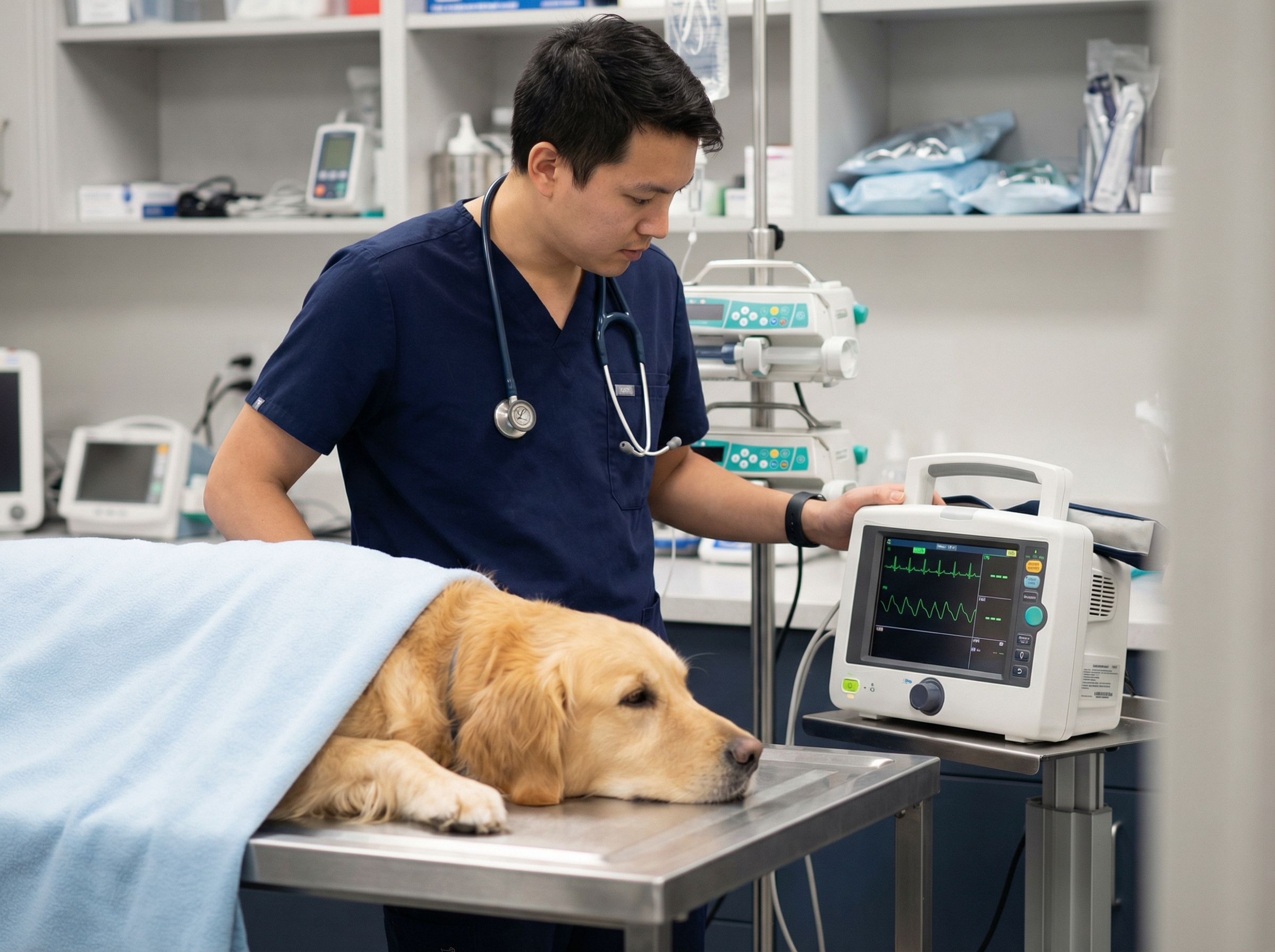
Veterinary emergency and critical care has evolved dramatically over the past two decades. The American College of Veterinary Emergency and Critical Care (ACVECC) represents the specialty organization dedicated to advancing veterinary emergency medicine, and it's one of 22 Recognized Veterinary Specialty Organizations encompassing 46 specialties recognized by the American Veterinary Medical Association.
The field is experiencing significant growth. According to recent Bureau of Labor Statistics projections, employment for veterinary technicians is expected to grow 19 percent from 2023 to 2033—nearly five times the national average for all occupations. This dramatic expansion reflects increased demand for veterinary emergency services and the growing sophistication of animal healthcare.
Despite this growth, standardization in veterinary emergency protocols remains inconsistent compared to human medicine. While organizations like the RECOVER Initiative have developed evidence-based veterinary CPR guidelines, adoption varies widely across practices. Many veterinary professionals work in clinics without dedicated emergency departments or access to specialized training, making their ability to handle cardiac arrests and respiratory emergencies more challenging than their counterparts in human hospitals.
This inconsistency creates an opportunity. Veterinary professionals who pursue additional training in human life support protocols gain standardized, evidence-based knowledge that can be adapted to veterinary settings. Understanding human ACLS provides a framework for critical thinking about cardiovascular emergencies that transcends species-specific differences.
Cardiovascular physiology operates on similar principles across mammalian species. Dogs, cats, and humans all have four-chambered hearts, similar electrical conduction systems, and respond to cardiac emergencies in comparable ways. The fundamental goals of resuscitation—restoring circulation, ensuring oxygenation, and supporting vital organ perfusion—remain identical whether the patient walks on two legs or four.
The Merck Veterinary Manual notes that cardiopulmonary resuscitation techniques for small animals draw heavily from human medical research. Chest compression techniques, ventilation strategies, and medication protocols used in veterinary medicine evolved directly from human emergency medicine research. When veterinary professionals understand the original human protocols, they gain deeper insight into why certain interventions work and how to modify them appropriately for different species.
Consider the cardiac arrest algorithms that form the foundation of ACLS training. The approach to ventricular fibrillation, pulseless ventricular tachycardia, asystole, and pulseless electrical activity follows similar logic in both human and veterinary patients. Recognition requires ECG interpretation skills, treatment demands understanding of electrical therapies and medication mechanisms, and success depends on coordinated team response—all elements that translate directly between species.
Even the medications overlap significantly. Epinephrine, atropine, lidocaine, and amiodarone are used in both human and veterinary resuscitation, though dosing differs based on body weight and species-specific factors. Understanding how these drugs work in human patients provides veterinary professionals with pharmacological knowledge that informs their veterinary practice. For those interested in mastering these medications, our ACLS Medications Cheat Sheet offers a comprehensive reference.
ACLS training emphasizes systematic assessment and algorithmic thinking. Rather than memorizing procedures, students learn to recognize patterns, interpret diagnostic information, and make rapid treatment decisions based on evolving clinical presentations. This structured approach to emergency decision-making proves invaluable in veterinary settings where patients cannot verbally communicate symptoms.
Veterinary professionals who complete ACLS training report improved ability to quickly assess cardiovascular emergencies, interpret ECG rhythms, and implement appropriate interventions. The systematic approach taught in human life support courses provides a mental framework that reduces panic during high-stress situations and improves patient outcomes.
ECG interpretation forms a cornerstone of ACLS certification. Veterinary professionals must recognize dangerous rhythms in their patients just as human healthcare providers do. While some species-specific differences exist—dogs have naturally higher heart rates than humans, for example—the fundamental electrical patterns indicating ventricular fibrillation, tachycardia, bradycardia, and conduction blocks remain similar.
Many veterinary programs provide limited ECG training compared to human nursing or medical programs. ACLS courses fill this gap, offering intensive practice in rhythm recognition and interpretation that directly applies to veterinary electrocardiography. This skill proves particularly valuable for veterinary technicians working in specialty practices or emergency clinics where cardiac cases are common.
ACLS training provides comprehensive education about cardiovascular medications, their mechanisms of action, appropriate dosing strategies, and potential complications. While veterinary-specific dosing differs, understanding why epinephrine works in cardiac arrest, how amiodarone stabilizes cardiac membranes, or when adenosine is appropriate for supraventricular tachycardia creates more competent, confident veterinary professionals.
This pharmacological knowledge enables veterinary technicians to better anticipate physician needs during emergencies, recognize potential medication errors, and understand the rationale behind treatment decisions. It transforms technicians from task-followers into informed team members who can contribute meaningfully to patient care discussions.
Modern ACLS training emphasizes team-based resuscitation and effective communication during high-stress situations. Concepts like closed-loop communication, clear role assignment, and structured team leadership are taught as essential components of successful resuscitation—not just nice-to-have soft skills.
Veterinary practices often operate with smaller teams than human hospitals, making effective communication even more critical. A veterinary technician who understands ACLS team dynamics can help establish better emergency protocols in their practice, improve coordination during critical cases, and create a more efficient, less chaotic response when seconds matter most.
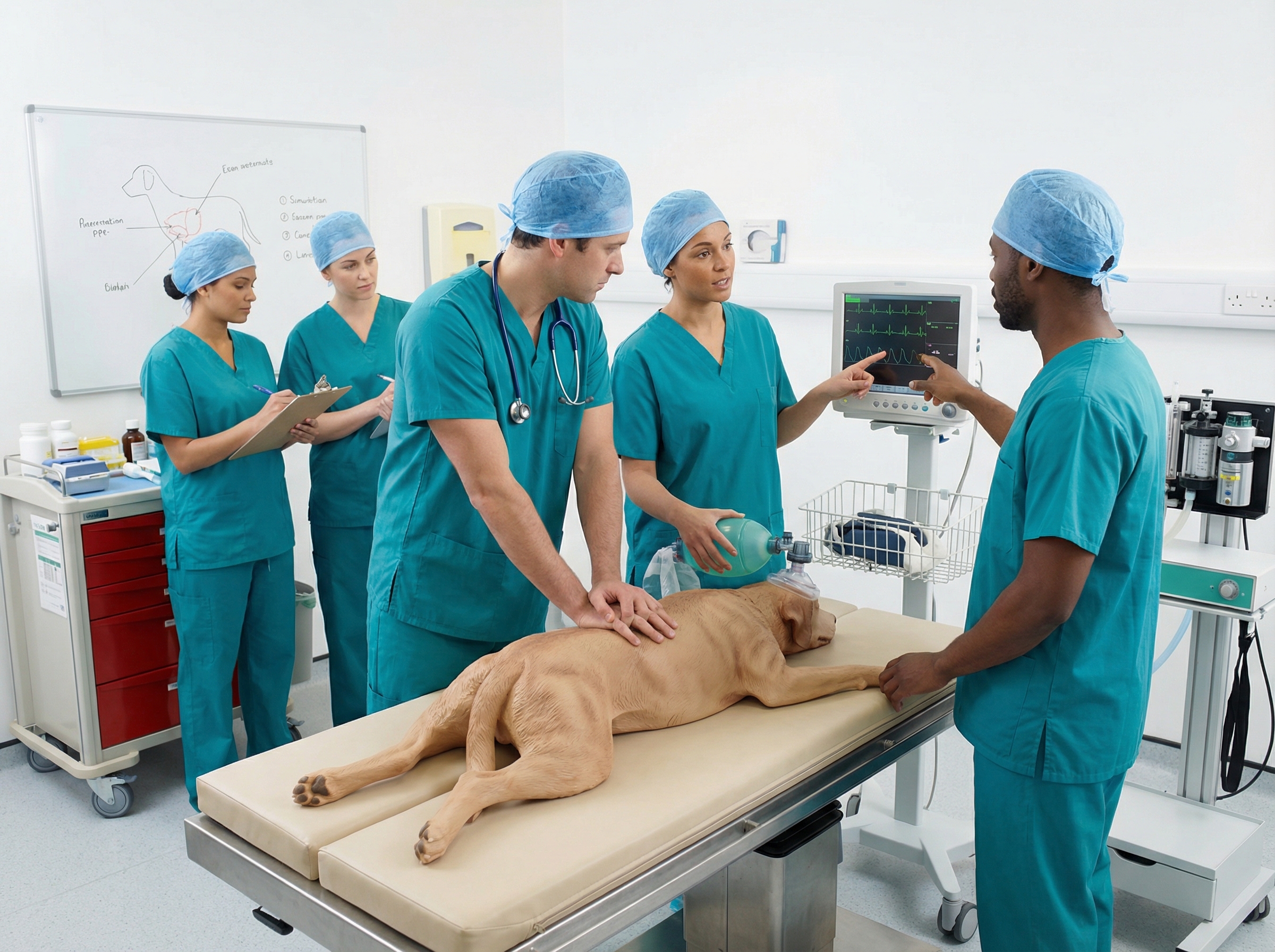
Pursuing certification beyond minimum veterinary requirements demonstrates commitment to professional excellence. Veterinary technicians with ACLS certification distinguish themselves as serious emergency care professionals willing to seek advanced training. This credential can open doors to positions in specialty veterinary hospitals, university veterinary teaching hospitals, and emergency-only veterinary clinics.
Additionally, continuing education requirements for veterinary technicians vary by state—ranging from 8 to 24 hours per renewal period according to various state veterinary boards. ACLS training can satisfy these requirements while providing more practical, clinically-focused education than many traditional veterinary CE offerings. To learn more about the flexibility of online certification, explore our guide on 5 Benefits of ACLS Certification Online.
Some veterinary professionals maintain dual careers treating both human and animal patients. Paramedics who also work in veterinary emergency medicine, nurses who volunteer with veterinary rescue organizations, or EMTs who staff mobile veterinary clinics benefit immensely from understanding both human and animal emergency protocols.
Even for those focused exclusively on veterinary medicine, ACLS certification creates networking opportunities with human healthcare professionals, facilitates knowledge exchange between medical disciplines, and positions veterinary professionals as legitimate emergency care providers within the broader healthcare community.
ACLS training prepares professionals to respond to human medical emergencies anywhere they occur—including in veterinary clinics. When a client suffers a heart attack in your waiting room, when a colleague collapses in the treatment area, or when a family member experiences a cardiac emergency at home, ACLS-trained veterinary professionals can provide life-saving intervention.
This dual competency provides peace of mind and genuine life-saving capability. Veterinary professionals already possess medical knowledge and comfort with emergency situations; ACLS training simply extends that capability to human patients, making these professionals valuable community resources during medical emergencies. Those curious about the foundational skills should also consider our guide to performing CPR on dogs and cats to understand the specific adaptations for animal patients.
It's important to clarify that human ACLS certification does not replace veterinary-specific training. The RECOVER Initiative offers specialized veterinary CPR Basic and Advanced Life Support courses designed specifically for animal resuscitation. These courses follow the RECOVER CPR algorithm and incorporate evidence-based guidelines developed specifically for dogs and cats.
Veterinary professionals should ideally pursue both human and veterinary-specific life support training. Human ACLS provides foundational knowledge about cardiovascular emergencies, medications, and resuscitation science, while veterinary-specific courses address species differences in anatomy, physiology, and treatment protocols.
Key differences between human and veterinary resuscitation include chest compression techniques adapted for different body sizes and thorax shapes, ventilation rates adjusted for species-specific respiratory physiology, and medication dosing calculated based on body weight and species metabolism. However, the underlying principles—early recognition, immediate intervention, high-quality compressions, appropriate ventilation, and post-resuscitation care—remain remarkably consistent.
For veterinary professionals uncertain about which certifications they need, our article on ACLS, PALS, and BLS: Which Certification Do You Actually Need? provides helpful guidance on choosing appropriate training based on your practice setting and professional goals.
How does ACLS training translate to daily veterinary practice? Consider these real-world scenarios where human life support knowledge directly improves animal patient care.
Anesthesia-related complications represent a common cause of veterinary emergencies. When a patient develops bradycardia under anesthesia, understanding the ACLS bradycardia algorithm helps veterinary professionals systematically assess the situation, determine if the rhythm is symptomatic, and select appropriate interventions—whether that's reducing anesthetic depth, administering anticholinergics, or preparing for more aggressive treatment.
Similarly, when tachycardia develops during surgery, ACLS-trained professionals can rapidly differentiate between sinus tachycardia responding to pain or light anesthesia versus pathological rhythms requiring immediate treatment. This systematic approach reduces diagnostic errors and improves patient safety.
Trauma cases—hit-by-car injuries, bite wounds, falls—require rapid assessment and stabilization. ACLS training emphasizes the systematic approach to unstable patients, teaching professionals to quickly identify life-threatening conditions and prioritize interventions. This structured thinking prevents tunnel vision on dramatic but less critical injuries while missing immediately life-threatening problems.
Understanding shock pathophysiology from human medicine helps veterinary professionals recognize different shock types—hypovolemic, cardiogenic, distributive, or obstructive—and tailor fluid resuscitation and medication strategies accordingly. The principles of permissive hypotension in trauma, appropriate crystalloid versus colloid use, and balanced resuscitation all translate from human to veterinary trauma care.
Veterinary patients with chronic cardiac disease—degenerative valve disease in dogs, hypertrophic cardiomyopathy in cats—require ongoing monitoring and medication management. ACLS knowledge about cardiac medications like beta-blockers, ACE inhibitors, and diuretics helps veterinary technicians better understand treatment rationales, recognize potential complications, and provide more informed client education.
When these cardiac patients decompensate into congestive heart failure or develop dangerous arrhythmias, the systematic assessment and treatment approach learned through ACLS training becomes invaluable. Veterinary professionals can quickly recognize deterioration, implement appropriate emergency interventions, and communicate effectively with veterinarians about patient status and treatment responses.
Veterinary professionals face unique scheduling challenges that make traditional in-person ACLS courses difficult. Irregular shift work, on-call responsibilities, and unpredictable emergency caseloads make fixed-date classroom courses problematic. This is where online ACLS certification offers distinct advantages.
When selecting an online provider, veterinary professionals should prioritize several key factors. First, ensure the course content follows current American Heart Association guidelines and International Liaison Committee on Resuscitation standards. The science of resuscitation evolves continuously, and outdated protocols can be dangerous.
Second, look for courses developed by practicing emergency medicine physicians rather than just training instructors. Affordable ACLS courses are created by Board Certified Emergency Medicine physicians with over 20 years of combined clinical experience who continue to actively practice emergency medicine. This ensures course content reflects real-world emergency department practice, not just textbook theory.
Third, consider cost and flexibility. Veterinary professionals, particularly veterinary technicians, often face financial constraints while pursuing continuing education. Traditional in-person ACLS courses can cost $250-$400 and require full-day attendance. Online options like Affordable ACLS offer certification for $109 ($99 for recertification) with truly self-paced learning, unlimited retakes, and immediate digital certification upon completion. For veterinary professionals balancing tight budgets with CE requirements, this affordability matters significantly.
Finally, verify employer acceptance. Reputable online providers like Affordable ACLS offer money-back guarantees if certification isn't accepted by employers, demonstrating confidence in their credential quality. For more detailed guidance, our article on How to Choose the Best Online ACLS Provider for Certification provides comprehensive selection criteria.
Ready to pursue ACLS certification? The process is straightforward, especially with online options designed for busy healthcare professionals. Here's what to expect.
ACLS assumes foundational knowledge of basic life support, ECG rhythm recognition, and cardiovascular pharmacology. Most veterinary professionals—particularly those with veterinary technician credentials or veterinary degrees—possess sufficient background knowledge to succeed in ACLS courses. However, reviewing basic ECG interpretation and cardiovascular anatomy before starting helps maximize learning.
Consider starting with Basic Life Support (BLS) certification if you're new to human resuscitation protocols. BLS covers fundamental CPR techniques, AED use, and team-based resuscitation that form the foundation for more advanced training. Many veterinary professionals pursue both BLS and ACLS certification, which Affordable ACLS offers as a discounted bundle for $133 (saving $45 compared to purchasing separately).
Typical ACLS courses cover cardiac arrest management algorithms, ECG rhythm interpretation, pharmacology of emergency medications, acute coronary syndrome recognition and treatment, stroke protocols, and team dynamics during resuscitation. Online courses present this material through video instruction, interactive simulations, case studies, and written content that you can review at your own pace.
Most healthcare professionals complete online ACLS courses in 1-2 hours, though there's no time limit. You can save progress and return whenever your schedule permits—particularly valuable for veterinary professionals whose shifts may be interrupted by emergencies. The self-paced format allows you to spend extra time on challenging topics while moving quickly through familiar material.
ACLS certification requires passing a comprehensive examination demonstrating mastery of course content. Reputable providers like Affordable ACLS offer unlimited retakes at no additional cost, removing the stress of single-attempt testing and allowing you to learn from mistakes without financial penalty.
Upon successful completion, you receive an immediately downloadable digital certification valid for two years. This certificate meets employer requirements for ACLS certification and demonstrates your commitment to advanced emergency training. For a detailed breakdown of the certification process, see our guide: Get Your ACLS Certification in 3 Easy Steps.
Earning ACLS certification represents the beginning, not the end, of your advanced life support education. Cardiovascular science evolves continuously, with new research informing updated treatment protocols and medication recommendations. Staying current requires ongoing learning beyond initial certification.
Participate in regular mock code simulations in your veterinary practice. These practice scenarios help maintain procedural skills, reinforce team communication, and identify equipment or protocol gaps before real emergencies occur. Even brief quarterly simulations significantly improve emergency response competency and reduce stress during actual cardiac arrests.
Consider joining veterinary emergency medicine discussion groups or online forums where professionals share case studies, discuss challenging situations, and exchange knowledge about emergency protocols. The combination of human ACLS knowledge and veterinary-specific experience creates unique perspectives that benefit both fields.
When your ACLS certification approaches expiration (certifications are valid for two years), complete recertification promptly. Online providers like Affordable ACLS offer streamlined recertification courses for $89 that review essential concepts, update you on guideline changes, and renew your credential efficiently. Setting calendar reminders or using provider notification services ensures you never practice with an expired certification.
Pursuing ACLS certification as a veterinary professional represents an investment in clinical excellence, professional development, and ultimately, better patient outcomes. The knowledge gained through human life support training translates remarkably well to veterinary medicine, providing systematic approaches to emergency care, deeper understanding of cardiovascular physiology and pharmacology, and enhanced critical thinking skills that benefit animal patients daily.
As veterinary medicine continues evolving toward greater specialization and sophistication, professionals who seek training beyond minimum requirements position themselves as leaders in the field. ACLS certification distinguishes you as a serious emergency care professional committed to providing the highest quality care regardless of species.
The barriers to certification have never been lower. Online courses offer affordable, flexible options that accommodate the demanding schedules of veterinary professionals while delivering rigorous, evidence-based education from practicing emergency physicians. With courses available for under $100, unlimited retakes, and immediate certification, there's no reason to delay this valuable professional development.
Whether you're a veterinary technician working in a busy emergency clinic, a veterinarian seeking to enhance your critical care skills, or a practice manager looking to elevate your team's emergency preparedness, ACLS training offers tangible benefits that extend far beyond a credential on your resume. It provides knowledge that saves lives—both human and animal—and that makes it an investment worth making.
Ready to begin your ACLS certification journey? Affordable ACLS offers veterinary professionals the same high-quality, guideline-compliant training trusted by over 500 human healthcare providers, with the flexibility and affordability that respects the unique challenges of veterinary practice. Visit affordableacls.com to get started today, or call 866-655-2157 to speak with our team about how ACLS training can enhance your veterinary career.
.jpg)