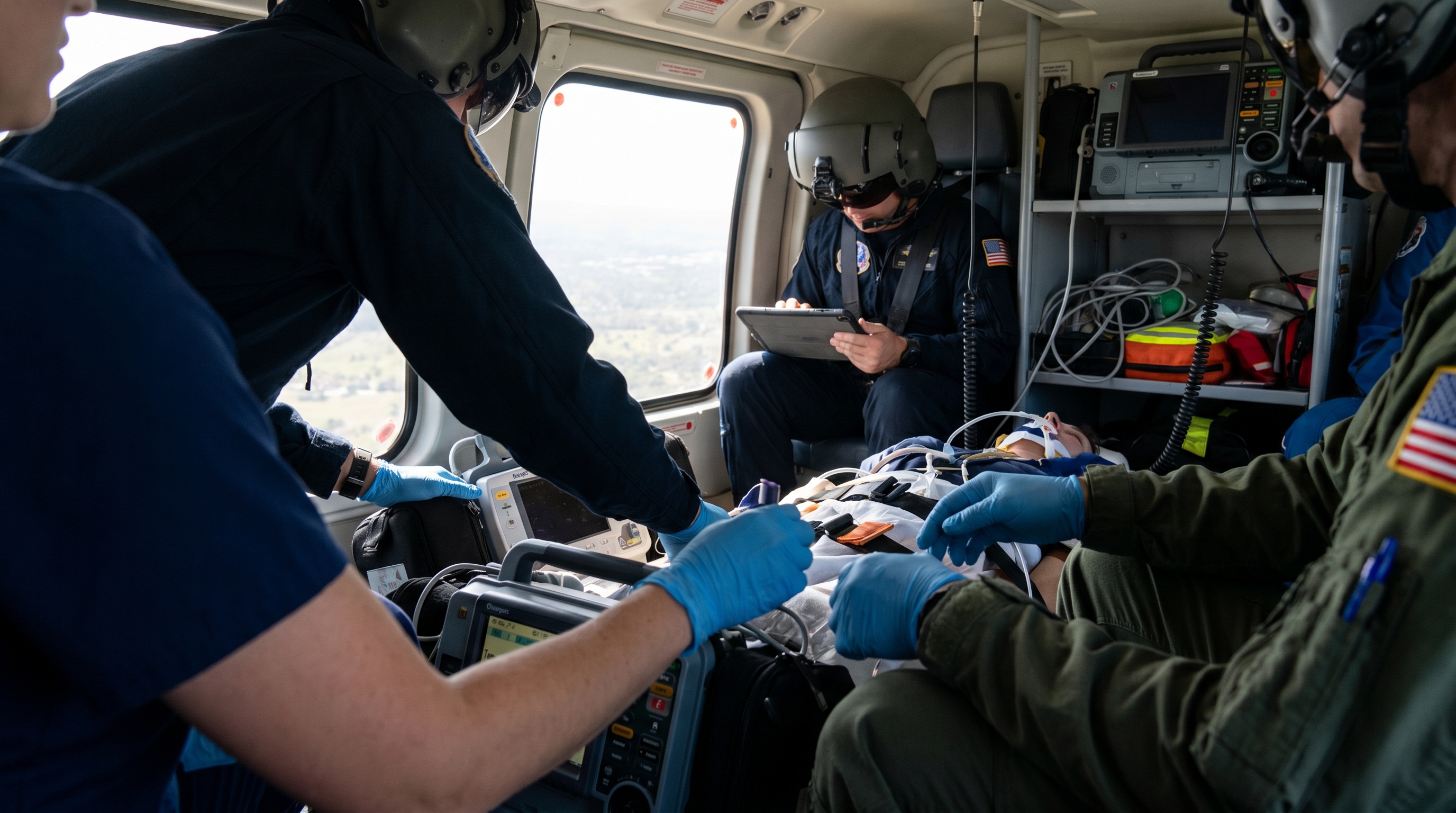
For flight nurses, flight paramedics, and critical care transport physicians, the aircraft cabin is not a waiting room between scenes and hospitals. It is an active resuscitation environment where ACLS protocols must be executed under conditions that would challenge even the most experienced hospital-based clinician. Vibration, altitude physiology, noise, confined physical space, a crew of two, and no backup team down the hallway — these are the realities that define air medical transport, and they demand a level of ACLS mastery that goes well beyond passing a certification exam.
Helicopter Emergency Medical Services (HEMS) and fixed-wing critical care transport occupy a unique and demanding niche in emergency and critical care medicine. According to a study published in Resuscitation Plus and available through PubMed Central, HEMS-treated cardiac arrests show distinct clinical profiles compared to ground EMS responses — including higher rates of witnessed arrest and initially shockable rhythms — making ACLS competency in these crews an absolute clinical imperative. This article is written for the flight crew member who already knows the algorithms but needs to understand how to apply them when everything familiar about the hospital environment has been stripped away.

Before addressing specific ACLS interventions, every air medical provider must understand what altitude does to patients — and to equipment. Most helicopter transports occur at altitudes below 2,000 feet AGL (above ground level), but pressurized fixed-wing aircraft routinely operate at cabin altitudes equivalent to 6,000 to 8,000 feet. Even modest altitude changes have meaningful physiological and pharmacological implications. A thorough review of aeromedical transport physiology is essential reading for any provider entering critical care transport.
Boyle's Law governs what happens to gas-containing spaces at altitude: as ambient pressure decreases, gas expands. For your patient, this means pneumothoraces can enlarge, endotracheal tube cuffs can over-inflate and cause tracheal mucosal ischemia, and air-containing IV lines can introduce unintended bubbles. For resuscitation specifically, it means that an ET tube cuff inflated at ground level may cause airway compromise during a prolonged fixed-wing transport unless you switch to saline inflation or use a pressure-monitoring cuff device. Equipment that functions reliably on the ground must be re-evaluated in the flight context.
Oxygen partial pressure also falls at altitude. At a cabin altitude of 8,000 feet, the partial pressure of inspired oxygen (PiO2) drops to roughly 118 mmHg compared to 160 mmHg at sea level. For a post-cardiac arrest patient already at risk for hypoxic brain injury, this decrease matters. Supplemental oxygen must be titrated aggressively, and pulse oximetry targets should reflect the physiologic stress of the altitude environment. Avoiding both hypoxia and hyperoxia in post-arrest care — a principle reinforced in the most recent AHA guidelines — is harder to execute at altitude with limited oxygen supplies aboard a fixed-wing aircraft on a multi-hour transfer.
Standard ACLS chest compression technique assumes a rescuer standing or kneeling at the patient's side with full upper-body leverage. None of those assumptions hold in a helicopter or fixed-wing cabin. In most HEMS aircraft, the provider is seated, belted, and working in a space that offers minimal room for arm extension. Compressions delivered from this position are consistently shallower, faster, and more fatiguing than ground-level manual CPR — degrading CPR quality precisely when it matters most.
This is precisely where mechanical CPR devices earn their place in the air medical toolkit. The LUCAS device and similar load-distributing band devices have been studied specifically in helicopter resuscitation, with compelling results. Research published on PubMed examining mechanical LUCAS resuscitation in helicopter teams found that the device delivered superior compression depth and rate consistency while simultaneously reducing rescuer heart rate and improving cognitive performance scores on post-resuscitation assessments. When a provider is simultaneously managing the airway, interpreting an ECG, timing drug delivery, and communicating with receiving facilities — all while airborne — cognitive load reduction is not a luxury; it is a patient safety issue.
That said, mechanical CPR devices have transport-specific concerns. Placement of the LUCAS device takes approximately 30 to 60 seconds, during which compressions are interrupted — a particularly consequential hands-off interval in shockable rhythms where time to defibrillation is everything. Flight crews who train with these devices regularly can significantly reduce setup time. If your program uses mechanical CPR devices, simulation training in the actual aircraft — not just a classroom — is essential, and simulation-based training has been shown to meaningfully improve real-world resuscitation performance across provider types.
Defibrillation during flight presents both safety and efficacy challenges. Modern biphasic defibrillators used by air medical programs are designed to operate safely in aircraft environments, but protocols must still address crew safety, patient positioning, and device performance. Every HEMS provider should know the following key operational points:
Airway management is arguably the highest-stakes ACLS intervention in the air medical environment. A failed intubation in a hospital generates a call for help and a cascade of backup resources. A failed intubation in a helicopter at night, over mountains, with a deteriorating patient is a fundamentally different scenario with no comparable safety net.
Pre-transport airway assessment and early definitive airway management are core principles of flight medicine. Many air medical programs apply a low threshold for prophylactic intubation before loading any patient who shows signs of airway compromise. The rationale is straightforward: any airway problem that is manageable on the ground becomes exponentially harder in flight. The confined space limits blade angle during laryngoscopy, lighting is poor, and turbulence can disrupt even a well-rehearsed intubation attempt. Anticipating the problem before the aircraft leaves the ground is always preferable.
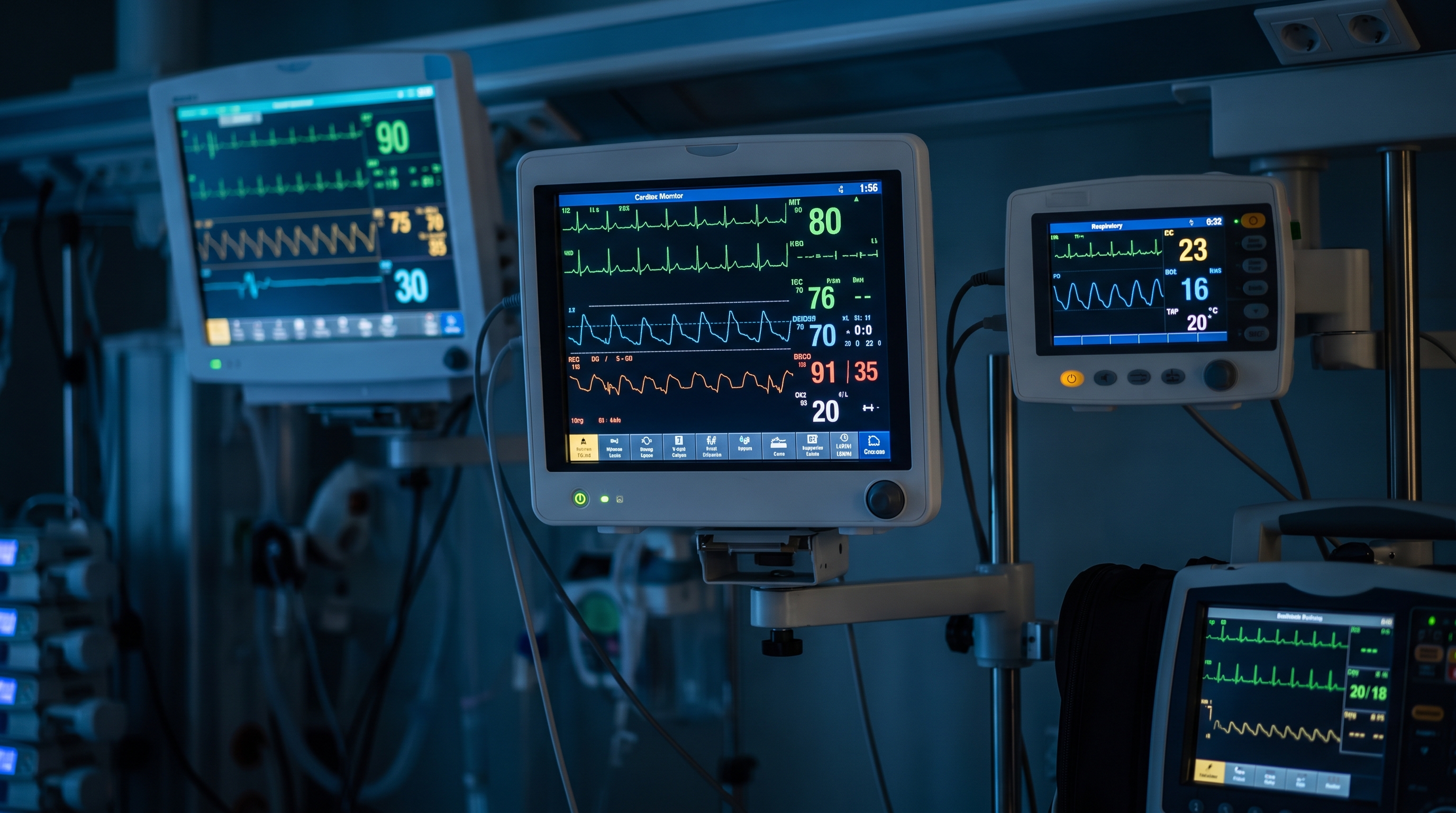
Continuous waveform capnography is mandatory for all intubated patients in air medical transport and is a direct extension of ACLS monitoring standards. During cardiac arrest, end-tidal CO2 (EtCO2) serves double duty: it confirms tube placement and provides real-time feedback on CPR quality and the likelihood of ROSC. An EtCO2 that suddenly rises above 40 mmHg during resuscitation is a strong signal of return of spontaneous circulation — a finding that becomes even more meaningful when auscultation is impossible over aircraft noise. Every air medical ACLS provider should be fluent in waveform capnography interpretation, particularly the transport-specific artifacts introduced by aircraft vibration that can falsely alter readings.
Rapid sequence intubation (RSI) in the aircraft requires the same drug-assisted approach as ground-based emergency medicine. Ketamine remains the induction agent of choice for many air medical programs due to its sympathomimetic properties, which are particularly useful in hypotensive trauma patients — a population heavily represented in HEMS transports. Succinylcholine and rocuronium remain the paralytic agents of choice, though programs carrying sugammadex can more confidently employ rocuronium for difficult-airway RSI and have a reliable reversal option if needed.
Aircraft vibration creates electrical artifact on ECG tracings that can make rhythm interpretation genuinely difficult. Motion artifact from rotor vibration in helicopters, and from turbulence in fixed-wing transport, can mimic or obscure ventricular fibrillation, tachyarrhythmias, and ST-segment changes that are clinically important. Flight crews need practical strategies for navigating this challenge:
For STEMI recognition and management, the flight crew's ability to transmit a 12-lead ECG to the receiving facility during transport has become a critical link in the systems-of-care chain. Many HEMS programs now transmit 12-lead ECGs in flight, allowing the cath lab to activate before the patient arrives. This capability directly improves door-to-balloon times and represents one of the highest-value ACLS-adjacent skills in the air medical repertoire — a direct intersection of monitoring competency and system coordination.
The ACLS pharmacopeia does not change at altitude, but the logistics of medication administration during flight introduce real challenges. IV access must be secured before transport begins — attempting peripheral IV placement in a moving aircraft in turbulence is difficult at best, and dangerous for both patient and provider. Intraosseous access is increasingly used by air medical programs as a primary vascular access strategy for critical patients, particularly those in cardiac arrest, because it is faster and more reliable in a moving environment than peripheral IV attempts under stress.
The intraosseous route delivers ACLS medications — epinephrine, amiodarone, lidocaine, adenosine — with comparable pharmacokinetics to IV delivery during cardiac arrest states where cardiac output is severely diminished. Flight programs that stock and train with IO devices routinely will have a significant resuscitation advantage over those relying solely on peripheral IV access during the highest-acuity transports.
Epinephrine 1 mg IV/IO every 3 to 5 minutes remains the backbone of cardiac arrest pharmacotherapy in the ACLS algorithm, unchanged for the air medical setting. However, drug timing during flight requires deliberate attention. The noise level in most HEMS aircraft makes verbal timer reminders unreliable; dedicated timer devices, watches with audible alerts, or pre-programmed infusion pump alarms should be used to track 2-minute CPR cycles and drug intervals. Precise ACLS drug delivery timing is a skill that requires as much deliberate practice as drug selection itself.
For patients transported in hypothermic cardiac arrest — avalanche victims, drowning patients, and cold-water submersion cases that HEMS crews encounter regularly — standard ACLS medications may be less effective and resuscitation efforts should continue longer than would be expected in normothermic arrest. Flight crews transporting these patients must understand the modified approach to reversible causes. The Hs and Ts framework is particularly relevant in HEMS transport because many reversible causes — tension pneumothorax, hypovolemia, hypothermia, hypoxia — are directly addressable by the transport crew during flight.
Bradyarrhythmias requiring transcutaneous pacing (TCP) present specific transport challenges. Pacing in a moving aircraft is technically feasible with modern combination defibrillator-pacers, but patient movement, artifact, and the physical difficulty of assessing capture make the procedure more demanding than in a controlled hospital environment. The key clinical considerations for in-flight pacing include:
When ROSC is achieved during a HEMS transport, the clinical situation shifts immediately from resuscitation mode to post-arrest intensive care mode — and all of this must be accomplished in a moving aircraft with two providers and limited equipment. The current AHA guidelines for post-cardiac arrest care apply without modification to the air medical environment, but implementation requires deliberate adaptation to transport constraints.
Target systolic blood pressure greater than 90 mmHg, SpO2 between 94% and 99%, EtCO2 between 35 and 45 mmHg, and avoidance of hyperthermia are the core post-ROSC hemodynamic and physiologic targets. In flight, maintaining these targets requires continuous monitoring and rapid medication titration. Vasopressor infusions should ideally be running before ROSC is achieved in any patient at high risk of hemodynamic instability after resuscitation. The detailed protocols for post-ROSC care are directly applicable to the air medical setting and represent essential clinical knowledge for any HEMS provider who runs resuscitations in the field.

Targeted temperature management has evolved significantly, with current evidence no longer mandating active cooling to 32 to 36 degrees Celsius for all post-arrest patients. The emphasis has shifted to fever prevention — maintaining temperature below 37.7 degrees Celsius — for at least 72 hours following arrest. For HEMS and fixed-wing transport programs, this means active monitoring of patient temperature during transport and passive cooling measures for patients who arrive febrile. Cold IV fluid administration, once commonly used for prehospital cooling, is no longer recommended as a routine prehospital intervention based on current evidence, simplifying one aspect of post-ROSC management for transport crews.
One of the defining features of fixed-wing critical care transport — and increasingly of long-range HEMS missions — is extended transport time. Resuscitations that in a hospital setting would be time-limited by protocol must sometimes continue for 30, 60, or even 90 minutes during transport to tertiary receiving centers. Prolonged resuscitation in the air requires discipline and preparation that most hospital-based ACLS training does not address.
The regulatory and credentialing landscape for air medical transport crews has tightened meaningfully over the past decade. The Commission on Accreditation of Medical Transport Systems (CAMTS) now requires RNs in CAMTS-accredited programs to hold transport-specific advanced certifications such as the Certified Flight Registered Nurse (CFRN) or Certified Transport Registered Nurse (CTRN), in addition to standard ACLS, BLS, and PALS. The Air and Surface Transport Nurses Association (ASTNA) provides position statements and clinical practice guidelines that define the standard of care for transport nursing practice, and these documents should be part of every flight nurse's professional library.
ACLS certification is not merely a checkbox for air medical providers — it is the foundation upon which transport-specific skills are built. Flight nurses and paramedics who maintain rigorous, current ACLS training are better equipped to adapt standard algorithms to the transport environment because they have internalized the underlying clinical reasoning, not just the step sequences. This distinction matters enormously when you are executing a complex resuscitation in a vibrating aircraft at 2 a.m. with no attending physician available for consultation.
For flight nurses, paramedics, and critical care transport providers who face unpredictable schedules, rotating shifts, and remote home bases, the flexibility of online ACLS certification is a practical necessity. Time-flexible online certification allows air medical providers to maintain current credentials without blocking out a full day for a classroom course, which is often logistically impossible for HEMS crew members on 24-hour or 48-hour rotations. Programs designed by Board Certified Emergency Medicine physicians and fully compliant with AHA/ILCOR guidelines provide the rigorous clinical foundation that air medical professionals need.
For those earlier in their air medical career path — transitioning from ground EMS to flight paramedic roles — building a strong foundation in advanced cardiac life support is essential before pursuing transport-specific credentials. The transition from EMT-level practice to critical care transport requires not just additional certifications but a deeper understanding of the ACLS clinical rationale that goes beyond algorithm memorization. How ACLS certification bridges the EMT-to-paramedic gap is directly relevant to any provider building the credential foundation for a future in air medical transport.
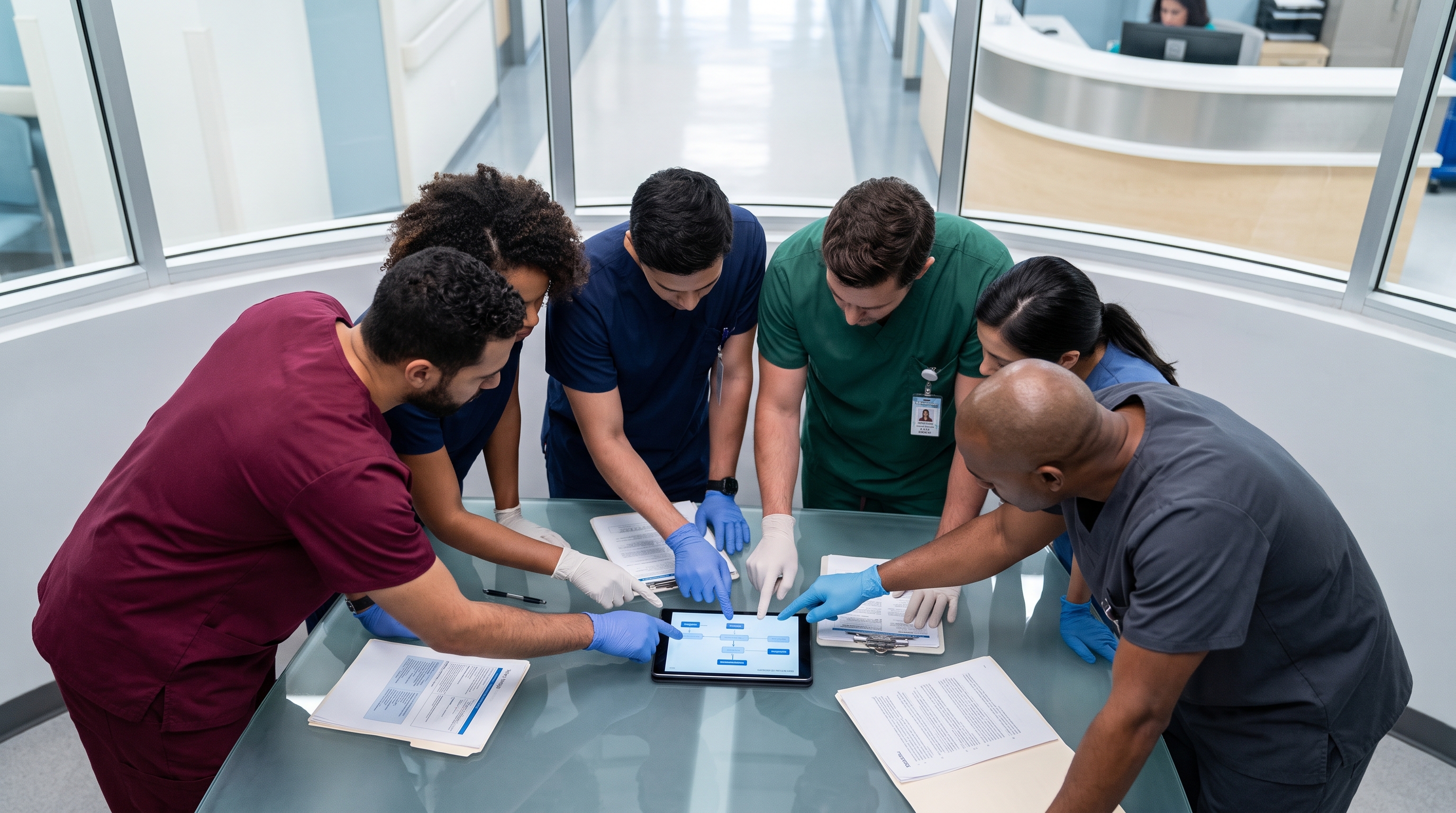
Air medical transport is almost always a two-person clinical operation. The team dynamics principles that underpin effective ACLS — clear role assignment, closed-loop communication, explicit task prioritization — are amplified in importance when there are only two providers and one of them may need to step away from patient care to communicate with the pilot or relay information to medical control. Aviation Crew Resource Management (CRM) principles have been formally adopted by most air medical programs precisely because the communication failure modes in cockpit environments directly parallel those documented in resuscitation team failures.
Noise level in HEMS aircraft during flight typically exceeds 85 decibels, making verbal communication between crew members difficult even with helmets and integrated communication systems. Critical orders — drug doses, shock delivery, airway interventions — must be communicated with deliberate clarity, confirmed with read-back, and acknowledged. Flight crews who establish explicit pre-flight communication protocols for likely resuscitation events — the brief scenario walkthrough before each high-acuity transport — make significantly fewer communication errors during actual events than crews who rely on improvised coordination during the crisis itself.
Ultimately, the performance ceiling for air medical ACLS is set not by individual provider knowledge but by team coordination. A two-person crew with synchronized decision-making, clear role division, and practiced communication protocols will outperform a crew of individually highly trained providers who have not rehearsed together. The investment in team simulation training, protocol review, and pre-transport briefing pays dividends that no individual certification course can replace — but that certification foundation must be current, evidence-based, and clinically rigorous to support the level of performance these missions demand.
Air medical transport remains one of the most demanding environments in all of emergency and critical care medicine. The ACLS algorithms you learn during certification are the foundation, but applying them in a vibrating, noisy, altitude-altered, resource-limited aircraft cabin requires deliberate practice, program-specific simulation, and a deep understanding of the physiologic and logistical factors that modify standard protocols. Every hour spent strengthening your ACLS clinical reasoning during certification and recertification translates directly into better patient outcomes during the transports that matter most.
For flight nurses, flight paramedics, and critical care transport physicians committed to the highest standard of patient care, maintaining current ACLS certification is non-negotiable. The quality of that certification matters — programs designed by emergency physicians who understand the clinical realities of high-acuity environments provide the evidence-based reasoning skills that algorithmic memorization alone cannot develop.
Whether you are renewing your ACLS before your next HEMS contract or building the credential foundation for your first flight crew position, Affordable ACLS offers 100% online, self-paced ACLS certification starting at $89, with unlimited retakes, immediate certification upon completion, and full AHA/ILCOR compliance. Visit affordableacls.com or call 866-655-2157 to get started today.
.jpg)