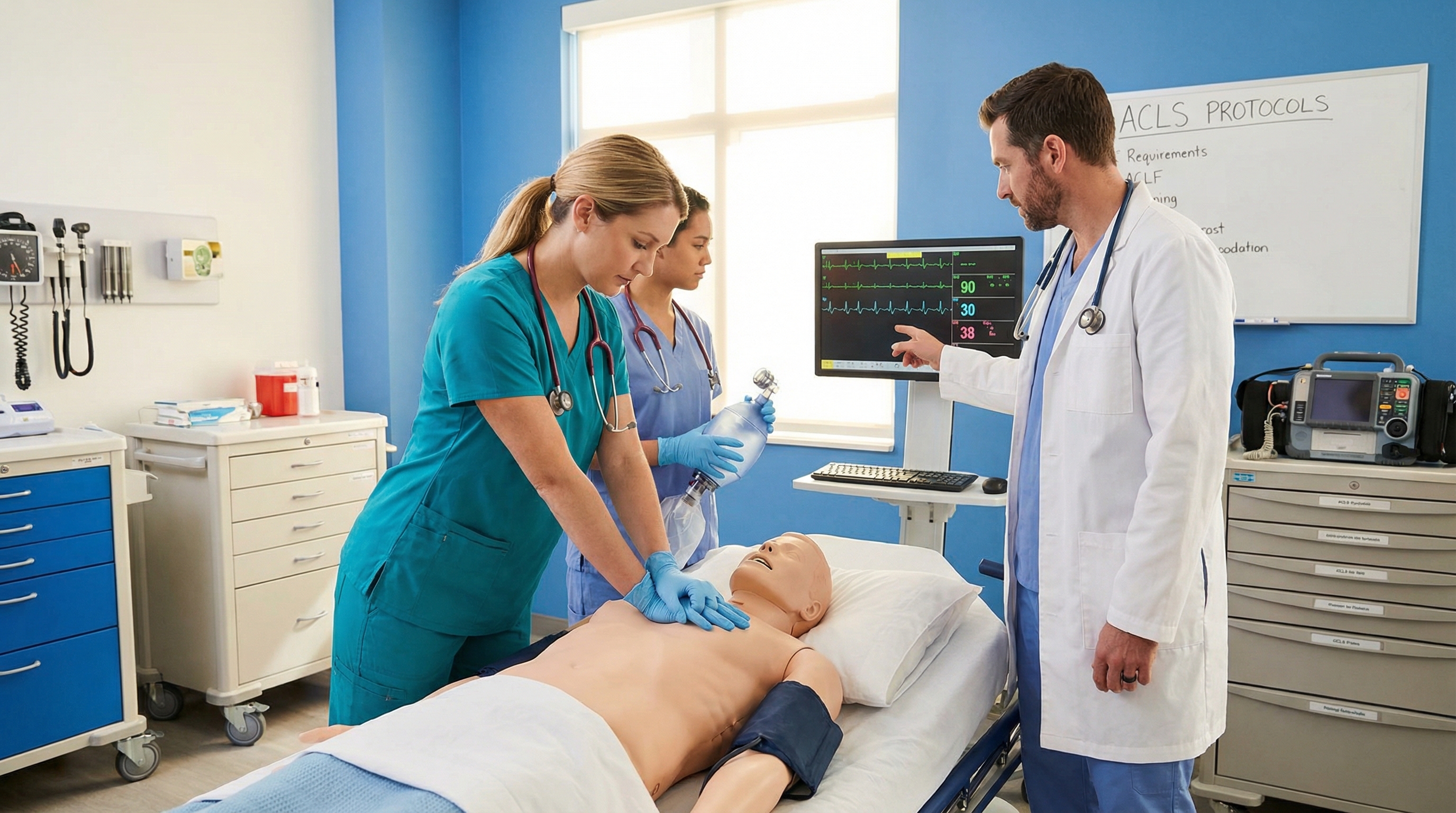
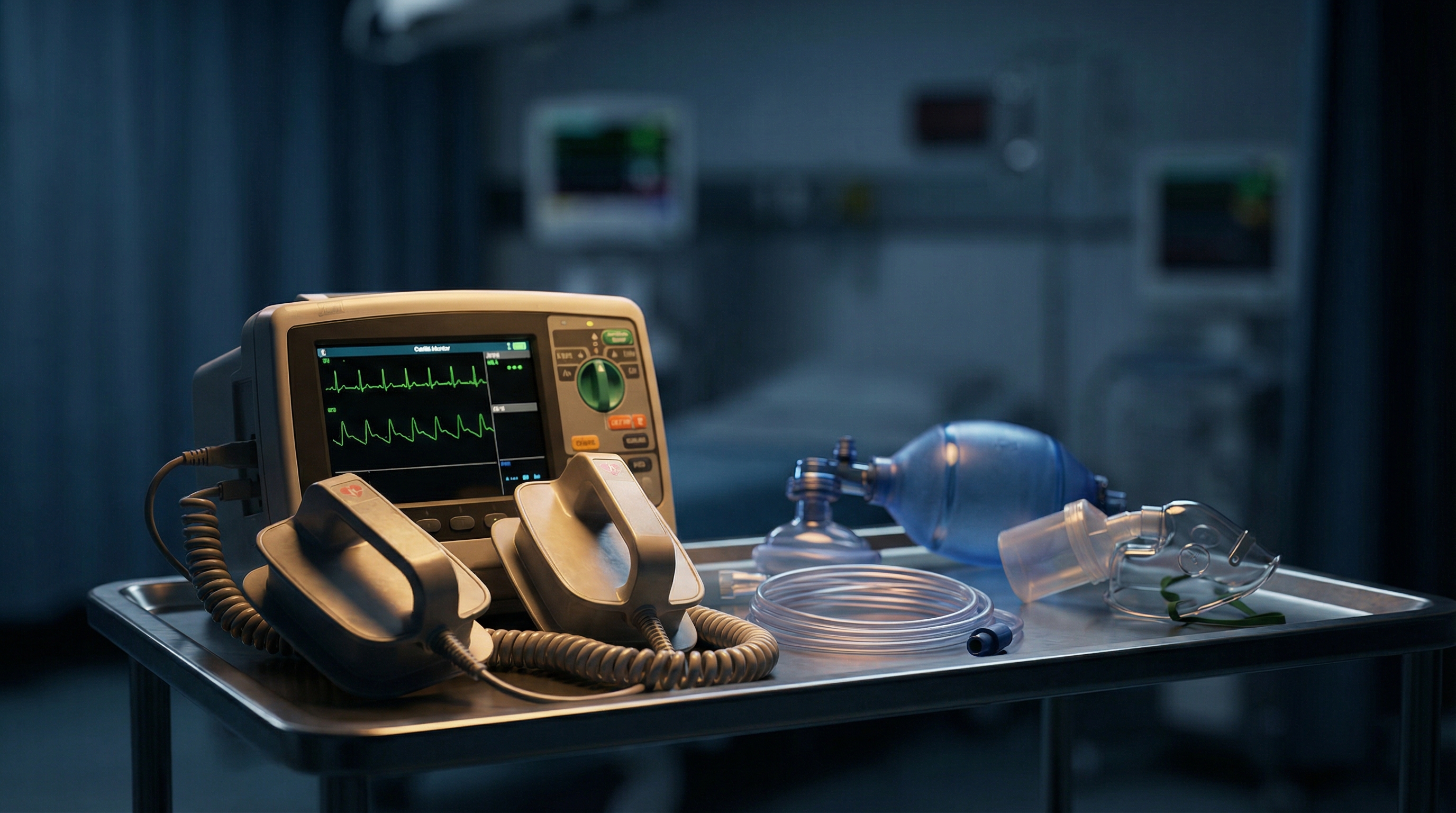
You are standing at the bedside of a 34-year-old woman with a heart rate of 178 beats per minute, narrow-complex tachycardia on the monitor, and that familiar look of wide-eyed discomfort on her face. She has been here before. You have too. The temptation is to reach for the adenosine — it is sitting right there, labeled and loaded. But before you flush that 6 mg bolus into the antecubital, ask yourself: did you give her vagus nerve a chance first?
Vagal maneuvers are underutilized in emergency medicine. Not because clinicians are unaware of them, but because the modified techniques that actually work are still slower to reach the bedside than the default muscle memory of grabbing adenosine. This guide is written by emergency physicians for emergency physicians — and for every nurse, paramedic, and advanced practice provider who manages SVT in a fast-moving acute care environment. We are going to walk through the physiology, the evidence-based technique, the contraindications, and the clinical integration that makes vagal maneuvers a genuine first-line tool rather than a perfunctory checkbox before the real treatment begins.

The vast majority of SVT episodes presenting to emergency departments are AVNRT — atrioventricular nodal reentrant tachycardia. The reentry circuit lives within or immediately around the AV node, using a fast pathway and a slow pathway to sustain itself in a tight electrical loop. A smaller but clinically significant proportion are AVRT, atrioventricular reentrant tachycardias, which use an accessory pathway outside the AV node as one limb of the circuit. In both cases, the AV node is a critical part of the circuit.
This matters for vagal maneuvers because increasing vagal tone acts directly on the AV node. Enhanced parasympathetic stimulation slows AV nodal conduction velocity and prolongs the AV node refractory period. In a reentry circuit that depends on the AV node to sustain itself, even a brief interruption in conduction through that node can break the circuit entirely and restore normal sinus rhythm. The key word is briefly — and this is why technique and timing matter so much. A half-hearted Valsalva attempt generates insufficient intrathoracic pressure to produce a meaningful vagal surge, and the opportunity is lost.
For a deeper dive into the pharmacologic side of SVT management — when you do move on to medications — our comprehensive resource on treating supraventricular tachycardia with adenosine covers dosing, administration technique, and what to expect on the monitor.
The landmark study that changed how emergency physicians should think about vagal maneuvers is the REVERT trial, published in The Lancet in 2015. This was a multicenter randomized controlled trial of 428 patients presenting with SVT in emergency departments across the United Kingdom. Patients were randomized to either the standard Valsalva maneuver or a modified version that included supine repositioning and leg elevation immediately after the strain phase.
The results were striking. The standard Valsalva converted SVT to sinus rhythm in 17% of patients. The modified Valsalva converted 43% of patients — more than double the success rate. The adjusted odds ratio was 3.7 (95% CI 2.3–5.8, p<0.0001). No serious adverse events were recorded in either group. According to the REVERT trial published in The Lancet, the modified maneuver should be considered routine first treatment for stable SVT.
A subsequent network meta-analysis confirmed these findings, establishing the modified Valsalva maneuver as the most effective vagal strategy for acute SVT termination — more effective than carotid sinus massage and substantially more effective than the standard Valsalva. One clinical study of 60 patients found that 68.3% converted after the first attempt using the modified technique, with an overall success rate of 78.3% including second attempts. Compare that to the standard maneuver's 20–25% success rate, and you understand why technique specifics matter enormously.
The standard Valsalva fails so often not because the physiology does not work, but because the technique is incomplete. Here is what generates the vagal surge that actually breaks SVT circuits: the strain phase produces increased intrathoracic pressure, which reduces venous return and triggers a baroreceptor-mediated sympathetic response. When you then rapidly reposition the patient to supine with legs elevated, venous return surges back into the thorax, stretching the great vessels and generating an aortic baroreceptor response — a powerful parasympathetic surge that slams the AV node.
Execute the modified Valsalva in these precise steps:
If the first attempt is unsuccessful, a second attempt is reasonable before escalating to pharmacotherapy. Studies show that a meaningful proportion of patients who do not convert on the first attempt will convert on the second. The maneuver is safe, costs nothing, and buys you time to optimize your IV access and adenosine setup.
Carotid sinus massage (CSM) is the second major vagal maneuver in your toolkit. It works by directly compressing the carotid baroreceptors at the bifurcation of the common carotid artery, reflexively reducing sympathetic tone and increasing parasympathetic output. In SVT, it carries an overall termination rate of approximately 18–25% — lower than the modified Valsalva, but still a useful adjunct, and the preferred technique in patients who cannot adequately perform a Valsalva strain.
According to the New England Journal of Medicine's procedural guide on carotid sinus massage, proper technique requires applying firm circular pressure over the carotid sinus — located just below the angle of the jaw at the level of the thyroid cartilage — for 5 to 10 seconds. Apply CSM to one side only; simultaneous bilateral massage is absolutely contraindicated given the risk of compromising cerebral circulation. Right-sided CSM tends to have a more pronounced effect on the sinoatrial node; left-sided CSM has a slightly greater effect on AV conduction. Either side is acceptable, but never both at once.

Continuous cardiac monitoring and blood pressure monitoring are required throughout the procedure. Have resuscitation equipment at the bedside — though adverse events are uncommon, the small but real risk of ventricular asystole, hypotension, or neurologic complication demands preparation. Transient adverse effects including dizziness, nausea, and hypotension are self-limiting and resolve promptly upon stopping the massage.
CSM carries a neurologic complication rate of 0.2–1% in published series — small in absolute terms, but not negligible when the complication is a stroke. A rigorous pre-procedure history is essential. The following are hard contraindications:
When in doubt, skip CSM and rely on the modified Valsalva. The Valsalva carries a far more favorable safety profile and, when performed correctly, outperforms CSM on efficacy. StatPearls' comprehensive review of vagal maneuvers provides an evidence-based reference for contraindication screening in both techniques.
The diving reflex — submersion of the face in ice-cold water or application of an ice-filled bag to the face — produces profound vagal stimulation via the trigeminal nerve. It is most effective in infants and children with SVT and has a respectable success rate in pediatric patients. In adults, the technique is understandably unpopular and less reliably performed under emergency conditions, but it remains a legitimate option when other maneuvers have failed and adenosine is unavailable or contraindicated.
Ocular pressure — the Aschner maneuver — is historical and should no longer be used in clinical practice. Applying pressure to the globes carries real risks of retinal detachment and globe injury, particularly in elderly patients or those with pre-existing eye pathology. There is no meaningful evidence supporting its continued use over safer alternatives. Drop it from your practice if it is still there.
Cough-induced vagal stimulation has been described anecdotally and in small case series. Asking the patient to cough forcefully can produce transient increases in intrathoracic pressure that mimic the strain phase of the Valsalva. Its efficacy is inconsistent and not well-supported by controlled trial data, but it is worth attempting if the patient is unable to cooperate with a structured Valsalva technique. The risk is essentially zero.
The 2015 ACC/AHA/HRS guidelines for the management of adult SVT give vagal maneuvers a Class I recommendation as first-line treatment for stable narrow-complex tachycardia. The ACLS tachycardia algorithm reflects this hierarchy clearly: assess stability first, confirm narrow complex, then attempt vagal maneuvers before reaching for adenosine.
In practice, the clinical sequence looks like this: the patient presents with a regular, narrow-complex tachycardia. You assess for signs of hemodynamic instability — hypotension, altered mentation, chest pain, pulmonary edema. If the patient is stable, you have time to work. Establish IV access if not already present (you will need it shortly regardless), place the patient on a monitor with a continuous rhythm strip, and attempt the modified Valsalva. If two attempts fail, proceed to adenosine per protocol. Understanding how this fits into the broader picture of narrow and wide complex rhythms is essential — our resource on understanding narrow complex irregular tachycardia covers the differential diagnosis and treatment framework in detail.
Document your vagal maneuver attempts in the chart. Note the technique used, the number of attempts, the duration of each attempt, and the patient's response. This documentation matters clinically because it informs the adenosine dosing decision and communicates to consultants what has already been tried. For a broader look at how medication timing fits into ACLS protocols, see our reference on ACLS medication timing and drug delivery windows.
Two failed modified Valsalva attempts are your signal to move to pharmacotherapy without further delay. Adenosine remains the first-line drug for stable, narrow-complex SVT, with a cardioversion success rate of approximately 75% when administered correctly. The key phrase is administered correctly — poor IV site selection and inadequate flush technique are the most common reasons adenosine fails in clinical practice.
Adenosine is given as a rapid IV push — 6 mg initial dose — followed immediately by a 20 mL normal saline flush pushed as fast as possible. The antecubital or external jugular is preferred over peripheral hand or wrist veins; adenosine's half-life in the bloodstream is measured in seconds, and a central delivery site maximizes the drug's chance of reaching the AV node in pharmacologically active concentrations. If the first dose fails to convert, 12 mg is given in the same manner and can be repeated once more at 12 mg. Our detailed guide on adenosine for SVT covers the full administration protocol, monitoring requirements, and what the expected rhythm response looks like on the monitor.
Warn the patient before adenosine administration. The transient effects — chest tightness, flushing, a sense of impending doom lasting 10–15 seconds — are alarming if unexpected and entirely manageable when anticipated. Brief, direct patient education immediately before the push reduces distress and improves cooperation if a second dose is needed.
Vagal maneuvers are safe in pregnancy and should be the first-line approach for SVT in pregnant patients. Both the modified Valsalva and CSM (when not contraindicated) carry no known fetal risk. Adenosine is also considered safe in pregnancy, but the minimal systemic exposure of a successful vagal maneuver is always preferable to any pharmacologic agent in the pregnant patient.
In pediatric patients, the diving reflex using ice water applied to the face is generally more effective than the Valsalva technique, particularly in infants who cannot cooperate with a structured strain maneuver. Older children and adolescents can typically perform a Valsalva with instruction. CSM is not recommended in children under 10. For pediatric resuscitation and SVT management in children, the PALS algorithm provides specific guidance — our ACLS algorithm memory hacks can help you internalize the pediatric and adult tachycardia algorithms together.
When the rhythm is irregular or the QRS is wide, vagal maneuvers must be approached with caution. Wide complex tachycardia with preexcitation — Wolff-Parkinson-White with antidromic conduction — can potentially accelerate rather than terminate with AV-nodal-blocking maneuvers. If you are uncertain whether you are dealing with true SVT or a preexcited rhythm, the safer first step may be synchronized cardioversion rather than pushing vagal tone. Our detailed review of wide complex tachycardia myths and facts addresses this distinction with clinical clarity.
One of the most underappreciated aspects of vagal maneuver proficiency is its patient education potential. SVT is often a recurrent condition — patients with AVNRT frequently experience multiple episodes over years or decades before definitive treatment with catheter ablation. The REVERT trial authors explicitly noted that the modified Valsalva can and should be taught to patients for self-administration.
A brief, structured discharge conversation can meaningfully reduce ED return visits. Teach the patient the exact technique: positioned at 45 degrees, hard sustained strain for 15 seconds into a syringe or against resistance, then immediate supine repositioning with legs elevated for 15 seconds. Patients who successfully self-terminate an SVT episode at home avoid an ED visit entirely. For patients with frequent episodes, refer to cardiology for discussion of ablation — the definitive curative option. Understanding the full spectrum of conduction system pathology, including atrioventricular blocks, helps frame SVT within the broader context of rhythm disorders you manage and teach.
Documentation of patient education in the discharge summary is both a clinical and medicolegal best practice. Note that you explained the technique, demonstrated it, and verified patient understanding before discharge.
Run a continuous rhythm strip during every vagal maneuver attempt. Conversion patterns tell you something diagnostically useful: abrupt termination with a clear P wave and normal PR interval returning suggests AVNRT. A brief pause followed by sinus rhythm with a delta wave suggests AVRT with a bypass tract. A gradual slowing of the ventricular rate without full conversion — with visible flutter waves becoming apparent — may suggest atrial flutter with 2:1 block responding to increased AV nodal block, which changes your management entirely.
Capture a 12-lead ECG immediately after conversion. The post-conversion ECG can reveal baseline delta waves suggesting WPW, repolarization abnormalities, or PR interval findings that guide outpatient cardiology referral. This is the most information-rich moment of the encounter — do not miss it by allowing the monitor to reset to basic telemetry without capturing the strip. For a review of how shockable and non-shockable rhythms factor into the broader resuscitation decision tree, our resource on shockable rhythms provides essential context for any advanced provider managing acute arrhythmias.
Vagal maneuver proficiency — like all ACLS-level skills — degrades without deliberate reinforcement. The modified Valsalva technique sounds simple but requires hands-on practice to execute smoothly under the time pressure of an acute SVT encounter. Knowing the contraindications to CSM, recognizing when wide complex morphology changes your approach, and understanding the full tachycardia algorithm are not static competencies. They require regular review.
At Affordable ACLS, our online certification courses are built by Board Certified Emergency Medicine physicians who manage SVT, AVNRT, AVRT, and every variant of tachycardia in real clinical practice. Our ACLS course covers the full tachycardia algorithm — including vagal maneuvers, adenosine, synchronized cardioversion, and the decision points between each step — in depth and with clinical context that connects the protocol to the patient at the bedside. Courses are self-paced, available 24/7, and come with unlimited retakes, immediate certification, and a money-back guarantee. ACLS recertification is available at $99, with BLS at $59 and PALS at $99 for providers who need multiple credentials. Reach our clinical support team at 866-655-2157 or support@affordableacls.com with any questions about which course fits your practice needs.
According to a network meta-analysis comparing vagal maneuvers for SVT published in PMC, the modified Valsalva maneuver represents the current gold standard among non-pharmacologic options. Mastering this technique is not just good medicine — it is the kind of evidence-based practice refinement that distinguishes a clinician who keeps up from one who settled into habits formed before the REVERT trial changed the data landscape.
Vagal maneuvers are not a formality before the real treatment. When performed correctly — specifically, the modified Valsalva with immediate supine repositioning and leg elevation — they convert SVT in 43% or more of patients without a milligram of medication, without the transient asystole that comes with adenosine, and without the cost, IV access requirements, or monitoring demands of pharmacotherapy. The evidence supporting the modified technique over the standard Valsalva is Level I, from a well-designed RCT published in a flagship journal. There is no good clinical reason not to use it.
Know your technique cold. Screen your patients for CSM contraindications before you touch the neck. Document everything. Teach your patients self-termination before discharge. And when vagal maneuvers fail — move to adenosine with the same confidence and protocol discipline you brought to the first step. The ACLS tachycardia algorithm is a coherent, sequential decision tree. Vagal maneuvers are not step zero. They are step one.
.jpg)