ACLS Blogs

Building ACLS Stamina: Physical and Mental Conditioning Strategies for Prolonged Resuscitation Events

When the Code Goes Long: Why Stamina Is a Clinical Skill

Every clinician who has run a prolonged resuscitation remembers the moment their arms started to burn. You are two, maybe three minutes into continuous chest compressions, the team leader is calling rhythm checks, the pharmacist is drawing up the third dose of epinephrine, and your shoulders are already screaming. This is not a hypothetical scenario — it is a routine reality in emergency departments, ICUs, and cardiac wards around the country.


What separates a high-functioning code team from a fatigued, disorganized one is not just knowledge of the ACLS algorithms. It is the physical endurance to deliver high-quality compressions across an extended event, and the mental conditioning to maintain clear decision-making under sustained stress. Both are trainable skills, and both are routinely undertrained in most clinical education programs. This guide addresses that gap directly — written from one EM physician to another — with practical, evidence-based strategies you can implement today.


The Physiology of CPR Fatigue: What the Research Actually Shows

Before we talk about building stamina, it is worth understanding how quickly physical performance deteriorates during chest compressions and why it matters so profoundly for patient outcomes.


The data is sobering. Research published in Resuscitation found that fatigue affects CPR performance within an average of 167 seconds — not five minutes, not three minutes, but under three minutes into continuous compressions. The same study found that only 79% of rescuers even recognized they were fatigued, meaning the majority of providers cannot reliably self-monitor their own compression quality degradation. Equally alarming, the proportion of correctly delivered chest compressions dropped from 52% in the first minute to 39% by the fifth minute — a 25% decline in technical quality within a single resuscitation cycle.

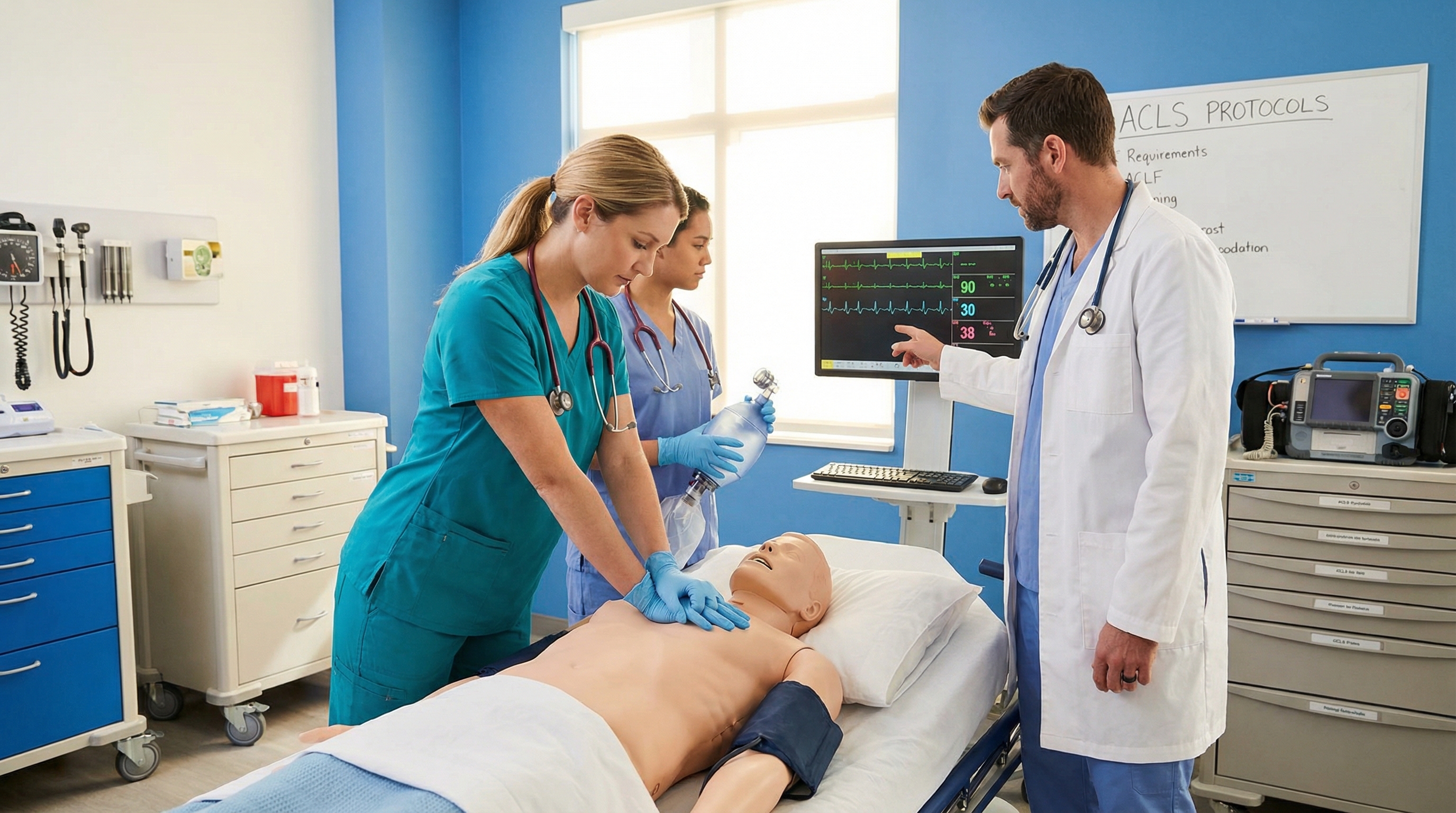
Two healthcare providers rotating CPR chest compressions on a training mannequin during a resuscitation simulation


A randomized crossover manikin study published in PMC further confirmed that compression depth — the most critical measurable parameter for coronary perfusion pressure — degrades significantly within the first 60 to 90 seconds of continuous compressions. What this means clinically is straightforward: even before your conscious mind registers fatigue, your compressions are already getting shallower. The patient's coronary perfusion pressure is dropping, cerebral blood flow is falling, and the window for a favorable neurological outcome is narrowing.


This is precisely why high-performance CPR team strategies treat compressor rotation not as an afterthought but as a core protocol element. But rotation alone is not enough if your team members arrive at the rotation already depleted or if they do not have the physical baseline to sustain quality compressions even for a single two-minute cycle.


Rotation Intervals: What the Evidence Says About Timing

The 2025 AHA Guidelines for CPR and ECC recommend rotating the compressor approximately every two minutes, which conveniently aligns with rhythm check intervals. This has been the standard recommendation for years, and it remains clinically sound for teams with adequate personnel. However, emerging research suggests that in many real-world scenarios, a shorter rotation interval may actually produce better outcomes.


A randomized crossover simulation study comparing one-minute versus two-minute rotation intervals found that one-minute rotations produced significantly higher compression depth and lower subjective fatigue scores across the board. The one-minute group maintained compression quality more consistently across extended resuscitation periods. A systematic review and meta-analysis published in the Archives of Academic Emergency Medicine corroborated these findings, concluding that shortening rotation intervals improves overall CPR quality metrics.


The clinical implication is practical: if you have enough team members, consider rotating every one minute during prolonged resuscitation events. This requires more personnel to cycle through the compressor role, which makes pre-code team assembly and role clarity even more important. It also means your team members need enough individual stamina to re-enter the rotation within three to four minutes of their last turn — a demand that quickly exposes physical conditioning gaps.


Physical Conditioning Strategies for Code Team Members

Building the physical capacity to deliver high-quality chest compressions across a prolonged event is not about becoming an elite athlete. It is about developing targeted muscular endurance in the specific muscle groups loaded during CPR, combined with cardiovascular conditioning sufficient to sustain effort under acute psychological stress. Here is how to approach it systematically.


Upper Body and Core Endurance

Chest compressions primarily load the triceps, anterior deltoids, pectorals, and the erector spinae complex of the lower back. Secondary loading falls on the wrist extensors and core stabilizers. Weakness or low endurance in any of these groups accelerates the rate of compression depth degradation.


Targeted exercises that translate directly to CPR endurance include push-up variations (which mimic the compression biomechanical pattern), tricep dips, plank holds for core stability, and low-back strengthening movements such as Romanian deadlifts and back extensions. The key training variable for stamina — as opposed to raw strength — is volume at moderate intensity. Sets of 15 to 20 repetitions with moderate load, performed with controlled tempo, build the slow-twitch fiber recruitment and lactic acid buffering capacity that determine how long you can maintain compression quality.


A practical protocol for busy clinicians: three sessions per week, each consisting of three sets of push-ups to technical failure (not complete exhaustion), three sets of plank holds for 45 to 60 seconds, and two sets of tricep-focused pressing movements. This requires 20 to 25 minutes and can be accomplished without a gym. The physiological adaptations relevant to CPR performance — specifically slow-twitch endurance in the prime movers — begin to manifest within four to six weeks of consistent training.


Cardiovascular Conditioning Under Stress

What many clinicians underestimate is the cardiovascular demand of a prolonged code. Heart rate elevations to 140 to 160 beats per minute are common in active compressors, and the psychological arousal of a real resuscitation event drives additional sympathetic activation that compounds physical fatigue. Your aerobic baseline determines how efficiently your body manages this demand.


Zone 2 aerobic training — sustained moderate-intensity effort, typically at 60 to 70% of maximum heart rate — builds the mitochondrial density and cardiovascular efficiency that allows your body to recover faster between compression cycles. Thirty to forty-five minutes of zone 2 cardio three times per week (running, cycling, rowing) creates meaningful improvements in recovery capacity within eight weeks. For clinicians already managing demanding schedules, even two sessions per week produce measurable baseline improvements compared to a sedentary baseline.


High-intensity interval training (HIIT) is a complementary tool rather than a replacement. Short bursts of near-maximal effort followed by active recovery train your body to clear lactate more efficiently — a direct analog to the effort-recovery cycles of rotating through the compressor role. Two HIIT sessions per week alongside zone 2 base training represents an efficient protocol for busy clinicians.


Compression Ergonomics: Technique as a Stamina Strategy

Physical conditioning amplifies good technique but cannot compensate for poor biomechanics. The 2025 AHA Guidelines explicitly note that keeping shoulders directly over hands, locking elbows, and using upper body weight rather than just arm strength substantially improves power output while reducing the muscular load per compression. This is not a minor stylistic preference — it is a fatigue management strategy embedded in the guidelines themselves.


Step stool availability matters more than most teams acknowledge. Performing compressions from a standing position on the floor — particularly at a standard hospital bed height — places the compressor in a mechanically disadvantaged position that accelerates shoulder and lower back fatigue. When a step stool is not available, the rate of biomechanical compensation increases markedly. One study on compressor position found that alternating rescuers every one minute in the standing-on-floor position (versus every two minutes in a kneeling or elevated position) was necessary to maintain compression quality — meaning poor ergonomics directly compresses your optimal rotation window.


Advocate for step stools at every resuscitation bay in your facility. This is a low-cost, high-impact infrastructure investment that directly supports compression quality in prolonged events. Pair this with explicit positioning coaching during your mock code program to build correct mechanics under simulated pressure.


Mental Conditioning for Prolonged Resuscitation Events

Physical stamina without mental stamina produces a compressor who delivers adequate compressions while the team's cognitive leadership deteriorates. The mental demands of a prolonged code — sustained attention, algorithmic decision-making under time pressure, team coordination, and emotional regulation — are as trainable as the physical components, and equally neglected.


Understanding Cognitive Load During Resuscitation

Research using functional near-infrared spectroscopy and the NASA Task Load Index has confirmed what experienced resuscitationists already know intuitively: cognitive load spikes sharply during medication administration, defibrillation decisions, and rhythm analysis. These are precisely the moments when an unprepared team leader is most vulnerable to decision errors.


Cognitive load management during a prolonged code depends on two foundational strategies: cognitive offloading and attentional narrowing prevention. Cognitive offloading means distributing decision-making tasks across the team rather than centralizing them in the team leader — a practice directly supported by structured team communication protocols. When the team leader is not simultaneously tracking compressions, airway status, rhythm, timing, and medication dosing in their head, their executive function remains available for higher-order decisions.


Attentional narrowing — the phenomenon where sustained stress causes tunnel vision on immediate tasks at the expense of strategic oversight — is the cognitive equivalent of compression depth decay. It worsens over time, it is poorly self-monitored, and it degrades team performance in measurable ways. Recognizing its onset and having explicit strategies to counter it are marks of an experienced resuscitation leader.


Controlled Breathing and Stress Inoculation

Tactical breathing — the practice of controlled respiratory pacing during high-stress events — has a robust evidence base in military and high-performance athletic contexts and is increasingly being applied in emergency medicine training. The fundamental technique (four-count inhale, four-count hold, four-count exhale) activates the parasympathetic nervous system, blunting the cortisol-driven performance degradation that accumulates during prolonged psychological stress.


Practically, the team leader can use rhythm check intervals — the 10-second pulse check windows — as deliberate opportunities for a single controlled breath cycle. This creates a reliable, protocol-embedded stress regulation moment without adding any time to the resuscitation. Over time, this becomes automatic, and the physiological benefits compound across the duration of a prolonged event.

Emergency physician using controlled breathing technique during a simulated resuscitation event


Stress inoculation through high-fidelity simulation is the most powerful mental conditioning tool available to clinical teams. Repeated exposure to realistic, prolonged mock resuscitations — especially ones designed to introduce unexpected complications, team member fatigue, and equipment failures — progressively raises the threshold at which a provider's performance begins to deteriorate under stress. This is the clinical analog of interval training: controlled, progressive overload of the stress-response system to build resilience capacity. If your institution does not yet have a structured simulation program, the framework for building one starts with how to build an effective mock code program.


Countering Decision Fatigue with Cognitive Anchors

Decision fatigue — the documented deterioration in decision quality that accumulates with sustained cognitive effort — is a real and measurable phenomenon in clinical settings, including resuscitation. The primary countermeasure is reducing the number of active decisions that need to be made by keeping cognitive resources anchored to structured algorithms rather than working memory.


Clinicians who know the ACLS algorithms at a level of genuine automaticity — not recognition but recall — maintain decision quality significantly longer into a prolonged event than those who still need to consciously retrieve algorithmic steps. This is the practical argument for investing in deep algorithm mastery rather than surface-level familiarity. Algorithm memory techniques and cognitive shortcuts that reduce the retrieval load for algorithmic steps directly translate to preserved decision capacity during prolonged events.


Equally important is explicit role assignment at the beginning of every code. When team members know exactly what they are responsible for — and what they are not — the cognitive overhead of role ambiguity is eliminated. The team leader can focus on oversight and decision-making rather than task monitoring. This structure is a direct fatigue management strategy, not just a communication preference.


Structuring Your Team for Prolonged Events

Individual physical and mental conditioning are necessary but not sufficient. How your team is structured and led during a prolonged resuscitation determines whether those individual capacities are deployed effectively or wasted through poor coordination.


Pre-Assignment of Roles and the Rotation Roster

In a prolonged resuscitation, improvised role assignment is a recipe for delayed rotations, redundant actions, and gaps in task coverage. High-performing teams designate a rotation roster at the outset — a pre-assigned sequence of compressors with clear handoff cues — so that no cognitive effort is spent managing transitions during the event. The team leader calls the rotation; the next compressor is already in position.


This structure also matters for personnel management during a prolonged event. Clinicians who are not actively compressing should not be standing idle — they should be preparing medications, managing documentation, coordinating with consultants, or staging equipment for potential interventions. Active role engagement for all team members reduces the fatigue of passive waiting and keeps the team cognitively primed for reentry into the compressor role.


The skills required to lead this kind of structured team response are built progressively. For clinicians early in their training, the transition from team member to team leader in a code situation requires deliberate preparation beyond algorithmic knowledge. Understanding the communication architecture of a high-functioning code team is the starting point, and resources like transitioning from student to code team leader provide a structured framework for developing that leadership capacity.


Maintaining Situational Awareness Across Time

Situational awareness — the continuous integration of what is happening, what it means, and what is likely to happen next — is the cognitive skill most vulnerable to erosion during a prolonged resuscitation. It degrades with fatigue, with cognitive load, and with the tunnel vision that comes from sustained stress. Explicit strategies to maintain it are necessary, not optional.


Structured time updates at regular intervals — announced aloud by the team leader or a designated timekeeper — create shared situational anchors that counter individual attentional drift. "We are eight minutes into this resuscitation, third dose of epi in two minutes" is a simple verbal marker that re-synchronizes the team's temporal awareness and prompts proactive planning for the next decision window.


For teams working night shifts or extended hours, the challenge is compounded by baseline fatigue entering the event. The Night Shift ACLS Toolkit provides specific strategies for maintaining performance quality when cognitive and physical reserves are already reduced before the code begins — a reality that is far more common than formal training programs acknowledge.


Preparation Before the Code: Building the Foundation

Everything discussed above assumes a foundation of quality ACLS training that has been maintained and regularly refreshed. Physical stamina and mental conditioning strategies enhance a well-trained practitioner — they cannot compensate for knowledge gaps or algorithm uncertainty. The practitioner who enters a prolonged resuscitation with genuine algorithmic confidence has a fundamentally different cognitive experience than one who is simultaneously trying to execute and recall.


Mental preparation for codes — including the specific psychological preparation for high-stakes, emotionally charged resuscitation events — is a skill that receives almost no attention in traditional ACLS curricula. The phenomenology of a real code is categorically different from a simulation: the emotional stakes, the ambient chaos, the family in the hallway, the team members looking to you for direction. Developing explicit mental rehearsal strategies and emotional regulation frameworks is part of mental preparation beyond the algorithms — a dimension of readiness that separates competent practitioners from genuinely confident ones.


Your certification currency also matters more than many clinicians acknowledge. ACLS knowledge that has drifted since your last recertification cycle creates retrieval friction at exactly the moments when you need automatic recall. Maintaining certification with a program built around genuine comprehension — not just checkbox completion — means your algorithmic foundation is solid enough to sustain decision quality under fatigue. At Affordable ACLS, our courses are developed by board-certified emergency physicians and aligned with AHA/ILCOR guidelines, delivered in a self-paced format that works around clinical schedules. Recertification starts at $89, with unlimited retakes and a money-back guarantee, so there is no excuse for letting your foundational training lapse.


When Human Stamina Has Limits: Mechanical CPR Devices

For truly prolonged resuscitation events — particularly those involving bridge-to-ECPR scenarios or extended transport — mechanical CPR devices represent an important tool that removes human fatigue from the compression quality equation entirely. Devices such as the LUCAS and AutoPulse deliver consistent, guideline-compliant compressions without degradation over time.


Awareness of when to deploy mechanical assistance is a clinical judgment that belongs in your stamina management toolkit. If your team is running lean on personnel, if the event is extending beyond 15 to 20 minutes with no ROSC, or if circumstances require compressions during transport or procedures, mechanical CPR should be actively considered. Understanding the full landscape of advanced resuscitation options — including extracorporeal CPR technology — is part of the toolkit of the contemporary resuscitation leader.


According to research on management and prevention of in-hospital cardiac arrest published in npj Cardiovascular Health, mechanical CPR devices provide consistent chest compressions during prolonged resuscitation where human fatigue would inevitably compromise quality. The decision to deploy them should be proactive rather than reactive — made before compression quality has already deteriorated, not after.


Building Stamina Is Building Patient Safety

The quality of chest compressions delivered in the fifth minute of a resuscitation, the clarity of the team leader's decision-making in the twelfth minute, and the precision of the handoffs in the twentieth minute are not random — they are a product of deliberate preparation. Physical conditioning, mental training, structured team protocols, and solid algorithmic foundation work together as a system. Neglect any one component and your stamina architecture has a critical weakness.


The patients who survive prolonged resuscitation events are the ones cared for by teams that trained for exactly this scenario. That training starts with you — with the decision to build the physical endurance to deliver compressions that actually generate coronary perfusion pressure, the mental conditioning to maintain decision quality under sustained stress, and the team structures that deploy individual capacity effectively.


If your ACLS certification is due for renewal, or if you want to build a stronger algorithmic foundation before your next code, Affordable ACLS offers board-physician-developed courses at $89 for ACLS recertification, with unlimited retakes and a full money-back guarantee. Call us at 866-655-2157 or get started online today. Your next prolonged resuscitation will test everything you have built — make sure that foundation is solid.


ACLS Blogs

Building ACLS Stamina: Physical and Mental Conditioning Strategies for Prolonged Resuscitation Events

When the Code Goes Long: Why Stamina Is a Clinical Skill

Every clinician who has run a prolonged resuscitation remembers the moment their arms started to burn. You are two, maybe three minutes into continuous chest compressions, the team leader is calling rhythm checks, the pharmacist is drawing up the third dose of epinephrine, and your shoulders are already screaming. This is not a hypothetical scenario — it is a routine reality in emergency departments, ICUs, and cardiac wards around the country.


What separates a high-functioning code team from a fatigued, disorganized one is not just knowledge of the ACLS algorithms. It is the physical endurance to deliver high-quality compressions across an extended event, and the mental conditioning to maintain clear decision-making under sustained stress. Both are trainable skills, and both are routinely undertrained in most clinical education programs. This guide addresses that gap directly — written from one EM physician to another — with practical, evidence-based strategies you can implement today.


The Physiology of CPR Fatigue: What the Research Actually Shows

Before we talk about building stamina, it is worth understanding how quickly physical performance deteriorates during chest compressions and why it matters so profoundly for patient outcomes.


The data is sobering. Research published in Resuscitation found that fatigue affects CPR performance within an average of 167 seconds — not five minutes, not three minutes, but under three minutes into continuous compressions. The same study found that only 79% of rescuers even recognized they were fatigued, meaning the majority of providers cannot reliably self-monitor their own compression quality degradation. Equally alarming, the proportion of correctly delivered chest compressions dropped from 52% in the first minute to 39% by the fifth minute — a 25% decline in technical quality within a single resuscitation cycle.

Two healthcare providers rotating CPR chest compressions on a training mannequin during a resuscitation simulation


A randomized crossover manikin study published in PMC further confirmed that compression depth — the most critical measurable parameter for coronary perfusion pressure — degrades significantly within the first 60 to 90 seconds of continuous compressions. What this means clinically is straightforward: even before your conscious mind registers fatigue, your compressions are already getting shallower. The patient's coronary perfusion pressure is dropping, cerebral blood flow is falling, and the window for a favorable neurological outcome is narrowing.


This is precisely why high-performance CPR team strategies treat compressor rotation not as an afterthought but as a core protocol element. But rotation alone is not enough if your team members arrive at the rotation already depleted or if they do not have the physical baseline to sustain quality compressions even for a single two-minute cycle.


Rotation Intervals: What the Evidence Says About Timing

The 2025 AHA Guidelines for CPR and ECC recommend rotating the compressor approximately every two minutes, which conveniently aligns with rhythm check intervals. This has been the standard recommendation for years, and it remains clinically sound for teams with adequate personnel. However, emerging research suggests that in many real-world scenarios, a shorter rotation interval may actually produce better outcomes.


A randomized crossover simulation study comparing one-minute versus two-minute rotation intervals found that one-minute rotations produced significantly higher compression depth and lower subjective fatigue scores across the board. The one-minute group maintained compression quality more consistently across extended resuscitation periods. A systematic review and meta-analysis published in the Archives of Academic Emergency Medicine corroborated these findings, concluding that shortening rotation intervals improves overall CPR quality metrics.


The clinical implication is practical: if you have enough team members, consider rotating every one minute during prolonged resuscitation events. This requires more personnel to cycle through the compressor role, which makes pre-code team assembly and role clarity even more important. It also means your team members need enough individual stamina to re-enter the rotation within three to four minutes of their last turn — a demand that quickly exposes physical conditioning gaps.


Physical Conditioning Strategies for Code Team Members

Building the physical capacity to deliver high-quality chest compressions across a prolonged event is not about becoming an elite athlete. It is about developing targeted muscular endurance in the specific muscle groups loaded during CPR, combined with cardiovascular conditioning sufficient to sustain effort under acute psychological stress. Here is how to approach it systematically.


Upper Body and Core Endurance

Chest compressions primarily load the triceps, anterior deltoids, pectorals, and the erector spinae complex of the lower back. Secondary loading falls on the wrist extensors and core stabilizers. Weakness or low endurance in any of these groups accelerates the rate of compression depth degradation.


Targeted exercises that translate directly to CPR endurance include push-up variations (which mimic the compression biomechanical pattern), tricep dips, plank holds for core stability, and low-back strengthening movements such as Romanian deadlifts and back extensions. The key training variable for stamina — as opposed to raw strength — is volume at moderate intensity. Sets of 15 to 20 repetitions with moderate load, performed with controlled tempo, build the slow-twitch fiber recruitment and lactic acid buffering capacity that determine how long you can maintain compression quality.


A practical protocol for busy clinicians: three sessions per week, each consisting of three sets of push-ups to technical failure (not complete exhaustion), three sets of plank holds for 45 to 60 seconds, and two sets of tricep-focused pressing movements. This requires 20 to 25 minutes and can be accomplished without a gym. The physiological adaptations relevant to CPR performance — specifically slow-twitch endurance in the prime movers — begin to manifest within four to six weeks of consistent training.


Cardiovascular Conditioning Under Stress

What many clinicians underestimate is the cardiovascular demand of a prolonged code. Heart rate elevations to 140 to 160 beats per minute are common in active compressors, and the psychological arousal of a real resuscitation event drives additional sympathetic activation that compounds physical fatigue. Your aerobic baseline determines how efficiently your body manages this demand.


Zone 2 aerobic training — sustained moderate-intensity effort, typically at 60 to 70% of maximum heart rate — builds the mitochondrial density and cardiovascular efficiency that allows your body to recover faster between compression cycles. Thirty to forty-five minutes of zone 2 cardio three times per week (running, cycling, rowing) creates meaningful improvements in recovery capacity within eight weeks. For clinicians already managing demanding schedules, even two sessions per week produce measurable baseline improvements compared to a sedentary baseline.


High-intensity interval training (HIIT) is a complementary tool rather than a replacement. Short bursts of near-maximal effort followed by active recovery train your body to clear lactate more efficiently — a direct analog to the effort-recovery cycles of rotating through the compressor role. Two HIIT sessions per week alongside zone 2 base training represents an efficient protocol for busy clinicians.


Compression Ergonomics: Technique as a Stamina Strategy

Physical conditioning amplifies good technique but cannot compensate for poor biomechanics. The 2025 AHA Guidelines explicitly note that keeping shoulders directly over hands, locking elbows, and using upper body weight rather than just arm strength substantially improves power output while reducing the muscular load per compression. This is not a minor stylistic preference — it is a fatigue management strategy embedded in the guidelines themselves.


Step stool availability matters more than most teams acknowledge. Performing compressions from a standing position on the floor — particularly at a standard hospital bed height — places the compressor in a mechanically disadvantaged position that accelerates shoulder and lower back fatigue. When a step stool is not available, the rate of biomechanical compensation increases markedly. One study on compressor position found that alternating rescuers every one minute in the standing-on-floor position (versus every two minutes in a kneeling or elevated position) was necessary to maintain compression quality — meaning poor ergonomics directly compresses your optimal rotation window.


Advocate for step stools at every resuscitation bay in your facility. This is a low-cost, high-impact infrastructure investment that directly supports compression quality in prolonged events. Pair this with explicit positioning coaching during your mock code program to build correct mechanics under simulated pressure.


Mental Conditioning for Prolonged Resuscitation Events

Physical stamina without mental stamina produces a compressor who delivers adequate compressions while the team's cognitive leadership deteriorates. The mental demands of a prolonged code — sustained attention, algorithmic decision-making under time pressure, team coordination, and emotional regulation — are as trainable as the physical components, and equally neglected.


Understanding Cognitive Load During Resuscitation

Research using functional near-infrared spectroscopy and the NASA Task Load Index has confirmed what experienced resuscitationists already know intuitively: cognitive load spikes sharply during medication administration, defibrillation decisions, and rhythm analysis. These are precisely the moments when an unprepared team leader is most vulnerable to decision errors.


Cognitive load management during a prolonged code depends on two foundational strategies: cognitive offloading and attentional narrowing prevention. Cognitive offloading means distributing decision-making tasks across the team rather than centralizing them in the team leader — a practice directly supported by structured team communication protocols. When the team leader is not simultaneously tracking compressions, airway status, rhythm, timing, and medication dosing in their head, their executive function remains available for higher-order decisions.


Attentional narrowing — the phenomenon where sustained stress causes tunnel vision on immediate tasks at the expense of strategic oversight — is the cognitive equivalent of compression depth decay. It worsens over time, it is poorly self-monitored, and it degrades team performance in measurable ways. Recognizing its onset and having explicit strategies to counter it are marks of an experienced resuscitation leader.


Controlled Breathing and Stress Inoculation

Tactical breathing — the practice of controlled respiratory pacing during high-stress events — has a robust evidence base in military and high-performance athletic contexts and is increasingly being applied in emergency medicine training. The fundamental technique (four-count inhale, four-count hold, four-count exhale) activates the parasympathetic nervous system, blunting the cortisol-driven performance degradation that accumulates during prolonged psychological stress.


Practically, the team leader can use rhythm check intervals — the 10-second pulse check windows — as deliberate opportunities for a single controlled breath cycle. This creates a reliable, protocol-embedded stress regulation moment without adding any time to the resuscitation. Over time, this becomes automatic, and the physiological benefits compound across the duration of a prolonged event.

Emergency physician using controlled breathing technique during a simulated resuscitation event


Stress inoculation through high-fidelity simulation is the most powerful mental conditioning tool available to clinical teams. Repeated exposure to realistic, prolonged mock resuscitations — especially ones designed to introduce unexpected complications, team member fatigue, and equipment failures — progressively raises the threshold at which a provider's performance begins to deteriorate under stress. This is the clinical analog of interval training: controlled, progressive overload of the stress-response system to build resilience capacity. If your institution does not yet have a structured simulation program, the framework for building one starts with how to build an effective mock code program.


Countering Decision Fatigue with Cognitive Anchors

Decision fatigue — the documented deterioration in decision quality that accumulates with sustained cognitive effort — is a real and measurable phenomenon in clinical settings, including resuscitation. The primary countermeasure is reducing the number of active decisions that need to be made by keeping cognitive resources anchored to structured algorithms rather than working memory.


Clinicians who know the ACLS algorithms at a level of genuine automaticity — not recognition but recall — maintain decision quality significantly longer into a prolonged event than those who still need to consciously retrieve algorithmic steps. This is the practical argument for investing in deep algorithm mastery rather than surface-level familiarity. Algorithm memory techniques and cognitive shortcuts that reduce the retrieval load for algorithmic steps directly translate to preserved decision capacity during prolonged events.


Equally important is explicit role assignment at the beginning of every code. When team members know exactly what they are responsible for — and what they are not — the cognitive overhead of role ambiguity is eliminated. The team leader can focus on oversight and decision-making rather than task monitoring. This structure is a direct fatigue management strategy, not just a communication preference.


Structuring Your Team for Prolonged Events

Individual physical and mental conditioning are necessary but not sufficient. How your team is structured and led during a prolonged resuscitation determines whether those individual capacities are deployed effectively or wasted through poor coordination.


Pre-Assignment of Roles and the Rotation Roster

In a prolonged resuscitation, improvised role assignment is a recipe for delayed rotations, redundant actions, and gaps in task coverage. High-performing teams designate a rotation roster at the outset — a pre-assigned sequence of compressors with clear handoff cues — so that no cognitive effort is spent managing transitions during the event. The team leader calls the rotation; the next compressor is already in position.


This structure also matters for personnel management during a prolonged event. Clinicians who are not actively compressing should not be standing idle — they should be preparing medications, managing documentation, coordinating with consultants, or staging equipment for potential interventions. Active role engagement for all team members reduces the fatigue of passive waiting and keeps the team cognitively primed for reentry into the compressor role.


The skills required to lead this kind of structured team response are built progressively. For clinicians early in their training, the transition from team member to team leader in a code situation requires deliberate preparation beyond algorithmic knowledge. Understanding the communication architecture of a high-functioning code team is the starting point, and resources like transitioning from student to code team leader provide a structured framework for developing that leadership capacity.


Maintaining Situational Awareness Across Time

Situational awareness — the continuous integration of what is happening, what it means, and what is likely to happen next — is the cognitive skill most vulnerable to erosion during a prolonged resuscitation. It degrades with fatigue, with cognitive load, and with the tunnel vision that comes from sustained stress. Explicit strategies to maintain it are necessary, not optional.


Structured time updates at regular intervals — announced aloud by the team leader or a designated timekeeper — create shared situational anchors that counter individual attentional drift. "We are eight minutes into this resuscitation, third dose of epi in two minutes" is a simple verbal marker that re-synchronizes the team's temporal awareness and prompts proactive planning for the next decision window.


For teams working night shifts or extended hours, the challenge is compounded by baseline fatigue entering the event. The Night Shift ACLS Toolkit provides specific strategies for maintaining performance quality when cognitive and physical reserves are already reduced before the code begins — a reality that is far more common than formal training programs acknowledge.


Preparation Before the Code: Building the Foundation

Everything discussed above assumes a foundation of quality ACLS training that has been maintained and regularly refreshed. Physical stamina and mental conditioning strategies enhance a well-trained practitioner — they cannot compensate for knowledge gaps or algorithm uncertainty. The practitioner who enters a prolonged resuscitation with genuine algorithmic confidence has a fundamentally different cognitive experience than one who is simultaneously trying to execute and recall.


Mental preparation for codes — including the specific psychological preparation for high-stakes, emotionally charged resuscitation events — is a skill that receives almost no attention in traditional ACLS curricula. The phenomenology of a real code is categorically different from a simulation: the emotional stakes, the ambient chaos, the family in the hallway, the team members looking to you for direction. Developing explicit mental rehearsal strategies and emotional regulation frameworks is part of mental preparation beyond the algorithms — a dimension of readiness that separates competent practitioners from genuinely confident ones.


Your certification currency also matters more than many clinicians acknowledge. ACLS knowledge that has drifted since your last recertification cycle creates retrieval friction at exactly the moments when you need automatic recall. Maintaining certification with a program built around genuine comprehension — not just checkbox completion — means your algorithmic foundation is solid enough to sustain decision quality under fatigue. At Affordable ACLS, our courses are developed by board-certified emergency physicians and aligned with AHA/ILCOR guidelines, delivered in a self-paced format that works around clinical schedules. Recertification starts at $89, with unlimited retakes and a money-back guarantee, so there is no excuse for letting your foundational training lapse.


When Human Stamina Has Limits: Mechanical CPR Devices

For truly prolonged resuscitation events — particularly those involving bridge-to-ECPR scenarios or extended transport — mechanical CPR devices represent an important tool that removes human fatigue from the compression quality equation entirely. Devices such as the LUCAS and AutoPulse deliver consistent, guideline-compliant compressions without degradation over time.


Awareness of when to deploy mechanical assistance is a clinical judgment that belongs in your stamina management toolkit. If your team is running lean on personnel, if the event is extending beyond 15 to 20 minutes with no ROSC, or if circumstances require compressions during transport or procedures, mechanical CPR should be actively considered. Understanding the full landscape of advanced resuscitation options — including extracorporeal CPR technology — is part of the toolkit of the contemporary resuscitation leader.


According to research on management and prevention of in-hospital cardiac arrest published in npj Cardiovascular Health, mechanical CPR devices provide consistent chest compressions during prolonged resuscitation where human fatigue would inevitably compromise quality. The decision to deploy them should be proactive rather than reactive — made before compression quality has already deteriorated, not after.


Building Stamina Is Building Patient Safety

The quality of chest compressions delivered in the fifth minute of a resuscitation, the clarity of the team leader's decision-making in the twelfth minute, and the precision of the handoffs in the twentieth minute are not random — they are a product of deliberate preparation. Physical conditioning, mental training, structured team protocols, and solid algorithmic foundation work together as a system. Neglect any one component and your stamina architecture has a critical weakness.


The patients who survive prolonged resuscitation events are the ones cared for by teams that trained for exactly this scenario. That training starts with you — with the decision to build the physical endurance to deliver compressions that actually generate coronary perfusion pressure, the mental conditioning to maintain decision quality under sustained stress, and the team structures that deploy individual capacity effectively.


If your ACLS certification is due for renewal, or if you want to build a stronger algorithmic foundation before your next code, Affordable ACLS offers board-physician-developed courses at $89 for ACLS recertification, with unlimited retakes and a full money-back guarantee. Call us at 866-655-2157 or get started online today. Your next prolonged resuscitation will test everything you have built — make sure that foundation is solid.


blogs

More articles for you

all articles

Start Today!

Get certified at your own pace, on your schedule, from the comfort of your home.