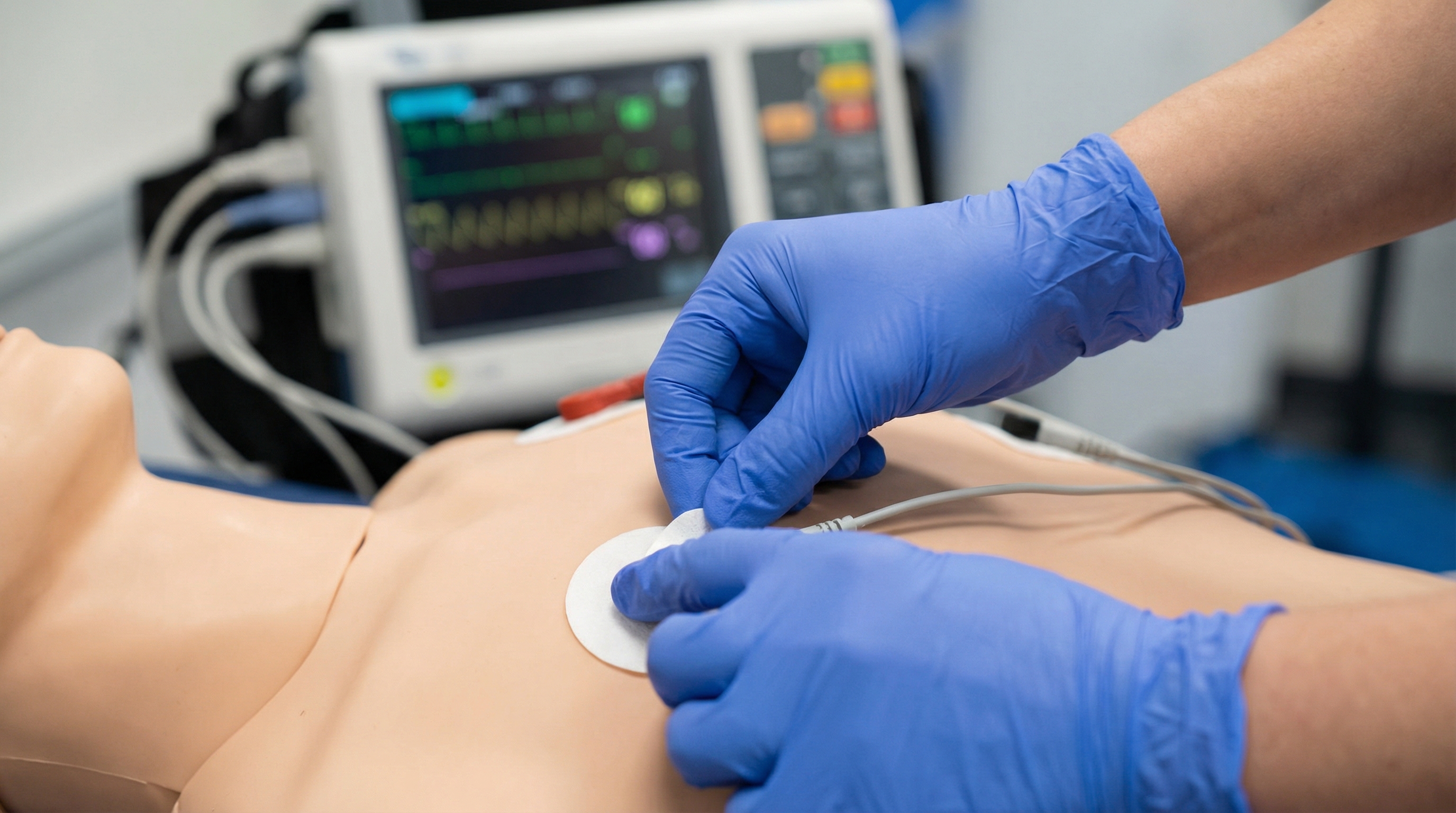
Hyperkalemia is one of the most dangerous and underrecognized electrolyte emergencies in clinical practice. When serum potassium levels rise above normal thresholds, the consequences can be swift and catastrophic — progressing from subtle ECG changes to life-threatening arrhythmias and full cardiac arrest within minutes. For healthcare providers working in emergency medicine, critical care, nephrology, or any high-acuity setting, the ability to recognize and aggressively treat hyperkalemia-induced cardiac arrest is not optional. It is a core competency that saves lives.
Recent data underscore just how serious this condition is. According to a matched case-control study published in PubMed, severe hyperkalemia with a potassium level greater than 6.5 mEq/L is associated with more than double the odds of in-hospital cardiac arrest compared with normal potassium levels. Furthermore, increasing severity of hyperkalemia correlates with significantly decreased rates of return of spontaneous circulation (ROSC), 30-day survival, and 1-year survival. These are sobering statistics that demand a thorough understanding of the condition's pathophysiology, its ECG footprint, and the step-by-step emergency treatment protocol.
This guide walks through everything you need to know — from what causes dangerous potassium elevations, to how the ECG changes in real time, to the precise medications and interventions that can reverse the process before cardiac arrest occurs or restore circulation after it does. Whether you are preparing for ACLS certification or reinforcing your clinical decision-making at the bedside, this is the resource you need.

Understanding who is at risk for hyperkalemia is the first step in prevention and early identification. Potassium homeostasis depends on adequate kidney function, appropriate hormonal regulation (particularly aldosterone), and proper cellular uptake mechanisms. When any of these systems fail, potassium accumulates in the bloodstream.
Chronic kidney disease (CKD) and acute kidney injury (AKI) are the most common underlying causes. Research published in PMC demonstrates that hyperkalemia prevalence climbs from approximately 7% in early CKD to over 50% in stage 5 disease. Dialysis-dependent patients are at particularly elevated risk, especially if they miss a session or consume a high-potassium diet. For providers working in dialysis centers, a thorough familiarity with ACLS protocols specific to renal care settings is essential.
Medications are another major contributor. Angiotensin-converting enzyme (ACE) inhibitors, angiotensin receptor blockers (ARBs), potassium-sparing diuretics (such as spironolactone), and nonsteroidal anti-inflammatory drugs (NSAIDs) all impair renal potassium excretion. Patients on multiple agents from these classes — a common scenario in heart failure and diabetic nephropathy management — face cumulative risk. Beta-blockers can also impair the cellular uptake of potassium by inhibiting the sodium-potassium ATPase pump.
Additional causes include adrenal insufficiency (Addison's disease), severe metabolic acidosis, massive tissue breakdown (rhabdomyolysis, tumor lysis syndrome, extensive burns), and iatrogenic causes such as excessive potassium supplementation or rapid transfusion of stored blood products. Pseudohyperkalemia — caused by hemolysis of red blood cells in the collection tube — should always be considered when a result appears inconsistent with the clinical picture.
The electrocardiogram is the most powerful bedside tool for identifying and staging the severity of hyperkalemia. However, one critical caveat must be understood: serum potassium levels do not always correlate reliably with ECG changes. A patient with a relatively normal ECG can still suffer sudden cardiac arrest from hyperkalemia, particularly when potassium rises acutely. This is why a high index of suspicion in at-risk patients is non-negotiable.
ECG changes in hyperkalemia follow a characteristic progression tied to rising potassium levels. According to Life in the Fast Lane's ECG Library, these changes unfold as potassium climbs through increasingly dangerous thresholds. Familiarity with this progression is foundational to emergency ECG interpretation — a skill that dovetails with broader competencies covered in resources like our comprehensive guide to ECG interpretation in ischemia.
The earliest and most recognizable ECG hallmark of hyperkalemia is the appearance of tall, narrow, symmetrically peaked T waves — often described as tented — most prominent in the precordial leads (V2 through V5). Unlike the broad, asymmetric T waves seen in myocardial ischemia, the hyperkalemic T wave has a narrow base that rises sharply to a point. The QT interval may be shortened at this stage. These changes reflect enhanced repolarization of ventricular myocytes due to increased potassium conductance through cell membranes.
As potassium rises further, the PR interval begins to prolong, reflecting slowed conduction through the atrioventricular node. P waves flatten and may disappear entirely as atrial depolarization becomes disorganized. The QRS complex begins to widen — often presenting as a nonspecific intraventricular conduction delay rather than a classic left or right bundle branch block pattern. QRS widening greater than 120 milliseconds is a danger sign that demands immediate intervention. At this stage, providers should also be alert for bradycardia and junctional escape rhythms, which are discussed in detail in our guide to symptomatic bradycardia causes and treatment.
At critically elevated potassium levels, the QRS complex widens so dramatically that it merges with the T wave, creating the ominous sine wave pattern. This ECG morphology can mimic a wide-complex tachycardia — a distinction that matters clinically. Understanding the myths and facts of wide complex tachycardias helps providers avoid misdiagnosis that could result in inappropriate treatment. The sine wave pattern is a pre-terminal rhythm. Without immediate intervention, it degenerates into ventricular fibrillation, pulseless electrical activity (PEA), or asystole — all requiring full ACLS resuscitation.
When hyperkalemia causes cardiac arrest, the presenting rhythm is most commonly PEA or asystole rather than shockable VF/VT — though VF can occur with the sine wave transition. This means defibrillation alone will not restore perfusion. The underlying electrolyte derangement must be corrected concurrently with standard CPR. This is why hyperkalemia is classified as one of the reversible H causes of cardiac arrest in the ACLS framework — specifically, it falls under the Hs and Ts mnemonic that guides resuscitation decision-making.
To understand this classification more fully and how it applies across all reversible causes, review our overview of the Hs and Ts of sudden cardiac arrest. Recognizing hyperkalemia as a treatable etiology during resuscitation can be the difference between successful ROSC and prolonged unsuccessful efforts.
PEA caused by hyperkalemia warrants particular attention because organized electrical activity may persist on the monitor even as the patient loses perfusing rhythm. For a deeper understanding of PEA arrest management and its many etiologies, see our resource on understanding pulseless electrical activity. Hyperkalemia should be near the top of your differential whenever you encounter a PEA arrest in a dialysis patient, someone with known CKD, or any patient with the risk factors described above.
Emergency treatment of hyperkalemia follows a logical, tiered sequence targeting three physiologic goals: (1) stabilize the cardiac membrane, (2) shift potassium into cells, and (3) eliminate potassium from the body. In cardiac arrest, all steps must be initiated simultaneously while CPR is in progress. Each medication class serves a distinct and complementary role.
The first and most urgent intervention in a patient with dangerous ECG changes or cardiac arrest from hyperkalemia is intravenous calcium. Calcium does not lower serum potassium levels — instead, it directly antagonizes the membrane-depolarizing effects of elevated potassium, raising the threshold for cardiac excitation and buying time for the other interventions to work.
Standard dosing options include 10 mL of 10% calcium gluconate IV (providing approximately 93 mg elemental calcium) or 10 mL of 10% calcium chloride IV (providing approximately 272 mg elemental calcium — three times more concentrated). Calcium chloride is preferred in cardiac arrest due to its faster and more predictable effect, though it requires central or large peripheral venous access due to risk of tissue necrosis with extravasation. Onset of action occurs within 1 to 3 minutes and duration of effect lasts approximately 30 to 60 minutes. Evidence reviewed in PMC confirms calcium's role in rapidly reversing dangerous ECG changes. The dose may be repeated every 5 minutes if ECG changes persist.

Insulin drives potassium from the extracellular space into cells by stimulating the sodium-potassium ATPase pump, rapidly lowering serum potassium by 0.5 to 1.5 mEq/L over 15 to 60 minutes. This is the most reliable and potent transcellular shifting agent available. A 2025 systematic review in Resuscitation journal confirmed that insulin in combination with glucose is the pharmacological intervention with the strongest evidence base for acute hyperkalemia treatment, including in cardiac arrest settings.
Standard dosing: 10 units of regular insulin IV, administered with 25 g of dextrose (50 mL of 50% dextrose) to prevent hypoglycemia in patients who are not already hyperglycemic. Blood glucose should be checked every 30 to 60 minutes for at least 4 to 6 hours after administration, as delayed hypoglycemia is a significant complication. Research has shown that 10 units of insulin achieves comparable potassium lowering to 20 units while carrying a lower hypoglycemia risk — an important consideration given the already fragile physiology of an arresting patient.
In patients with concurrent metabolic acidosis, sodium bicarbonate (50 to 100 mEq IV) can facilitate potassium shift into cells by correcting the acidemia that drives extracellular potassium accumulation. It is most effective when acidosis is documented and is considered an adjunct rather than a primary intervention. Monitoring arterial blood gases helps guide bicarbonate use — a skill detailed in our comprehensive guide to arterial blood gas interpretation. Routine bicarbonate use in all hyperkalemic arrests is not strongly supported by current evidence, so clinical judgment based on documented pH is essential.
Inhaled or nebulized albuterol (10 to 20 mg by nebulizer) acts on beta-2 adrenergic receptors to stimulate cellular potassium uptake, lowering serum potassium by approximately 0.5 to 1.5 mEq/L. It is synergistic with insulin — using both agents together produces greater potassium reduction than either alone. In patients who are intubated or unconscious during resuscitation, albuterol can be delivered via the endotracheal tube. This agent is particularly valuable as an adjunct in patients with concurrent bronchospasm, and its combined use with insulin reflects the layered treatment philosophy that characterizes effective hyperkalemia management.
Stabilizing and shifting interventions only buy time. Definitive treatment requires removing excess potassium from the body. The available options differ significantly in speed and applicability to the acute arrest setting.
When a patient arrests and hyperkalemia is suspected — based on history (dialysis, CKD, medications) or the pre-arrest ECG — the following protocol should run simultaneously with standard ACLS resuscitation. Refer to the adult cardiac arrest circular algorithm as your structural framework, adding these hyperkalemia-specific interventions at every appropriate juncture during the resuscitation cycle.
For a comprehensive reference on ACLS medication dosages during resuscitation — including epinephrine, amiodarone, and adjunct agents — bookmark the ACLS medications cheat sheet covering dosages, routes, and indications. Having this reference at hand during high-acuity situations reinforces confident, protocol-driven care and reduces the cognitive load on team members during resuscitation.
End-stage renal disease patients on hemodialysis represent the highest-risk group for hyperkalemic cardiac arrest. Potassium accumulates rapidly between dialysis sessions, and a missed session — particularly over a holiday weekend — can raise potassium to lethal levels within 48 to 72 hours. These patients often have pre-existing cardiovascular disease, making them especially vulnerable to arrhythmias at even modestly elevated potassium levels. Always check potassium and perform an ECG in any dialysis patient presenting with weakness, palpitations, or altered mental status, and have a low threshold for empiric calcium administration if the ECG is abnormal or the clinical story is consistent with a missed session.
Metabolic acidosis drives potassium out of cells at a rate of approximately 0.6 mEq/L per 0.1-unit decrease in pH. Diabetic ketoacidosis (DKA) is a classic scenario where total body potassium may actually be depleted while serum potassium appears dangerously elevated due to acidosis. In DKA, aggressive insulin and bicarbonate therapy can cause precipitous potassium drops — so close monitoring and proactive replacement are essential once treatment begins. Always interpret potassium results in the full context of arterial blood gas findings, acid-base status, and clinical presentation rather than as an isolated number.
Patients on chronic renin-angiotensin-aldosterone system (RAAS) blockade — particularly those receiving combination therapy with ACE inhibitors, ARBs, and mineralocorticoid receptor antagonists — require periodic potassium monitoring. This is especially important when acute illness, dehydration, or concurrent NSAID use reduces renal perfusion. Medication reconciliation should be a standard component of post-resuscitation care in any hyperkalemic arrest. Identifying the pharmacologic contributor and adjusting therapy appropriately is as important as the immediate emergency intervention.
While this guide focuses on emergency management, it is worth underscoring that most hyperkalemic arrests are preventable. Healthcare providers who understand the risk factors and clinical trajectory of hyperkalemia are positioned not only to treat emergencies when they arise but to prevent them from occurring in the first place. Proactive strategies that should be integrated into routine clinical care include:
The 2025 ACLS guidelines incorporate updated evidence on electrolyte-induced arrest management. Staying informed about these updates is a professional responsibility for every provider who may encounter a hyperkalemic emergency. Review the key changes in ACLS guidelines for 2025 to ensure your practice reflects the most current evidence-based recommendations from ILCOR and the American Heart Association.
Hyperkalemia-induced cardiac arrest is precisely the kind of high-stakes, time-critical scenario that ACLS certification prepares you to manage. The systematic approach to reversible causes — identifying, treating, and eliminating etiologies while maintaining high-quality CPR — is a core ACLS competency that requires both didactic knowledge and confident clinical decision-making under pressure.
Affordable ACLS offers 100% online, self-paced ACLS certification and recertification courses developed by board-certified emergency medicine physicians who manage scenarios like this every day. The curriculum covers cardiac arrest algorithms in depth, including the recognition and management of all reversible causes: hyperkalemia, hypovolemia, hypoxia, tension pneumothorax, cardiac tamponade, and toxicological emergencies. Courses are AHA and ILCOR compliant, and certification is issued immediately upon successful course completion — no waiting, no scheduling delays.
Key features that make Affordable ACLS the right choice for busy healthcare professionals include:
If you work in emergency medicine, critical care, nephrology, dialysis, or any environment where hyperkalemia can occur, ACLS certification through Affordable ACLS ensures you have the knowledge and confidence to act decisively when seconds count. Visit www.affordableacls.com or call or text 866-655-2157 to get started today.
Hyperkalemia-induced cardiac arrest is a medical emergency where clinical knowledge directly translates to patient survival. The pathophysiology is well understood, the ECG findings are recognizable and staged, and the treatment protocol — stabilize the membrane with calcium, shift potassium with insulin and adjuncts, eliminate potassium through dialysis or enhanced excretion — is evidence-based and actionable. What separates providers who achieve ROSC from those who do not is often nothing more than recognizing hyperkalemia as the culprit early and implementing the correct sequence of interventions without hesitation.
Whether you are a nurse, paramedic, physician, or respiratory therapist, understanding hyperkalemia at this depth is a hallmark of expert clinical practice. The condition is common in high-risk populations, its consequences are catastrophic without prompt intervention, and every member of the resuscitation team has a role in recognizing and treating it. Pair this knowledge with current ACLS certification — including up-to-date training on reversible causes of cardiac arrest — and you will be equipped to face this dangerous but treatable condition with the confidence and competence your patients depend on.
.jpg)