ACLS Blogs

Nursing Home Emergency Preparedness: Building ACLS-Ready Response Teams in Long-Term Care

Why ACLS Readiness Is a Life-or-Death Issue in Long-Term Care

When a cardiac emergency strikes inside a nursing home or skilled nursing facility, every second counts. The residents who call these facilities home are among the most medically vulnerable patients in the healthcare system — older adults with complex comorbidities, limited physiological reserve, and a disproportionately high risk of sudden cardiac events. Yet many long-term care settings remain under-prepared for the kind of rapid, coordinated resuscitation response that can mean the difference between life and death.


Advanced Cardiovascular Life Support (ACLS) training has long been the gold standard for managing cardiac arrest, severe arrhythmias, respiratory failure, and other life-threatening emergencies in acute-care hospitals. But there is a growing and well-founded argument that ACLS-level competency — or at minimum a robust, ACLS-informed emergency response framework — belongs in every long-term care facility as well. According to the 2025 American Heart Association Guidelines for CPR and Emergency Cardiovascular Care, improving survival after cardiac arrest requires integrated systems of people, protocols, policies, and resources working in concert. Long-term care facilities are part of that system — and they need to show up fully equipped.
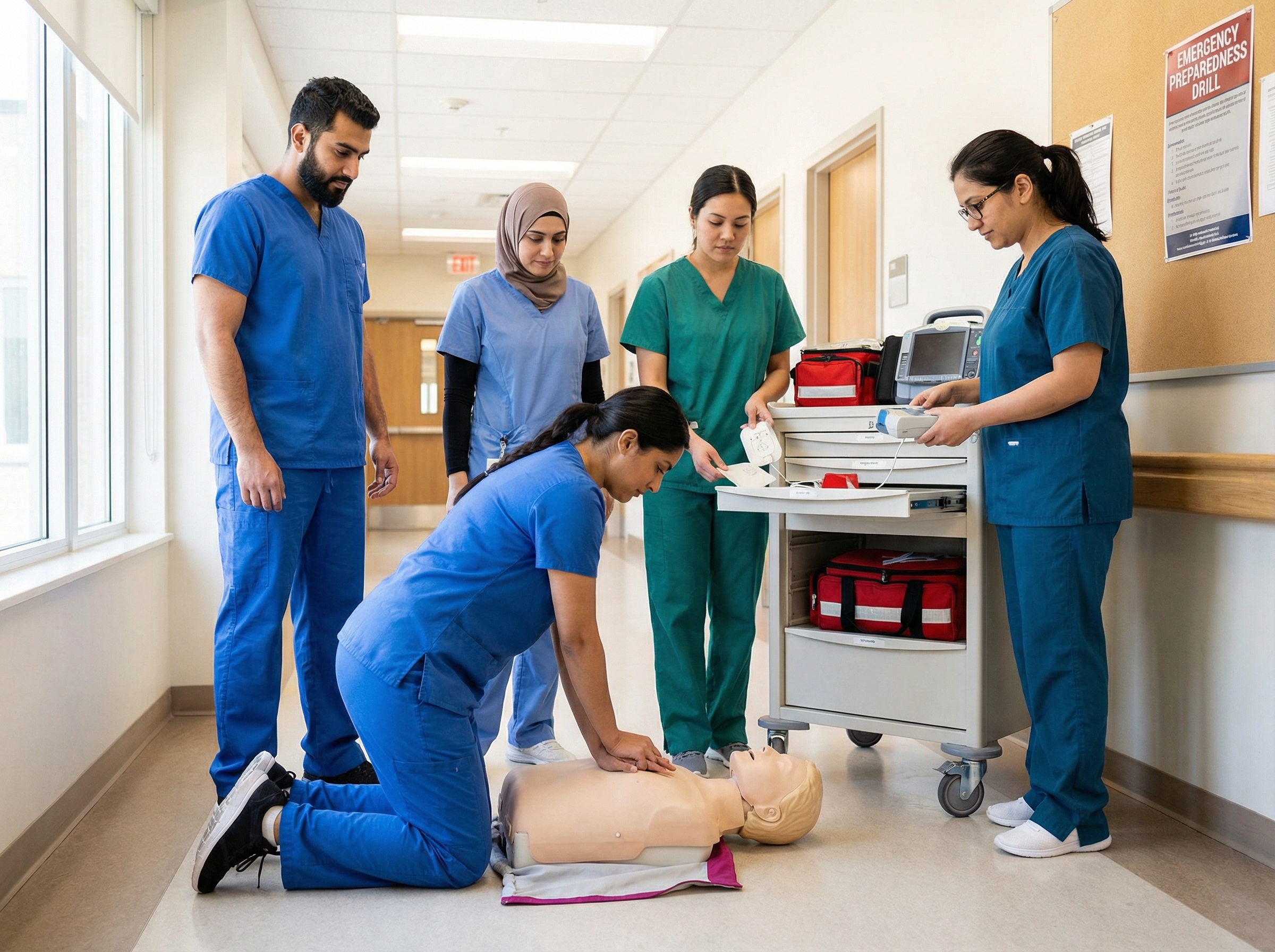
Long-term care nursing staff practicing CPR and emergency response during an ACLS preparedness drill


This guide is written for nursing home directors of nursing, charge nurses, clinical educators, and administrators who want to build — or significantly strengthen — an ACLS-ready emergency response capability within their facility. We will walk through the clinical realities of cardiac emergencies in senior populations, the essential components of an effective response team, how to structure training and drills, and how to leverage affordable online ACLS certification to keep your entire team current without disrupting your staffing model.


The Cardiac Emergency Landscape in Long-Term Care

The resident population in skilled nursing facilities and nursing homes represents one of the highest-risk groups for cardiac arrest and acute cardiovascular events. Cardiovascular disease remains the leading cause of death among older adults in the United States, and the prevalence of conditions like heart failure, atrial fibrillation, coronary artery disease, and hypertension increases sharply with age. When you combine these underlying conditions with sedentary status, polypharmacy, and frequent acute illnesses like pneumonia or sepsis, you have a population where sudden deterioration can occur at any time — on any shift.


Research published in the New England Journal of Medicine on long-term outcomes in elderly survivors of in-hospital cardiac arrest highlights that survival outcomes in older populations depend heavily on the speed and quality of initial resuscitation. The window for effective intervention is narrow. Without immediate high-quality CPR and rapid defibrillation for shockable rhythms, neurologically intact survival is unlikely. This is precisely why the training and readiness of your nursing staff — those who are at the bedside when events occur — cannot be an afterthought.


Understanding the specific cardiac threats your residents face also means recognizing common emergency scenarios: ventricular fibrillation and pulseless ventricular tachycardia, which require immediate defibrillation; pulseless electrical activity (PEA) and asystole, which require high-quality CPR and treatment of reversible causes; severe symptomatic bradycardia; and acute respiratory failure leading to cardiac arrest. ACLS training addresses each of these with evidence-based algorithms that your team needs to know before an event occurs. To deepen your team's understanding of why these skills matter specifically for older adults, the resource Senior Health and ACLS: Understanding and Addressing Cardiac Issues in the Elderly provides essential clinical context.


Building Your ACLS-Ready Emergency Response Team

An effective emergency response team in a long-term care facility is not simply a collection of people with current certifications. It is a coordinated unit with defined roles, practiced skills, clear communication protocols, and the institutional support to function under pressure. Building this team requires deliberate effort at the organizational level — and it starts with leadership commitment.


The foundation of a well-structured long-term care emergency response team mirrors the Nursing Home Incident Command System (NHICS), a management framework endorsed by federal emergency preparedness regulators. Within the clinical response context, your team structure should include clearly assigned roles for every potential emergency scenario:


  • Team Leader / Code Leader: Typically the charge nurse or most senior clinical staff member on shift. Responsible for directing resuscitation, assigning roles, and making real-time clinical decisions based on ACLS algorithms.
  • Chest Compressor(s): Performs high-quality CPR at the correct rate (100-120 compressions per minute) and depth (at least 2 inches), rotating every 2 minutes to maintain quality. BLS and ACLS-trained staff fill this role.
  • Airway Manager: Manages ventilation via bag-mask, ideally an RN or respiratory therapist with airway competency. Coordinates with the team leader on advanced airway decisions.
  • IV/Medication Nurse: Establishes vascular access and administers ACLS medications per algorithm — epinephrine, amiodarone, atropine, and others as indicated.
  • AED / Defibrillator Operator: Retrieves and operates the AED or manual defibrillator, ensures proper pad placement, and delivers shocks for shockable rhythms as directed.
  • Recorder / Timekeeper: Documents all interventions, medications, and times in real time. Provides critical memory support for the team and generates the event record.
  • Family / Environment Liaison: Manages communication with families and ensures the response area remains clear and safe.


Every shift should have pre-assigned personnel for each of these roles, even if the same individual fills multiple roles due to staffing constraints. The key principle is that no one should be improvising role assignments during an active emergency. The importance of ACLS training in enabling confident role-filling cannot be overstated — as explored in The Importance of BLS and ACLS in Senior Living, facilities that invest in systematic certification see measurable improvements in emergency response quality and staff confidence.


Certification Requirements: What Your Team Actually Needs

One of the most practical questions long-term care administrators face is: who on my team needs ACLS certification, who needs BLS, and how do I keep everyone current? The answer requires understanding both regulatory requirements and clinical best practices.


Basic Life Support (BLS) certification is the baseline requirement for all clinical staff who may respond to a cardiac or respiratory emergency. Every nurse, nursing assistant, and respiratory therapist in your facility should hold a current BLS certification. BLS covers the core skills — high-quality CPR, AED use, relief of foreign-body airway obstruction, and basic rescue breathing — that are essential for anyone who might be first on scene.


ACLS certification builds on BLS and is most critical for licensed nurses (RNs and LPNs) who serve in charge or leadership roles, staff who manage IV medications during emergencies, and any clinicians who will function as team leaders or airway managers during codes. Per CMS guidelines for nursing homes, facilities must ensure staff are trained and competent in emergency procedures — and ACLS provides the structured framework that makes that competency demonstrable and defensible during survey.


The good news for long-term care facilities managing tight training budgets is that online ACLS certification has made it significantly more affordable and accessible to certify your entire clinical team. At Affordable ACLS's group certification solutions, facilities can certify multiple staff members simultaneously at highly competitive rates — ACLS at $99 (or $89 for recertification), BLS at $59 (or $49 for recertification) — with the convenience of 100% online, self-paced learning that staff can complete on their own schedules without requiring shift coverage for training days.


Designing Your Facility's Emergency Training Program

Certification is necessary but not sufficient. A card that says ACLS Certified does not automatically translate into confident, coordinated team performance during a real-life code. That performance is built through deliberate, recurring practice in your actual facility environment. Your training program needs to address both individual competency and team-based execution.


Individual Skills Maintenance: Beyond initial and renewal certification, each team member should regularly practice the specific skills they will perform during an emergency. For chest compressors, this means hands-on CPR practice with feedback on rate, depth, and recoil. For medication nurses, this means familiarity with ACLS drug protocols — doses, routes, and timing. Self-paced online resources from Affordable ACLS offer detailed clinical content on ACLS medications, dosages, routes, and indications that staff can review on their own time.


Mock Code Drills: Simulated code scenarios conducted in your actual facility are one of the most powerful tools for building team performance. Mock codes expose gaps in equipment location knowledge, role clarity, communication patterns, and algorithmic decision-making in a low-stakes environment. A well-designed mock code program should include unannounced drills on all shifts, structured debriefs using a standardized format, and tracking of performance metrics over time. The comprehensive guide at How to Build an Effective Mock Code Program provides actionable frameworks for implementing this in your facility.
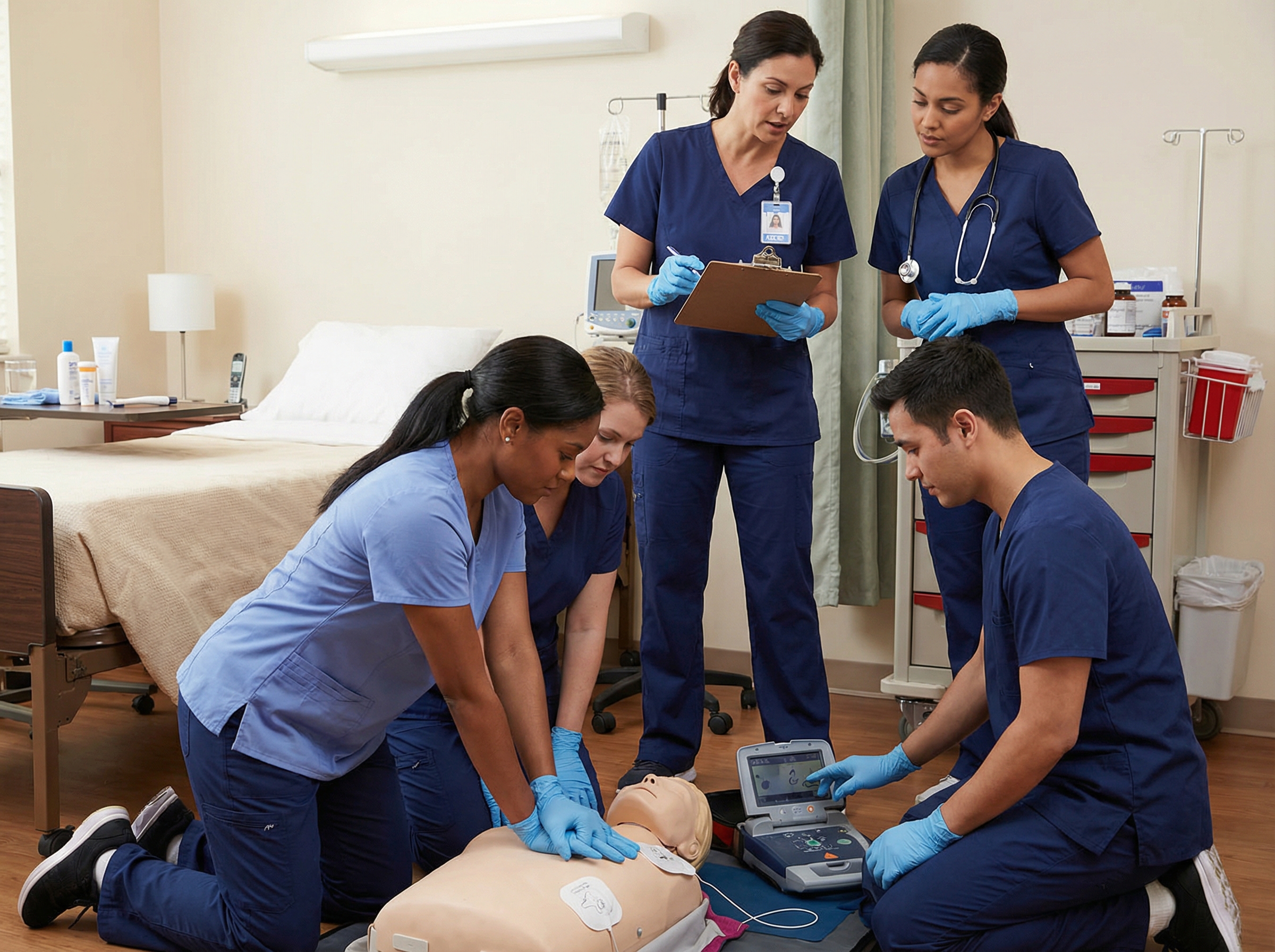
Nursing home emergency response team conducting a mock code drill with team leader directing CPR and AED use


Regulatory Compliance: CMS Emergency Preparedness regulations require long-term care facilities to test their emergency plan at least twice per year, with at least one exercise being a full-scale or community-based drill. According to the ASPR TRACIE CMS Emergency Preparedness Final Rule for Long-Term Care, your cardiac emergency protocols and training programs should be documented, reviewed annually, and integrated into your broader emergency preparedness plan. Regular training not only improves outcomes — it is a demonstrable compliance requirement that surveyors will assess.


Equipment Readiness: The Hardware Side of Emergency Preparedness

No amount of training compensates for equipment that is not immediately accessible, properly maintained, or unfamiliar to staff. Your ACLS-ready response capability depends on having the right equipment in the right places — and making sure every team member knows exactly where it is and how to use it.


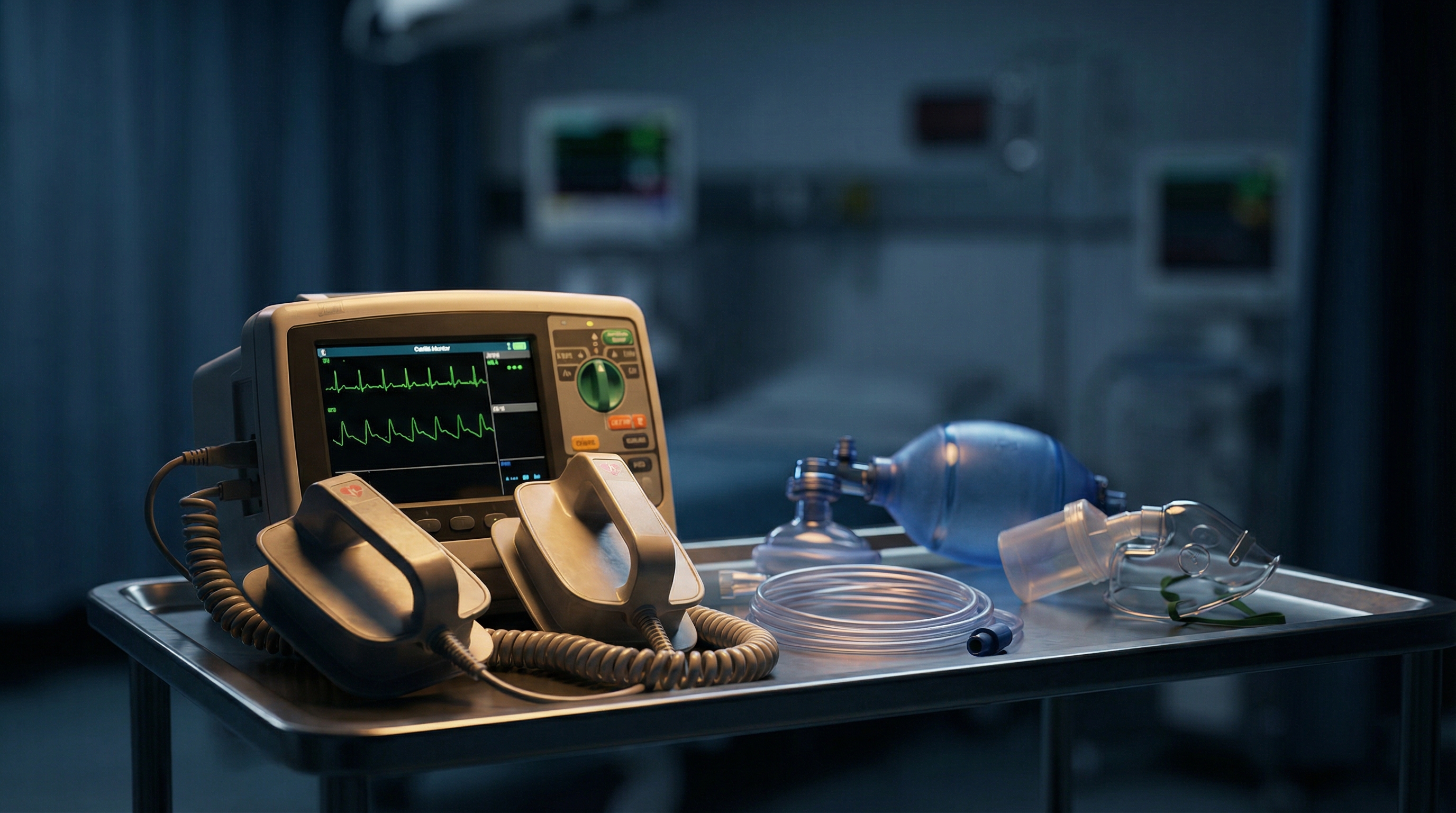
At minimum, every nursing home floor or unit should have immediate access to an Automated External Defibrillator (AED) or manual defibrillator. AEDs are now the standard of care for any setting where cardiac arrest may occur. They are designed to be used by individuals with basic training, walk the user through the process with audio and visual prompts, and can analyze cardiac rhythm to determine whether a shock is indicated. For a comprehensive overview of how these devices work and why every healthcare setting needs them, see AEDs: The Lifesavers You Need to Know About.


Beyond the defibrillator, your emergency equipment inventory should include a crash cart or emergency medication kit stocked with ACLS medications, IV supplies and access equipment, airway management supplies (bag-mask devices in appropriate sizes, oral and nasal airways, suction equipment), a cardiac monitor or 12-lead ECG capability if available, and oxygen delivery equipment. Equipment must be checked on a defined schedule — daily checks of AED readiness and crash cart seal integrity are standard practice in well-run facilities. Checklists should be documented and available for survey review.


Communication Protocols During a Cardiac Emergency

Effective communication is what separates a coordinated team response from a chaotic one. During a cardiac arrest, the team leader must maintain situational awareness, direct team members clearly, and make rapid clinical decisions — all while managing a high-stress environment. ACLS training explicitly addresses closed-loop communication, a technique where directives are confirmed by the receiving team member to ensure accurate understanding and execution.


Your facility's emergency communication plan should include a clear internal alert system — a dedicated overhead announcement, specific call light signal, or facility intercom protocol — that immediately mobilizes the response team without ambiguity. Staff should know exactly what the alert means and what their role requires them to do the moment they hear it. Bystander staff who are not assigned response roles should know to stay clear of the response area and avoid creating obstacles.


External communication with EMS is equally critical. Your facility should have a current transfer agreement with a local hospital emergency department and a clear protocol for when to activate EMS. Staff should be prepared to give EMS responders a concise, organized handoff using SBAR (Situation, Background, Assessment, Recommendation) communication — a skill that ACLS training reinforces. Early activation of EMS, concurrent with in-house resuscitation efforts, is standard practice for out-of-hospital cardiac arrest scenarios occurring within nursing facilities.


Navigating Goals of Care and Resuscitation Preferences

Long-term care settings introduce a clinical and ethical dimension that is less common in acute-care hospitals: a significant proportion of residents have documented Do Not Resuscitate (DNR) or Do Not Attempt Resuscitation (DNAR) orders, or have advance directives specifying their wishes regarding resuscitation. ACLS-ready teams must be equipped to act on these preferences quickly and accurately — both to honor resident autonomy and to avoid the trauma of unwanted resuscitation attempts.


Every team member should know exactly how to access each resident's advance directive or code status designation — and this information must be immediately accessible, not buried in a paper chart that requires time to locate during an emergency. Best practice is to have code status clearly flagged in the medical record, in the care plan, and in a standardized location at the bedside or nursing station. A resident's code status should be reviewed at every significant change in condition and at regular intervals per facility policy.


When a resident is a full code, your team's ACLS training and emergency response protocols apply in full. When a resident has a DNR or comfort-focused care directive, the appropriate response is comfort measures — positioning, oxygen for comfort, emotional support for the resident and family — not resuscitation. Training your team to navigate this distinction quickly and confidently, under pressure, is an essential component of your overall emergency preparedness program.


Leveraging Online ACLS Certification for Long-Term Care Teams

One of the most persistent barriers to ACLS readiness in long-term care is the logistical challenge of getting busy clinical staff through certification and recertification on a two-year cycle without disrupting operations. Traditional in-person ACLS courses require half-day or full-day time commitments, scheduling coordination across multiple staff members, and often involve travel to an off-site training center. For nursing homes operating with lean staffing models, this is a significant operational burden.


Online ACLS certification through Affordable ACLS eliminates these barriers entirely. Courses are 100% self-paced, meaning staff can complete their certification in segments that fit around shift schedules — an hour before work, during a lunch break, or at home on a day off. There are no fixed class times, no travel, and no scheduling coordination required. The curriculum is developed by Board Certified Emergency Medicine physicians with over 20 years of clinical experience, and the content is fully compliant with 2025 AHA and ILCOR guidelines. Certification is immediate upon successful completion, with a digital card available for download right away.


For facilities certifying multiple staff members at once, the group certification model used by similar healthcare facilities demonstrates how significant cost and time savings are achievable. ACLS certification is priced at $99 per individual (or $89 for recertification), with bundle options available — ACLS and BLS together for $123, or ACLS, BLS, and PALS combined for $227. Unlimited retakes and a money-back guarantee mean there is no financial risk for staff who need additional review before passing their exam.


Additionally, because many long-term care facilities also serve short-stay rehabilitation patients who may include younger adults across various settings, it is worth noting that the parallel challenges faced by home health organizations in maintaining certification across a distributed workforce offer instructive lessons for long-term care settings managing similar logistics.


Building a Culture of Preparedness

Technical skills and equipment matter enormously — but the most resilient emergency response programs are built on a culture where preparedness is a shared value, not just a compliance checkbox. In long-term care settings, this means leadership modeling active engagement with training, celebrating staff who demonstrate clinical readiness, and creating psychological safety for team members to ask questions, acknowledge gaps, and practice without fear of judgment.


According to the AHA 2025 guidelines on systems of care, the integration of ongoing data acquisition and review into emergency response programs is a key driver of survival improvement. For long-term care facilities, this means conducting structured debriefs after every cardiac event — not just mock codes — and tracking response times, intervention quality, and outcomes over time. Use this data to identify gaps, celebrate improvements, and drive ongoing program development.


Post-event debriefs should be blame-free and focused on system performance rather than individual fault. They are learning opportunities, not disciplinary proceedings. When staff understand that debriefs are a tool for improving performance — not a process for assigning blame — they engage more honestly and the team improves more rapidly. Recognition also matters: staff who maintain their certifications, perform well in mock codes, or respond effectively in real emergencies deserve acknowledgment at the team and leadership level.


Getting Started: A Practical Action Plan for Long-Term Care Leaders

If you are starting from scratch — or rebuilding a program that has grown stale — here is a practical sequence for getting your facility to ACLS-ready status:


  • Audit current certification status. Generate a list of all clinical staff, their current certifications, and expiration dates. Identify gaps by role and shift coverage.
  • Define your certification matrix. Determine which roles require ACLS versus BLS, based on clinical responsibilities and your facility's emergency response plan structure.
  • Enroll lapsed or uncertified staff. Use online group certification to bring all targeted staff current efficiently. Affordable ACLS's self-paced format makes this achievable without pulling multiple staff off the floor simultaneously.
  • Assign and document response team roles. Create a shift-by-shift role assignment document for all emergency response positions. Update it whenever staffing changes occur.
  • Conduct an equipment audit. Inventory all emergency equipment by location and condition. Establish documented check schedules and assign clear accountability for each unit.
  • Schedule your first mock code. Conduct an unannounced mock code within 30 days. Debrief the team immediately afterward and document findings for quality improvement.
  • Review and document code status for all residents. Ensure advance directives are current, immediately accessible, and understood by all staff on all shifts.
  • Set a recurring training calendar. Schedule mock codes, skills reviews, and certification renewals at least 6 months in advance to prevent certification lapses.


The goal is not perfection on day one — it is forward momentum toward a measurably more prepared facility. Each of these steps builds on the previous one, and each one moves your team closer to the standard of care that your residents deserve and that regulators expect.


The Standard of Care Your Residents Deserve

Cardiac emergencies do not schedule themselves. They happen on the night shift, on weekends, in the dining room, in the hallway — wherever and whenever your residents are. The only preparation that matters is the preparation that happens before the event. Building an ACLS-ready emergency response team in your long-term care facility is one of the most meaningful investments in resident safety you can make — and with the accessibility of online certification, it has never been more achievable.


At Affordable ACLS, we have built our entire platform around the needs of working healthcare professionals who need high-quality, flexible certification that fits their lives. Whether you are certifying one charge nurse or your entire clinical team, our ER physician-developed courses give your staff the knowledge and confidence to respond when it matters most. ACLS certification starts at just $99, with immediate digital certification upon completion, unlimited retakes, and a money-back guarantee.


Your residents placed their trust in your facility. Give your team the tools to honor that trust — starting with the training that makes them ready for anything. Questions about group certification options? Contact our team at 866-655-2157 or support@affordableacls.com.


ACLS Blogs

Nursing Home Emergency Preparedness: Building ACLS-Ready Response Teams in Long-Term Care

Why ACLS Readiness Is a Life-or-Death Issue in Long-Term Care

When a cardiac emergency strikes inside a nursing home or skilled nursing facility, every second counts. The residents who call these facilities home are among the most medically vulnerable patients in the healthcare system — older adults with complex comorbidities, limited physiological reserve, and a disproportionately high risk of sudden cardiac events. Yet many long-term care settings remain under-prepared for the kind of rapid, coordinated resuscitation response that can mean the difference between life and death.


Advanced Cardiovascular Life Support (ACLS) training has long been the gold standard for managing cardiac arrest, severe arrhythmias, respiratory failure, and other life-threatening emergencies in acute-care hospitals. But there is a growing and well-founded argument that ACLS-level competency — or at minimum a robust, ACLS-informed emergency response framework — belongs in every long-term care facility as well. According to the 2025 American Heart Association Guidelines for CPR and Emergency Cardiovascular Care, improving survival after cardiac arrest requires integrated systems of people, protocols, policies, and resources working in concert. Long-term care facilities are part of that system — and they need to show up fully equipped.

Long-term care nursing staff practicing CPR and emergency response during an ACLS preparedness drill


This guide is written for nursing home directors of nursing, charge nurses, clinical educators, and administrators who want to build — or significantly strengthen — an ACLS-ready emergency response capability within their facility. We will walk through the clinical realities of cardiac emergencies in senior populations, the essential components of an effective response team, how to structure training and drills, and how to leverage affordable online ACLS certification to keep your entire team current without disrupting your staffing model.


The Cardiac Emergency Landscape in Long-Term Care

The resident population in skilled nursing facilities and nursing homes represents one of the highest-risk groups for cardiac arrest and acute cardiovascular events. Cardiovascular disease remains the leading cause of death among older adults in the United States, and the prevalence of conditions like heart failure, atrial fibrillation, coronary artery disease, and hypertension increases sharply with age. When you combine these underlying conditions with sedentary status, polypharmacy, and frequent acute illnesses like pneumonia or sepsis, you have a population where sudden deterioration can occur at any time — on any shift.


Research published in the New England Journal of Medicine on long-term outcomes in elderly survivors of in-hospital cardiac arrest highlights that survival outcomes in older populations depend heavily on the speed and quality of initial resuscitation. The window for effective intervention is narrow. Without immediate high-quality CPR and rapid defibrillation for shockable rhythms, neurologically intact survival is unlikely. This is precisely why the training and readiness of your nursing staff — those who are at the bedside when events occur — cannot be an afterthought.


Understanding the specific cardiac threats your residents face also means recognizing common emergency scenarios: ventricular fibrillation and pulseless ventricular tachycardia, which require immediate defibrillation; pulseless electrical activity (PEA) and asystole, which require high-quality CPR and treatment of reversible causes; severe symptomatic bradycardia; and acute respiratory failure leading to cardiac arrest. ACLS training addresses each of these with evidence-based algorithms that your team needs to know before an event occurs. To deepen your team's understanding of why these skills matter specifically for older adults, the resource Senior Health and ACLS: Understanding and Addressing Cardiac Issues in the Elderly provides essential clinical context.


Building Your ACLS-Ready Emergency Response Team

An effective emergency response team in a long-term care facility is not simply a collection of people with current certifications. It is a coordinated unit with defined roles, practiced skills, clear communication protocols, and the institutional support to function under pressure. Building this team requires deliberate effort at the organizational level — and it starts with leadership commitment.


The foundation of a well-structured long-term care emergency response team mirrors the Nursing Home Incident Command System (NHICS), a management framework endorsed by federal emergency preparedness regulators. Within the clinical response context, your team structure should include clearly assigned roles for every potential emergency scenario:


  • Team Leader / Code Leader: Typically the charge nurse or most senior clinical staff member on shift. Responsible for directing resuscitation, assigning roles, and making real-time clinical decisions based on ACLS algorithms.
  • Chest Compressor(s): Performs high-quality CPR at the correct rate (100-120 compressions per minute) and depth (at least 2 inches), rotating every 2 minutes to maintain quality. BLS and ACLS-trained staff fill this role.
  • Airway Manager: Manages ventilation via bag-mask, ideally an RN or respiratory therapist with airway competency. Coordinates with the team leader on advanced airway decisions.
  • IV/Medication Nurse: Establishes vascular access and administers ACLS medications per algorithm — epinephrine, amiodarone, atropine, and others as indicated.
  • AED / Defibrillator Operator: Retrieves and operates the AED or manual defibrillator, ensures proper pad placement, and delivers shocks for shockable rhythms as directed.
  • Recorder / Timekeeper: Documents all interventions, medications, and times in real time. Provides critical memory support for the team and generates the event record.
  • Family / Environment Liaison: Manages communication with families and ensures the response area remains clear and safe.


Every shift should have pre-assigned personnel for each of these roles, even if the same individual fills multiple roles due to staffing constraints. The key principle is that no one should be improvising role assignments during an active emergency. The importance of ACLS training in enabling confident role-filling cannot be overstated — as explored in The Importance of BLS and ACLS in Senior Living, facilities that invest in systematic certification see measurable improvements in emergency response quality and staff confidence.


Certification Requirements: What Your Team Actually Needs

One of the most practical questions long-term care administrators face is: who on my team needs ACLS certification, who needs BLS, and how do I keep everyone current? The answer requires understanding both regulatory requirements and clinical best practices.


Basic Life Support (BLS) certification is the baseline requirement for all clinical staff who may respond to a cardiac or respiratory emergency. Every nurse, nursing assistant, and respiratory therapist in your facility should hold a current BLS certification. BLS covers the core skills — high-quality CPR, AED use, relief of foreign-body airway obstruction, and basic rescue breathing — that are essential for anyone who might be first on scene.


ACLS certification builds on BLS and is most critical for licensed nurses (RNs and LPNs) who serve in charge or leadership roles, staff who manage IV medications during emergencies, and any clinicians who will function as team leaders or airway managers during codes. Per CMS guidelines for nursing homes, facilities must ensure staff are trained and competent in emergency procedures — and ACLS provides the structured framework that makes that competency demonstrable and defensible during survey.


The good news for long-term care facilities managing tight training budgets is that online ACLS certification has made it significantly more affordable and accessible to certify your entire clinical team. At Affordable ACLS's group certification solutions, facilities can certify multiple staff members simultaneously at highly competitive rates — ACLS at $99 (or $89 for recertification), BLS at $59 (or $49 for recertification) — with the convenience of 100% online, self-paced learning that staff can complete on their own schedules without requiring shift coverage for training days.


Designing Your Facility's Emergency Training Program

Certification is necessary but not sufficient. A card that says ACLS Certified does not automatically translate into confident, coordinated team performance during a real-life code. That performance is built through deliberate, recurring practice in your actual facility environment. Your training program needs to address both individual competency and team-based execution.


Individual Skills Maintenance: Beyond initial and renewal certification, each team member should regularly practice the specific skills they will perform during an emergency. For chest compressors, this means hands-on CPR practice with feedback on rate, depth, and recoil. For medication nurses, this means familiarity with ACLS drug protocols — doses, routes, and timing. Self-paced online resources from Affordable ACLS offer detailed clinical content on ACLS medications, dosages, routes, and indications that staff can review on their own time.


Mock Code Drills: Simulated code scenarios conducted in your actual facility are one of the most powerful tools for building team performance. Mock codes expose gaps in equipment location knowledge, role clarity, communication patterns, and algorithmic decision-making in a low-stakes environment. A well-designed mock code program should include unannounced drills on all shifts, structured debriefs using a standardized format, and tracking of performance metrics over time. The comprehensive guide at How to Build an Effective Mock Code Program provides actionable frameworks for implementing this in your facility.

Nursing home emergency response team conducting a mock code drill with team leader directing CPR and AED use


Regulatory Compliance: CMS Emergency Preparedness regulations require long-term care facilities to test their emergency plan at least twice per year, with at least one exercise being a full-scale or community-based drill. According to the ASPR TRACIE CMS Emergency Preparedness Final Rule for Long-Term Care, your cardiac emergency protocols and training programs should be documented, reviewed annually, and integrated into your broader emergency preparedness plan. Regular training not only improves outcomes — it is a demonstrable compliance requirement that surveyors will assess.


Equipment Readiness: The Hardware Side of Emergency Preparedness

No amount of training compensates for equipment that is not immediately accessible, properly maintained, or unfamiliar to staff. Your ACLS-ready response capability depends on having the right equipment in the right places — and making sure every team member knows exactly where it is and how to use it.


At minimum, every nursing home floor or unit should have immediate access to an Automated External Defibrillator (AED) or manual defibrillator. AEDs are now the standard of care for any setting where cardiac arrest may occur. They are designed to be used by individuals with basic training, walk the user through the process with audio and visual prompts, and can analyze cardiac rhythm to determine whether a shock is indicated. For a comprehensive overview of how these devices work and why every healthcare setting needs them, see AEDs: The Lifesavers You Need to Know About.


Beyond the defibrillator, your emergency equipment inventory should include a crash cart or emergency medication kit stocked with ACLS medications, IV supplies and access equipment, airway management supplies (bag-mask devices in appropriate sizes, oral and nasal airways, suction equipment), a cardiac monitor or 12-lead ECG capability if available, and oxygen delivery equipment. Equipment must be checked on a defined schedule — daily checks of AED readiness and crash cart seal integrity are standard practice in well-run facilities. Checklists should be documented and available for survey review.


Communication Protocols During a Cardiac Emergency

Effective communication is what separates a coordinated team response from a chaotic one. During a cardiac arrest, the team leader must maintain situational awareness, direct team members clearly, and make rapid clinical decisions — all while managing a high-stress environment. ACLS training explicitly addresses closed-loop communication, a technique where directives are confirmed by the receiving team member to ensure accurate understanding and execution.


Your facility's emergency communication plan should include a clear internal alert system — a dedicated overhead announcement, specific call light signal, or facility intercom protocol — that immediately mobilizes the response team without ambiguity. Staff should know exactly what the alert means and what their role requires them to do the moment they hear it. Bystander staff who are not assigned response roles should know to stay clear of the response area and avoid creating obstacles.


External communication with EMS is equally critical. Your facility should have a current transfer agreement with a local hospital emergency department and a clear protocol for when to activate EMS. Staff should be prepared to give EMS responders a concise, organized handoff using SBAR (Situation, Background, Assessment, Recommendation) communication — a skill that ACLS training reinforces. Early activation of EMS, concurrent with in-house resuscitation efforts, is standard practice for out-of-hospital cardiac arrest scenarios occurring within nursing facilities.


Navigating Goals of Care and Resuscitation Preferences

Long-term care settings introduce a clinical and ethical dimension that is less common in acute-care hospitals: a significant proportion of residents have documented Do Not Resuscitate (DNR) or Do Not Attempt Resuscitation (DNAR) orders, or have advance directives specifying their wishes regarding resuscitation. ACLS-ready teams must be equipped to act on these preferences quickly and accurately — both to honor resident autonomy and to avoid the trauma of unwanted resuscitation attempts.


Every team member should know exactly how to access each resident's advance directive or code status designation — and this information must be immediately accessible, not buried in a paper chart that requires time to locate during an emergency. Best practice is to have code status clearly flagged in the medical record, in the care plan, and in a standardized location at the bedside or nursing station. A resident's code status should be reviewed at every significant change in condition and at regular intervals per facility policy.


When a resident is a full code, your team's ACLS training and emergency response protocols apply in full. When a resident has a DNR or comfort-focused care directive, the appropriate response is comfort measures — positioning, oxygen for comfort, emotional support for the resident and family — not resuscitation. Training your team to navigate this distinction quickly and confidently, under pressure, is an essential component of your overall emergency preparedness program.


Leveraging Online ACLS Certification for Long-Term Care Teams

One of the most persistent barriers to ACLS readiness in long-term care is the logistical challenge of getting busy clinical staff through certification and recertification on a two-year cycle without disrupting operations. Traditional in-person ACLS courses require half-day or full-day time commitments, scheduling coordination across multiple staff members, and often involve travel to an off-site training center. For nursing homes operating with lean staffing models, this is a significant operational burden.


Online ACLS certification through Affordable ACLS eliminates these barriers entirely. Courses are 100% self-paced, meaning staff can complete their certification in segments that fit around shift schedules — an hour before work, during a lunch break, or at home on a day off. There are no fixed class times, no travel, and no scheduling coordination required. The curriculum is developed by Board Certified Emergency Medicine physicians with over 20 years of clinical experience, and the content is fully compliant with 2025 AHA and ILCOR guidelines. Certification is immediate upon successful completion, with a digital card available for download right away.


For facilities certifying multiple staff members at once, the group certification model used by similar healthcare facilities demonstrates how significant cost and time savings are achievable. ACLS certification is priced at $99 per individual (or $89 for recertification), with bundle options available — ACLS and BLS together for $123, or ACLS, BLS, and PALS combined for $227. Unlimited retakes and a money-back guarantee mean there is no financial risk for staff who need additional review before passing their exam.


Additionally, because many long-term care facilities also serve short-stay rehabilitation patients who may include younger adults across various settings, it is worth noting that the parallel challenges faced by home health organizations in maintaining certification across a distributed workforce offer instructive lessons for long-term care settings managing similar logistics.


Building a Culture of Preparedness

Technical skills and equipment matter enormously — but the most resilient emergency response programs are built on a culture where preparedness is a shared value, not just a compliance checkbox. In long-term care settings, this means leadership modeling active engagement with training, celebrating staff who demonstrate clinical readiness, and creating psychological safety for team members to ask questions, acknowledge gaps, and practice without fear of judgment.


According to the AHA 2025 guidelines on systems of care, the integration of ongoing data acquisition and review into emergency response programs is a key driver of survival improvement. For long-term care facilities, this means conducting structured debriefs after every cardiac event — not just mock codes — and tracking response times, intervention quality, and outcomes over time. Use this data to identify gaps, celebrate improvements, and drive ongoing program development.


Post-event debriefs should be blame-free and focused on system performance rather than individual fault. They are learning opportunities, not disciplinary proceedings. When staff understand that debriefs are a tool for improving performance — not a process for assigning blame — they engage more honestly and the team improves more rapidly. Recognition also matters: staff who maintain their certifications, perform well in mock codes, or respond effectively in real emergencies deserve acknowledgment at the team and leadership level.


Getting Started: A Practical Action Plan for Long-Term Care Leaders

If you are starting from scratch — or rebuilding a program that has grown stale — here is a practical sequence for getting your facility to ACLS-ready status:


  • Audit current certification status. Generate a list of all clinical staff, their current certifications, and expiration dates. Identify gaps by role and shift coverage.
  • Define your certification matrix. Determine which roles require ACLS versus BLS, based on clinical responsibilities and your facility's emergency response plan structure.
  • Enroll lapsed or uncertified staff. Use online group certification to bring all targeted staff current efficiently. Affordable ACLS's self-paced format makes this achievable without pulling multiple staff off the floor simultaneously.
  • Assign and document response team roles. Create a shift-by-shift role assignment document for all emergency response positions. Update it whenever staffing changes occur.
  • Conduct an equipment audit. Inventory all emergency equipment by location and condition. Establish documented check schedules and assign clear accountability for each unit.
  • Schedule your first mock code. Conduct an unannounced mock code within 30 days. Debrief the team immediately afterward and document findings for quality improvement.
  • Review and document code status for all residents. Ensure advance directives are current, immediately accessible, and understood by all staff on all shifts.
  • Set a recurring training calendar. Schedule mock codes, skills reviews, and certification renewals at least 6 months in advance to prevent certification lapses.


The goal is not perfection on day one — it is forward momentum toward a measurably more prepared facility. Each of these steps builds on the previous one, and each one moves your team closer to the standard of care that your residents deserve and that regulators expect.


The Standard of Care Your Residents Deserve

Cardiac emergencies do not schedule themselves. They happen on the night shift, on weekends, in the dining room, in the hallway — wherever and whenever your residents are. The only preparation that matters is the preparation that happens before the event. Building an ACLS-ready emergency response team in your long-term care facility is one of the most meaningful investments in resident safety you can make — and with the accessibility of online certification, it has never been more achievable.


At Affordable ACLS, we have built our entire platform around the needs of working healthcare professionals who need high-quality, flexible certification that fits their lives. Whether you are certifying one charge nurse or your entire clinical team, our ER physician-developed courses give your staff the knowledge and confidence to respond when it matters most. ACLS certification starts at just $99, with immediate digital certification upon completion, unlimited retakes, and a money-back guarantee.


Your residents placed their trust in your facility. Give your team the tools to honor that trust — starting with the training that makes them ready for anything. Questions about group certification options? Contact our team at 866-655-2157 or support@affordableacls.com.


blogs

More articles for you

all articles

Start Today!

Get certified at your own pace, on your schedule, from the comfort of your home.