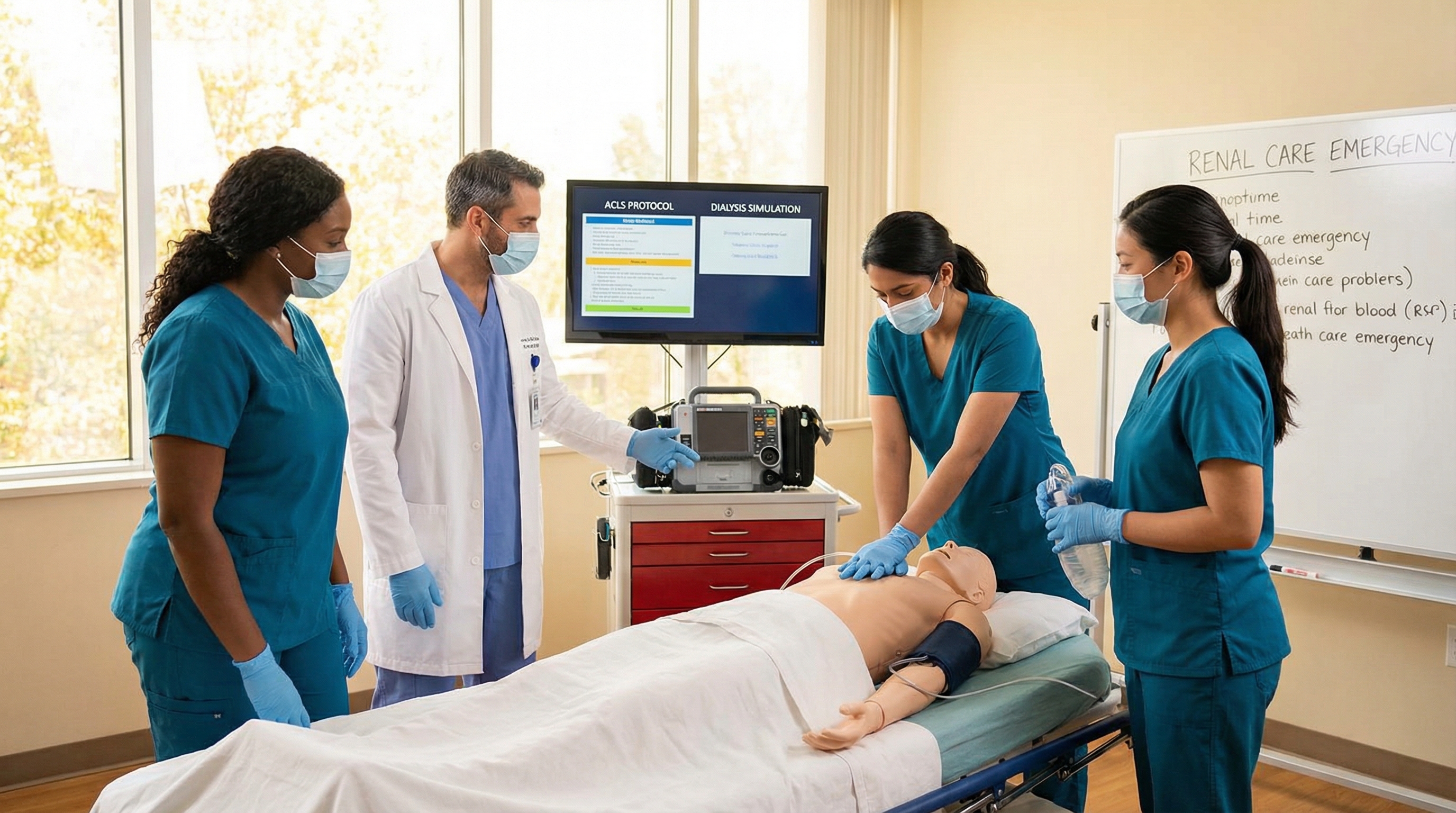
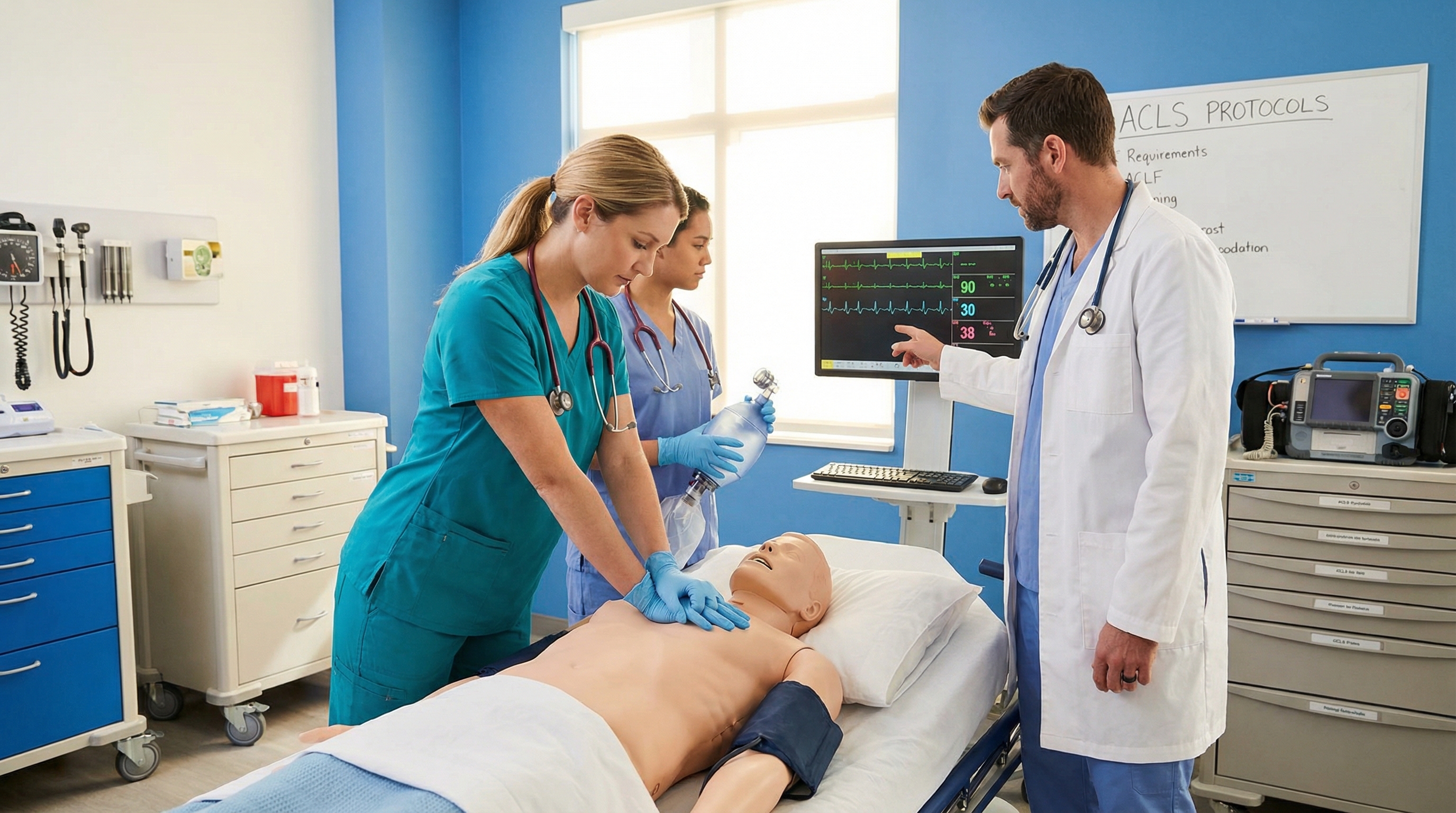
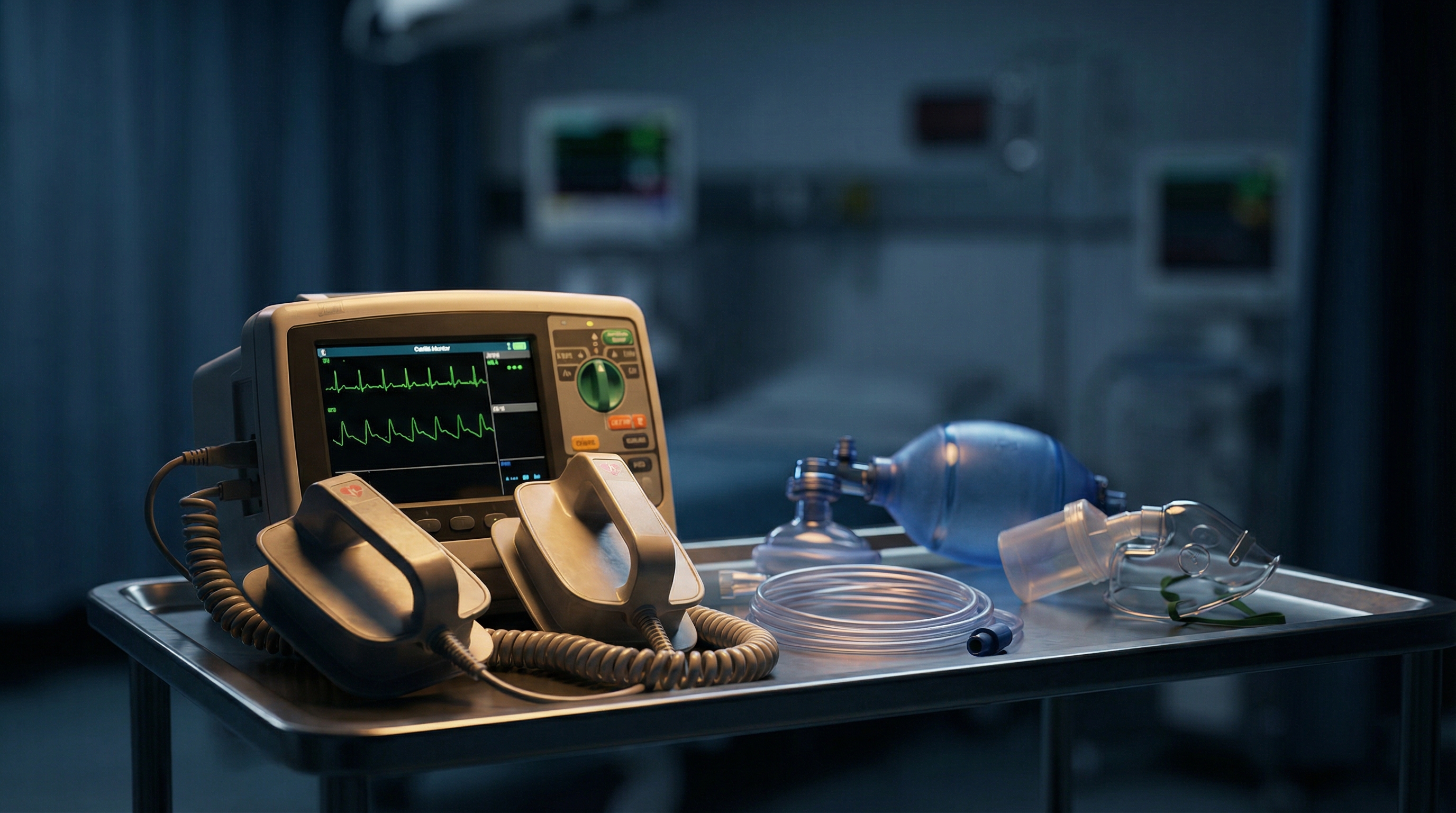
Dialysis centers face unique emergency challenges that set them apart from other outpatient healthcare facilities. Patients undergoing hemodialysis experience profound physiological changes during treatment—rapid fluid shifts, electrolyte fluctuations, and cardiovascular stress—all while connected to machines that access their circulatory system. According to NKF KDOQI Guidelines, cardiac arrest occurs frequently enough in dialysis centers that all units should have on-site defibrillator capability and staff trained in emergency response protocols.
For nurses, patient care technicians, and other healthcare professionals working in renal care settings, Advanced Cardiovascular Life Support (ACLS) certification provides the essential knowledge and skills needed to manage life-threatening emergencies. Research from Seattle and King County analyzing emergency medical services data found that among 47 cardiac arrests occurring in dialysis centers, 62 percent presented with ventricular fibrillation or ventricular tachycardia, and overall survival to hospital discharge reached 30 percent—demonstrating that prompt, skilled intervention can save lives in this vulnerable population.

This comprehensive guide explores the specific ACLS protocols and considerations that dialysis center staff need to master. Whether you're a registered nurse supervising a dialysis unit, a patient care technician monitoring treatments, or a physician medical director developing emergency protocols, understanding how to adapt ACLS guidelines to the unique renal care environment can mean the difference between life and death for your patients.
Dialysis patients face a constellation of risk factors that make cardiac emergencies both more likely and more complex to manage than in general patient populations. The chronic uremic state, fluid overload, electrolyte imbalances, and underlying cardiovascular disease create a perfect storm of vulnerability. Staff working in dialysis centers must recognize these unique physiological challenges and understand how they influence emergency response strategies.
Hyperkalemia stands out as the most dangerous electrolyte disturbance in dialysis patients and a leading cause of sudden cardiac arrest in this population. Because the kidneys play the critical role in potassium excretion, patients with end-stage renal disease cannot effectively eliminate excess potassium between dialysis sessions. According to research published in PMC on hyperkalemia pathophysiology, this electrolyte disturbance is one of the most common complications in patients on maintenance hemodialysis and represents a potentially life-threatening disorder that can cause arrhythmias and sudden cardiac arrest.
Potassium levels above 6.5 mEq/L create significant cardiac instability, though interestingly, only about half of patients with severely elevated potassium display the typical ECG changes that clinicians are taught to recognize. Classic ECG manifestations include peaked T waves, widened QRS complexes, flattened P waves, and in severe cases, a sine-wave pattern that precedes cardiac arrest. Understanding the reversible causes of cardiac arrest, particularly the "Hs and Ts," becomes especially relevant in dialysis settings where hyperkalemia (one of the critical "Hs") occurs frequently.

Several factors increase hyperkalemia risk in dialysis patients: missed or shortened dialysis treatments, dietary indiscretion with high-potassium foods, use of medications that impair potassium excretion, metabolic acidosis, and hemolysis. According to research on predictors of hyperkalemia, a longer interval from the last dialysis treatment strongly correlates with hyperkalemia and associated complications. Dialysis center staff should maintain heightened vigilance for patients presenting after extended interdialytic intervals, particularly after holiday weekends or when patients have missed scheduled treatments.
Patients with minimal or absent urine output accumulate fluid between dialysis sessions, leading to volume overload that stresses the cardiovascular system. During hemodialysis treatment, ultrafiltration removes this excess fluid—sometimes several liters over a three-to-four-hour session. This rapid fluid removal, while necessary, creates hemodynamic challenges that can precipitate cardiovascular emergencies.
Intradialytic hypotension represents the most common acute complication during hemodialysis, occurring when the rate of fluid removal exceeds the rate of vascular refilling from the interstitial space. Blood pressure can drop precipitously, causing symptoms ranging from lightheadedness and nausea to loss of consciousness, seizures, and cardiac arrhythmias. Conversely, patients who arrive at dialysis with severe fluid overload may develop acute pulmonary edema, hypertensive crisis, or flash pulmonary edema—all requiring immediate intervention.
While comprehensive ACLS training covers a broad range of cardiovascular emergencies, dialysis center staff should focus particular attention on specific skills and algorithms most relevant to their practice environment. The goal is not just certification but true competency in the protocols most likely to save lives in your facility.
Recognizing cardiac arrest in a dialysis patient may seem straightforward, but the connected equipment and background alarms can sometimes delay identification. Staff must immediately assess for responsiveness, absence of normal breathing, and absence of pulse. In the dialysis setting, this assessment must occur simultaneously with ensuring patient safety by addressing the dialysis circuit—a unique consideration not present in other environments.
The adult cardiac arrest algorithm provides the systematic framework for response: immediate activation of emergency medical services, initiation of high-quality CPR, early defibrillation for shockable rhythms, and appropriate medication administration. In dialysis centers, this algorithm must be adapted to account for the patient being connected to a dialysis machine and the need to safely manage vascular access.
According to Quality Insights emergency preparedness guidelines, facilities should conduct hands-on training so staff can practice emergency disconnection procedures. This builds confidence and ensures that when seconds count, staff know exactly how to safely disconnect a patient from dialysis while simultaneously initiating resuscitation efforts.
High-quality cardiopulmonary resuscitation remains the cornerstone of cardiac arrest survival, and the principles don't change in dialysis patients: chest compressions at a rate of 100-120 per minute, depth of at least 2 inches in adults, allowing complete chest recoil between compressions, and minimizing interruptions. However, dialysis center staff face unique challenges in delivering effective CPR.
Patient positioning presents the first challenge. Dialysis recliners, while comfortable for treatment, are not ideal surfaces for chest compressions. Staff must quickly assess whether to lower the chair back fully and perform CPR in the chair, or whether to move the patient to the floor. This decision depends on the chair design, patient size, and available personnel. Having a predetermined protocol eliminates dangerous delays in decision-making during the critical first minutes.
Vascular access management during CPR requires special attention. If the patient has a dialysis catheter, it provides immediate central venous access for medication administration during the code, eliminating the need to establish IV access and allowing faster drug delivery. However, staff must ensure the catheter is properly flushed and functional for medication administration.
Rapid rhythm identification determines the entire treatment pathway in cardiac arrest. Dialysis staff must quickly distinguish between shockable rhythms (ventricular fibrillation and pulseless ventricular tachycardia) and non-shockable rhythms (asystole and pulseless electrical activity). Understanding shockable rhythms and their characteristics helps staff make this critical determination rapidly.
Given that 62 percent of dialysis center cardiac arrests present with ventricular fibrillation or ventricular tachycardia according to KDOQI data, having an automated external defibrillator (AED) immediately available is essential. The guidelines explicitly state that AEDs should be widely available in dialysis facilities and that all dialysis staff should be encouraged to use AEDs during cardiac arrest, regardless of whether certified ACLS personnel are present.
ACLS pharmacology takes on special significance in dialysis patients due to altered drug metabolism, electrolyte considerations, and the unique pathophysiology of cardiac arrest in this population. While the standard ACLS medication dosages and routes generally apply, several considerations warrant special attention in renal patients.
Epinephrine remains the primary vasopressor in cardiac arrest, administered at 1 mg IV/IO every 3-5 minutes during resuscitation. In dialysis patients, if the patient has a functioning dialysis catheter, it provides central venous access that delivers medications directly to the central circulation, potentially improving drug effectiveness compared to peripheral IV administration.
Calcium administration deserves special consideration in dialysis patients, particularly when hyperkalemia is suspected as the arrest trigger. Calcium chloride (10% solution, 10-20 mL IV) or calcium gluconate (10% solution, 30 mL IV) can be given to stabilize the cardiac membrane and counteract the cardiotoxic effects of hyperkalemia. While calcium doesn't lower potassium levels, it provides crucial cardiac protection while definitive treatments take effect.
Hyperkalemia represents the most dialysis-specific cause of cardiac arrest and requires targeted interventions beyond standard ACLS protocols. When cardiac arrest occurs in a dialysis patient, particularly if they've missed recent treatments or present with ECG changes suggestive of hyperkalemia, staff should presume hyperkalemia as the underlying cause and initiate specific treatments while simultaneously following standard resuscitation algorithms.
The first priority in suspected hyperkalemia-induced cardiac events is protecting the heart from potassium's cardiotoxic effects. Calcium administration—either calcium chloride or calcium gluconate—stabilizes cardiac cell membranes and antagonizes the effects of hyperkalemia on cardiac conduction, though it doesn't actually lower potassium levels. This intervention can reverse life-threatening ECG changes within minutes and should be administered promptly when hyperkalemia is suspected.
Calcium chloride provides more elemental calcium per milliliter than calcium gluconate, making calcium chloride the preferred agent in cardiac arrest situations where central access is available. The typical dose is 10-20 mL of 10% calcium chloride IV push over 2-3 minutes, with continuous ECG monitoring. Effects begin within minutes but last only 30-60 minutes, so additional treatments to actually lower potassium must follow.
While calcium buys time by stabilizing the cardiac membrane, definitive management requires actually lowering serum potassium. Several pharmacologic interventions can shift potassium from the extracellular space into cells, temporarily lowering blood levels while preparations are made for the definitive treatment: emergency dialysis.
Regular insulin (10 units IV) combined with dextrose (25 grams, typically given as 50 mL of D50W) drives potassium into cells via insulin-mediated cellular uptake. This intervention lowers potassium by approximately 0.5-1.2 mEq/L with effects beginning in 10-20 minutes and lasting several hours. In cardiac arrest situations, insulin and dextrose can be administered during the resuscitation while CPR continues.
Beta-2 agonists such as albuterol stimulate sodium-potassium ATPase pumps, driving potassium intracellularly. Nebulized albuterol (10-20 mg, which is significantly higher than typical bronchodilator dosing) can lower potassium by 0.5-1.0 mEq/L. The beta-agonist effect is additive with insulin, so both treatments can be used simultaneously.
Sodium bicarbonate has historically been recommended for hyperkalemia management, particularly in acidotic patients, though its effectiveness is debated in current literature. According to Medscape hyperkalemia treatment guidelines, bicarbonate may be most beneficial in patients with concurrent metabolic acidosis and should not be mixed with calcium-containing solutions.
While the pharmacologic interventions described above provide temporary potassium lowering, hemodialysis remains the only treatment that actually removes potassium from the body and provides definitive management of severe hyperkalemia. In life-threatening hyperkalemia with cardiac manifestations, emergency dialysis should be initiated as soon as possible.
The advantage of cardiac arrest occurring within a dialysis facility is that the equipment, staff, and expertise for emergency dialysis are immediately available—assuming the patient can be successfully resuscitated. For patients who achieve return of spontaneous circulation (ROSC) after cardiac arrest, immediate hemodialysis may be life-saving, both for potassium removal and for correction of other metabolic derangements.
Not all emergencies in dialysis centers involve cardiac arrest. Symptomatic bradycardia and severe hypotension are common complications that, while less immediately life-threatening than cardiac arrest, can rapidly progress to more serious conditions without appropriate intervention.
Bradycardia in dialysis patients can result from multiple causes: hyperkalemia affecting cardiac conduction, medications (beta-blockers, calcium channel blockers, digoxin), vagal stimulation during volume removal, or underlying cardiac conduction disease. Understanding symptomatic bradycardia and its treatment helps dialysis staff respond appropriately when patients develop slow heart rates with hemodynamic compromise.
The key distinction is between bradycardia that is well-tolerated and bradycardia causing symptoms or hemodynamic instability. First-line treatment for symptomatic bradycardia is atropine 0.5 mg IV, which can be repeated every 3-5 minutes up to a total dose of 3 mg. However, atropine is unlikely to be effective in high-degree AV blocks, and in dialysis patients, bradycardia from hyperkalemia may not respond to atropine alone and requires the potassium-lowering interventions discussed previously.
Intradialytic hypotension occurs in 10-30 percent of dialysis treatments and represents the most common acute complication during hemodialysis. While often relatively benign and responsive to simple interventions, severe or prolonged hypotension can lead to myocardial ischemia, stroke, mesenteric ischemia, loss of consciousness, and falls—all potentially catastrophic outcomes.
Initial interventions for intradialytic hypotension include placing the patient in Trendelenburg position (legs elevated), temporarily stopping or slowing ultrafiltration, administering normal saline boluses (typically 100-250 mL), and providing supplemental oxygen if the patient is symptomatic. Most hypotensive episodes respond to these conservative measures within minutes. Staff should assess for other causes of hypotension including cardiac arrhythmias, bleeding, allergic reactions to dialyzer membranes, and air embolism—each requiring specific interventions beyond simple volume replacement.
Having ACLS-certified staff represents just one component of a comprehensive emergency preparedness program. According to CMS emergency preparedness guidelines for dialysis facilities, centers must develop and maintain emergency plans as living documents that constantly evolve based on new situations and lessons learned.
Individual ACLS certification provides foundational knowledge, but team-based training and regular emergency drills build the coordination and communication skills essential for effective resuscitation. Dialysis centers should conduct mock code drills at least quarterly, simulating realistic scenarios including cardiac arrest, hyperkalemia with ECG changes, severe hypotension, and respiratory emergencies.
Effective drills involve the entire care team—nurses, patient care technicians, administrative staff, and if possible, physicians. Each drill should be followed by a structured debriefing that identifies strengths, areas for improvement, and action items. Common issues identified in dialysis center drills include delays in disconnecting patients from dialysis machines, confusion about role assignments, difficulty locating emergency equipment, and communication breakdowns when multiple patients require simultaneous attention.
The best-trained staff cannot succeed without immediately accessible, functional emergency equipment. Dialysis centers should maintain crash carts or emergency kits containing all necessary ACLS medications and supplies, with regular checks ensuring nothing has expired and all items are present. Automated external defibrillators should be positioned for accessibility within 60-90 seconds from any location in the dialysis unit.
Individual staff competency must be supported by clear facility-wide protocols that standardize emergency responses. Written policies should define roles during emergencies (who leads the code, who manages medications, who documents, who communicates with family and emergency services), establish criteria for activating emergency medical services, specify when to initiate emergency dialysis, and outline post-resuscitation care procedures.
Ensuring all eligible staff maintain current ACLS certification can be challenging from both logistical and financial perspectives. Traditional in-person ACLS courses require staff to travel, spend entire days away from work, and pay substantial fees. Group certification solutions designed for healthcare facilities offer an alternative approach, allowing entire teams to complete or renew ACLS certification on their own schedules at significantly reduced costs.
Dialysis centers occupy a unique position in the healthcare landscape—outpatient facilities treating medically complex patients with multiple life-threatening risk factors. When cardiac emergencies occur in this setting, the window for effective intervention is narrow, and the consequences of delayed or inadequate response can be devastating. ACLS-trained staff equipped with the knowledge, skills, and confidence to manage these emergencies represent the difference between successful resuscitation and tragic outcomes.
The protocols and considerations discussed in this guide—recognizing the unique pathophysiology of dialysis emergencies, adapting standard ACLS algorithms for dialysis-specific complications, managing hyperkalemia-induced cardiac events, building comprehensive emergency preparedness programs—provide a framework for excellence in emergency response. But knowledge alone is insufficient. Regular hands-on training, functional emergency equipment, clear facility protocols, and a culture that prioritizes emergency readiness all contribute to optimal patient safety.
For dialysis nurses, patient care technicians, and other renal care professionals committed to providing the highest quality care, obtaining and maintaining ACLS certification represents an investment in patient safety and professional development. Whether you're seeking initial certification or preparing for recertification, choosing a high-quality, affordable program developed by practicing emergency medicine physicians ensures you receive training that is both evidence-based and clinically practical. When the inevitable emergency occurs in your dialysis center, your ACLS training and preparedness will provide the foundation for rapid, effective, life-saving intervention.
.jpg)