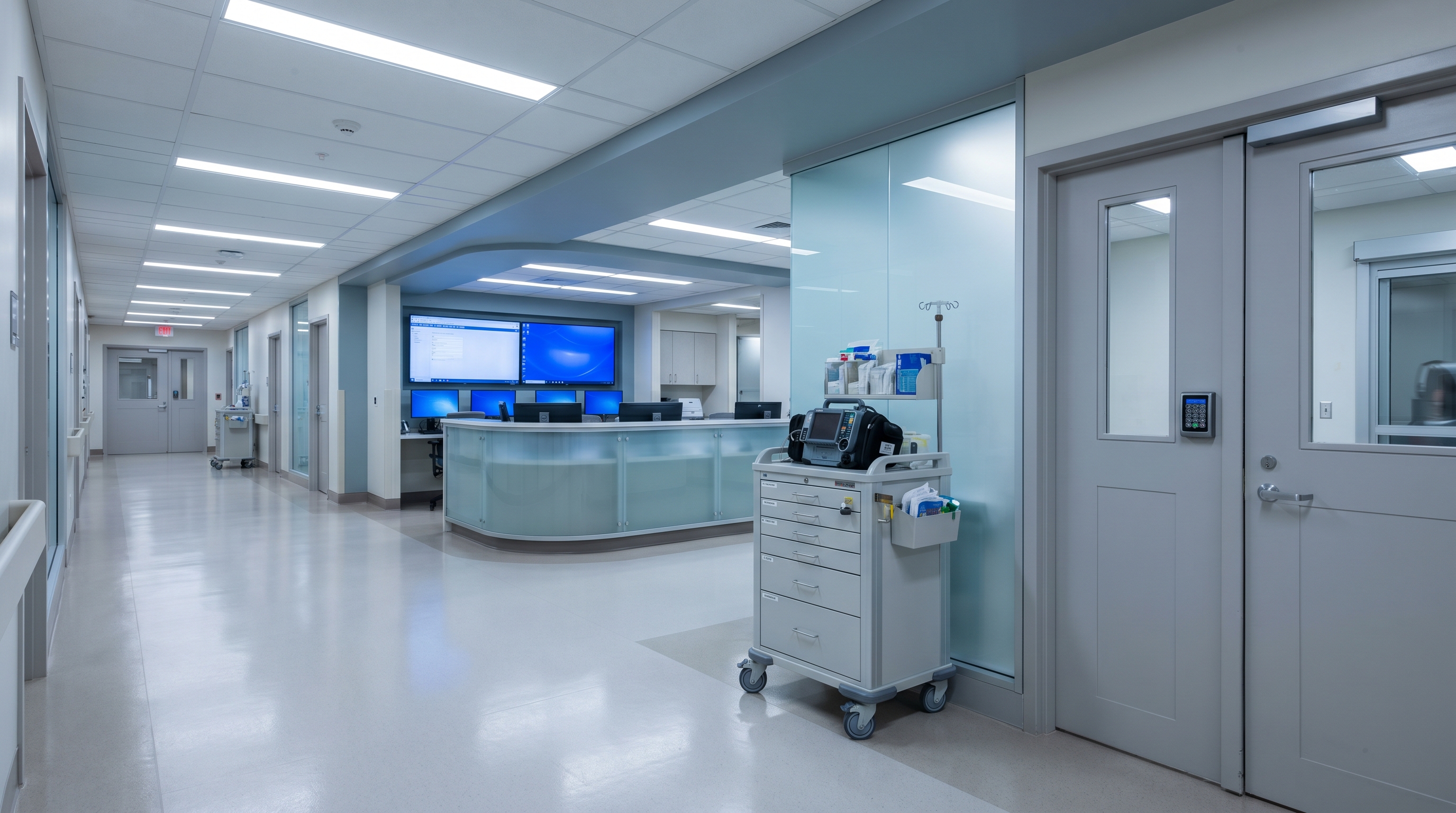
Most code blue protocols were designed with the medical-surgical floor in mind: open hallways, crash carts within arm's reach, easy EMS access, and a team that has run simulations in that exact environment. Locked inpatient psychiatric units operate under an entirely different set of constraints. Doors require key or badge access. Equipment that could serve as a ligature cannot be stored in patient areas. Staff-to-patient ratios skew heavily toward behavioral management. And the very medications keeping patients stable can quietly be setting the stage for a fatal arrhythmia.
For registered nurses, psychiatric technicians, and behavioral health physicians who work inside these locked environments every day, cardiac emergencies are not theoretical. They happen — and they happen under conditions that are nothing like a standard hospital code scenario. This article is written for the clinicians in those rooms: the ones who need to know what is different, what is harder, and what needs to be practiced before a patient collapses.

Before discussing response logistics, it is worth grounding the conversation in why cardiac emergencies occur in behavioral health units at a rate that surprises many providers who transfer from other settings.
Patients admitted to locked psychiatric units often arrive with underlying cardiovascular comorbidities that were poorly managed during periods of psychiatric decompensation. Hypertension, obesity, metabolic syndrome, and tobacco use disorder are all overrepresented in this population. A patient in acute psychosis may not have taken their antihypertensive medications for weeks. Someone in a manic episode may not have slept or eaten adequately. These physiologic stressors compound rapidly in the days following admission.
Then there is the medication burden. Antipsychotic agents — first-generation and second-generation alike — carry measurable cardiotoxic risk that many psychiatric nurses and physicians do not receive in-depth training on. As detailed in our overview of the interplay between mental health and cardiovascular disease, the relationship between psychiatric illness and cardiac vulnerability is bidirectional and clinically significant. Understanding that relationship is the first step in anticipating when a patient may be heading toward a life-threatening event.
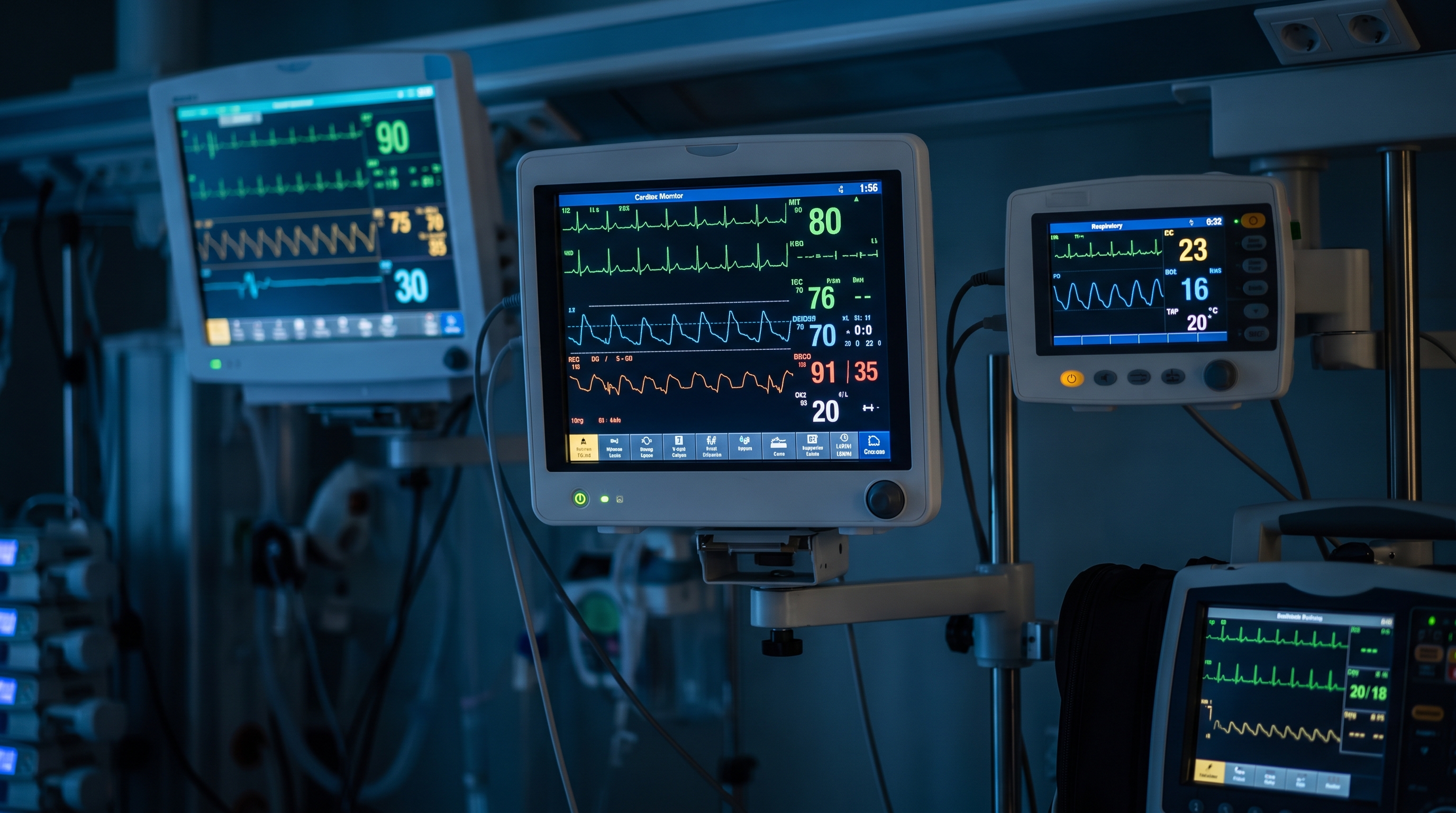
QT prolongation is the central pharmacologic risk in inpatient psychiatry. Nearly every antipsychotic agent blocks cardiac potassium channels — specifically the IKr current — to some degree. This delays ventricular repolarization, lengthens the QT interval on the ECG, and creates a window of electrical vulnerability during which early afterdepolarizations can trigger a potentially lethal arrhythmia: torsades de pointes.
Among first-generation antipsychotics, thioridazine and haloperidol (particularly intravenous haloperidol) carry the highest QT-prolonging burden. In second-generation agents, ziprasidone and quetiapine are notable offenders. The risk is not academic. According to epidemiological data from a large cohort study of antipsychotic users, the incidence of sudden cardiac death or ventricular arrhythmia reached 3.4 per 1,000 person-years — a number that becomes clinically meaningful when extrapolated across a census of 20 to 30 inpatients staying for weeks or months at a time.
Risk escalates dramatically with polypharmacy. Patients who receive multiple QT-prolonging agents simultaneously — a common occurrence when rapid tranquilization protocols combine haloperidol, promethazine, or lorazepam — may push into the danger zone before any single agent would do so alone. Electrolyte disturbances from poor oral intake, vomiting related to medication side effects, or diuretic use for concurrent medical conditions further lower the threshold for arrhythmia. As research published in Advances in Psychiatric Treatment explains, sudden cardiac death attributable to antipsychotics occurs in a stepwise fashion beginning with QT prolongation, progressing through torsades de pointes, and potentially culminating in cardiac arrest. Hypokalemia and hypomagnesemia are particularly dangerous triggers in this sequence.
Clinicians working in locked behavioral health units need to recognize the early presentation of torsades de pointes and understand its treatment. A patient complaining of palpitations, near-syncope, or sudden chest fluttering warrants immediate ECG assessment, not reassurance. Cardiac effects of specific antipsychotics are well-characterized in the clinical pharmacology literature — the Psychopharmacology Institute's overview of antipsychotic QTc prolongation provides a practical agent-by-agent risk reference. For a thorough breakdown of recognition criteria and resuscitation steps, our dedicated resource on recognizing and treating torsades de pointes covers the full clinical decision pathway, including the role of IV magnesium and temporary pacing.
Physical restraint in psychiatric settings is a last-resort intervention that nonetheless occurs regularly in acute inpatient environments. What is far less commonly addressed in behavioral health training is the cardiac physiology of restraint-related death — and the specific resuscitation challenges that follow.
Deaths during or following physical restraint have been extensively documented in clinical and forensic literature. The mechanism is not straightforward asphyxia, as was once assumed. A comprehensive review of prone restraint cardiac arrest published in the medical literature identifies a more specific pathway: prolonged prone restraint triggers profound metabolic acidosis. The restrained, agitated patient has dramatically elevated oxygen demand from physical struggle, while the prone position impairs ventilatory mechanics and reduces the ability to compensate by blowing off CO2. pH values as low as 6.25 have been recorded in restraint-related arrest victims. Resuscitation in this physiologic state has proven extraordinarily difficult, with published case series reporting high mortality despite aggressive intervention.
The clinical implication is clear: staff must be trained to recognize early signs of physiologic deterioration during restraint — not just behavioral de-escalation cues. A patient who suddenly becomes quiet or limp during a prolonged restraint event is not calming down. They may be losing physiologic reserve. Immediate release of restraint, positioning the patient supine, and calling for emergency response should occur simultaneously. Waiting to see if the patient settles costs seconds that cannot be recovered.
For all staff present in locked inpatient psychiatric units — not only nurses and physicians, but psychiatric technicians and mental health workers — basic CPR competency is non-negotiable. The resource on managing violent patients as a BLS provider addresses how to balance de-escalation skills with the physical readiness to transition to CPR when a patient's status changes without warning.

The physical design of locked psychiatric units is deliberately built to reduce suicide risk. This safety architecture creates genuine complications for emergency cardiac response that must be anticipated and planned around explicitly.
AEDs are one of the clearest examples. Standard hospital AEDs are stored openly on corridor walls. On a locked psychiatric unit, an AED and its electrode cables stored in patient-accessible areas creates a documented ligature risk. The Joint Commission and CMS have issued detailed guidance on ligature-resistant design requirements for locked psychiatric environments. According to Joint Commission standards on ligature and suicide risk reduction in inpatient psychiatric units, patient rooms, bathrooms, corridors, and common areas must all be assessed and mitigated for ligature attachment points — a category that encompasses medical cables and equipment cords.
Practical solutions include storing AEDs behind staff-controlled access panels or inside the nursing station, with a clearly rehearsed protocol for retrieval during a code. The seconds spent retrieving the device must be offset by the guaranteed absence of ligature risk in patient areas. The critical point: every person working on the unit must know exactly where the AED is and how to retrieve it before an emergency occurs. Walking a route for the first time while a patient is in cardiac arrest is not an acceptable plan.
Crash cart accessibility presents a parallel challenge. Full crash carts often cannot be permanently stationed inside the secured patient area for equipment-safety reasons. Many locked units position crash carts just outside the entry door, requiring that staff activate the door — or temporarily prop it open — to roll the cart in. This single logistical step can add 60 to 90 seconds to the time between recognition of arrest and first defibrillation attempt. Unit-specific drills must account for this delay and identify who owns the door during a code.
Staffing patterns compound the logistical challenge further. During night shifts, a 20-bed locked unit may have only two or three clinical staff present. One is running the code. One is performing compressions. That leaves, at most, one person to manage door access, call for additional help, retrieve equipment, and document — while also maintaining visual supervision of the remaining patient census. This reality must be incorporated into written emergency response protocols and rehearsed in simulation, not encountered for the first time during an actual event.
The pharmacologic management of cardiac arrest follows the same ACLS algorithms on a psychiatric unit as anywhere else in the hospital. But certain medication considerations deserve specific attention in this population.
Epinephrine remains the cornerstone of pulseless arrest management. However, in patients who were already agitated and tachycardic prior to arrest — a common picture in acute psychiatric presentations — epinephrine's alpha and beta agonist effects may create additional challenges in achieving ROSC and managing post-arrest hemodynamics. Close attention to rhythm response after epinephrine administration is essential.
Intravenous magnesium sulfate is a critical drug in any code that appears triggered by torsades de pointes. The dose is 1 to 2 grams IV push. In a psychiatric unit where torsades is a known risk secondary to antipsychotic polypharmacy, magnesium should be one of the first agents reached for when the rhythm is identified as polymorphic ventricular tachycardia with a prolonged QTc baseline. Do not wait for electrolyte results to confirm hypomagnesemia — treat empirically. The full dosing reference for code medications is outlined in our ACLS medications cheat sheet covering dosages, routes, and indications for every drug in the algorithm.
Amiodarone is the antiarrhythmic of choice for shockable rhythms refractory to defibrillation. It is worth noting the clinical irony that amiodarone itself prolongs the QT interval — meaning that in a patient whose arrest was triggered by drug-induced QT prolongation, the post-ROSC period requires careful ECG monitoring and may necessitate electrophysiology consultation for ongoing management decisions.
In restraint-related arrest with suspected profound metabolic acidosis, sodium bicarbonate takes on greater urgency than in a typical code. While routine bicarbonate use in cardiac arrest is not recommended by current ACLS guidelines, the specific clinical picture of restraint-associated arrest with presumed severe lactic acidosis is a recognized exception context. The immediate post-arrest care period should include arterial blood gas analysis at the earliest opportunity. The 2025 AHA Guidelines for Systems of Care in CPR and Emergency Cardiovascular Care provide the current evidence framework for these post-arrest management decisions.
Closed-loop communication, role assignment, and cognitive load management are the foundations of effective code team performance. In a locked psychiatric unit, each of these is complicated by the dual-role reality that most staff occupy: the same nurse who was managing a behavioral escalation two minutes ago is now running a code.
When a code is called on a locked unit, immediate role clarity is essential. Who is doing compressions? Who is managing the airway? Who controls the door for incoming support? Who is operating the defibrillator? And critically, who is managing the other patients on the unit — because a code in a locked environment will trigger fear, agitation, and potential secondary behavioral crises among patients who witness it from their rooms.
The communication frameworks used in standard code scenarios — closed-loop confirmation, explicit task assignment, read-back of medication orders — become more important in small-team codes, not less. With two or three people managing a resuscitation, unspoken assumptions about who is doing what create dangerous gaps. Our resource on ACLS team dynamics and communication scripts that save lives during code blues provides practical language frameworks specifically built for lean-team environments where roles must be made explicit at every step.
Staff who work in correctional healthcare settings face analogous challenges: locked environments, access-controlled doors, constrained equipment storage, and patient populations with elevated baseline medical risk. The protocols developed for ACLS and BLS in correctional facilities offer directly transferable insights for behavioral health teams designing their emergency response systems and simulation curricula.
No amount of classroom-based or online ACLS training fully prepares a clinician for the specific challenges of their code environment unless that environment is incorporated into simulation practice. This is particularly true in locked psychiatric units, where standard hospital code simulations do not replicate the physical and logistical constraints that staff will actually face.
Unit-specific code drills should account for: locked door retrieval time for the crash cart and AED, transitions between active restraint management and CPR initiation, communication protocols during a code when some staff must simultaneously maintain behavioral supervision of other patients, and scenario-specific presentations such as torsades de pointes triggered by antipsychotic medications and restraint-associated arrest with suspected metabolic acidosis. If these scenarios have not been rehearsed, the first time staff encounter them will be a real emergency with real consequences.
The Joint Commission recommends that hospitals conduct code response drills at appropriate and recurring intervals. For locked psychiatric units, given the unique environmental and pharmacologic risk factors, quarterly drills that include the full sequence from recognition of arrest through door access, equipment retrieval, and first rhythm analysis represent a defensible standard. After-action debriefs should specifically identify where the locked-unit constraints introduced delays — and what protocol changes or equipment positioning adjustments can reduce them.
For staff who need to build or refresh their core ACLS knowledge as a foundation for unit-specific training, online certification programs taught by board-certified emergency physicians allow behavioral health nursing staff to complete certification at their own pace — evenings, weekends, between shifts — without disrupting the unit staffing patterns that already run lean. Self-paced format is not a shortcut; it is a practical accommodation to the reality of healthcare scheduling in high-acuity settings.
Return of spontaneous circulation in a locked psychiatric unit is not the end of the emergency — it is the beginning of a complex transfer sequence. Locked behavioral health units are not equipped for post-arrest intensive care. The patient needs to move to an ICU or cardiac care unit, and they need to move quickly.
In the interval between ROSC and transport, clinical priorities include airway protection, hemodynamic monitoring, targeted temperature management consideration per current AHA guidelines, and continuous cardiac monitoring for re-arrest or recurrent arrhythmia. Staff must be equipped to manage these needs without the full resources of a critical care unit available. This is where ACLS certification for all RNs working in behavioral health inpatient settings translates directly into lives saved during the transfer window — not just during the arrest itself.
Documentation during and after the code should include a precise timeline: time of recognition, time compressions began, time of first rhythm analysis, time of first shock if applicable, medications administered with exact timing, and time of ROSC. This documentation supports continuity of care for the receiving ICU team and is essential for post-event quality review.
Every code should be followed by a structured debrief for all involved staff. In a locked psychiatric unit, this debrief should address not only clinical performance during the resuscitation but the secondary behavioral impacts: how were other patients managed, what was communicated to them afterward, and what psychological support is available for staff who experienced the trauma of a code in an already high-stress environment. Resilience and debriefing are not peripheral concerns — they are part of sustaining a team that will be ready to respond the next time.
Cardiac emergencies in locked psychiatric units are survivable — but only when the team is trained, the protocols are rehearsed, and the equipment is accessible. The foundation of that readiness is certification. Every registered nurse, advanced practice provider, and physician working in an inpatient behavioral health setting should hold current ACLS certification. Every psychiatric technician, mental health worker, and non-clinical staff member with patient access should hold current BLS certification.
Behavioral health facilities often struggle with certification logistics for the same reasons their emergency response is challenged: lean staffing, 24-hour operations, and limited ability to release staff for off-unit training. Online ACLS and BLS certification built around self-paced learning and immediate certificate issuance removes the scheduling barrier entirely. At Affordable ACLS, ACLS certification is available for $109 (renewal at $99), and BLS is available for $69 (renewal at $59) — both developed and taught by board-certified emergency physicians and fully compliant with AHA and ILCOR guidelines. Unlimited retakes and a money-back guarantee ensure that every clinician who starts the course can complete it successfully.
For behavioral health facilities looking to certify entire clinical teams, group certification solutions allow for streamlined enrollment and compliance tracking across a full staff roster. This is particularly valuable in settings where staff turnover creates ongoing certification gaps that must be actively managed. Keeping a locked inpatient unit fully certified should not require a scheduling miracle or a significant budget line — it should be a straightforward administrative process.
The nurses and clinicians working in locked behavioral health units already carry one of the more demanding and underrecognized roles in healthcare. They manage acute psychiatric crises, de-escalate dangerous situations, administer medications with complex risk profiles, and do all of this in an environment designed to prevent harm — sometimes at the expense of emergency preparedness. Giving those same clinicians the advanced cardiac life support skills to manage a code when it comes is not optional. It is part of the job, and it is achievable without adding burden to an already stretched team.
Cardiac arrest in a locked psychiatric ward is a distinct clinical scenario that blends standard ACLS algorithms with environmental, pharmacologic, and team-dynamic challenges found nowhere else in acute care. Antipsychotic-induced QT prolongation, restraint-associated metabolic acidosis, ligature-restricted equipment storage, and lean night-shift staffing all converge to make cardiac emergencies in behavioral health units more dangerous — and more demanding of preparation.
The solution is not to redesign the locked unit or abandon the medications that keep patients safe. It is to train the clinicians working in those units to a level of cardiac emergency competency that matches the complexity of the environment they inhabit every shift. ACLS certification for nurses and providers, unit-specific simulation drills that include the locked-door sequence, clear medication protocols for QT-related arrhythmias, and rehearsed team roles in a lean-staff code are all actionable steps that any behavioral health facility can implement starting today.
Ready to close the certification gap on your behavioral health team? Explore online ACLS and BLS certification at Affordable ACLS — self-paced, immediately certified, and designed by emergency physicians who understand what real code situations demand. Group enrollment options are available for facilities certifying their entire clinical team. Contact us at 866-655-2157 or support@affordableacls.com.
.jpg)