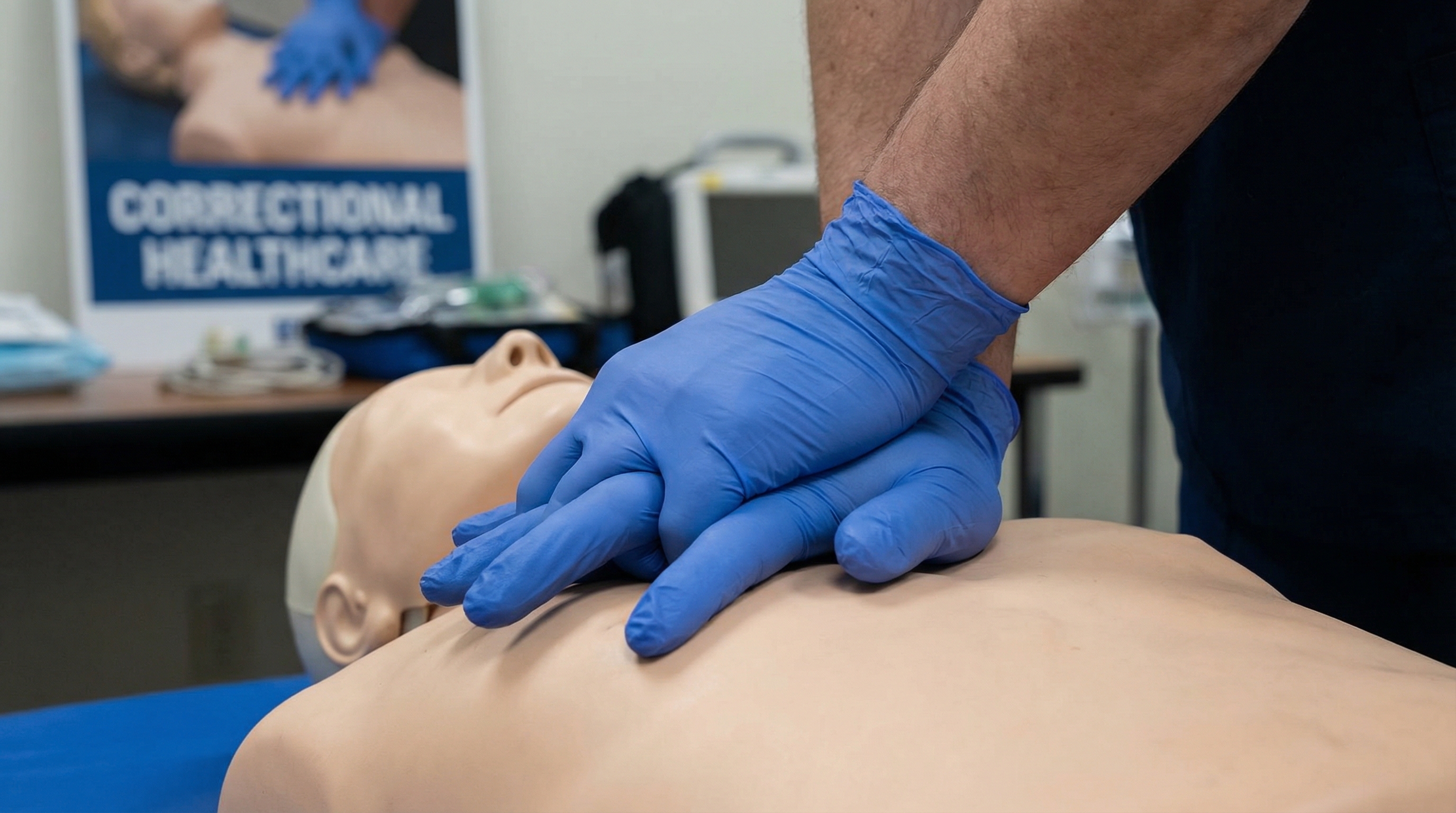
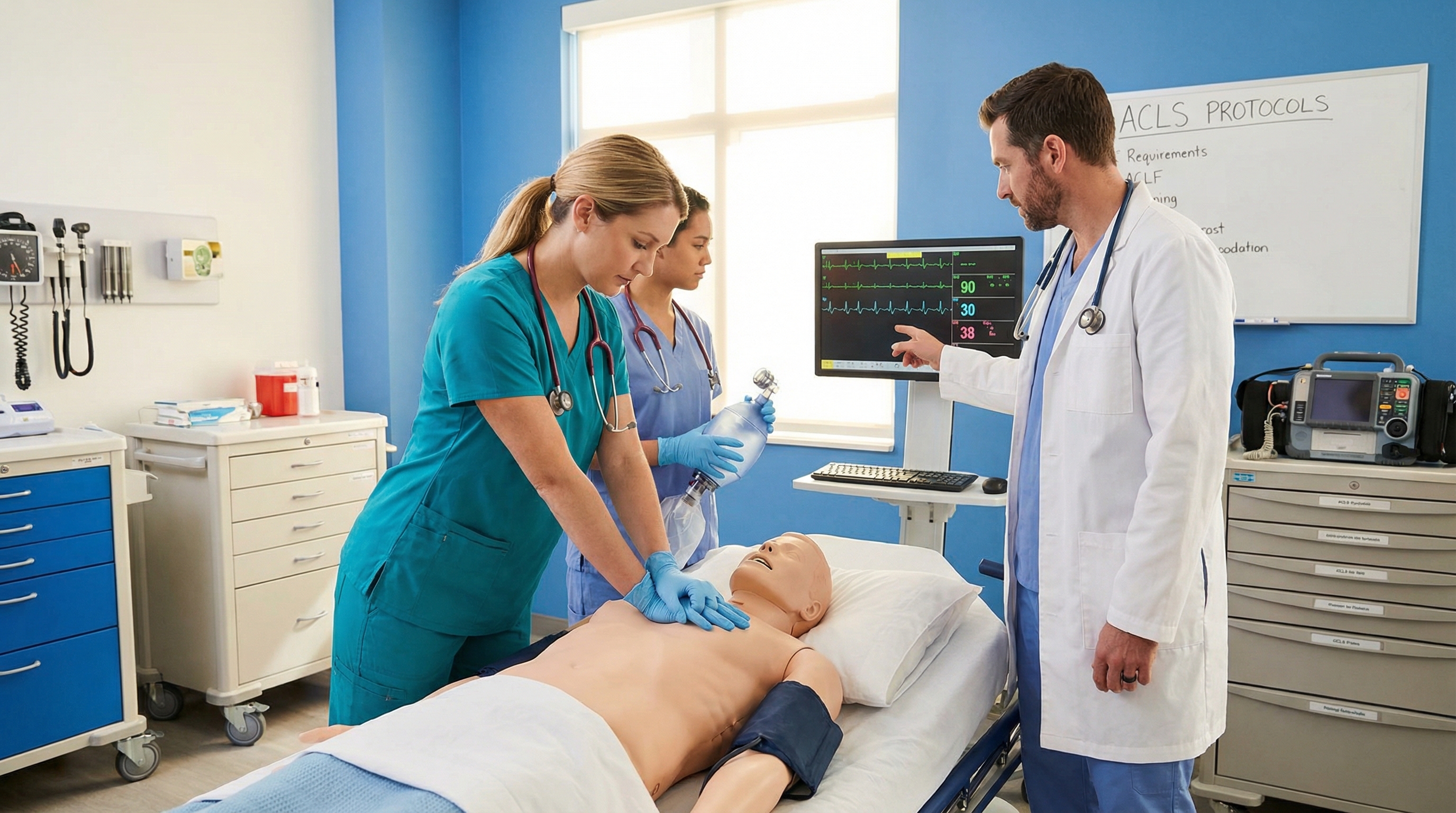
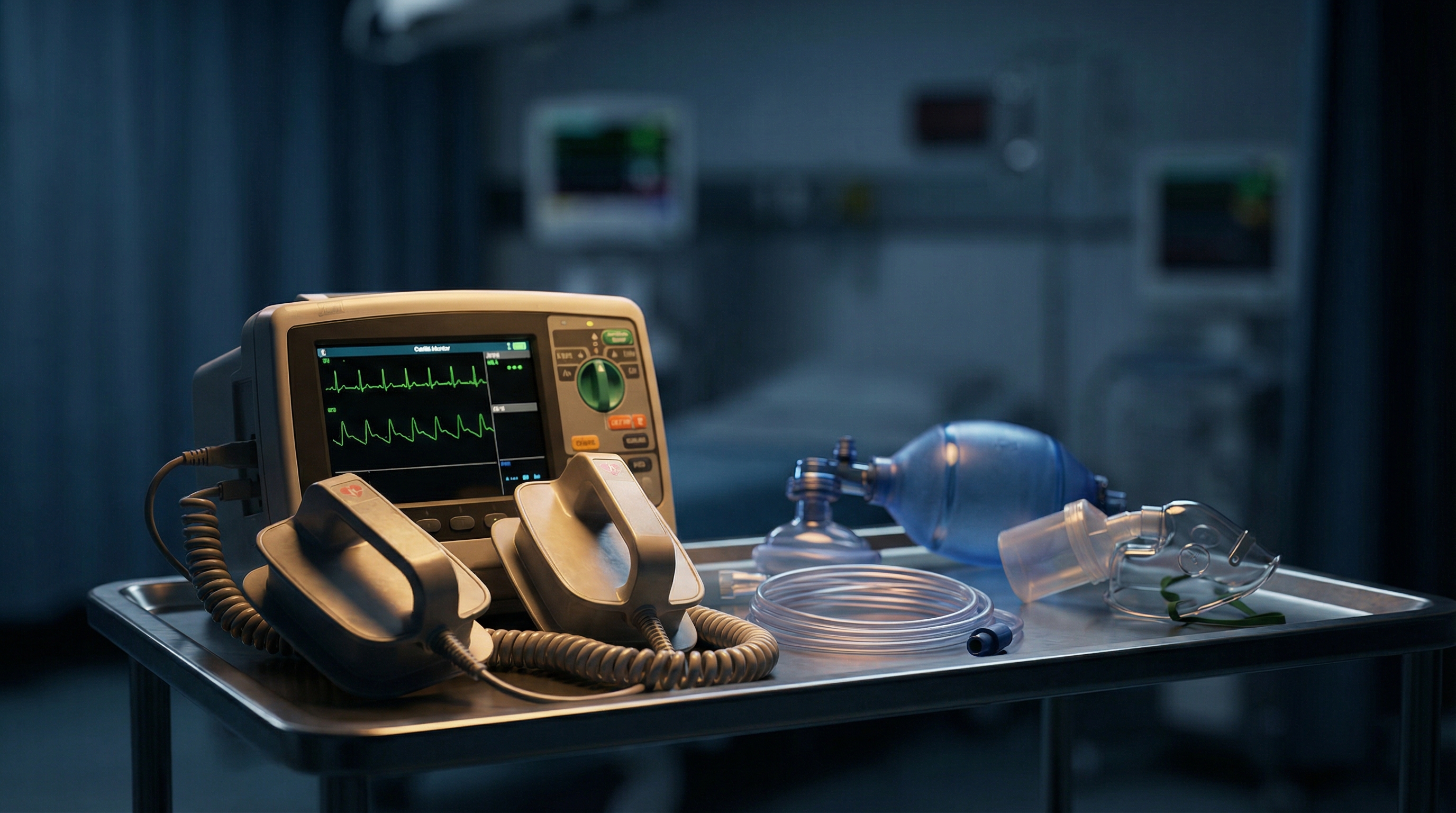
Healthcare professionals working in correctional facilities face unique challenges that demand specialized training and certification. Prison medical staff operate in environments where emergency medical situations can arise suddenly, access to advanced hospital care may be delayed, and resources are often limited. In this high-stakes setting, Basic Life Support (BLS) and Advanced Cardiovascular Life Support (ACLS) certifications are not just professional credentials but essential tools that can mean the difference between life and death for incarcerated patients.
The correctional healthcare environment presents distinct challenges that set it apart from traditional clinical settings. Medical staff must be prepared to respond to cardiac emergencies, overdoses, violent injuries, and sudden medical crises in a secure environment where calling for backup or transporting patients to higher levels of care involves additional security protocols and potential delays. Understanding the certification requirements and best practices for life support training in correctional facilities is crucial for healthcare professionals considering this specialized career path and for facility administrators ensuring compliance with national standards.
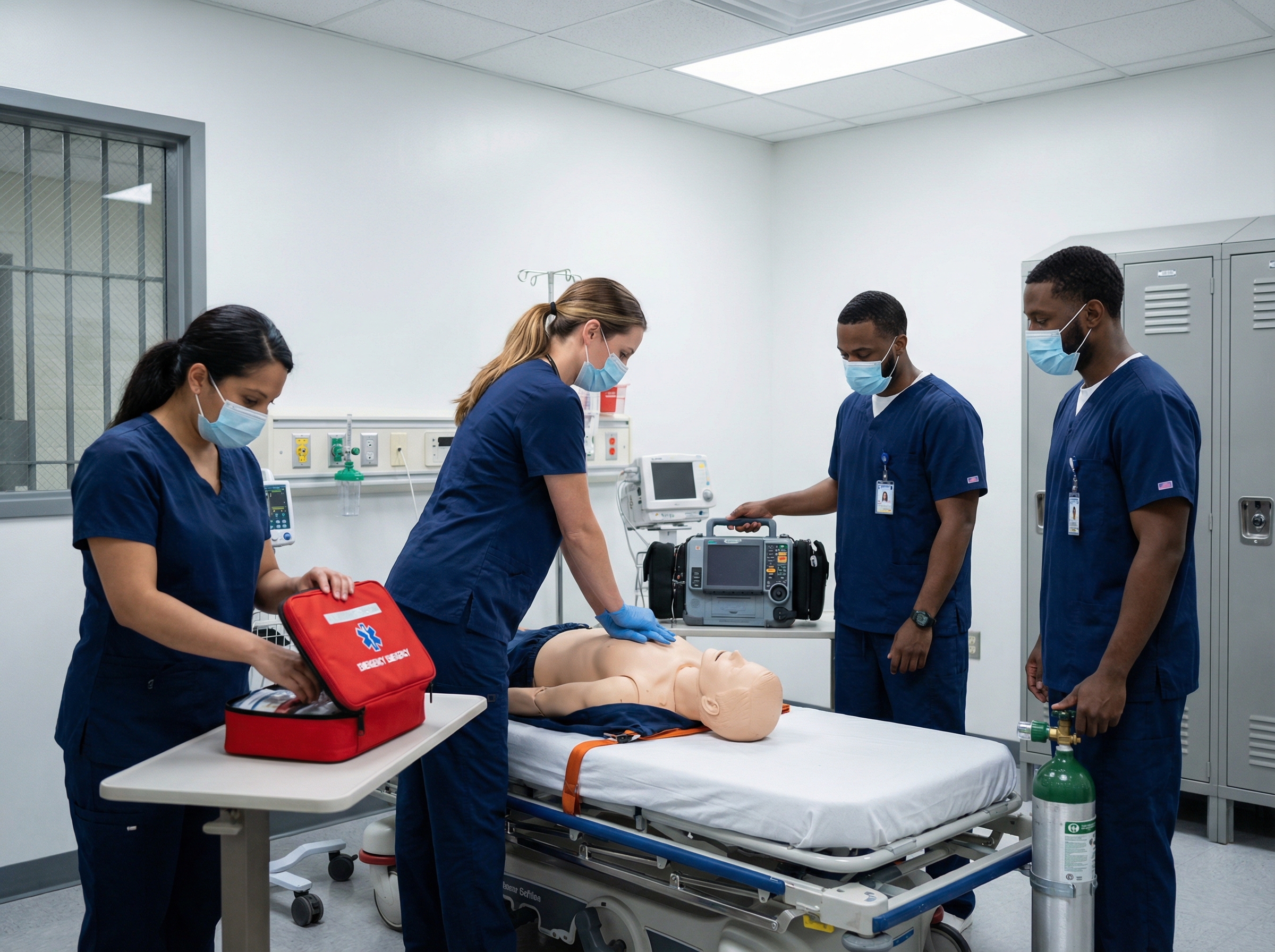
Correctional healthcare is a specialized field that serves a unique patient population with complex medical and behavioral health needs. According to credentialing standards for correctional healthcare workers, all medical professionals working in prisons and jails must maintain current life support certifications as part of their credentialing requirements. This mandate reflects the critical nature of emergency preparedness in facilities where medical emergencies can occur at any moment.
The healthcare staff in correctional facilities typically includes registered nurses, licensed practical nurses, nurse practitioners, physician assistants, physicians, mental health professionals, and emergency medical technicians. Each of these professionals plays a vital role in the continuum of care, and most positions require valid BLS certification at minimum. For positions involving emergency response, critical care, or supervisory medical roles, ACLS certification is frequently required or strongly preferred.
Correctional facilities range from county jails with smaller populations to large state and federal prisons housing thousands of inmates. Regardless of size, these facilities must provide constitutionally adequate healthcare to their populations, which includes having appropriately trained staff ready to respond to medical emergencies. The National Commission on Correctional Health Care (NCCHC) sets standards that guide healthcare delivery in these settings, and life support training is a fundamental component of meeting these standards.
Basic Life Support certification is the foundational credential for virtually all clinical staff working in correctional healthcare. BLS training provides healthcare professionals with the essential skills to recognize and respond to life-threatening emergencies, including cardiac arrest, respiratory emergencies, choking, and stroke. In the correctional environment, where medical staff may be the first and only responders for critical minutes, BLS skills are absolutely essential.
According to regulatory guidance on life support certifications, healthcare facilities explicitly require BLS certification for clinical staff regardless of whether they also hold ACLS certification. This is because BLS focuses on the immediate, hands-on skills of high-quality CPR, AED use, and basic airway management that form the foundation of all resuscitative efforts. In correctional settings, nurses and medical staff must be proficient in these core skills because they will likely be performing them without immediate physician supervision.
BLS certification for correctional healthcare professionals covers critical competencies including high-quality chest compressions for adults, children, and infants, effective rescue breathing, proper use of automated external defibrillators (AEDs), relief of choking in conscious and unconscious patients, and team-based resuscitation dynamics. These skills must be maintained through regular recertification, typically every two years, to ensure healthcare staff remain current with the latest American Heart Association and International Liaison Committee on Resuscitation guidelines.
For correctional nurses and medical staff seeking convenient, affordable BLS certification or recertification, online options provide flexibility that accommodates the demanding schedules typical in correctional healthcare. Our comprehensive BLS certification guide offers healthcare professionals detailed preparation strategies to ensure they master these critical skills and pass their certification exam confidently.
While BLS provides the foundation, Advanced Cardiovascular Life Support certification equips correctional healthcare professionals with the advanced knowledge and skills needed to manage complex cardiac emergencies. ACLS training goes beyond basic CPR to include systematic approaches to cardiac arrest algorithms, recognition and treatment of life-threatening arrhythmias, management of acute coronary syndromes and stroke, pharmacological interventions, advanced airway management, and effective team leadership during resuscitation efforts.
In correctional facilities, ACLS-certified staff members are essential for providing the highest level of emergency cardiac care possible within the secure environment. The American Heart Association's ACLS program prepares healthcare professionals to respond confidently to cardiovascular emergencies, using evidence-based algorithms to guide clinical decision-making under pressure. For correctional medical staff, these skills are particularly valuable because transport to outside hospital facilities may involve security considerations and time delays.
ACLS certification is typically required or strongly preferred for several positions in correctional healthcare, including nurse practitioners and physician assistants who provide advanced practice care, registered nurses in supervisory or charge nurse roles, emergency response team members designated as first responders to medical codes, healthcare professionals working in infirmary or higher-acuity units, and physicians providing on-site medical care. Even when not strictly required, ACLS certification significantly enhances a correctional healthcare professional's capabilities and often improves employment prospects and advancement opportunities.
Understanding the key differences between BLS and ACLS helps correctional healthcare professionals determine which certifications they need for their specific roles. While BLS focuses on foundational CPR and basic life support, ACLS builds on these skills with advanced interventions, pharmacology, and team leadership. Many correctional facilities require both certifications for their clinical staff, recognizing that effective emergency response requires both the hands-on skills of BLS and the clinical judgment and advanced interventions of ACLS.
The National Commission on Correctional Health Care establishes the primary standards for healthcare delivery in correctional facilities across the United States. NCCHC accreditation is a voluntary but highly respected credential that demonstrates a facility's commitment to providing quality healthcare to incarcerated populations. Facilities seeking NCCHC accreditation must comply with comprehensive standards that address all aspects of healthcare delivery, including staffing, training, emergency response, and quality improvement.
According to NCCHC's updated standards for 2026, which will be published in August 2025 and take effect January 1, 2026, correctional facilities must ensure that healthcare staff maintain appropriate certifications and training. While NCCHC standards focus broadly on comprehensive healthcare delivery, they emphasize the importance of emergency preparedness and staff competency in responding to medical emergencies. Life support certification is a fundamental component of meeting these expectations.
NCCHC Standard C-04 specifically addresses health training programs for correctional officers, requiring that security staff receive training to recognize medical emergencies and provide basic emergency care until healthcare professionals arrive. This standard includes CPR training for correctional officers, with facilities expected to train at least 75 percent of staff present on each shift in jails and prisons. For healthcare staff themselves, the expectation is even higher: clinical personnel must maintain current life support certifications appropriate to their professional roles and the acuity level of care they provide.
Facilities pursuing or maintaining NCCHC accreditation undergo comprehensive reviews that include verification of staff credentials, training records, and certification currency. Documentation of BLS and ACLS certifications for appropriate staff members is part of the credentialing files that surveyors review during accreditation site visits. Maintaining organized, up-to-date certification records is essential for both individual healthcare professionals and facility compliance.
Emergency response in correctional facilities follows protocols that must balance rapid medical intervention with security requirements. According to specialized training programs for correctional emergency response, medical emergencies in corrections facilities typically fall into several categories: medical emergencies including cardiac arrest, respiratory distress, and seizures, disturbance-related emergencies involving injuries from fights or assaults, environmental emergencies such as fires or hazardous materials exposure, and mass casualty incidents requiring coordinated response.
When a medical emergency occurs in a correctional facility, the response typically begins with correctional officers who discover the situation and immediately call for medical assistance while beginning basic life support measures if needed. Healthcare staff respond rapidly to the location, often accompanied by additional security personnel to maintain safety. The medical team, led by the most qualified provider on-site, assesses the patient, initiates appropriate interventions including BLS and ACLS protocols as indicated, and determines whether the patient requires transport to an outside hospital facility.
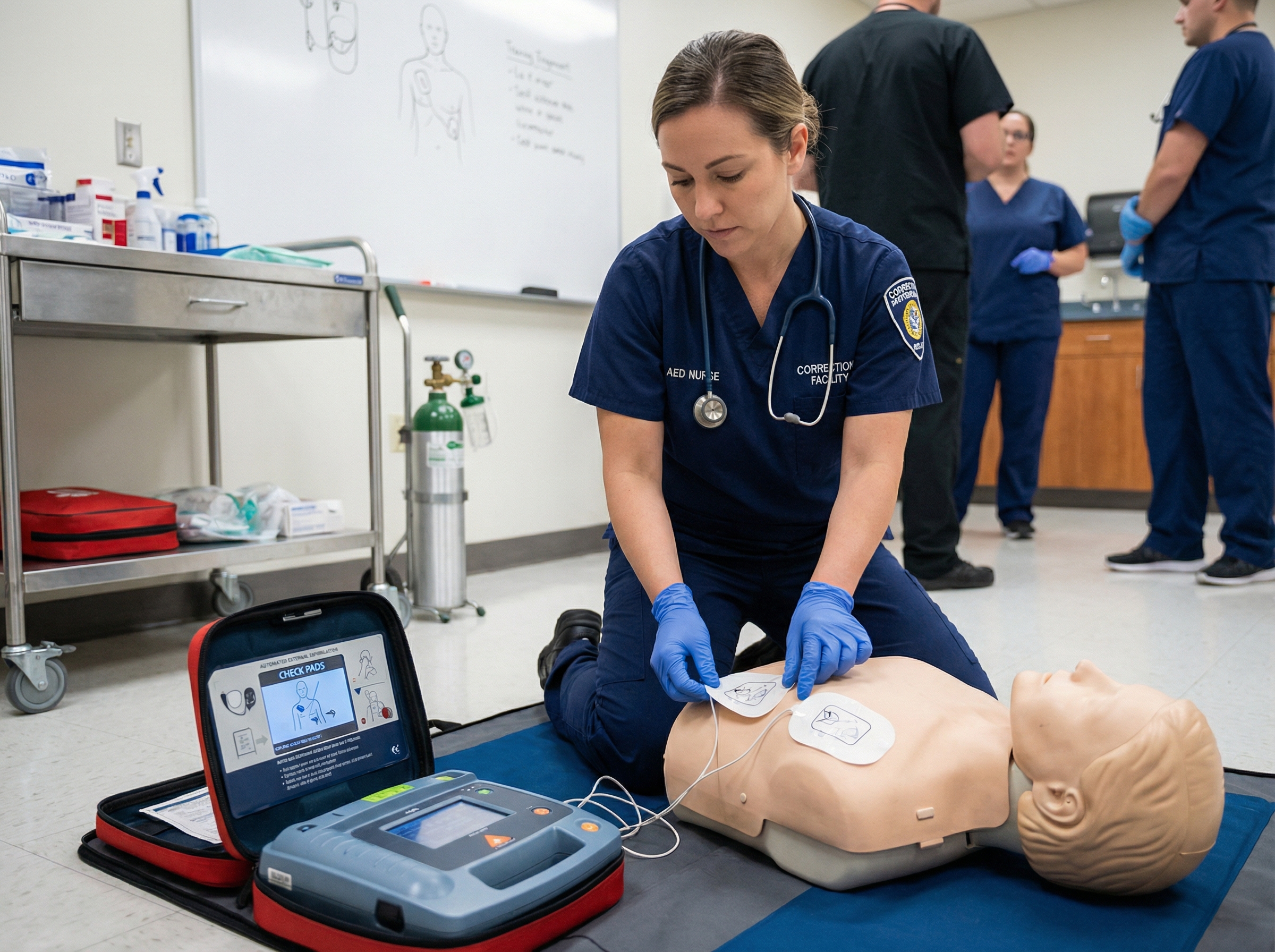
The role of correctional nurses in emergency response is similar to that of emergency medical technicians or paramedics in the community, focusing on rapid assessment, prevention of further deterioration, initiation of life-saving interventions, and safe transport to higher levels of care when needed. BLS and ACLS certifications provide the standardized framework and algorithmic approach that allows correctional medical teams to function effectively under pressure, even when team members may not regularly work together.
Correctional facilities conduct regular emergency drills and training exercises to ensure that both security and healthcare staff can respond effectively to medical codes. These drills test communication systems, response times, equipment availability, and team coordination. Healthcare staff with current BLS and ACLS certifications bring essential expertise to these exercises, helping ensure that the facility's emergency response plans are clinically sound and operationally feasible within the unique constraints of the correctional environment.
The credentialing process for healthcare professionals in correctional facilities is comprehensive and rigorous, reflecting the autonomous nature of much correctional healthcare practice and the vulnerable population being served. According to standards for correctional healthcare credentialing, the process includes verification of government-issued identification, valid state professional licenses, relevant board certifications, educational transcripts and degrees, detailed work history and references, malpractice claims history, immunization records, criminal background checks, and current BLS and ACLS certifications as appropriate to role.
Life support certifications must be validated and kept on file as part of each healthcare professional's credential file. These certifications must remain current throughout employment, and facilities typically track expiration dates to ensure staff complete recertification before their credentials lapse. Recredentialing typically occurs every two to three years, at which time all certifications and licenses must be reverified. Proactive tracking of certification expiration dates prevents lapses that could affect a healthcare professional's ability to practice and the facility's compliance with accreditation standards.
For healthcare professionals seeking positions in correctional facilities, having current BLS and ACLS certifications before applying significantly strengthens applications. Many facilities require these certifications at the time of hire rather than allowing new employees time to obtain them after starting. Online certification options provide a convenient pathway for healthcare professionals to obtain or renew their credentials quickly, often completing the entire process in a single day and receiving immediately downloadable certificates.
Group certification solutions are particularly valuable for correctional facilities that need to ensure their entire healthcare team maintains current credentials. Our guide to group certification for healthcare facilities explains how correctional medical departments can efficiently manage team certification and recertification, ensuring compliance and readiness while respecting budget constraints common in correctional healthcare settings.
Healthcare professionals working in or considering correctional healthcare positions should carefully evaluate which life support certifications they need based on their specific roles, professional licenses, facility requirements, and career goals. For most entry-level clinical positions in correctional healthcare, BLS certification is the minimum requirement. Licensed practical nurses, medical assistants, and other support staff typically need current BLS to perform their duties effectively and meet credentialing standards.
Registered nurses working in correctional facilities should generally maintain both BLS and ACLS certifications, even if ACLS is not explicitly required for their positions. The reality of correctional healthcare is that RNs often function with significant autonomy, particularly during evening and night shifts when physician coverage may be limited or on-call. Having ACLS certification expands an RN's capability to manage complex emergencies and demonstrates a commitment to professional excellence that can enhance career advancement opportunities within correctional healthcare.
For advanced practice providers, including nurse practitioners and physician assistants in correctional settings, ACLS certification is typically required. These professionals often serve as the highest level of medical care available on-site for extended periods and must be prepared to manage the full spectrum of cardiovascular emergencies. Physicians working in correctional healthcare similarly need ACLS certification, and depending on the patient population served, may also benefit from Pediatric Advanced Life Support (PALS) certification if the facility houses younger inmates or operates a mother-baby unit.
Our comprehensive guide on determining which life support certification you need helps healthcare professionals evaluate their specific requirements based on their roles, clinical environments, and professional goals. For correctional healthcare professionals, the general recommendation is to obtain and maintain all certifications that might be relevant to emergencies you could encounter, recognizing that the unique correctional environment demands broad preparedness.
Correctional healthcare professionals face scheduling challenges that make traditional in-person certification courses difficult. Shift work, mandatory overtime, security protocols, and the 24/7 nature of correctional facilities mean that healthcare staff may struggle to attend multi-day certification courses held at specific times and locations. Online certification has emerged as a practical solution that allows correctional medical staff to complete their BLS and ACLS training on their own schedules without taking time away from critical facility operations.
Online life support certification courses provide the same evidence-based content as traditional courses, covering current American Heart Association and International Liaison Committee on Resuscitation guidelines. Healthcare professionals learn the same algorithms, study the same clinical scenarios, and must demonstrate the same knowledge to pass certification exams. The primary difference is the delivery method: online courses allow self-paced learning that accommodates individual schedules and learning styles, while traditional courses require attendance at scheduled sessions.
For correctional facilities, online certification offers additional advantages including cost efficiency with per-person costs significantly lower than traditional courses, elimination of travel time and expenses for staff, ability to schedule certification around facility needs rather than course availability, consistent training content across all staff members, and immediate certificate availability upon successful completion. These benefits make online certification particularly attractive for correctional healthcare departments managing tight budgets and complex staffing schedules.
Healthcare professionals considering online certification often want to understand how it compares to traditional options and whether their employers will accept online credentials. Our detailed comparison of online versus in-person ACLS certification addresses these questions, explaining that online certifications following AHA/ILCOR guidelines are widely accepted by healthcare employers including correctional facilities. The key is selecting a reputable provider that offers current, comprehensive content and legitimate certification.
Applying BLS and ACLS skills in correctional facilities involves practical considerations that differ from traditional healthcare settings. Security protocols may affect how quickly healthcare staff can reach a patient experiencing a medical emergency, particularly if the emergency occurs in a housing unit, recreation area, or other location requiring security clearance to access. Medical equipment including AEDs, crash carts, and emergency medications must be strategically positioned throughout the facility in secure but accessible locations.
Correctional medical staff must be prepared to perform CPR and other life support interventions in less-than-ideal conditions. Unlike hospital code teams that respond to well-equipped rooms with ample space, correctional nurses may need to provide emergency care in confined cells, on hard concrete floors, in outdoor recreation areas, or in other challenging environments. BLS and ACLS training provides the foundational skills, but correctional healthcare professionals must adapt these skills to their unique setting, often with limited assistance and in potentially hostile environments.
The patient population in correctional facilities presents additional considerations for life support response. Incarcerated individuals often have complex medical histories including substance use disorders, chronic diseases, mental health conditions, and histories of trauma. Medical emergencies may involve overdoses requiring naloxone administration, psychiatric emergencies complicating physical health crises, or injuries from violence requiring simultaneous trauma care and life support. Healthcare staff must be prepared to manage these multifaceted situations while maintaining personal safety and security protocols.
Regular training and skills maintenance become even more important in correctional settings where medical emergencies may be infrequent but high-stakes. Correctional facilities should conduct routine code drills, equipment checks, and skills reviews to ensure healthcare staff remain proficient in BLS and ACLS interventions. Online recertification platforms make it easy for staff to review content regularly, refresh their knowledge, and maintain certification currency without the logistical challenges of coordinating in-person training for an entire team.
Correctional healthcare operates under significant budget constraints, and facilities must carefully manage resources while maintaining high standards of care. Life support certification for medical staff is a non-negotiable requirement, but the cost of certifying and recertifying entire healthcare teams through traditional in-person courses can strain limited budgets. Online certification provides a cost-effective solution that maintains quality while dramatically reducing per-person costs and eliminating expenses related to travel, time away from facility, and replacement staffing during training.
Affordable ACLS was founded by practicing Board Certified Emergency Medicine physicians who recognized the need for accessible, affordable certification options for busy healthcare professionals. Our platform offers BLS certification starting at just $69 and ACLS certification starting at $99, with discounted recertification options and bundle packages for professionals needing multiple certifications. For correctional facilities certifying entire healthcare teams, these savings multiply significantly, allowing facilities to ensure compliance without sacrificing other critical budget priorities.
The online certification process is straightforward and designed for working healthcare professionals. Correctional medical staff can complete the entire certification process on any device including smartphones, tablets, or computers, making it possible to study during breaks or between shifts. The self-paced format means there are no time limits or deadlines, allowing healthcare professionals to move through material as quickly or slowly as needed. Upon passing the certification exam, students receive immediate access to download and print their digital certificate, ensuring no delays in meeting credentialing requirements.
We back our certifications with a comprehensive money-back guarantee: if your employer does not accept your Affordable ACLS certification, we provide a full refund. This guarantee reflects our confidence that correctional facilities and other healthcare employers widely accept our certifications, which are based on current American Heart Association and International Liaison Committee on Resuscitation guidelines. For correctional healthcare professionals and facility administrators, this assurance removes risk from choosing an affordable online certification solution.
Life support certifications expire after two years, requiring healthcare professionals to complete recertification to maintain current credentials. For correctional medical staff, staying on top of certification expiration dates is essential for continued employment and facility compliance with accreditation standards. Allowing certifications to lapse can result in immediate inability to practice clinically, potential disciplinary action, and gaps in facility emergency response capabilities.
Proactive planning for recertification prevents last-minute stress and ensures seamless credential maintenance. Healthcare professionals should mark certification expiration dates on personal calendars and set reminders several months in advance. Many online certification platforms, including Affordable ACLS, offer automatic recertification reminder services that notify healthcare professionals when their certification expiration is approaching, making it easy to complete recertification before credentials lapse.
Recertification courses are designed for experienced healthcare professionals who need to renew their credentials. These streamlined courses focus on updates to guidelines, review of key concepts, and reinforcement of critical skills without requiring students to repeat all foundational content. For correctional healthcare professionals who regularly apply their life support skills in practice, recertification courses provide an efficient way to maintain certification currency while staying current with evolving best practices in resuscitation science.
Facility human resources departments and medical directors should implement systems for tracking certification expiration dates across the entire healthcare team. When multiple staff members need recertification around the same time, group certification solutions can streamline the process. By enrolling staff members together, facilities can ensure team-wide compliance, simplify administrative tracking, and often access volume discounts that further reduce costs. This systematic approach to certification management ensures that correctional facilities always maintain adequate numbers of BLS and ACLS-certified staff to respond to emergencies.
Healthcare professionals working in correctional facilities serve a vulnerable population in a challenging environment where emergency preparedness is paramount. BLS and ACLS certifications provide the essential knowledge, skills, and confidence needed to respond effectively to life-threatening medical emergencies, potentially saving lives when minutes matter and advanced hospital care is not immediately available. For correctional nurses, advanced practice providers, and physicians, maintaining current life support certifications is not merely a credentialing requirement but a professional responsibility and ethical imperative.
The correctional healthcare field offers rewarding career opportunities for medical professionals seeking to make a meaningful difference in an underserved population. Whether you are already working in correctional healthcare or considering this specialized career path, ensuring you have the appropriate life support certifications positions you for success. Understanding the requirements, choosing the right certification pathway, and selecting a convenient, affordable certification provider are important steps in building or advancing your correctional healthcare career.
Online certification through reputable providers offers correctional healthcare professionals the flexibility, affordability, and convenience needed to obtain and maintain BLS and ACLS credentials without disrupting demanding work schedules. With self-paced learning, unlimited exam retakes, immediate certificate availability, and money-back guarantees, online platforms remove traditional barriers to certification while maintaining the rigorous content standards that ensure healthcare professionals are truly prepared to respond to emergencies.
For correctional healthcare professionals ready to obtain or renew their life support certifications, the next step is simple. Visit our comprehensive guide to the benefits of online ACLS certification to learn more about how online learning can meet your professional needs. Whether you need BLS, ACLS, or both, Affordable ACLS provides the affordable, convenient, and clinically rigorous certification solution designed by practicing emergency physicians for working healthcare professionals like you. Ensure you are prepared to respond confidently and competently to any medical emergency in your correctional facility by getting certified today.
.jpg)