ACLS Blogs

ACLS in Aircraft Cabins: How In-Flight Medical Volunteers Manage Cardiac Emergencies at 30,000 Feet

When the Overhead Announcement Is "Is There a Doctor on Board?"

You're cruising at 35,000 feet somewhere over the Atlantic, two hours from the nearest airport, when the flight attendant's voice crackles over the intercom: "If there is a medical professional on board, please make yourself known to a crew member immediately." You set down your coffee. This is the moment your ACLS training was built for — except there is no crash cart, no monitored bed, no respiratory therapist, and no code team backing you up.


In-flight cardiac emergencies are far more common than most healthcare providers realize. According to a landmark cohort study published by the JAMA Network Open reviewing data from 84 airlines across more than 3.1 billion passenger boardings, one in every 212 commercial flights involves a medical emergency. Acute cardiac events account for nearly 27% of all diversions and a staggering 88.5% of in-flight deaths. For the healthcare professional sitting in seat 24C, knowing how to apply Advanced Cardiovascular Life Support (ACLS) principles in a resource-constrained aircraft cabin is not a theoretical exercise — it is a matter of life and death.
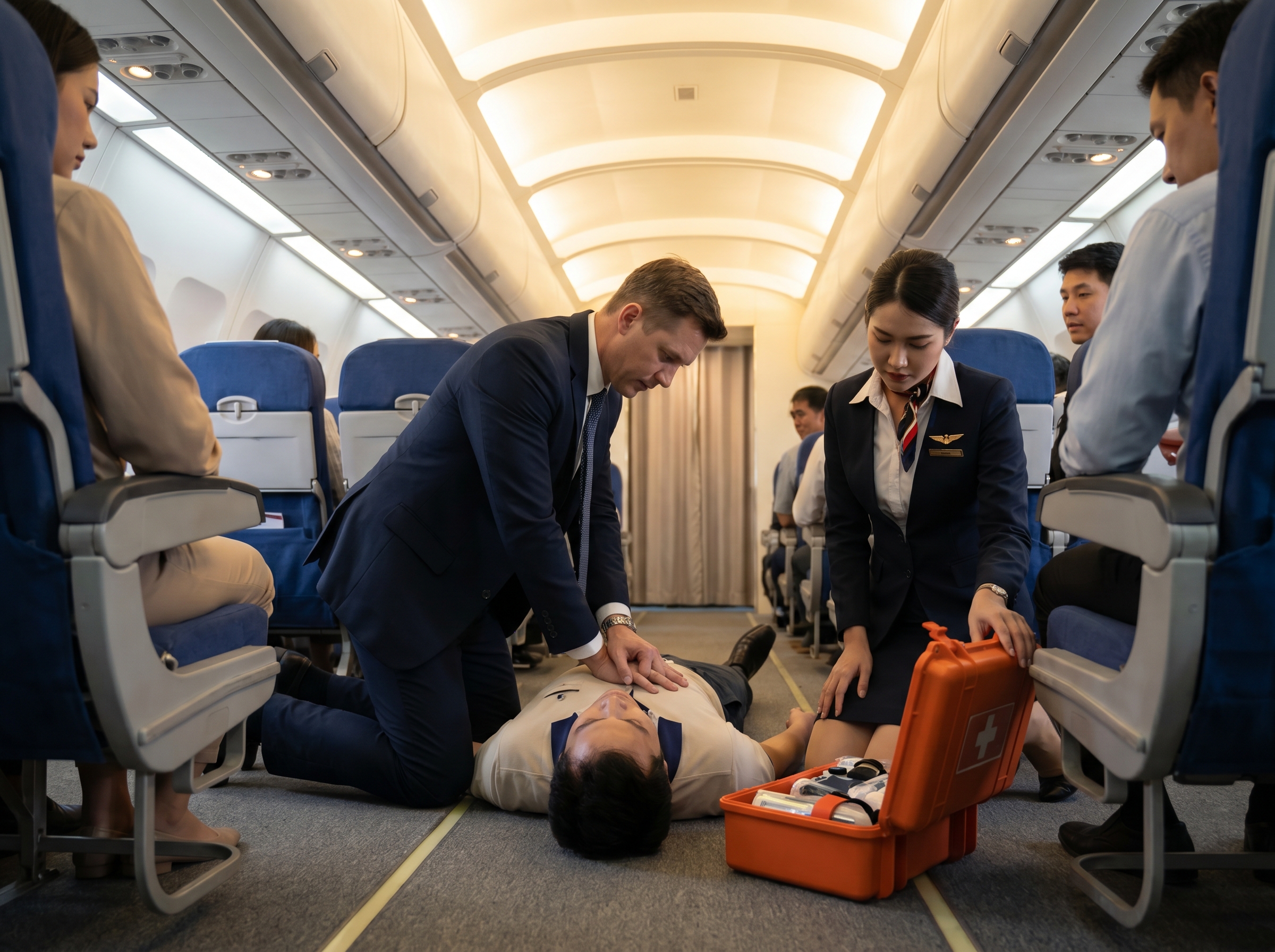
Healthcare provider performing CPR on a passenger in a commercial aircraft aisle


This guide, written from one clinician to another, walks through the realities of managing a cardiac arrest at altitude: the legal framework protecting you, the equipment available, the adaptations ACLS algorithms require, and why keeping your certification sharp is the single best investment you can make before every flight.


The Scope of the Problem: Cardiac Arrest Happens Every Day in the Sky

The numbers are sobering. Research published through EurekAlert! highlights a stark survival disparity: without an AED, only about 6% of in-flight cardiac arrest patients survive. With an AED deployed promptly, survival rates can climb to 70%. That delta — 6% versus 70% — is entirely determined by the speed and quality of the response in the cabin.


Cardiopulmonary resuscitation is performed in roughly 0.4% of all reported in-flight medical events, with AED shocks delivered in a meaningful subset of those cases. And the population flying today skews older and sicker than ever. Passengers travel with pre-existing coronary artery disease, implanted pacemakers, histories of prior MI, and multiple cardiovascular risk factors. Combine that with hypobaric cabin pressure (typically maintained at an equivalent of 6,000–8,000 feet altitude), dehydration, immobility, circadian disruption, and anxiety — and the aircraft cabin becomes a surprisingly hostile cardiovascular environment.


For the in-flight volunteer responder, early recognition and immediate action compress the entire chain of survival into a window measured in minutes. Every link matters more when the next definitive care is two hours away and separated by six miles of air.


Your Legal Protection: The Aviation Medical Assistance Act

Before any clinician rises from their seat, they deserve a clear answer to the question running through their mind: "What is my liability?" The answer, for U.S. domestic flights, is reassuring. The Aviation Medical Assistance Act (AMAA) of 1998 provides federal Good Samaritan protection to any licensed or certified medical professional — physician, nurse, physician assistant, paramedic, or EMT — who responds in good faith to an in-flight emergency.


Specifically, the Act protects the individual responder from civil liability unless their actions constitute gross negligence or willful misconduct. This is a high bar. Providing competent, good-faith ACLS care — even in the unusual constraints of a pressurized cabin — falls well within that protection. The airline itself is also shielded when it reasonably relied on a passenger's claimed qualifications to render assistance.


A few important caveats: AMAA protections apply to flights that depart from or arrive in the United States. On purely international routes, jurisdiction can become murkier, potentially governed by the law of the country of aircraft registration or the geographic location at the time of the event. If you travel internationally, familiarize yourself with the broad principle that most jurisdictions apply Good Samaritan-equivalent protections, but the specifics vary. When in doubt, consult aviation medicine references or legal resources from the American Academy of Family Physicians, which publishes practical guidance on responding to mid-air medical emergencies.


What Is Actually on the Aircraft: Equipment You Can Count On

One of the first cognitive adjustments a clinician must make when responding in-flight is recalibrating their equipment expectations. You are not walking into a code room. But the regulatory baseline is better than many providers assume.


The AED: Your Most Powerful Tool

Since April 2001, the FAA has mandated that all commercial aircraft weighing more than 7,500 pounds with at least one flight attendant must carry an AED. This rule, codified under FAA Advisory Circular AC 121-33B, established a minimum standard that has since been updated to require monthly readiness checks and inspection logs. Every flight attendant receives initial training on AED operation. As a volunteer responder, you can request the AED immediately and trust that it will be ready.


The AED is your equalizer at altitude. Given the evidence showing survival rates jumping from 6% to 70% when a defibrillator is deployed, your priority in any witnessed collapse with suspected cardiac arrest is identical to what it is on the ground: compress, compress, compress — and get that AED attached as fast as possible. Our Ultimate Guide to AEDs covers device mechanics in depth, but in the aircraft context, the key operational consideration is to follow the AED prompts without modification — the device's rhythm analysis algorithms function normally at cabin altitude.
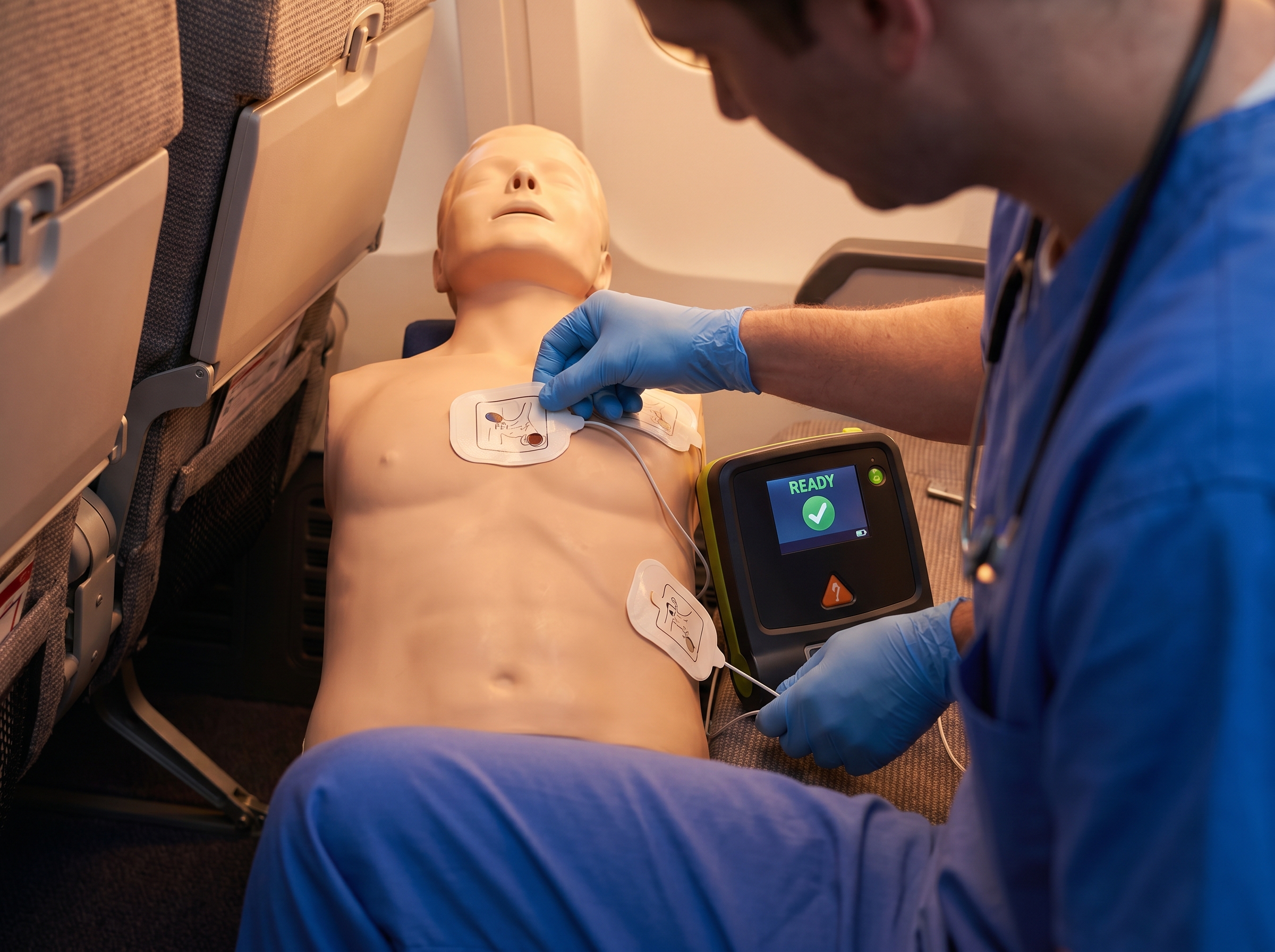
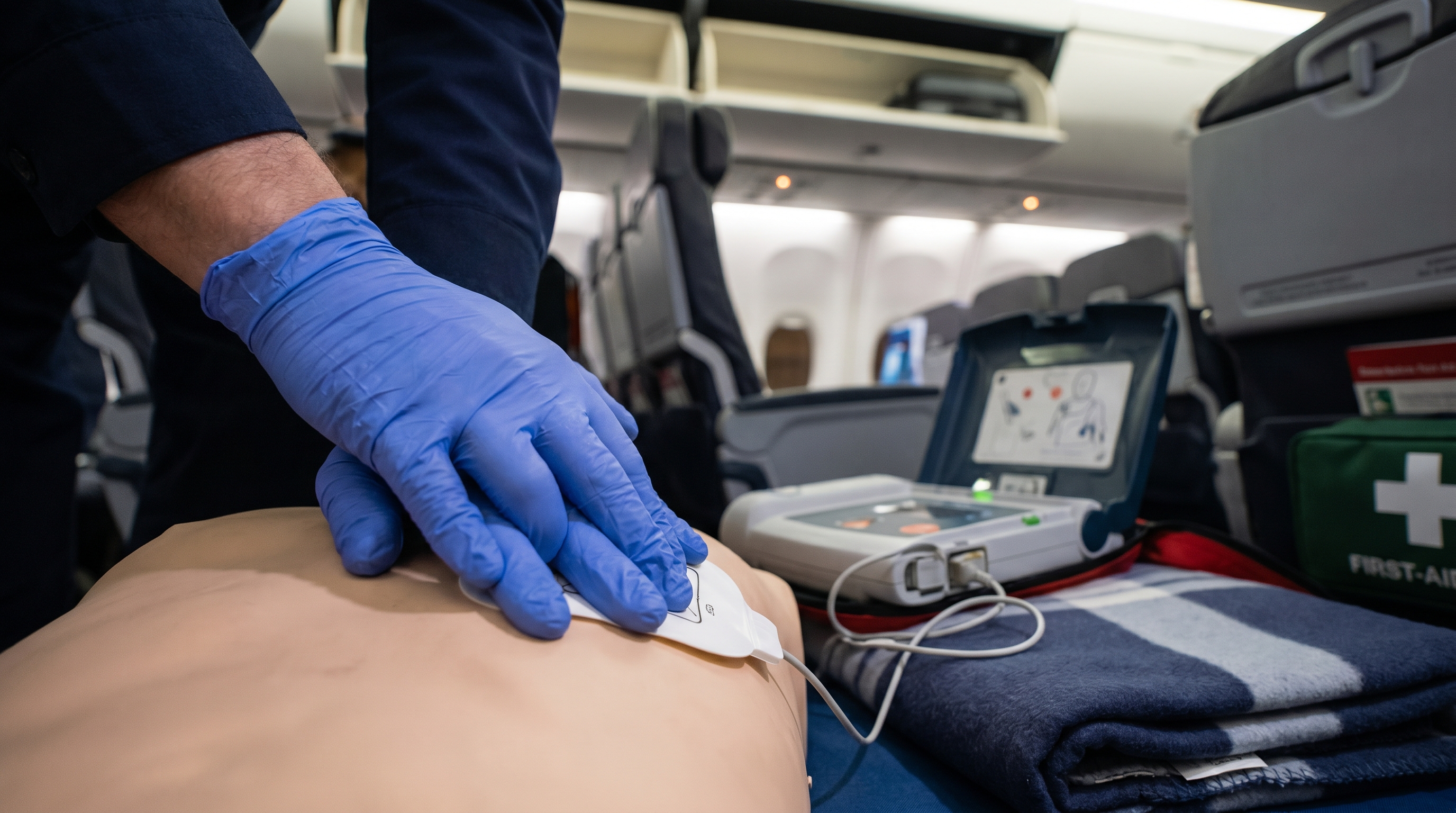
AED electrode pads being applied during in-flight cardiac emergency training simulation


The Enhanced Emergency Medical Kit (EMK)

Beyond the AED, FAA regulations require commercial aircraft to carry an Enhanced Emergency Medical Kit. The contents of a compliant EMK include basic airway equipment (oral airways, bag-valve mask), IV supplies with normal saline and dextrose, epinephrine 1:1000 and 1:10,000, lidocaine, diphenhydramine, nitroglycerin, aspirin, a non-narcotic analgesic, and a range of other medications that cover the most common in-flight emergencies. For a cardiac arrest, the critical contents are epinephrine and the airway kit.


Flight attendants are trained to retrieve and open the EMK but are generally not trained in its clinical application. As the responding provider, you will need to direct their actions: have them retrieve supplies, hand you equipment, and assist with compressions while you direct the overall resuscitation. Think of it as running a code team with one very motivated but medically untrained assistant.


Adapting ACLS Algorithms for the Aircraft Environment

Standard ACLS algorithms were designed for hospital and pre-hospital settings with specific assumptions baked in: supplemental oxygen is plentiful, IV access is standard, advanced airway management is feasible, and a team of trained personnel is available. Each of those assumptions requires adjustment at 30,000 feet. Understanding how to adapt the algorithms under pressure is what separates a provider who panics from one who performs.


High-Quality CPR in a Confined Space

The physics of the aircraft cabin create immediate challenges. Seats are narrow, aisles are tight, and laying a patient flat on the floor — the optimal position for CPR — typically requires moving to the galley area at the front or rear of the aircraft. Request this immediately. Bystanders must be cleared, overhead bins may need to be opened to create a work corridor, and you will be kneeling on a hard floor with limited room to maneuver.


The principles of high-performance CPR do not change: compression rate 100-120 per minute, depth at least 2 inches (5 cm) in adults, full chest recoil, and minimized interruptions. You will fatigue faster in the cabin environment — there is no code team to rotate through compressions. Recruit bystanders. A rotating compression schedule every two minutes keeps quality high and responders functional. Understanding high-performance CPR team strategies is directly applicable here, even with a makeshift team of untrained passengers.


Airway Management Without an Anesthesiologist

Unless you happen to be an anesthesiologist or intensivist, endotracheal intubation on a dark, cramped aircraft floor without a laryngoscope light source upgrade, proper suction, or backup is a high-risk proposition. In the in-flight environment, the EMK-supplied bag-valve mask is almost always the right primary airway tool. Prioritize:


  • Oral airway insertion to maintain a patent airway in an unconscious patient
  • BVM ventilation with supplemental oxygen if available from the aircraft oxygen supply
  • Two-person BVM technique when a second responder or trained crew member is available to form a seal while you compress
  • Passive oxygenation during the first minutes of compression-only CPR if BVM is unavailable

If you must intubate due to refractory vomiting, aspiration risk, or an unconscious patient who cannot be managed with BVM, do it systematically and confirm placement with every available method — end-tidal CO2 colorimetry is often included in modern EMKs. Never rely on visualization alone in this environment.


Rhythm Recognition and Medication Decisions

The AED will handle rhythm analysis and shockable rhythm identification for you. For a witnessed collapse in a previously ambulatory passenger, ventricular fibrillation (VF) is the most likely initial rhythm — and the most treatable. Shock early, shock promptly, and resume compressions immediately. Do not wait to confirm a rhythm with a pulse check before initiating compressions in an unresponsive, non-breathing patient.


For medication administration, the EMK provides epinephrine. In a pulseless arrest, epinephrine 1 mg IV/IO every 3-5 minutes remains the ACLS-recommended vasopressor. The challenge is IV access in a moving aircraft with a patient on the floor. If you cannot establish IV access within the first two cycles of CPR, do not delay further compressions attempting to get a line — prioritize CPR quality over medication administration. Reviewing the Hs and Ts framework for cardiac arrest is particularly valuable here: altitude-related causes like hypoxia are immediately actionable (optimize oxygenation), while others like hypovolemia, hypothermia, and tension pneumothorax may be identifiable with limited assessment tools.


Lidocaine is available in many EMKs and may serve as an antiarrhythmic in refractory VF following shock — consistent with ACLS algorithm guidance when amiodarone is unavailable. Work with what you have, apply the algorithms methodically, and stay organized. Our resource on ACLS algorithm memory hacks is specifically designed to help clinicians recall protocols under pressure — exactly the cognitive load scenario of an in-flight arrest.


Medical Direction from the Ground: Using MedLink and Similar Services

Most major commercial airlines contract with ground-based physician consultation services — MedLink (operated by Global Rescue) and similar providers offer 24/7 phone support for in-flight medical events. Flight attendants are trained to contact these services immediately. As the responding provider, you can and should request to speak directly with the ground physician.


Ground physicians can assist with: medication dosing confirmation, differential diagnosis, diversion decision-making, and documentation. They cannot see your patient, however — your clinical assessment is the ground physician's only data stream. Communicate clearly: vital signs (estimated if necessary), rhythm (shockable or non-shockable per AED), interventions performed and response, and time of collapse onset. This structured communication mirrors the SBAR format used in hospital handoffs and ensures the ground team can advise effectively.


The decision to divert the aircraft rests ultimately with the captain. Your role as the responding clinician is to provide an honest medical assessment: can the patient be safely managed in-flight until the planned destination, or does the clinical picture mandate immediate landing? Diversion carries significant operational and financial costs to the airline — but that calculus is never the clinician's burden. Your only obligation is to the patient in front of you.


Special Considerations for the High-Altitude Environment

Cabin Pressure and Physiologic Stress

Commercial aircraft cabins are pressurized to an equivalent altitude of 6,000–8,000 feet. At this partial pressure of oxygen, arterial oxygen saturation in healthy passengers typically remains adequate (SpO2 ~94-96%). But in a patient with underlying cardiovascular disease, reduced cardiac reserve, or active ischemia, hypobaric hypoxia compounds the physiologic crisis significantly. Supplemental oxygen from the aircraft's portable O2 supply should be delivered at the highest flow rate available as early as possible in any suspected cardiac emergency.


Immobility during long flights also contributes to venous stasis and DVT risk — a passenger who collapses hours into a transatlantic flight may present with pulmonary embolism rather than primary cardiac arrest. The clinical picture (preceding leg swelling, pleuritic chest pain, pre-syncope, history of hypercoagulability) should inform your differential even as you initiate resuscitation. This is the Hs and Ts in real-world application.


Managing the Non-Arrest Cardiac Emergency

Not every in-flight cardiac emergency is a full arrest. Unstable angina, NSTEMI, symptomatic bradycardia, and hypertensive urgency all require management at altitude. The EMK provides aspirin and nitroglycerin — the cornerstone of acute coronary syndrome management. Administer aspirin 325 mg chewed immediately for any patient with suspected ACS. Nitroglycerin 0.4 mg sublingual can relieve ischemic chest pain, but use it cautiously in patients who may be volume-depleted (long flight, poor oral intake) or who have taken phosphodiesterase inhibitors.


For symptomatic bradycardia with hemodynamic compromise, the EMK does not include atropine in all configurations — verify contents with the flight attendant. If atropine is unavailable, transcutaneous pacing is not an option in the cabin setting. Positional therapy (supine with legs elevated) and supportive care while pushing for expedited diversion are your primary tools.


After the Code: Documentation and Handoff

Whether your resuscitation achieves ROSC or results in a declared death, documentation is essential. Request paper and document: time of collapse, initial rhythm, time of first shock, time and dose of medications administered, and the clinical response at each interval. This information is critical for the receiving emergency team and for any subsequent medicolegal review.


On landing, emergency services will meet the aircraft. Your handoff should follow the standard format: patient demographics and history as known, time of onset, interventions performed in sequence, response to interventions, and current clinical status. Clarity in this moment directly influences the receiving team's initial management decisions.


The experience of running a code at altitude is unlike anything in the hospital setting. The emotional and physical toll is real — debriefing with a colleague after the event is not optional, it is necessary. The isolation of the situation, the resource limitations, and the weight of the responsibility demand that providers process these events intentionally.


In-Flight Response and the Broader Pattern of Austere Medicine

The skills demanded of an in-flight medical volunteer overlap substantially with those required in other resource-limited environments. Maritime medicine presents analogous challenges — our resource on ACLS certification for cruise ship medical officers explores how clinicians adapt protocols to isolated environments with limited backup. Rural emergency departments face similar constraints — prioritizing available resources, adapting algorithms, and making decisions without specialist backup. The principles explored in maximizing ACLS outcomes with limited resources translate directly to the aircraft cabin.


The common thread across all austere environments is preparation. The clinician who has reviewed their ACLS algorithms recently, who understands the Hs and Ts, who has practiced high-quality CPR mechanics, and who has thought through the equipment constraints before the emergency occurs — that clinician performs better when the overhead announcement comes. The one who has let their certification lapse and is fuzzy on the pulseless arrest algorithm is already operating at a disadvantage.


Why Keeping Your ACLS Current Matters More Than You Think

The in-flight cardiac emergency crystallizes something that is easy to take for granted in the structured hospital environment: ACLS certification is a clinical readiness tool, not a bureaucratic checkbox. When you are the only provider on a 280-seat aircraft managing a VF arrest with one flight attendant, a consumer-grade AED, and a modest EMK, every gap in your protocol recall has immediate consequences.


At Affordable ACLS, our ACLS certification course is designed by Board Certified Emergency Medicine physicians who understand exactly this kind of high-pressure, resource-limited scenario. Our curriculum covers not just the standard algorithms but the clinical reasoning behind them — so that when the environment does not match the textbook picture, you can adapt without losing the thread. The course is fully online, self-paced, and priced at $99 (with discounts available), with unlimited retakes and an immediate digital certificate you can access the moment you complete. Whether you are recertifying before a major international trip or maintaining readiness for your next shift, the investment takes hours, not days.


If you have ever wondered how you would perform if the overhead call came on your next flight, the answer starts now — with a current certification, a refreshed protocol review, and a commitment to being prepared wherever your work takes you. The same commitment that makes you a better in-flight responder makes you a better provider in every setting where patients depend on you to think clearly under pressure.


The Seat You Occupy Could Save a Life

At 30,000 feet, the gap between a good outcome and a tragic one narrows to the quality of the response in the first minutes. The AED on board changes everything — but only if someone knows how to direct the resuscitation, interpret the rhythm, manage the airway, and organize a team from nothing. That someone is you, if you choose to be ready.


The FAA has mandated the equipment. The Aviation Medical Assistance Act has protected your liability. The ACLS algorithms have been optimized for exactly this kind of event. What remains is your preparation — and the willingness to stand up when the call comes over the intercom. Review your algorithms, refresh your certification, and step onto every flight knowing that your seat might be the most important one on the aircraft.


For more on emergency preparedness in unexpected environments, explore our guidance on what to do when someone collapses in a public setting — the principles of immediate bystander response apply whether you are at 30,000 feet or at sea level.


ACLS Blogs

ACLS in Aircraft Cabins: How In-Flight Medical Volunteers Manage Cardiac Emergencies at 30,000 Feet

When the Overhead Announcement Is "Is There a Doctor on Board?"

You're cruising at 35,000 feet somewhere over the Atlantic, two hours from the nearest airport, when the flight attendant's voice crackles over the intercom: "If there is a medical professional on board, please make yourself known to a crew member immediately." You set down your coffee. This is the moment your ACLS training was built for — except there is no crash cart, no monitored bed, no respiratory therapist, and no code team backing you up.


In-flight cardiac emergencies are far more common than most healthcare providers realize. According to a landmark cohort study published by the JAMA Network Open reviewing data from 84 airlines across more than 3.1 billion passenger boardings, one in every 212 commercial flights involves a medical emergency. Acute cardiac events account for nearly 27% of all diversions and a staggering 88.5% of in-flight deaths. For the healthcare professional sitting in seat 24C, knowing how to apply Advanced Cardiovascular Life Support (ACLS) principles in a resource-constrained aircraft cabin is not a theoretical exercise — it is a matter of life and death.

Healthcare provider performing CPR on a passenger in a commercial aircraft aisle


This guide, written from one clinician to another, walks through the realities of managing a cardiac arrest at altitude: the legal framework protecting you, the equipment available, the adaptations ACLS algorithms require, and why keeping your certification sharp is the single best investment you can make before every flight.


The Scope of the Problem: Cardiac Arrest Happens Every Day in the Sky

The numbers are sobering. Research published through EurekAlert! highlights a stark survival disparity: without an AED, only about 6% of in-flight cardiac arrest patients survive. With an AED deployed promptly, survival rates can climb to 70%. That delta — 6% versus 70% — is entirely determined by the speed and quality of the response in the cabin.


Cardiopulmonary resuscitation is performed in roughly 0.4% of all reported in-flight medical events, with AED shocks delivered in a meaningful subset of those cases. And the population flying today skews older and sicker than ever. Passengers travel with pre-existing coronary artery disease, implanted pacemakers, histories of prior MI, and multiple cardiovascular risk factors. Combine that with hypobaric cabin pressure (typically maintained at an equivalent of 6,000–8,000 feet altitude), dehydration, immobility, circadian disruption, and anxiety — and the aircraft cabin becomes a surprisingly hostile cardiovascular environment.


For the in-flight volunteer responder, early recognition and immediate action compress the entire chain of survival into a window measured in minutes. Every link matters more when the next definitive care is two hours away and separated by six miles of air.


Your Legal Protection: The Aviation Medical Assistance Act

Before any clinician rises from their seat, they deserve a clear answer to the question running through their mind: "What is my liability?" The answer, for U.S. domestic flights, is reassuring. The Aviation Medical Assistance Act (AMAA) of 1998 provides federal Good Samaritan protection to any licensed or certified medical professional — physician, nurse, physician assistant, paramedic, or EMT — who responds in good faith to an in-flight emergency.


Specifically, the Act protects the individual responder from civil liability unless their actions constitute gross negligence or willful misconduct. This is a high bar. Providing competent, good-faith ACLS care — even in the unusual constraints of a pressurized cabin — falls well within that protection. The airline itself is also shielded when it reasonably relied on a passenger's claimed qualifications to render assistance.


A few important caveats: AMAA protections apply to flights that depart from or arrive in the United States. On purely international routes, jurisdiction can become murkier, potentially governed by the law of the country of aircraft registration or the geographic location at the time of the event. If you travel internationally, familiarize yourself with the broad principle that most jurisdictions apply Good Samaritan-equivalent protections, but the specifics vary. When in doubt, consult aviation medicine references or legal resources from the American Academy of Family Physicians, which publishes practical guidance on responding to mid-air medical emergencies.


What Is Actually on the Aircraft: Equipment You Can Count On

One of the first cognitive adjustments a clinician must make when responding in-flight is recalibrating their equipment expectations. You are not walking into a code room. But the regulatory baseline is better than many providers assume.


The AED: Your Most Powerful Tool

Since April 2001, the FAA has mandated that all commercial aircraft weighing more than 7,500 pounds with at least one flight attendant must carry an AED. This rule, codified under FAA Advisory Circular AC 121-33B, established a minimum standard that has since been updated to require monthly readiness checks and inspection logs. Every flight attendant receives initial training on AED operation. As a volunteer responder, you can request the AED immediately and trust that it will be ready.


The AED is your equalizer at altitude. Given the evidence showing survival rates jumping from 6% to 70% when a defibrillator is deployed, your priority in any witnessed collapse with suspected cardiac arrest is identical to what it is on the ground: compress, compress, compress — and get that AED attached as fast as possible. Our Ultimate Guide to AEDs covers device mechanics in depth, but in the aircraft context, the key operational consideration is to follow the AED prompts without modification — the device's rhythm analysis algorithms function normally at cabin altitude.

AED electrode pads being applied during in-flight cardiac emergency training simulation


The Enhanced Emergency Medical Kit (EMK)

Beyond the AED, FAA regulations require commercial aircraft to carry an Enhanced Emergency Medical Kit. The contents of a compliant EMK include basic airway equipment (oral airways, bag-valve mask), IV supplies with normal saline and dextrose, epinephrine 1:1000 and 1:10,000, lidocaine, diphenhydramine, nitroglycerin, aspirin, a non-narcotic analgesic, and a range of other medications that cover the most common in-flight emergencies. For a cardiac arrest, the critical contents are epinephrine and the airway kit.


Flight attendants are trained to retrieve and open the EMK but are generally not trained in its clinical application. As the responding provider, you will need to direct their actions: have them retrieve supplies, hand you equipment, and assist with compressions while you direct the overall resuscitation. Think of it as running a code team with one very motivated but medically untrained assistant.


Adapting ACLS Algorithms for the Aircraft Environment

Standard ACLS algorithms were designed for hospital and pre-hospital settings with specific assumptions baked in: supplemental oxygen is plentiful, IV access is standard, advanced airway management is feasible, and a team of trained personnel is available. Each of those assumptions requires adjustment at 30,000 feet. Understanding how to adapt the algorithms under pressure is what separates a provider who panics from one who performs.


High-Quality CPR in a Confined Space

The physics of the aircraft cabin create immediate challenges. Seats are narrow, aisles are tight, and laying a patient flat on the floor — the optimal position for CPR — typically requires moving to the galley area at the front or rear of the aircraft. Request this immediately. Bystanders must be cleared, overhead bins may need to be opened to create a work corridor, and you will be kneeling on a hard floor with limited room to maneuver.


The principles of high-performance CPR do not change: compression rate 100-120 per minute, depth at least 2 inches (5 cm) in adults, full chest recoil, and minimized interruptions. You will fatigue faster in the cabin environment — there is no code team to rotate through compressions. Recruit bystanders. A rotating compression schedule every two minutes keeps quality high and responders functional. Understanding high-performance CPR team strategies is directly applicable here, even with a makeshift team of untrained passengers.


Airway Management Without an Anesthesiologist

Unless you happen to be an anesthesiologist or intensivist, endotracheal intubation on a dark, cramped aircraft floor without a laryngoscope light source upgrade, proper suction, or backup is a high-risk proposition. In the in-flight environment, the EMK-supplied bag-valve mask is almost always the right primary airway tool. Prioritize:


  • Oral airway insertion to maintain a patent airway in an unconscious patient
  • BVM ventilation with supplemental oxygen if available from the aircraft oxygen supply
  • Two-person BVM technique when a second responder or trained crew member is available to form a seal while you compress
  • Passive oxygenation during the first minutes of compression-only CPR if BVM is unavailable

If you must intubate due to refractory vomiting, aspiration risk, or an unconscious patient who cannot be managed with BVM, do it systematically and confirm placement with every available method — end-tidal CO2 colorimetry is often included in modern EMKs. Never rely on visualization alone in this environment.


Rhythm Recognition and Medication Decisions

The AED will handle rhythm analysis and shockable rhythm identification for you. For a witnessed collapse in a previously ambulatory passenger, ventricular fibrillation (VF) is the most likely initial rhythm — and the most treatable. Shock early, shock promptly, and resume compressions immediately. Do not wait to confirm a rhythm with a pulse check before initiating compressions in an unresponsive, non-breathing patient.


For medication administration, the EMK provides epinephrine. In a pulseless arrest, epinephrine 1 mg IV/IO every 3-5 minutes remains the ACLS-recommended vasopressor. The challenge is IV access in a moving aircraft with a patient on the floor. If you cannot establish IV access within the first two cycles of CPR, do not delay further compressions attempting to get a line — prioritize CPR quality over medication administration. Reviewing the Hs and Ts framework for cardiac arrest is particularly valuable here: altitude-related causes like hypoxia are immediately actionable (optimize oxygenation), while others like hypovolemia, hypothermia, and tension pneumothorax may be identifiable with limited assessment tools.


Lidocaine is available in many EMKs and may serve as an antiarrhythmic in refractory VF following shock — consistent with ACLS algorithm guidance when amiodarone is unavailable. Work with what you have, apply the algorithms methodically, and stay organized. Our resource on ACLS algorithm memory hacks is specifically designed to help clinicians recall protocols under pressure — exactly the cognitive load scenario of an in-flight arrest.


Medical Direction from the Ground: Using MedLink and Similar Services

Most major commercial airlines contract with ground-based physician consultation services — MedLink (operated by Global Rescue) and similar providers offer 24/7 phone support for in-flight medical events. Flight attendants are trained to contact these services immediately. As the responding provider, you can and should request to speak directly with the ground physician.


Ground physicians can assist with: medication dosing confirmation, differential diagnosis, diversion decision-making, and documentation. They cannot see your patient, however — your clinical assessment is the ground physician's only data stream. Communicate clearly: vital signs (estimated if necessary), rhythm (shockable or non-shockable per AED), interventions performed and response, and time of collapse onset. This structured communication mirrors the SBAR format used in hospital handoffs and ensures the ground team can advise effectively.


The decision to divert the aircraft rests ultimately with the captain. Your role as the responding clinician is to provide an honest medical assessment: can the patient be safely managed in-flight until the planned destination, or does the clinical picture mandate immediate landing? Diversion carries significant operational and financial costs to the airline — but that calculus is never the clinician's burden. Your only obligation is to the patient in front of you.


Special Considerations for the High-Altitude Environment

Cabin Pressure and Physiologic Stress

Commercial aircraft cabins are pressurized to an equivalent altitude of 6,000–8,000 feet. At this partial pressure of oxygen, arterial oxygen saturation in healthy passengers typically remains adequate (SpO2 ~94-96%). But in a patient with underlying cardiovascular disease, reduced cardiac reserve, or active ischemia, hypobaric hypoxia compounds the physiologic crisis significantly. Supplemental oxygen from the aircraft's portable O2 supply should be delivered at the highest flow rate available as early as possible in any suspected cardiac emergency.


Immobility during long flights also contributes to venous stasis and DVT risk — a passenger who collapses hours into a transatlantic flight may present with pulmonary embolism rather than primary cardiac arrest. The clinical picture (preceding leg swelling, pleuritic chest pain, pre-syncope, history of hypercoagulability) should inform your differential even as you initiate resuscitation. This is the Hs and Ts in real-world application.


Managing the Non-Arrest Cardiac Emergency

Not every in-flight cardiac emergency is a full arrest. Unstable angina, NSTEMI, symptomatic bradycardia, and hypertensive urgency all require management at altitude. The EMK provides aspirin and nitroglycerin — the cornerstone of acute coronary syndrome management. Administer aspirin 325 mg chewed immediately for any patient with suspected ACS. Nitroglycerin 0.4 mg sublingual can relieve ischemic chest pain, but use it cautiously in patients who may be volume-depleted (long flight, poor oral intake) or who have taken phosphodiesterase inhibitors.


For symptomatic bradycardia with hemodynamic compromise, the EMK does not include atropine in all configurations — verify contents with the flight attendant. If atropine is unavailable, transcutaneous pacing is not an option in the cabin setting. Positional therapy (supine with legs elevated) and supportive care while pushing for expedited diversion are your primary tools.


After the Code: Documentation and Handoff

Whether your resuscitation achieves ROSC or results in a declared death, documentation is essential. Request paper and document: time of collapse, initial rhythm, time of first shock, time and dose of medications administered, and the clinical response at each interval. This information is critical for the receiving emergency team and for any subsequent medicolegal review.


On landing, emergency services will meet the aircraft. Your handoff should follow the standard format: patient demographics and history as known, time of onset, interventions performed in sequence, response to interventions, and current clinical status. Clarity in this moment directly influences the receiving team's initial management decisions.


The experience of running a code at altitude is unlike anything in the hospital setting. The emotional and physical toll is real — debriefing with a colleague after the event is not optional, it is necessary. The isolation of the situation, the resource limitations, and the weight of the responsibility demand that providers process these events intentionally.


In-Flight Response and the Broader Pattern of Austere Medicine

The skills demanded of an in-flight medical volunteer overlap substantially with those required in other resource-limited environments. Maritime medicine presents analogous challenges — our resource on ACLS certification for cruise ship medical officers explores how clinicians adapt protocols to isolated environments with limited backup. Rural emergency departments face similar constraints — prioritizing available resources, adapting algorithms, and making decisions without specialist backup. The principles explored in maximizing ACLS outcomes with limited resources translate directly to the aircraft cabin.


The common thread across all austere environments is preparation. The clinician who has reviewed their ACLS algorithms recently, who understands the Hs and Ts, who has practiced high-quality CPR mechanics, and who has thought through the equipment constraints before the emergency occurs — that clinician performs better when the overhead announcement comes. The one who has let their certification lapse and is fuzzy on the pulseless arrest algorithm is already operating at a disadvantage.


Why Keeping Your ACLS Current Matters More Than You Think

The in-flight cardiac emergency crystallizes something that is easy to take for granted in the structured hospital environment: ACLS certification is a clinical readiness tool, not a bureaucratic checkbox. When you are the only provider on a 280-seat aircraft managing a VF arrest with one flight attendant, a consumer-grade AED, and a modest EMK, every gap in your protocol recall has immediate consequences.


At Affordable ACLS, our ACLS certification course is designed by Board Certified Emergency Medicine physicians who understand exactly this kind of high-pressure, resource-limited scenario. Our curriculum covers not just the standard algorithms but the clinical reasoning behind them — so that when the environment does not match the textbook picture, you can adapt without losing the thread. The course is fully online, self-paced, and priced at $99 (with discounts available), with unlimited retakes and an immediate digital certificate you can access the moment you complete. Whether you are recertifying before a major international trip or maintaining readiness for your next shift, the investment takes hours, not days.


If you have ever wondered how you would perform if the overhead call came on your next flight, the answer starts now — with a current certification, a refreshed protocol review, and a commitment to being prepared wherever your work takes you. The same commitment that makes you a better in-flight responder makes you a better provider in every setting where patients depend on you to think clearly under pressure.


The Seat You Occupy Could Save a Life

At 30,000 feet, the gap between a good outcome and a tragic one narrows to the quality of the response in the first minutes. The AED on board changes everything — but only if someone knows how to direct the resuscitation, interpret the rhythm, manage the airway, and organize a team from nothing. That someone is you, if you choose to be ready.


The FAA has mandated the equipment. The Aviation Medical Assistance Act has protected your liability. The ACLS algorithms have been optimized for exactly this kind of event. What remains is your preparation — and the willingness to stand up when the call comes over the intercom. Review your algorithms, refresh your certification, and step onto every flight knowing that your seat might be the most important one on the aircraft.


For more on emergency preparedness in unexpected environments, explore our guidance on what to do when someone collapses in a public setting — the principles of immediate bystander response apply whether you are at 30,000 feet or at sea level.


blogs

More articles for you

all articles

Start Today!

Get certified at your own pace, on your schedule, from the comfort of your home.