PALS Blogs

PALS Certification for School Nurses: Protecting Students When Every Second Counts

Why PALS Certification Is Critical for School Nurses

Every school day, approximately 52.5 million students walk through classroom doors across the United States, trusting that they'll be safe and cared for if a medical emergency strikes. Standing as the frontline healthcare defender in these settings is often a single school nurse—responsible for hundreds or even thousands of students. When a child experiences cardiac arrest, severe respiratory distress, or another life-threatening emergency, there's no time to wait for an ambulance. The actions taken in those first critical minutes determine whether a student lives or dies, and whether they recover fully or face permanent neurological damage.


Research shows that 68% of school nurses have managed a life-threatening emergency requiring EMS activation during the past school year. That's more than two out of every three school nurses facing a situation where their pediatric emergency training directly impacts a child's survival. Yet despite this alarming reality, many school nurses lack the specialized certification that equips them to handle these critical moments with confidence and clinical precision.


Pediatric Advanced Life Support (PALS) certification provides school nurses with the systematic approach, evidence-based algorithms, and hands-on skills needed to recognize deteriorating pediatric patients, intervene before cardiac arrest occurs, and deliver expert resuscitation when seconds count. This isn't just another credential to add to your resume—it's the difference between knowing exactly what to do when a student collapses and feeling paralyzed by uncertainty during the most crucial moments of your career.
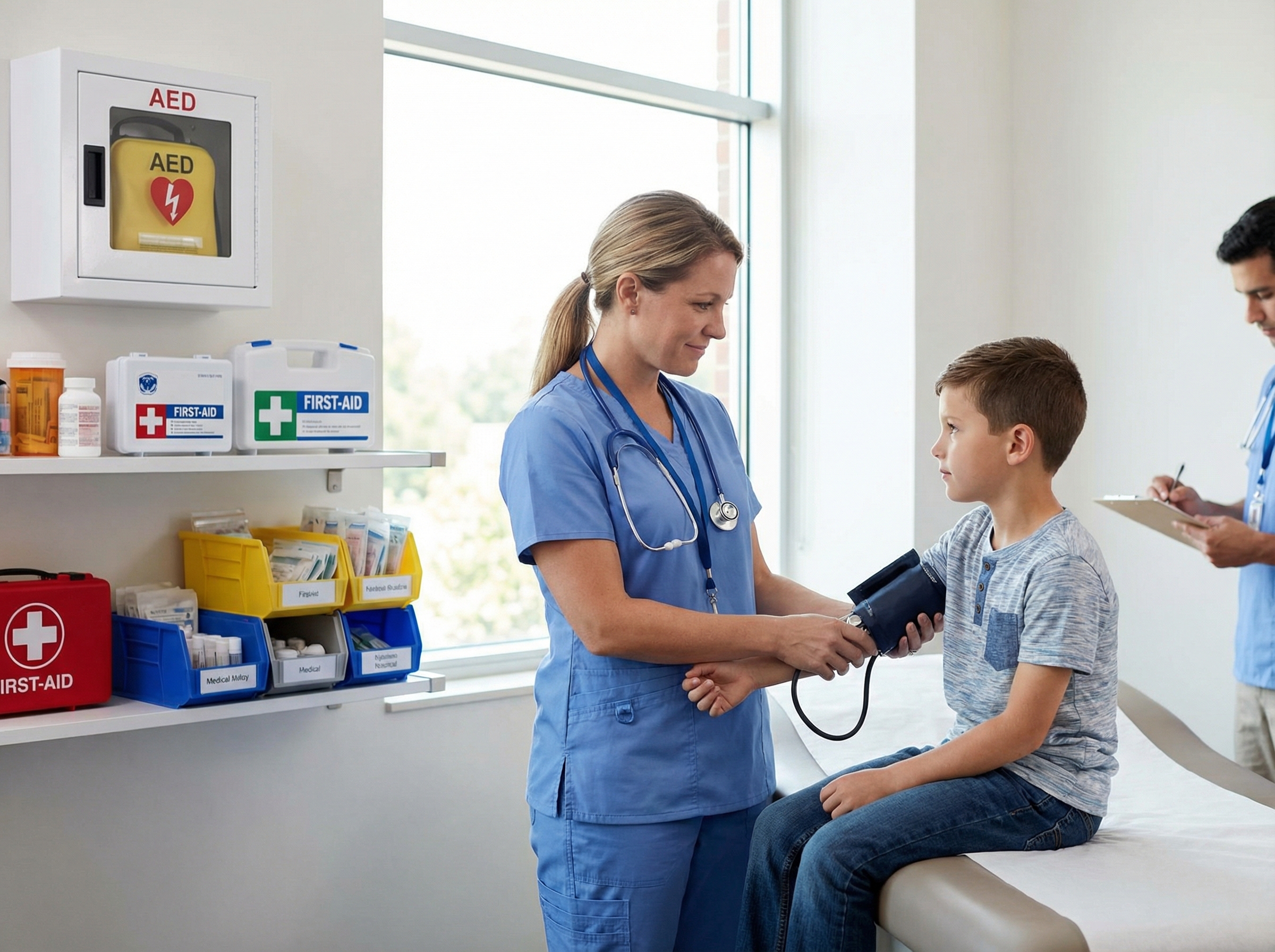
School nurse assessing student in health office


The Unique Emergency Response Challenges School Nurses Face

School nurses operate in a healthcare environment unlike any other. You're not in a hospital with a code team down the hall, crash carts on every floor, and physicians immediately available. You're often the only licensed healthcare professional in a building housing hundreds or thousands of children, many with underlying health conditions that increase their emergency risk.


Working in Professional Isolation

According to the National School Nurse Workforce Study, there are approximately 95,800 full-time school nurses serving 52.5 million students across 130,000 schools. That translates to an average ratio of one nurse for every 548 students. In many districts, the ratio is far worse. Unlike hospital nurses who work alongside colleagues and can call for immediate backup, school nurses make critical decisions alone, often without another healthcare professional within miles.


When a student experiences a medical emergency, you can't simply press a code button and have a specialized team arrive within seconds. You're the team. You must assess, diagnose, intervene, delegate tasks to untrained staff members, communicate with panicked teachers and administrators, contact parents, and coordinate with incoming EMS—all while delivering potentially life-saving treatment. PALS certification provides the systematic framework that enables you to manage this complex, high-stakes situation effectively.


Managing a Diverse Pediatric Population

School nurses care for an extraordinarily diverse patient population spanning multiple developmental stages, each with distinct physiological characteristics and emergency presentations. A kindergartener experiencing respiratory distress presents differently than a teenager with the same condition. Medication dosing, equipment sizing, vital sign interpretation, and intervention strategies all vary dramatically based on age and weight.


PALS training specifically addresses this complexity by teaching age-specific assessment techniques, weight-based medication calculations, and developmentally appropriate interventions. You'll learn to recognize subtle differences in presentation between infants, children, and adolescents—knowledge that proves critical when determining whether a student needs immediate intervention or can be safely observed.


Resource Constraints and Equipment Limitations

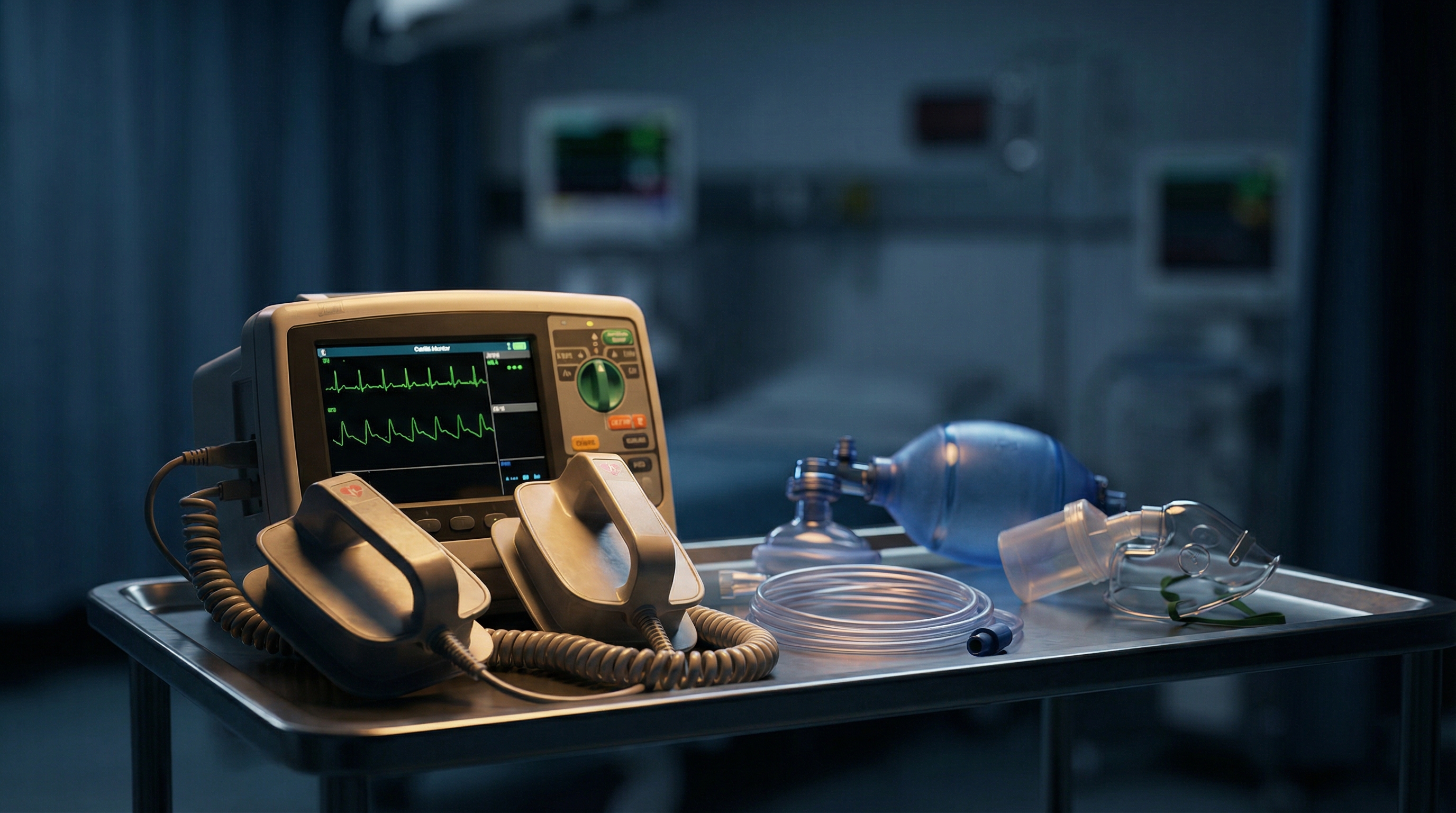
Research indicates that only 32% of schools have an automated external defibrillator (AED) readily available, 76% have epinephrine autoinjectors, and 78% have bronchodilator inhalers. Many school health offices lack advanced airway equipment, cardiac monitors, or comprehensive medication supplies that hospital nurses take for granted. You must deliver expert emergency care with limited resources, making clinical knowledge and skilled assessment even more crucial.


PALS certification teaches you to work effectively within resource constraints, prioritize interventions based on available equipment, and make critical decisions about when to utilize what you have versus when to focus on supportive care while awaiting EMS arrival. You'll gain confidence in delivering high-quality CPR, managing airways with basic equipment, and using AEDs effectively for pediatric patients—skills that directly translate to your school setting.


Pediatric Emergencies Most Likely to Occur in Schools

Understanding the types of emergencies you're most likely to encounter helps contextualize why PALS training is specifically designed to address school nurses' needs. Unlike adult emergencies that typically begin with cardiac events, pediatric emergencies follow distinctly different patterns that require specialized knowledge and intervention strategies.


Respiratory Emergencies: The Leading Cause of Pediatric Cardiac Arrest

Research demonstrates that respiratory etiologies account for 75.8% of pediatric cardiac arrests. Unlike adults where primary cardiac events predominate, children typically arrest due to progressive respiratory failure that leads to hypoxia, bradycardia, and eventually cardiac arrest. This fundamental difference means that recognizing and intervening early in respiratory distress can prevent the vast majority of pediatric cardiac arrests from occurring.


Common respiratory emergencies in schools include asthma exacerbations, severe allergic reactions causing airway swelling, foreign body airway obstruction, and respiratory infections causing significant distress. Managing pediatric respiratory emergencies requires systematic assessment of respiratory effort, breath sounds, oxygen saturation, mental status, and skin color to determine the severity and appropriate interventions.


PALS training teaches you to recognize the continuum of respiratory distress—from early compensated stages where simple interventions suffice, through decompensated respiratory failure requiring aggressive support, to respiratory arrest demanding immediate ventilation. You'll learn warning signs that herald impending cardiac arrest including increasing somnolence, tiring respiratory muscles, severe hypoxia, bradycardia, and the ominous "silent chest" that indicates a child is too exhausted to move air. Recognizing these red flags enables you to intervene before the situation becomes irreversible.
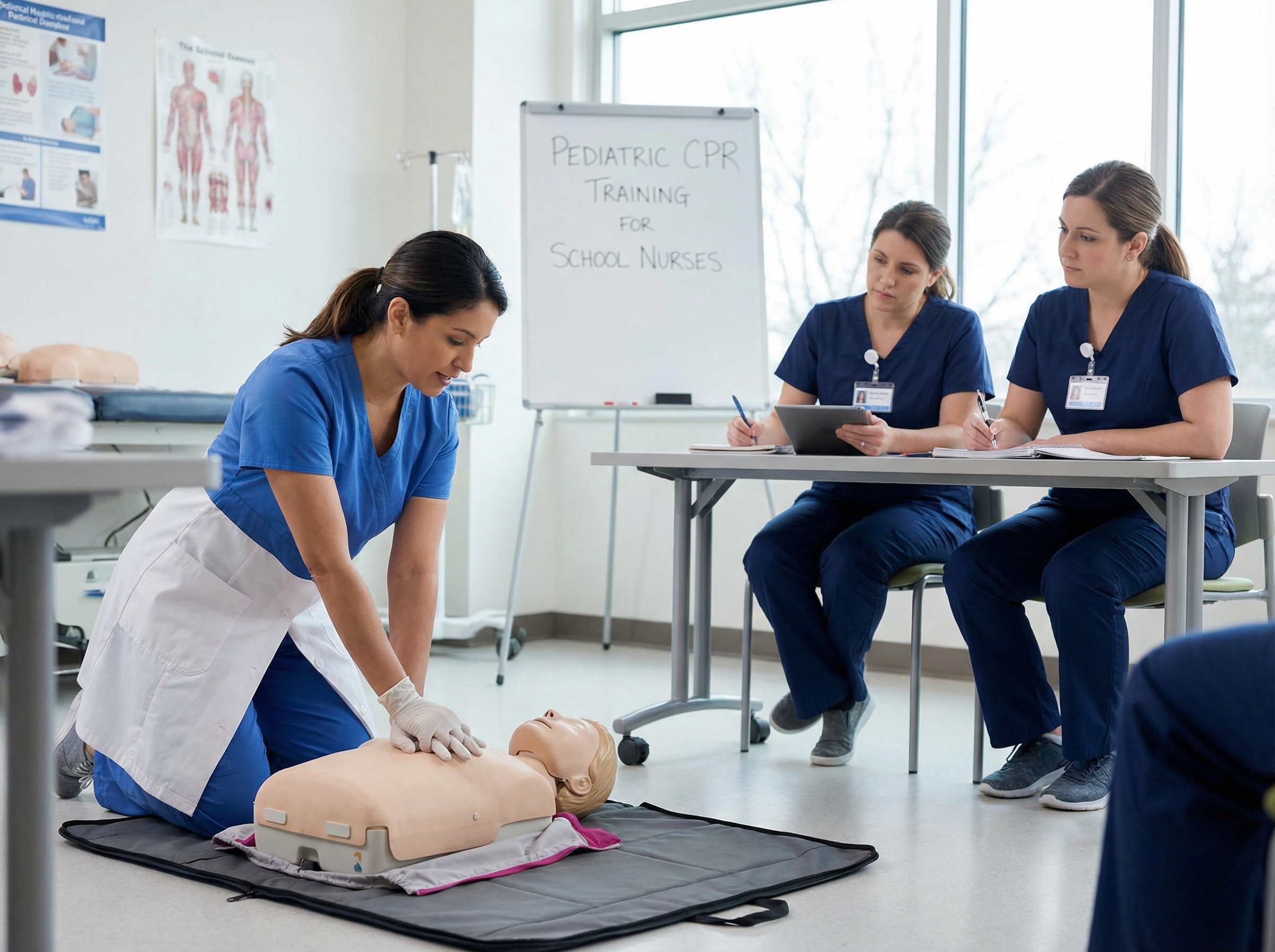
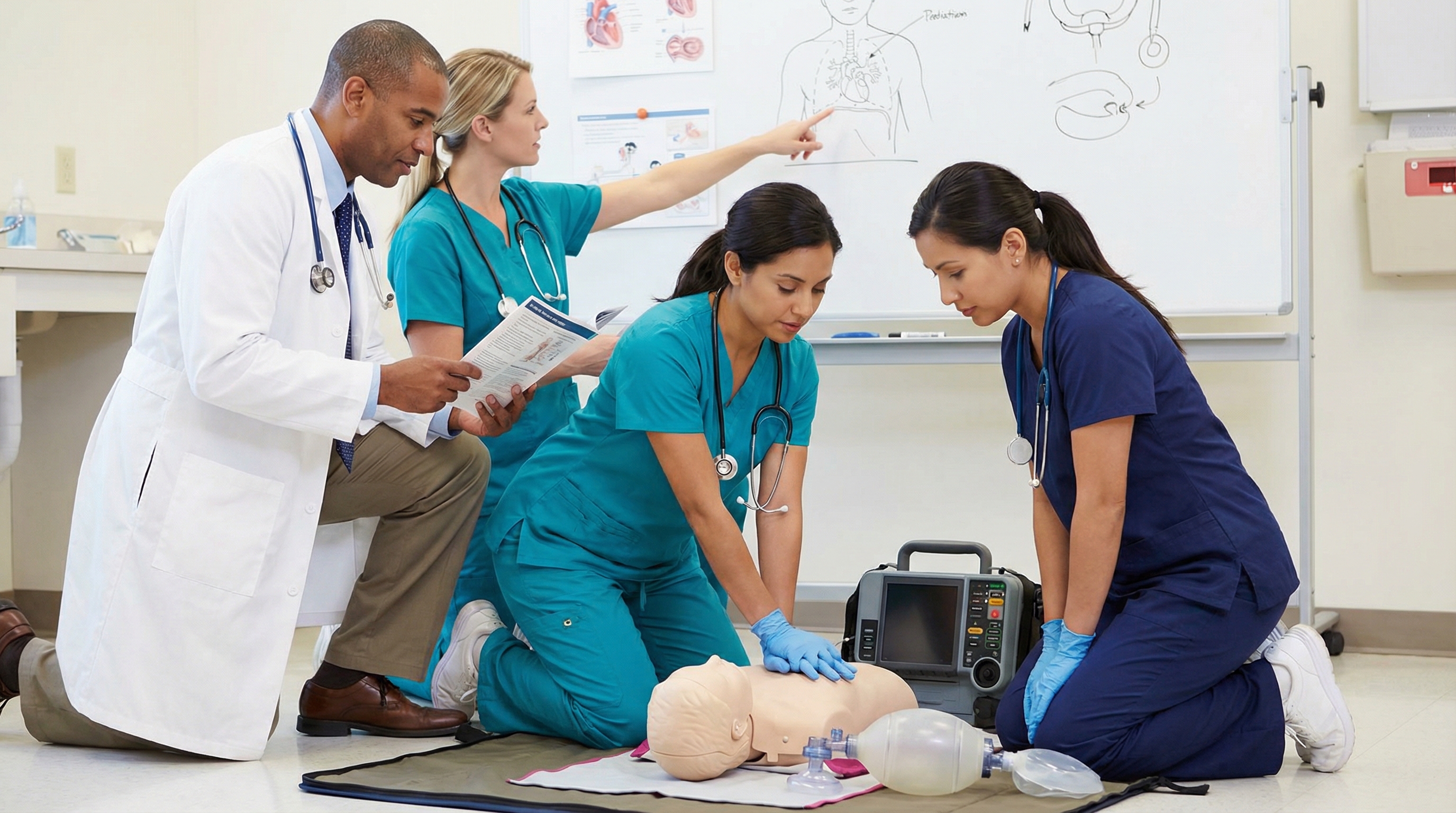
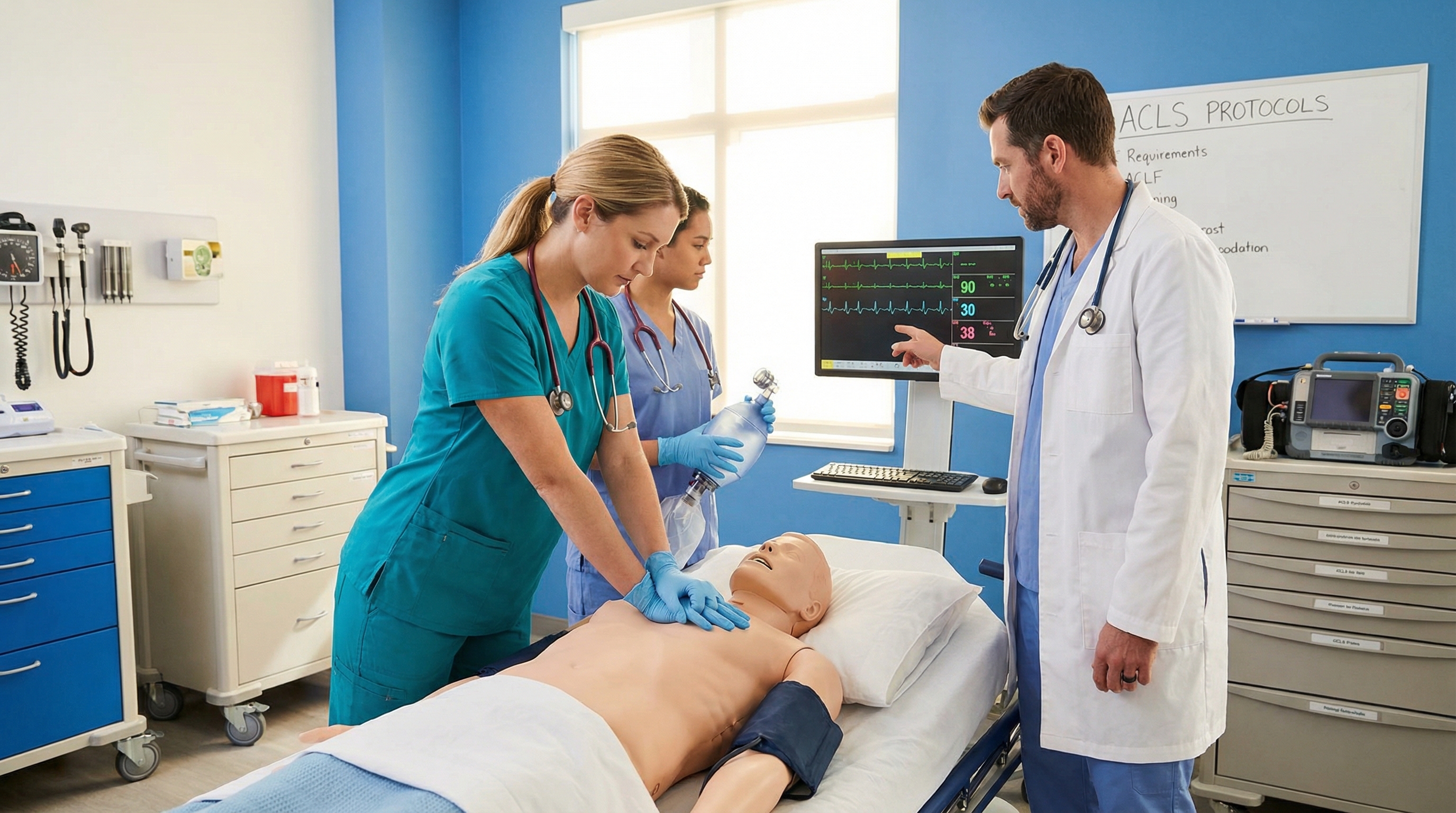
Pediatric CPR training demonstration for school nurses


Cardiac Emergencies and Sudden Cardiac Arrest

While less common than respiratory emergencies, sudden cardiac arrest does occur in schools, often in students with undiagnosed cardiac conditions or those participating in athletic activities. The survival statistics are sobering: only 8.4% of pediatric patients with out-of-hospital cardiac arrest survive to discharge. However, early bystander CPR approximately doubles survival rates, making your immediate response absolutely critical.


PALS certification ensures you can immediately recognize cardiac arrest, initiate high-quality CPR with proper compression-to-ventilation ratios for different age groups, deploy and operate an AED safely on pediatric patients, and manage the critical first minutes until EMS arrives. The course covers the pediatric cardiac arrest algorithm in detail, teaching you systematic approaches to shockable and non-shockable rhythms.


You'll learn crucial skills including appropriate AED pad placement for different-sized children, when to use pediatric attenuator pads versus adult pads, how to minimize interruptions in chest compressions, and how to lead a resuscitation team comprised of teachers, administrators, and other non-medical staff. This team leadership component proves especially valuable in school settings where you must quickly organize and direct untrained helpers during a chaotic, emotionally charged situation.


What PALS Certification Teaches School Nurses

The PALS course, developed based on guidelines from the American Heart Association (AHA) and International Liaison Committee on Resuscitation (ILCOR), provides comprehensive training specifically designed for healthcare professionals who care for critically ill children. For school nurses, this certification delivers practical, evidence-based knowledge that directly applies to your daily work environment.


Systematic Pediatric Assessment

One of the most valuable components of PALS training is the systematic assessment approach that enables you to rapidly identify sick children and determine the urgency of intervention. You'll learn the Pediatric Assessment Triangle (PAT)—a visual assessment tool that evaluates appearance, work of breathing, and circulation to the skin. This rapid initial assessment, which takes only seconds, helps you immediately categorize a patient's stability and determine your next steps.


The course then teaches detailed primary and secondary assessment techniques, vital sign interpretation across different age groups, and recognition of compensated versus decompensated shock. You'll develop the clinical judgment to distinguish between a child who appears ill but is physiologically compensating well versus one whose compensatory mechanisms are failing, requiring immediate aggressive intervention.


Advanced Respiratory Management Skills

Given that respiratory emergencies represent the primary pathway to pediatric cardiac arrest, PALS dedicates substantial focus to respiratory assessment and management. You'll learn to categorize respiratory problems as upper airway obstruction, lower airway obstruction, lung tissue disease, or disordered control of breathing—each requiring different interventions and having different implications for the child's trajectory.


The course covers practical airway management techniques including proper positioning, suctioning, oxygen delivery, bag-mask ventilation, and recognition of when advanced airway interventions become necessary. You'll practice delivering effective bag-mask ventilation—a critical skill that often proves challenging but can be life-saving when performed correctly.


Resuscitation Team Dynamics and Communication

Effective resuscitation requires coordinated teamwork, clear communication, and strong leadership—skills that prove especially challenging when your "team" consists of a PE teacher, the school secretary, and a custodian who happened to be nearby when a student collapsed. PALS training specifically addresses team dynamics, teaching you how to assign roles clearly, direct activities effectively, maintain situational awareness, and communicate critical information concisely.


You'll learn closed-loop communication techniques that ensure instructions are heard and executed correctly, strategies for managing stress and maintaining focus during chaotic situations, and methods for conducting post-event debriefings that help the team process what occurred and identify opportunities for improvement.


How School Nurses Can Obtain PALS Certification Affordably and Conveniently

Traditional PALS certification courses present significant barriers for school nurses. In-person classes typically require two full days away from your school, often during the school year when finding coverage proves nearly impossible. Courses frequently cost $200-300 or more, a significant expense that many school districts won't reimburse.


The Affordable Online Alternative

Affordable ACLS offers a solution specifically designed for busy healthcare professionals like school nurses who need certification but can't afford the time or expense of traditional courses. Our online PALS certification and recertification courses provide the same comprehensive content, evidence-based guidelines, and rigorous assessment as traditional programs, but with the flexibility and affordability that working nurses require.


Our PALS certification costs just $99, with recertification available for $89—a fraction of traditional course fees. The courses are completely self-paced with no time limits, allowing you to study during summer break, evenings, weekends, or whenever your schedule permits. You can start the course, save your progress, and return whenever convenient without worrying about expiring access or rushing through material.


Comprehensive Content Developed by Emergency Physicians

Unlike many online courses created by instructors with limited clinical experience, Affordable ACLS courses are developed by practicing Board Certified Emergency Medicine physicians with over 20 years of combined clinical and academic experience. Our founders actively work in emergency departments across four states, regularly managing critically ill children and teaching resuscitation skills to healthcare professionals. This real-world expertise ensures our content focuses on practical, clinically relevant information rather than unnecessary academic filler.


The course covers all essential PALS topics including systematic pediatric assessment, recognition and management of respiratory emergencies, shock recognition and treatment, cardiac arrest algorithms, post-resuscitation care, and effective team dynamics. All content is based on current American Heart Association and International Liaison Committee on Resuscitation guidelines, ensuring you receive up-to-date, evidence-based training that meets professional standards.


Unlimited Retakes and Immediate Certification

We understand that test anxiety and time pressure can interfere with demonstrating your knowledge, particularly when you're squeezing studying into an already overwhelming schedule. That's why we offer unlimited exam retakes at no additional charge. You can take the assessment as many times as needed until you achieve a passing score, without financial penalty or judgment.


Upon passing the exam, you receive immediate access to your digital certification card—no waiting for cards to arrive in the mail weeks later. You can download and print your certificate instantly, providing it to your employer or licensing board right away. Most school nurses complete the course in 1-2 hours, though you can take as much time as you need to feel confident in the material.


Integrating PALS Knowledge into School Emergency Preparedness

PALS certification represents just one component of comprehensive school emergency preparedness. To maximize the benefit of your training, consider how you can integrate PALS principles into your school's broader emergency planning and readiness efforts.


Developing and Practicing Medical Emergency Response Plans

Research from the National Association of School Nurses shows that 86% of schools have a Medical Emergency Response Plan (MERP), but alarmingly, 35% of those schools never practice the plan. Even more concerning, 17% of schools without a full-time nurse on campus don't have any MERP at all. If your school lacks a comprehensive medical emergency plan, use your PALS training as leverage to advocate for developing one.


An effective MERP should clearly identify who calls 911, who retrieves emergency equipment like the AED, who maintains crowd control and clears hallways for EMS access, who documents the emergency, and who communicates with administrators and parents. The plan should include specific protocols for different emergency types and should be practiced at least annually with staff debriefing to identify improvement opportunities.


Training School Staff in Basic Emergency Response

Your PALS certification equips you to lead pediatric resuscitation, but you can't be everywhere at once in a school building. Ensuring that teachers and staff throughout your school have basic CPR and first aid training creates layers of safety that can make the difference between life and death. Studies show that CPR training is offered to 76% of teachers, 68% of administrative staff, but only 28% of students—identifying a significant gap in preparedness.


Advocate for comprehensive CPR/AED training for all school staff, not just nurses and coaches. Consider organizing training sessions before school starts or during professional development days. The more people in your building who can recognize an emergency and start basic life support, the better the outcomes will be.


Ensuring Adequate Emergency Equipment and Supplies

PALS training will heighten your awareness of gaps in your school's emergency equipment and supplies. Use this knowledge to advocate for essential items that can save lives. At minimum, every school should have readily accessible AEDs with pediatric pads or attenuators, epinephrine auto-injectors for severe allergic reactions, albuterol inhalers for respiratory emergencies, and basic airway management equipment including bag-valve masks in pediatric sizes.


Review your emergency medication stock, ensuring medications haven't expired and are stored properly. Verify that emergency equipment is located where it can be accessed quickly—an AED locked in a closet that no one but the nurse can open provides little benefit when you're on the opposite side of the building and a student collapses.


The Professional Impact of PALS Certification for School Nurses

Beyond the clinical knowledge and emergency skills, PALS certification delivers professional benefits that extend throughout your nursing career. This credential demonstrates commitment to excellence, enhances your marketability, and provides confidence that translates into better patient care and reduced professional anxiety.


Enhanced Career Opportunities and Marketability

PALS certification distinguishes you from other school nurse candidates when seeking new positions or advancing within your district. Many school districts prefer or require PALS certification for school nurses, particularly for those serving schools with medically complex student populations or schools housing special education programs where students may have higher emergency risk.


The certification also keeps your skills current and maintains your clinical competency in pediatric emergency care—important if you ever decide to transition back to hospital nursing or pursue other healthcare opportunities. PALS is typically required for emergency department nurses, pediatric floor nurses, NICU nurses, and many other clinical positions, so maintaining this certification keeps your options open and your resume competitive.


Increased Confidence and Reduced Anxiety

Perhaps the most personally meaningful benefit of PALS certification is the confidence it provides when facing emergency situations. Instead of feeling panicked and uncertain when a student is critically ill, you'll have a systematic framework guiding your assessment and intervention. You'll know the algorithms, understand the rationale behind each step, and have practiced these skills many times before.


This confidence reduces professional anxiety and helps prevent the paralysis that sometimes occurs when healthcare providers encounter emergencies they don't feel prepared to manage. You'll approach each school day knowing that if the worst happens, you have the knowledge and skills to give that student the best possible chance of survival and recovery.


Protecting Students Through Advanced Pediatric Emergency Training

School nurses stand between vulnerable children and life-threatening emergencies every single school day. You're the expert who must recognize when a student with asthma is progressing toward respiratory failure, who must lead resuscitation when an athlete collapses on the field, who must make split-second decisions with limited resources and no backup. The responsibility is enormous, and the consequences of uncertainty or delayed intervention can be catastrophic.


PALS certification provides the systematic framework, evidence-based knowledge, and practical skills you need to fulfill this responsibility with confidence and clinical competence. The training addresses the specific types of emergencies you're most likely to encounter, teaches age-appropriate assessment and intervention techniques, and prepares you to lead resuscitation teams in resource-limited settings.


The barriers that traditionally prevented school nurses from obtaining PALS certification—expensive courses, inflexible scheduling, time away from work—no longer need to stand in your way. Affordable ACLS offers comprehensive, evidence-based PALS certification for just $99, with completely self-paced learning that fits into your schedule and unlimited retakes that eliminate test anxiety. Our courses are developed by practicing emergency physicians, based on current AHA/ILCOR guidelines, and backed by a money-back guarantee if your employer doesn't accept the certification.


You became a school nurse to protect children's health and wellbeing. PALS certification equips you to fulfill that mission even when students face their most critical moments. The knowledge you gain will serve students throughout your entire career, potentially making the difference between tragedy and triumph when a child's life hangs in the balance. Don't wait for an emergency to expose gaps in your preparedness. Get certified today and stand ready to protect your students when every second counts.


Visit Affordable ACLS to start your PALS certification today. With our self-paced online course, you can complete your certification on your schedule, gain the confidence and skills you need to handle pediatric emergencies, and know you're fully prepared to protect the students who depend on you every day.


PALS Blogs

PALS Certification for School Nurses: Protecting Students When Every Second Counts

Every school day, approximately 52.5 million students walk through classroom doors across the United States, trusting that they'll be safe and cared for if a medical emergency strikes. Standing as the frontline healthcare defender in these settings is often a single school nurse—responsible for hundreds or even thousands of students.

Why PALS Certification Is Critical for School Nurses

Every school day, approximately 52.5 million students walk through classroom doors across the United States, trusting that they'll be safe and cared for if a medical emergency strikes. Standing as the frontline healthcare defender in these settings is often a single school nurse—responsible for hundreds or even thousands of students. When a child experiences cardiac arrest, severe respiratory distress, or another life-threatening emergency, there's no time to wait for an ambulance. The actions taken in those first critical minutes determine whether a student lives or dies, and whether they recover fully or face permanent neurological damage.


Research shows that 68% of school nurses have managed a life-threatening emergency requiring EMS activation during the past school year. That's more than two out of every three school nurses facing a situation where their pediatric emergency training directly impacts a child's survival. Yet despite this alarming reality, many school nurses lack the specialized certification that equips them to handle these critical moments with confidence and clinical precision.


Pediatric Advanced Life Support (PALS) certification provides school nurses with the systematic approach, evidence-based algorithms, and hands-on skills needed to recognize deteriorating pediatric patients, intervene before cardiac arrest occurs, and deliver expert resuscitation when seconds count. This isn't just another credential to add to your resume—it's the difference between knowing exactly what to do when a student collapses and feeling paralyzed by uncertainty during the most crucial moments of your career.

School nurse assessing student in health office


The Unique Emergency Response Challenges School Nurses Face

School nurses operate in a healthcare environment unlike any other. You're not in a hospital with a code team down the hall, crash carts on every floor, and physicians immediately available. You're often the only licensed healthcare professional in a building housing hundreds or thousands of children, many with underlying health conditions that increase their emergency risk.


Working in Professional Isolation

According to the National School Nurse Workforce Study, there are approximately 95,800 full-time school nurses serving 52.5 million students across 130,000 schools. That translates to an average ratio of one nurse for every 548 students. In many districts, the ratio is far worse. Unlike hospital nurses who work alongside colleagues and can call for immediate backup, school nurses make critical decisions alone, often without another healthcare professional within miles.


When a student experiences a medical emergency, you can't simply press a code button and have a specialized team arrive within seconds. You're the team. You must assess, diagnose, intervene, delegate tasks to untrained staff members, communicate with panicked teachers and administrators, contact parents, and coordinate with incoming EMS—all while delivering potentially life-saving treatment. PALS certification provides the systematic framework that enables you to manage this complex, high-stakes situation effectively.


Managing a Diverse Pediatric Population

School nurses care for an extraordinarily diverse patient population spanning multiple developmental stages, each with distinct physiological characteristics and emergency presentations. A kindergartener experiencing respiratory distress presents differently than a teenager with the same condition. Medication dosing, equipment sizing, vital sign interpretation, and intervention strategies all vary dramatically based on age and weight.


PALS training specifically addresses this complexity by teaching age-specific assessment techniques, weight-based medication calculations, and developmentally appropriate interventions. You'll learn to recognize subtle differences in presentation between infants, children, and adolescents—knowledge that proves critical when determining whether a student needs immediate intervention or can be safely observed.


Resource Constraints and Equipment Limitations

Research indicates that only 32% of schools have an automated external defibrillator (AED) readily available, 76% have epinephrine autoinjectors, and 78% have bronchodilator inhalers. Many school health offices lack advanced airway equipment, cardiac monitors, or comprehensive medication supplies that hospital nurses take for granted. You must deliver expert emergency care with limited resources, making clinical knowledge and skilled assessment even more crucial.


PALS certification teaches you to work effectively within resource constraints, prioritize interventions based on available equipment, and make critical decisions about when to utilize what you have versus when to focus on supportive care while awaiting EMS arrival. You'll gain confidence in delivering high-quality CPR, managing airways with basic equipment, and using AEDs effectively for pediatric patients—skills that directly translate to your school setting.


Pediatric Emergencies Most Likely to Occur in Schools

Understanding the types of emergencies you're most likely to encounter helps contextualize why PALS training is specifically designed to address school nurses' needs. Unlike adult emergencies that typically begin with cardiac events, pediatric emergencies follow distinctly different patterns that require specialized knowledge and intervention strategies.


Respiratory Emergencies: The Leading Cause of Pediatric Cardiac Arrest

Research demonstrates that respiratory etiologies account for 75.8% of pediatric cardiac arrests. Unlike adults where primary cardiac events predominate, children typically arrest due to progressive respiratory failure that leads to hypoxia, bradycardia, and eventually cardiac arrest. This fundamental difference means that recognizing and intervening early in respiratory distress can prevent the vast majority of pediatric cardiac arrests from occurring.


Common respiratory emergencies in schools include asthma exacerbations, severe allergic reactions causing airway swelling, foreign body airway obstruction, and respiratory infections causing significant distress. Managing pediatric respiratory emergencies requires systematic assessment of respiratory effort, breath sounds, oxygen saturation, mental status, and skin color to determine the severity and appropriate interventions.


PALS training teaches you to recognize the continuum of respiratory distress—from early compensated stages where simple interventions suffice, through decompensated respiratory failure requiring aggressive support, to respiratory arrest demanding immediate ventilation. You'll learn warning signs that herald impending cardiac arrest including increasing somnolence, tiring respiratory muscles, severe hypoxia, bradycardia, and the ominous "silent chest" that indicates a child is too exhausted to move air. Recognizing these red flags enables you to intervene before the situation becomes irreversible.

Pediatric CPR training demonstration for school nurses


Cardiac Emergencies and Sudden Cardiac Arrest

While less common than respiratory emergencies, sudden cardiac arrest does occur in schools, often in students with undiagnosed cardiac conditions or those participating in athletic activities. The survival statistics are sobering: only 8.4% of pediatric patients with out-of-hospital cardiac arrest survive to discharge. However, early bystander CPR approximately doubles survival rates, making your immediate response absolutely critical.


PALS certification ensures you can immediately recognize cardiac arrest, initiate high-quality CPR with proper compression-to-ventilation ratios for different age groups, deploy and operate an AED safely on pediatric patients, and manage the critical first minutes until EMS arrives. The course covers the pediatric cardiac arrest algorithm in detail, teaching you systematic approaches to shockable and non-shockable rhythms.


You'll learn crucial skills including appropriate AED pad placement for different-sized children, when to use pediatric attenuator pads versus adult pads, how to minimize interruptions in chest compressions, and how to lead a resuscitation team comprised of teachers, administrators, and other non-medical staff. This team leadership component proves especially valuable in school settings where you must quickly organize and direct untrained helpers during a chaotic, emotionally charged situation.


What PALS Certification Teaches School Nurses

The PALS course, developed based on guidelines from the American Heart Association (AHA) and International Liaison Committee on Resuscitation (ILCOR), provides comprehensive training specifically designed for healthcare professionals who care for critically ill children. For school nurses, this certification delivers practical, evidence-based knowledge that directly applies to your daily work environment.


Systematic Pediatric Assessment

One of the most valuable components of PALS training is the systematic assessment approach that enables you to rapidly identify sick children and determine the urgency of intervention. You'll learn the Pediatric Assessment Triangle (PAT)—a visual assessment tool that evaluates appearance, work of breathing, and circulation to the skin. This rapid initial assessment, which takes only seconds, helps you immediately categorize a patient's stability and determine your next steps.


The course then teaches detailed primary and secondary assessment techniques, vital sign interpretation across different age groups, and recognition of compensated versus decompensated shock. You'll develop the clinical judgment to distinguish between a child who appears ill but is physiologically compensating well versus one whose compensatory mechanisms are failing, requiring immediate aggressive intervention.


Advanced Respiratory Management Skills

Given that respiratory emergencies represent the primary pathway to pediatric cardiac arrest, PALS dedicates substantial focus to respiratory assessment and management. You'll learn to categorize respiratory problems as upper airway obstruction, lower airway obstruction, lung tissue disease, or disordered control of breathing—each requiring different interventions and having different implications for the child's trajectory.


The course covers practical airway management techniques including proper positioning, suctioning, oxygen delivery, bag-mask ventilation, and recognition of when advanced airway interventions become necessary. You'll practice delivering effective bag-mask ventilation—a critical skill that often proves challenging but can be life-saving when performed correctly.


Resuscitation Team Dynamics and Communication

Effective resuscitation requires coordinated teamwork, clear communication, and strong leadership—skills that prove especially challenging when your "team" consists of a PE teacher, the school secretary, and a custodian who happened to be nearby when a student collapsed. PALS training specifically addresses team dynamics, teaching you how to assign roles clearly, direct activities effectively, maintain situational awareness, and communicate critical information concisely.


You'll learn closed-loop communication techniques that ensure instructions are heard and executed correctly, strategies for managing stress and maintaining focus during chaotic situations, and methods for conducting post-event debriefings that help the team process what occurred and identify opportunities for improvement.


How School Nurses Can Obtain PALS Certification Affordably and Conveniently

Traditional PALS certification courses present significant barriers for school nurses. In-person classes typically require two full days away from your school, often during the school year when finding coverage proves nearly impossible. Courses frequently cost $200-300 or more, a significant expense that many school districts won't reimburse.


The Affordable Online Alternative

Affordable ACLS offers a solution specifically designed for busy healthcare professionals like school nurses who need certification but can't afford the time or expense of traditional courses. Our online PALS certification and recertification courses provide the same comprehensive content, evidence-based guidelines, and rigorous assessment as traditional programs, but with the flexibility and affordability that working nurses require.


Our PALS certification costs just $99, with recertification available for $89—a fraction of traditional course fees. The courses are completely self-paced with no time limits, allowing you to study during summer break, evenings, weekends, or whenever your schedule permits. You can start the course, save your progress, and return whenever convenient without worrying about expiring access or rushing through material.


Comprehensive Content Developed by Emergency Physicians

Unlike many online courses created by instructors with limited clinical experience, Affordable ACLS courses are developed by practicing Board Certified Emergency Medicine physicians with over 20 years of combined clinical and academic experience. Our founders actively work in emergency departments across four states, regularly managing critically ill children and teaching resuscitation skills to healthcare professionals. This real-world expertise ensures our content focuses on practical, clinically relevant information rather than unnecessary academic filler.


The course covers all essential PALS topics including systematic pediatric assessment, recognition and management of respiratory emergencies, shock recognition and treatment, cardiac arrest algorithms, post-resuscitation care, and effective team dynamics. All content is based on current American Heart Association and International Liaison Committee on Resuscitation guidelines, ensuring you receive up-to-date, evidence-based training that meets professional standards.


Unlimited Retakes and Immediate Certification

We understand that test anxiety and time pressure can interfere with demonstrating your knowledge, particularly when you're squeezing studying into an already overwhelming schedule. That's why we offer unlimited exam retakes at no additional charge. You can take the assessment as many times as needed until you achieve a passing score, without financial penalty or judgment.


Upon passing the exam, you receive immediate access to your digital certification card—no waiting for cards to arrive in the mail weeks later. You can download and print your certificate instantly, providing it to your employer or licensing board right away. Most school nurses complete the course in 1-2 hours, though you can take as much time as you need to feel confident in the material.


Integrating PALS Knowledge into School Emergency Preparedness

PALS certification represents just one component of comprehensive school emergency preparedness. To maximize the benefit of your training, consider how you can integrate PALS principles into your school's broader emergency planning and readiness efforts.


Developing and Practicing Medical Emergency Response Plans

Research from the National Association of School Nurses shows that 86% of schools have a Medical Emergency Response Plan (MERP), but alarmingly, 35% of those schools never practice the plan. Even more concerning, 17% of schools without a full-time nurse on campus don't have any MERP at all. If your school lacks a comprehensive medical emergency plan, use your PALS training as leverage to advocate for developing one.


An effective MERP should clearly identify who calls 911, who retrieves emergency equipment like the AED, who maintains crowd control and clears hallways for EMS access, who documents the emergency, and who communicates with administrators and parents. The plan should include specific protocols for different emergency types and should be practiced at least annually with staff debriefing to identify improvement opportunities.


Training School Staff in Basic Emergency Response

Your PALS certification equips you to lead pediatric resuscitation, but you can't be everywhere at once in a school building. Ensuring that teachers and staff throughout your school have basic CPR and first aid training creates layers of safety that can make the difference between life and death. Studies show that CPR training is offered to 76% of teachers, 68% of administrative staff, but only 28% of students—identifying a significant gap in preparedness.


Advocate for comprehensive CPR/AED training for all school staff, not just nurses and coaches. Consider organizing training sessions before school starts or during professional development days. The more people in your building who can recognize an emergency and start basic life support, the better the outcomes will be.


Ensuring Adequate Emergency Equipment and Supplies

PALS training will heighten your awareness of gaps in your school's emergency equipment and supplies. Use this knowledge to advocate for essential items that can save lives. At minimum, every school should have readily accessible AEDs with pediatric pads or attenuators, epinephrine auto-injectors for severe allergic reactions, albuterol inhalers for respiratory emergencies, and basic airway management equipment including bag-valve masks in pediatric sizes.


Review your emergency medication stock, ensuring medications haven't expired and are stored properly. Verify that emergency equipment is located where it can be accessed quickly—an AED locked in a closet that no one but the nurse can open provides little benefit when you're on the opposite side of the building and a student collapses.


The Professional Impact of PALS Certification for School Nurses

Beyond the clinical knowledge and emergency skills, PALS certification delivers professional benefits that extend throughout your nursing career. This credential demonstrates commitment to excellence, enhances your marketability, and provides confidence that translates into better patient care and reduced professional anxiety.


Enhanced Career Opportunities and Marketability

PALS certification distinguishes you from other school nurse candidates when seeking new positions or advancing within your district. Many school districts prefer or require PALS certification for school nurses, particularly for those serving schools with medically complex student populations or schools housing special education programs where students may have higher emergency risk.


The certification also keeps your skills current and maintains your clinical competency in pediatric emergency care—important if you ever decide to transition back to hospital nursing or pursue other healthcare opportunities. PALS is typically required for emergency department nurses, pediatric floor nurses, NICU nurses, and many other clinical positions, so maintaining this certification keeps your options open and your resume competitive.


Increased Confidence and Reduced Anxiety

Perhaps the most personally meaningful benefit of PALS certification is the confidence it provides when facing emergency situations. Instead of feeling panicked and uncertain when a student is critically ill, you'll have a systematic framework guiding your assessment and intervention. You'll know the algorithms, understand the rationale behind each step, and have practiced these skills many times before.


This confidence reduces professional anxiety and helps prevent the paralysis that sometimes occurs when healthcare providers encounter emergencies they don't feel prepared to manage. You'll approach each school day knowing that if the worst happens, you have the knowledge and skills to give that student the best possible chance of survival and recovery.


Protecting Students Through Advanced Pediatric Emergency Training

School nurses stand between vulnerable children and life-threatening emergencies every single school day. You're the expert who must recognize when a student with asthma is progressing toward respiratory failure, who must lead resuscitation when an athlete collapses on the field, who must make split-second decisions with limited resources and no backup. The responsibility is enormous, and the consequences of uncertainty or delayed intervention can be catastrophic.


PALS certification provides the systematic framework, evidence-based knowledge, and practical skills you need to fulfill this responsibility with confidence and clinical competence. The training addresses the specific types of emergencies you're most likely to encounter, teaches age-appropriate assessment and intervention techniques, and prepares you to lead resuscitation teams in resource-limited settings.


The barriers that traditionally prevented school nurses from obtaining PALS certification—expensive courses, inflexible scheduling, time away from work—no longer need to stand in your way. Affordable ACLS offers comprehensive, evidence-based PALS certification for just $99, with completely self-paced learning that fits into your schedule and unlimited retakes that eliminate test anxiety. Our courses are developed by practicing emergency physicians, based on current AHA/ILCOR guidelines, and backed by a money-back guarantee if your employer doesn't accept the certification.


You became a school nurse to protect children's health and wellbeing. PALS certification equips you to fulfill that mission even when students face their most critical moments. The knowledge you gain will serve students throughout your entire career, potentially making the difference between tragedy and triumph when a child's life hangs in the balance. Don't wait for an emergency to expose gaps in your preparedness. Get certified today and stand ready to protect your students when every second counts.


Visit Affordable ACLS to start your PALS certification today. With our self-paced online course, you can complete your certification on your schedule, gain the confidence and skills you need to handle pediatric emergencies, and know you're fully prepared to protect the students who depend on you every day.


blogs

More articles for you

all articles

Start Today!

Get certified at your own pace, on your schedule, from the comfort of your home.