For locum tenens physicians, nurse practitioners, and travel nurses, professional mobility offers tremendous career benefits: higher compensation, flexible schedules, exposure to diverse clinical environments, and the opportunity to practice in underserved communities. However, this mobility comes with a complex administrative burden that can feel overwhelming—managing multiple state medical licenses, maintaining various certifications, and ensuring compliance with differing state-by-state requirements for ACLS, BLS, and PALS credentials.

Unlike healthcare professionals who work in a single facility, mobile clinicians must navigate a patchwork of licensing requirements across state lines. Each assignment in a new state potentially requires verification of certifications, proof of continuing education, and documentation that meets that state's specific standards. The cost, time, and administrative complexity of maintaining credentials across multiple jurisdictions can be staggering—with licensing fees ranging from $140 in Wisconsin to over $1,300 in California, and processing times varying from one week to six months depending on the state board's efficiency.
This comprehensive guide addresses the specific certification management challenges facing locum tenens and travel healthcare professionals. We'll explore how multi-state licensing compacts work, what ACLS, BLS, and PALS requirements vary by state, and most importantly, how time-flexible online certification options can streamline your compliance process while saving you both time and money between assignments.
The good news for mobile healthcare professionals is that interstate licensing compacts have made practice across state lines significantly easier than in previous decades. According to CompHealth's 2025 Interstate Medical Licensure Compact guide, these agreements among participating states work together to streamline the licensing process for physicians who want to practice in multiple states, offering a voluntary, expedited pathway to licensure for qualified physicians.
For physicians working locum tenens assignments, the Interstate Medical Licensure Compact has become a game-changer. As of 2025, 42 states plus Washington D.C. and Guam participate in the IMLC, and approximately 80% of U.S. physicians meet the criteria for licensure through the Compact. This represents a significant expansion of access for locum providers.
To qualify for IMLC participation, physicians must hold a full, unrestricted medical license in a Compact member state that can serve as a State of Principal License (SPL). It's important to note that some states like Connecticut, Pennsylvania, and Vermont can issue licenses through IMLC but cannot serve as an SPL for entry into the compact. The IMLC has been particularly instrumental in supporting telemedicine practice, allowing physicians to legally provide care across state lines for virtual consultations and remote patient monitoring.
The benefits extend beyond convenience. The Compact strengthens public protection by facilitating state medical board sharing of investigative and disciplinary information, creating a more transparent credentialing system. For locum tenens physicians juggling multiple state licenses, this centralized information sharing reduces redundant background checks and expedites the verification process.
Travel nurses and locum tenens nurse practitioners benefit from the Enhanced Nurse Licensure Compact, which allows practice across participating states without additional license applications. According to SGS Consulting's 2025 USA Travel Nurse Licensure Guide, many nurses apply for a multistate license through the eNLC for broader flexibility, though not all U.S. states participate in the program.
For nurse practitioners working locum tenens, the situation is more complex. Each state has its own licensing requirements and levels of practice autonomy, which can vary dramatically. Some states like Washington and Maine allow nurse practitioners to work independently with full practice authority, while others like Georgia and North Carolina require nurse practitioners to work under a supervising physician. These variations can affect not only your licensing requirements but also your scope of practice, prescription authority, and even the types of certification courses you may need to complete.
The continuing education requirements also vary significantly. One state might require 75 hours of pharmacology continuing education credits, while another has different specifications. This variability means travel nurse practitioners must carefully research each state's requirements before accepting an assignment, and maintain meticulous records of completed continuing education to ensure they can demonstrate compliance when needed.
Beyond physicians and nurses, other healthcare professionals working in mobile capacities may benefit from specialty compacts. The Physical Therapy Compact authorizes physical therapists to work in member states under a single license, while PSYPACT enables psychologists to practice telepsychology across member states. The Occupational Therapy Compact and the Audiology and Speech-Language Pathology Interstate Compact offer similar benefits. For respiratory therapists, paramedics, and other allied health professionals working locum assignments, however, individual state licensing remains the norm, requiring separate applications and fees for each state of practice.
Unlike state medical licenses, ACLS (Advanced Cardiovascular Life Support), BLS (Basic Life Support), and PALS (Pediatric Advanced Life Support) certifications are generally standardized across the United States because they're based on American Heart Association (AHA) and International Liaison Committee on Resuscitation (ILCOR) guidelines. This standardization is tremendously beneficial for mobile clinicians—a valid ACLS certification obtained in one state is recognized in all others.
The universal nature of these certifications means that whether you're working a travel nursing contract in California, a locum tenens physician assignment in Maine, or providing temporary coverage in Texas, your ACLS, BLS, or PALS credential remains valid. The course content, examination standards, and competency requirements are consistent nationwide, reflecting evidence-based resuscitation science that doesn't change based on geography.
This is where online certification platforms like Affordable ACLS provide exceptional value for mobile healthcare workers. Because the certifications are universally recognized and based on the same AHA/ILCOR guidelines used by traditional in-person courses, the digital certificate you receive can be presented to credentialing departments in any state. For locum and travel professionals who may need to complete or renew certifications between assignments, the ability to certify online from anywhere, at any time, eliminates the logistical nightmare of scheduling in-person classes around travel schedules.
While the certifications themselves are standardized, what does vary is the specific requirements imposed by individual employers, healthcare facilities, and staffing agencies. Some hospitals require all clinical staff to hold current BLS certification at minimum, with ACLS required for critical care units, emergency departments, and intensive care settings. Pediatric facilities typically require PALS certification for nurses and physicians working in emergency departments, PICUs, or pediatric units.
Travel nurses and locum tenens providers often discover that each new facility has slightly different expectations. One emergency department might require ACLS and BLS but not PALS, while a pediatric emergency department absolutely requires all three. Some facilities mandate in-person skills verification sessions even when you present valid certifications from online providers, while others fully accept digital certifications without additional requirements. The key is to verify specific facility requirements with your staffing agency or the credentialing department before beginning an assignment.
This is precisely why many experienced mobile clinicians choose to maintain all three certifications—ACLS, BLS, and PALS—even if their current assignment doesn't require all of them. Having comprehensive credentials ready eliminates delays when opportunities arise and demonstrates commitment to clinical excellence. Affordable ACLS offers bundle pricing specifically designed for this scenario: the ACLS + BLS + PALS bundle costs $227, significantly less than obtaining each certification separately and far more affordable than traditional in-person courses that can cost $200-300 per certification.
One of the most challenging aspects of certification management for mobile clinicians is coordinating recertification timelines with work assignments. ACLS, BLS, and PALS certifications typically expire after two years. For healthcare professionals working in a single facility, tracking one expiration date is straightforward. For locum and travel professionals juggling multiple state licenses, multiple facility credentialing requirements, and varying assignment schedules, keeping track of certification expirations requires careful organization.
Consider this common scenario: You complete a 13-week travel nursing assignment in Arizona that ends in October, but your ACLS certification expires in November. Your next assignment in Washington doesn't start until December, and you'll be traveling during the interim period. Traditional in-person recertification classes require you to be physically present at a specific location on a specific date—a significant logistical challenge when you're between assignments or traveling.
This is where online recertification options become invaluable. With self-paced online courses, you can complete your recertification from your laptop in a hotel room, during downtime between shifts, or from home between assignments. The flexibility to recertify on your schedule, without geographic constraints, means you never have to turn down an assignment or experience a lapse in credentials due to scheduling conflicts. Affordable ACLS offers unlimited retakes and no time limits on course completion, so you can fit recertification into your schedule regardless of how unpredictable your travel calendar might be.
Successfully managing certifications and licenses across multiple states requires organization, forward planning, and strategic use of available resources. Here are evidence-based strategies that experienced locum tenens and travel healthcare professionals use to maintain compliance while minimizing administrative burden and costs.
Develop a master calendar that tracks all your professional credentials with their expiration dates: state medical or nursing licenses, DEA registrations, controlled substance licenses, ACLS certification, BLS certification, PALS certification, and any specialty certifications. Set reminders at 90 days, 60 days, and 30 days before expiration to give yourself adequate time to complete renewal requirements.
Many mobile clinicians use digital tools specifically designed for healthcare credential tracking, but even a simple spreadsheet can be effective. The critical element is having a single source of truth that shows all your credentials, their expiration dates, and the renewal requirements for each. This prevents the nightmare scenario of arriving at a new assignment only to discover that one of your required certifications expired the previous month.
For ACLS, BLS, and PALS certifications specifically, consider staggering your recertification dates so they don't all expire simultaneously. If you need to recertify all three at once, take advantage of bundle pricing and complete them together to save both time and money. However, if your current certifications expire at different times, you might choose to recertify each one individually as it approaches expiration rather than synchronizing them all.
According to LocumStory's licensing guide, a general rule of thumb is to allow 90 days for licensing before starting an assignment, though the time required can vary from one week to six months depending on the state board's processing speed and the complexity of your application. For locum tenens providers and travel nurses, this means you need to think several months ahead when planning assignments.
When you're considering assignments in states where you don't currently hold a license, factor the licensing timeline and cost into your decision-making. Some states have expedited licensing options for an additional fee, which might be worthwhile if you have a time-sensitive assignment. Others participate in licensing compacts that can significantly reduce processing time. Research these options early and build the timeline into your contract negotiations with staffing agencies.
The financial investment in multi-state licensing can be substantial, with fees varying dramatically by state and additional costs for DEA registration and controlled substance registrations. However, unlike state licenses which require individual applications to each state board, your ACLS, BLS, and PALS certifications require only a single certification that's valid nationwide. This is another area where online certification offers significant cost savings—at $59-$109 per certification for recertification through Affordable ACLS, compared to $200-300 for traditional courses, mobile clinicians can save hundreds of dollars annually.
Every time you start a new assignment, you'll need to provide proof of your certifications and licenses to the facility's credentialing department. Rather than scrambling to locate documents each time, maintain a organized digital folder with current copies of all your credentials. Include your state licenses, DEA certificate, ACLS certificate, BLS certificate, PALS certificate, malpractice insurance documentation, and immunization records.
When you complete online certification through Affordable ACLS, you receive an immediately downloadable digital certificate that you can save to this credential folder and print as needed. Unlike traditional courses where you might wait weeks to receive a physical card in the mail, the instant access to your certification means you can submit it to credentialing departments immediately, potentially reducing your time-to-start for new assignments.
Keep both digital copies and physical copies of all credentials. Store digital versions in a secure cloud service that you can access from anywhere, and maintain a physical portfolio of printed certificates that travels with you. Some facilities still prefer physical documentation during orientation, even if you've submitted digital copies to credentialing in advance. Understanding how to interpret your certification card details helps ensure you're presenting the correct information to each facility.
Many travel nursing agencies and locum tenens staffing companies offer some form of reimbursement or assistance with licensing and certification costs. Some provide upfront payment for state licenses or certifications required for specific assignments, while others reimburse you after you complete the assignment. These benefits can offset a significant portion of your credentialing expenses.
Before paying out-of-pocket for certifications or licenses, check with your staffing agency about available reimbursement programs. Even if they don't automatically offer these benefits, they may be willing to negotiate reimbursement as part of your contract, particularly for high-demand specialties or hard-to-fill positions. Some agencies will pay for expedited licensing if it means you can start an urgent assignment sooner.
If you're working as an independent contractor rather than through an agency, remember that licensing and certification expenses are typically tax-deductible business expenses. Keep receipts for all professional credential costs, including state license fees, certification courses, continuing education, and associated expenses. Understanding reimbursement strategies can help you maximize these benefits and reduce your out-of-pocket costs significantly.
The traditional model of life support certification—attending an in-person class at a specific location on a specific date, often requiring a full day or multiple days of your time—simply doesn't align well with the mobile clinician lifestyle. When your work schedule involves travel between states, varying shift patterns, and unpredictable contract end dates, committing to a fixed-schedule certification class becomes a significant logistical challenge.
Online certification platforms eliminate these constraints entirely. Affordable ACLS courses are completely self-paced with no time limits, meaning you can start the course in one state, save your progress, travel to your next assignment, and complete it when convenient. You can work through course material during downtime between shifts, while waiting at an airport, or from your temporary housing between assignments. The certification itself is valid nationwide and accepted by healthcare facilities in all states, making it ideal for professionals who cross state lines regularly.
The unlimited retakes policy is particularly valuable for busy mobile clinicians. If you need to pause midway through an exam because you're called for a shift or interrupted by travel logistics, you can return later and retake it without penalty or additional cost. This flexibility removes the stress and pressure that comes with traditional high-stakes, one-time testing situations—especially important when you're studying while managing the demands of travel and temporary assignments.
The financial burden of maintaining credentials across multiple states can be substantial for locum tenens and travel healthcare professionals. Understanding these costs and identifying opportunities for savings is essential for protecting your bottom line while maintaining compliance.
According to industry data, state medical license fees vary dramatically. A medical license in Wisconsin might cost around $140, while an initial license in California can exceed $1,300. When you add the Federation Credentials Verification Service (FCVS) application fees, DEA registration (approximately $888 for three years), and each state's Controlled Substance Registration, the costs compound quickly. A locum tenens physician maintaining licenses in five states could easily spend $3,000-$5,000 annually on licensing fees alone.
For travel nurses, state nursing license fees are generally lower than physician licenses, but still represent a significant expense when multiplied across multiple states. While the Enhanced Nurse Licensure Compact can reduce these costs for nurses practicing in member states, those who work in non-compact states still need to pay for individual state licenses. Processing fees, fingerprinting costs, and background check fees add to the total expense.
These costs are largely unavoidable—you must hold appropriate licenses to practice legally in each state. However, the timing of when you obtain licenses can impact your finances. Some mobile clinicians maintain licenses only in states where they regularly accept assignments, applying for new state licenses only when specific opportunities arise. Others maintain licenses in several states proactively to be able to quickly accept assignments. Your strategy should depend on your typical assignment patterns and financial capacity.
While state license fees are relatively fixed, certification costs offer significant opportunity for savings. Traditional in-person ACLS, BLS, and PALS courses typically cost $200-$300 per certification, with some providers charging even more. For a mobile clinician who needs all three certifications renewed every two years, that represents $600-$900 in certification costs alone, not including the time cost of attending full-day or multi-day courses.
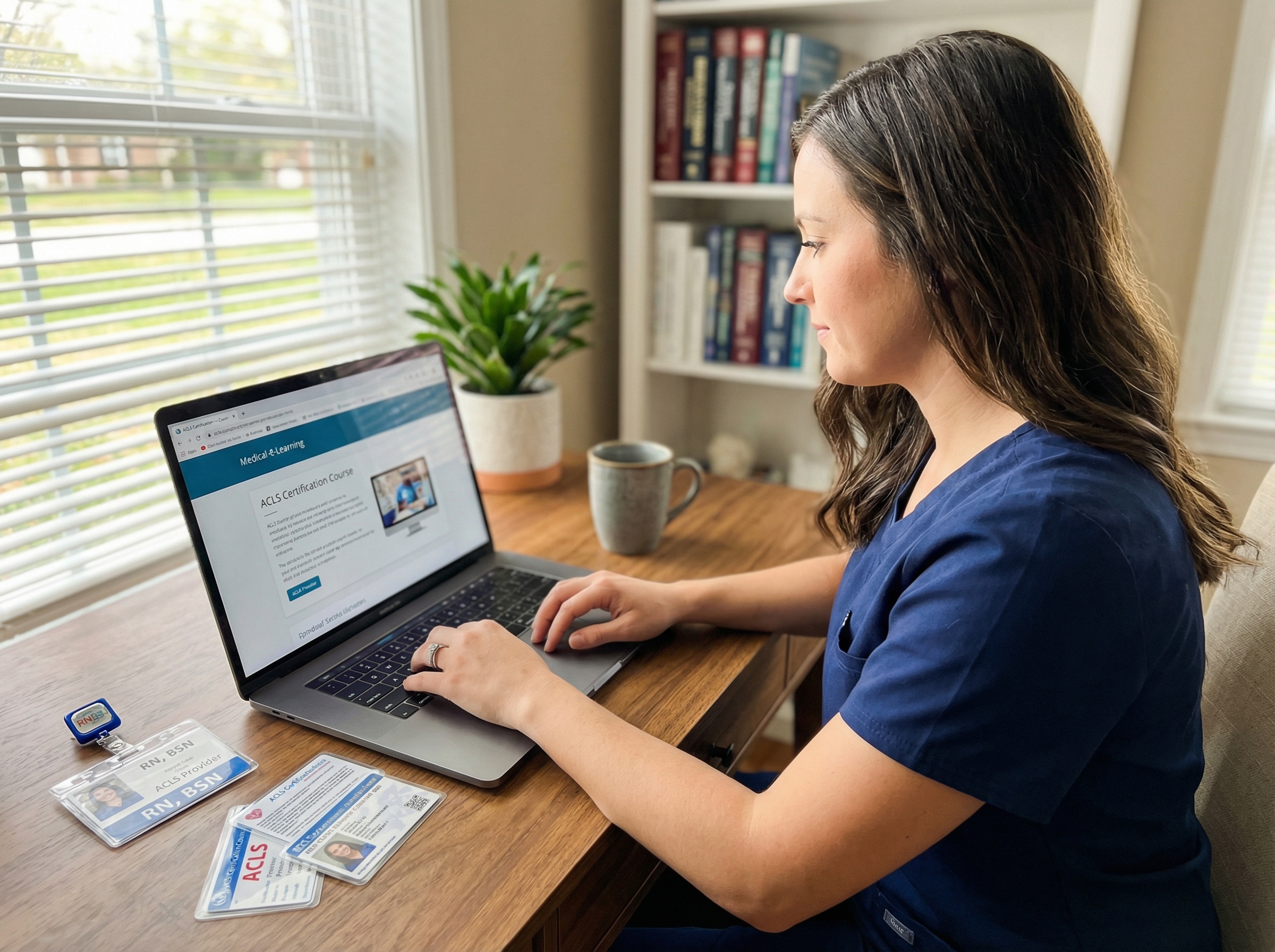
Online certification through Affordable ACLS costs dramatically less: BLS recertification is $59, while ACLS and PALS recertification are each $99. For all three certifications together, the bundle price is $237—a savings of $373-$673 compared to traditional courses. Over a typical career involving multiple recertification cycles, this represents thousands of dollars in savings that mobile clinicians can redirect toward other professional expenses or personal financial goals.
The time savings is equally significant. Traditional courses often require 4-8 hours of attendance, plus travel time to and from the course location. For a travel nurse working 12-hour shifts or a locum tenens physician with demanding call schedules, taking a full day off for certification can mean lost income or scheduling complications. Online self-paced courses can be completed in 1-2 hours at times that don't conflict with work schedules or require sacrificing billable hours.
Beyond direct fees, mobile clinicians face substantial hidden costs related to credential management. The administrative time required to complete multiple state license applications, track expiration dates, gather required documentation, and coordinate with credentialing departments represents hours of unpaid work. For high-earning specialists, this administrative time has a significant opportunity cost.
Travel costs for in-person certification courses can add up, particularly for clinicians working in rural or remote areas where courses may not be readily available locally. Hotel costs, meals, and transportation to attend a certification class can easily add $100-$200 to the total expense. Online certification eliminates these costs entirely.
Perhaps most significantly, credential-related delays can cost mobile clinicians actual work opportunities. If your ACLS certification expires and you can't immediately find an in-person recertification class that fits your schedule, you may need to turn down assignments until you're recertified. For a travel nurse earning $2,000-$3,000 per week or a locum tenens physician earning even more, a week or two of delayed start time while waiting for recertification represents substantial lost income—far more than any cost difference between certification options.
Maintaining perfect compliance with all certification and licensing requirements across multiple states requires diligence and attention to detail. Here are the most common pitfalls mobile clinicians encounter and strategies to avoid them.
The single most common—and most costly—mistake mobile clinicians make is allowing certifications or licenses to lapse. Even a single day of lapsed credentials can result in being unable to work, contract termination, or credentialing delays that prevent you from starting your next assignment on time. Some state boards impose reinstatement fees or require additional continuing education if you allow a license to lapse.
Set multiple reminders well in advance of expiration dates. Many mobile clinicians use a three-tier reminder system: 90 days out (start gathering renewal requirements), 60 days out (complete renewal applications or recertification courses), and 30 days out (final verification that renewal is complete). This buffer gives you time to address any unexpected complications in the renewal process.
For ACLS, BLS, and PALS certifications specifically, consider recertifying slightly early if it aligns better with your schedule. Affordable ACLS certifications are valid for two years from the date of completion, so if your current certification expires in November but you have significant downtime in September, completing your recertification early ensures you're covered without the risk of last-minute scheduling conflicts.
Don't assume that all facilities have identical certification requirements. Before accepting an assignment, explicitly confirm with the credentialing department or your staffing agency exactly which certifications are required, whether they accept online certifications, and if any additional skills verification is needed. Getting this information in writing prevents surprises during orientation.
Some facilities require in-person skills verification sessions even when you present valid certifications from online providers, particularly for BLS which includes hands-on CPR skills. While this is becoming less common as online certification gains broader acceptance, knowing in advance allows you to plan accordingly. Affordable ACLS certifications are accepted by the vast majority of healthcare facilities nationwide, and the platform offers a money-back guarantee if your employer doesn't accept the certification—providing peace of mind and financial protection.
Similarly, verify continuing education requirements for state license renewals well before they're due. Some states require specific topics or minimum hours of continuing education for license renewal, and scrambling to complete required courses at the last minute can be stressful and expensive. Planning ahead allows you to complete continuing education requirements during slower work periods or between assignments.
Disorganized record-keeping causes unnecessary stress and credentialing delays. According to healthcare training compliance research, mobile accessibility and compliance tracking are essential features of modern healthcare credential management. Having immediate access to all your credential documentation, regardless of where you're physically located, prevents delays and demonstrates professionalism.
Create a systematic filing system, both digital and physical. Use a consistent naming convention for digital files (for example: "ACLS_Certificate_2025-2027.pdf" or "CA_Medical_License_Expires_2026.pdf") so you can quickly locate documents when needed. Back up digital files to multiple locations—cloud storage, external hard drive, and email—to ensure you never lose access to critical credentials.
When you complete online certification through Affordable ACLS, immediately save the digital certificate to your credential folder and print a physical copy for your portfolio. Some mobile clinicians also email copies to themselves and to their staffing agency's credentialing coordinator to ensure multiple people have access if needed urgently. This redundancy prevents the panic of needing proof of certification and being unable to locate it quickly.
The landscape of multi-state healthcare credentialing continues to evolve, with trends toward greater standardization, technological integration, and recognition of online learning. Understanding these trends helps mobile clinicians anticipate and prepare for future changes.
The number of states participating in healthcare licensing compacts continues to grow. The IMLC has expanded from just a handful of states at its inception to 42 states plus D.C. and Guam in 2025. Similarly, nursing compacts and allied health professional compacts are adding member states regularly. This expansion reflects recognition that healthcare workforce mobility benefits both providers and patients, particularly for addressing provider shortages in rural and underserved areas.
As more states join compacts, the administrative burden for mobile clinicians will continue to decrease. Eventually, we may see near-universal compact participation for most healthcare professions, making true national practice authority a reality. For locum tenens and travel professionals, this would mean significantly reduced licensing costs and faster credentialing for new assignments.
The COVID-19 pandemic accelerated acceptance of telehealth and remote healthcare delivery, which in turn has prompted reconsideration of state-by-state licensing requirements. Many states temporarily relaxed licensing requirements during the pandemic to allow out-of-state providers to deliver telehealth services. While some of these emergency provisions have expired, the experience demonstrated that patients can safely receive care from providers licensed in other states.
For mobile clinicians, the expansion of telehealth creates new opportunities to provide care across state lines without physical relocation. However, it also creates new compliance considerations—you typically need to be licensed in the state where the patient is located, not necessarily where you're physically present during the telehealth encounter. Understanding these nuances is essential for clinicians incorporating telehealth into their practice model.
Healthcare credentialing is increasingly moving toward digital-first systems with blockchain verification for enhanced security and instant verification. Rather than mailing physical certificates or submitting paper documentation to credentialing offices, digital credentialing platforms allow instant verification of licenses, certifications, and credentials through secure online systems.
Affordable ACLS is already aligned with this digital-first approach, providing immediately downloadable digital certificates upon course completion. As healthcare facilities increasingly adopt digital credentialing verification systems, the ability to provide instant proof of certification becomes even more valuable for mobile clinicians who need to start assignments quickly.
Successfully managing multiple state certifications and licenses is one of the most challenging administrative aspects of working as a locum tenens physician, nurse practitioner, or travel nurse. The complexity of varying state requirements, the financial burden of maintaining credentials across multiple jurisdictions, and the logistical challenges of coordinating recertification with unpredictable work schedules can feel overwhelming.
However, with strategic planning, organized documentation systems, and smart use of available resources, mobile clinicians can maintain perfect compliance while minimizing both time and money spent on credentialing. Taking advantage of interstate licensing compacts when available reduces duplication of licensing requirements. Maintaining a comprehensive credential calendar prevents lapses. Leveraging employer reimbursement programs offsets costs. And most importantly, choosing certification options that align with your mobile lifestyle makes maintaining ACLS, BLS, and PALS credentials simple rather than stressful.
Online certification through Affordable ACLS is specifically designed to meet the needs of busy healthcare professionals who can't commit to fixed-schedule, location-dependent traditional courses. With 100% online, self-paced courses that you can complete from anywhere on any device, immediate digital certification available for download, unlimited retakes at no additional cost, and pricing that's 60-75% lower than traditional courses, it's the ideal solution for mobile clinicians. The certifications are based on current AHA and ILCOR guidelines and accepted by healthcare facilities nationwide, with a money-back guarantee for the rare situations where an employer doesn't accept online certification.
For locum tenens and travel healthcare professionals, your credentials are your most valuable professional assets—they determine where you can practice, what assignments you can accept, and ultimately your earning potential. Investing in efficient, affordable, and flexible credential management isn't just about compliance; it's about maximizing your career opportunities and minimizing the administrative friction that can prevent you from doing what you do best: providing excellent patient care across diverse clinical settings.
Whether you're a seasoned mobile clinician managing credentials in multiple states or just beginning to explore locum tenens and travel opportunities, start with the fundamentals: organized documentation, proactive renewal planning, and certification options that work with your schedule rather than against it. Your future self—standing in a credentialing office in a new state, able to immediately provide every required document—will thank you for the preparation you do today.
.jpg)