ACLS Blogs

Do NPs and PAs Need ACLS? Requirements by Practice Setting

If you are a nurse practitioner or physician assistant, you have probably heard two completely opposite answers to the same question. One colleague says ACLS is mandatory the day you sign your offer letter. Another has practiced for years in a clinic and has never been asked for a card. Both are right, which is exactly why the question "do nurse practitioners need ACLS" deserves a more careful answer than a simple yes or no.


The short version: there is no single national rule that makes ACLS mandatory for every NP or PA. The requirement comes from your employer, your hospital's medical staff bylaws, and the credentialing and privileging process - and it varies by where you practice. This guide walks through the most common practice settings, explains who actually sets the requirement, and gives you a practical way to confirm what applies to you before you spend time or money.


Who Actually Sets the ACLS Requirement for NPs and PAs?

Licensure and certification are different things, and mixing them up causes most of the confusion. Your state license, and your national certification as an NP or PA, establish that you are qualified to practice. ACLS is a separate, employer- and facility-driven credential. It is typically a condition of employment, of hospital credentialing, or of the clinical privileges you request.


The PA profession's own guidance reflects this structure. The American Academy of PAs guide for employers describes credentialing as verifying things like licensure, graduation from an accredited program, and national certification, while privileging is the separate step in which a facility defines what a clinician may do there. Additional requirements, such as life support cards, are set locally through the organized medical staff and the employer.


NP scope of practice also varies. The American Association of Nurse Practitioners tracks state practice environments in categories such as full, reduced, and restricted practice. Those categories describe how much autonomy an NP has. They do not tell you whether a given employer wants ACLS. That is why we are not going to claim that a particular state requires ACLS for NPs or PAs. If you hear a state-specific rule secondhand, verify it with your state board or your employer's credentialing office.


Here are the four places a requirement can actually come from:


  • Employer policy: a job posting or offer letter that lists ACLS (and usually BLS) as required or preferred.
  • Medical staff bylaws and privileging: the hospital or department defines which life support credentials are needed for specific privileges.
  • Department or unit rules: an ICU, ED, or sedation service may have stricter expectations than the rest of the organization.
  • Training programs and fellowships: some post-graduate residencies and specialty programs require current cards before you start.


The Quick Answer by Practice Setting

Before the detailed sections, here is the general pattern clinicians commonly report. Treat it as a map of where requirements are more likely to appear, not a guarantee.


  • Emergency department: very commonly required.
  • ICU and critical care: very commonly required.
  • Hospitalist and inpatient medicine: commonly required, especially if you respond to codes or rapid responses.
  • Procedural and sedation services: often required, sometimes alongside other credentials.
  • Urgent care: frequently required or strongly preferred, and BLS is almost always expected.
  • Primary care and outpatient clinics: varies widely; BLS is the more common baseline.
  • Surgical, cardiology, and other specialty services: depends on the service and the privileges you hold.


Emergency Department

The emergency department is where ACLS is most consistently expected. ED NPs and PAs evaluate undifferentiated chest pain, unstable arrhythmias, overdoses, and sepsis, and they are often the first clinician at the bedside when a patient arrests. Facilities typically want every provider in that environment to be able to lead or join a resuscitation using the same algorithms.


Regulatory documents sometimes spell this out. For example, the Washington State Department of Health's emergency department services standards reference ACLS training for physician assistants and advanced registered nurse practitioners working in that setting. That is one state's document, not a universal rule, but it illustrates the point: in emergency care, the expectation is often written down somewhere.


In practice, ED hiring managers frequently list ACLS and BLS as required, and some also list PALS or trauma-specific courses depending on patient mix. If you are targeting emergency medicine, plan to hold a current ACLS card before you apply, not after you are hired. Our guide to which nursing roles actually require ACLS shows the same pattern for RNs: the closer the role is to emergent care, the more likely the card is mandatory.

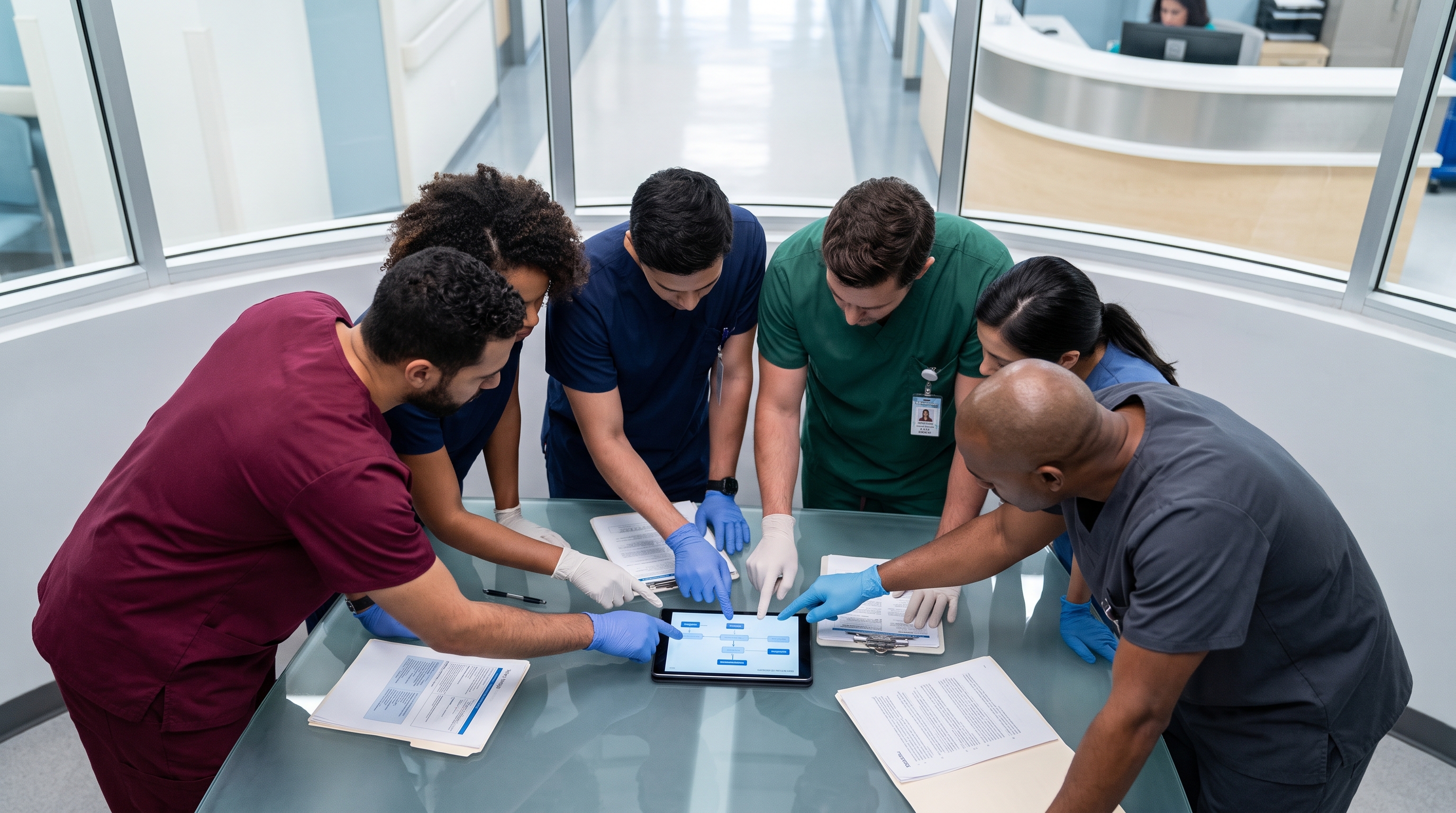
NP and PA reviewing hospital credentialing requirements


Hospitalist and Inpatient Medicine

Inpatient NPs and PAs manage the patients most likely to deteriorate: post-operative patients, people with heart failure, sepsis, arrhythmias, and acute coronary syndromes. When a rapid response or code is called on your unit, you may be the most advanced clinician present until the full team arrives.


Because of that, many hospitals include ACLS in the credentialing packet for inpatient advanced practice providers. Some require it at hire; others require it within a window after your start date. The details differ by organization, which is why you should ask HR or the medical staff office rather than assume.


Even where the card is not formally mandated, ACLS knowledge is practical. Understanding rhythm recognition, medication timing, and post-arrest priorities makes you more effective in a code and in the chaotic minutes before one.


ICU and Critical Care

Critical care is the other setting where ACLS is close to a default expectation. ICU NPs and PAs titrate vasopressors, manage ventilated patients, and respond to arrests in patients who are already fragile. Most intensive care units want advanced practice providers to hold ACLS and, in many cases, additional critical-care credentials.


ACLS is designed for exactly this kind of work. It is aimed at healthcare professionals who direct or participate in the management of cardiac arrest, stroke, and other cardiopulmonary emergencies, including those in emergency response, emergency medicine, critical care, and surgery. If that describes your daily workload, expect your employer to ask for the card.


Procedural and Sedation Services

NPs and PAs who perform or assist with procedures - cardioversion, cardiac catheterization support, endoscopy, interventional radiology, bedside procedures under moderate sedation - are working where cardiopulmonary complications can occur quickly. Facilities that offer sedation commonly expect the clinicians involved to be able to rescue a patient who becomes hypoxic, bradycardic, or hemodynamically unstable.


That expectation often takes the form of a sedation credentialing policy that includes current ACLS, and sometimes PALS where children are sedated. Policies differ, so read the one at your facility. It is also worth knowing the ACLS-adjacent emergencies that are specific to procedural work, such as local anesthetic systemic toxicity and how it modifies the ACLS approach.


Urgent Care

Urgent care sits in an interesting middle zone. Most visits are minor, but you will occasionally see chest pain, syncope, anaphylaxis, or a patient who arrests in the waiting room, and you may be the only advanced practice provider on site with EMS minutes away. Many urgent care operators therefore list ACLS and BLS as required or strongly preferred for NPs and PAs, while others require only BLS.


If you work in this setting, our article on ACLS for urgent care providers goes deeper on managing cardiac events outside the hospital. A useful rule of thumb: if you are the highest-level clinician on site and there is no code team, having ACLS is more than a checkbox.


Primary Care and Outpatient Clinics

Primary care is where requirements are the most variable. Many family medicine, pediatric, internal medicine, and specialty clinics require only BLS for clinical staff, with ACLS optional. Others, particularly larger health systems that credential all advanced practice providers the same way, ask for ACLS across the board.


If you practice in a clinic, start by confirming whether BLS is the stated requirement. Our job-by-job BLS requirements guide is a good companion here, because BLS is the foundation that ACLS builds on, and a current BLS card is the usual starting point for ACLS candidates. If you do not hold ACLS and your clinic does not require it, you can still choose to add it as a career investment, particularly if you might move into urgent care, hospital medicine, or emergency work later.


Surgical, Cardiology, and Other Specialty Services

NPs and PAs embedded in surgical teams, cardiology, cardiothoracic services, and similar specialties often fall under the hospital's general inpatient credentialing, plus any service-specific rules. A surgical PA who rounds on post-operative patients and assists in the operating room may be asked for ACLS even if the surgeon's office would not otherwise require it, because the privileges are granted through the hospital.


The pattern is simple: the more your role overlaps with acutely ill patients, procedures, or sedation, the more likely ACLS appears in your credentialing file. The more your role is scheduled, longitudinal, and low acuity, the more likely BLS alone is enough.


What About PAs and NPs Coming From EMS or Nursing?

Many PAs start as paramedics, and many NPs were ICU or ED nurses first. If that is you, you may already have held ACLS for years and are simply wondering whether to keep it. Past experience does not replace a current card on a credentialing checklist, because the card is documentation of up-to-date training under current guidelines. If you are making this transition, our guide from paramedic to PA covers how that background carries over and what to plan for as you move into a new scope.

NP and PA team at an ICU bedside


How to Confirm Your Requirement in Four Steps

Do not rely on a forum post, a coworker's memory, or a general article (including this one) for a final answer. Confirm with the people who control your credentialing file.


  • Read the job posting and offer letter. Look for "required," "preferred," and any deadline such as "within 90 days of hire."
  • Ask the credentialing or medical staff office. Request the list of life support credentials tied to the privileges you will hold.
  • Check unit or department policies. ICU, ED, sedation, and rapid response teams may have stricter rules than your organization overall.
  • Ask what card types are accepted. Some employers specify a course format or issuer, so verify before you enroll.


That last step matters. Employer policies differ on whether they accept online-completed courses, so ask directly. Our article on how employers verify online ACLS certification explains what verification usually looks like and what to ask HR.


Getting Your ACLS Card Without Disrupting Your Schedule

NPs and PAs rarely have spare days. If you need ACLS for a new role, a credentialing deadline, or a career move, an online course lets you learn on your own time, between shifts, on any device. Affordable ACLS was founded by practicing Board Certified Emergency Medicine physicians, courses are self-paced and based on AHA and ILCOR guidelines, and you can download your digital certificate immediately after completing the course. Retakes are unlimited at no extra charge, and there is a money-back guarantee if your employer does not accept the certification.


If this is your first time, start with the ACLS certification course. If your card is current or about to lapse, the ACLS recertification course is the right fit. Not sure which path applies? Check with your employer first, as covered above.


Why the Card Needs to Stay Current

Resuscitation science changes, and the AHA updates its recommendations through its CPR and ECC guidelines. Employers want the credential to reflect current practice, which is a big reason ACLS cards carry an expiration date. If you let yours lapse, you may find yourself unable to work certain shifts or maintain certain privileges until you renew, so build renewal into your calendar well ahead of the expiration date.


Frequently Asked Questions

Is ACLS required for all nurse practitioners?

No. There is no universal requirement. It is set by employers and credentialing bodies, and it is most commonly required in emergency, critical care, inpatient, and procedural settings.


Do physician assistants have the same requirement as NPs?

Generally the same logic applies. The facility, not the profession, drives the requirement. A PA and an NP in the same ED will usually be asked for the same life support credentials.


Do I need BLS before ACLS?

ACLS builds on BLS skills, and most employers expect both. If you are unsure which combination you need, check your job description and facility policy to decide.


What if I see pediatric patients?

Some pediatric-facing roles ask for PALS instead of, or in addition to, ACLS. Check the job description and your facility policy.


The Bottom Line

So, do NPs and PAs need ACLS? If you work in the ED, ICU, inpatient medicine, or procedural services, probably yes. In urgent care it is frequently expected. In primary care and routine outpatient settings it varies, and BLS may be all that is required. In every case, your employer and credentialing office have the final word, so ask before you assume.


Whatever your setting, holding a current ACLS card keeps more doors open as your career changes, and getting it should not cost you days off. Confirm your requirement, pick the right course, and get it done on your schedule.

ACLS Blogs

Do NPs and PAs Need ACLS? Requirements by Practice Setting

There is no single national rule making ACLS mandatory for every NP or PA. Requirements come from employers and credentialing bodies and vary by practice setting.

If you are a nurse practitioner or physician assistant, you have probably heard two completely opposite answers to the same question. One colleague says ACLS is mandatory the day you sign your offer letter. Another has practiced for years in a clinic and has never been asked for a card. Both are right, which is exactly why the question "do nurse practitioners need ACLS" deserves a more careful answer than a simple yes or no.


The short version: there is no single national rule that makes ACLS mandatory for every NP or PA. The requirement comes from your employer, your hospital's medical staff bylaws, and the credentialing and privileging process - and it varies by where you practice. This guide walks through the most common practice settings, explains who actually sets the requirement, and gives you a practical way to confirm what applies to you before you spend time or money.


Who Actually Sets the ACLS Requirement for NPs and PAs?

Licensure and certification are different things, and mixing them up causes most of the confusion. Your state license, and your national certification as an NP or PA, establish that you are qualified to practice. ACLS is a separate, employer- and facility-driven credential. It is typically a condition of employment, of hospital credentialing, or of the clinical privileges you request.


The PA profession's own guidance reflects this structure. The American Academy of PAs guide for employers describes credentialing as verifying things like licensure, graduation from an accredited program, and national certification, while privileging is the separate step in which a facility defines what a clinician may do there. Additional requirements, such as life support cards, are set locally through the organized medical staff and the employer.


NP scope of practice also varies. The American Association of Nurse Practitioners tracks state practice environments in categories such as full, reduced, and restricted practice. Those categories describe how much autonomy an NP has. They do not tell you whether a given employer wants ACLS. That is why we are not going to claim that a particular state requires ACLS for NPs or PAs. If you hear a state-specific rule secondhand, verify it with your state board or your employer's credentialing office.


Here are the four places a requirement can actually come from:


  • Employer policy: a job posting or offer letter that lists ACLS (and usually BLS) as required or preferred.
  • Medical staff bylaws and privileging: the hospital or department defines which life support credentials are needed for specific privileges.
  • Department or unit rules: an ICU, ED, or sedation service may have stricter expectations than the rest of the organization.
  • Training programs and fellowships: some post-graduate residencies and specialty programs require current cards before you start.


The Quick Answer by Practice Setting

Before the detailed sections, here is the general pattern clinicians commonly report. Treat it as a map of where requirements are more likely to appear, not a guarantee.


  • Emergency department: very commonly required.
  • ICU and critical care: very commonly required.
  • Hospitalist and inpatient medicine: commonly required, especially if you respond to codes or rapid responses.
  • Procedural and sedation services: often required, sometimes alongside other credentials.
  • Urgent care: frequently required or strongly preferred, and BLS is almost always expected.
  • Primary care and outpatient clinics: varies widely; BLS is the more common baseline.
  • Surgical, cardiology, and other specialty services: depends on the service and the privileges you hold.


Emergency Department

The emergency department is where ACLS is most consistently expected. ED NPs and PAs evaluate undifferentiated chest pain, unstable arrhythmias, overdoses, and sepsis, and they are often the first clinician at the bedside when a patient arrests. Facilities typically want every provider in that environment to be able to lead or join a resuscitation using the same algorithms.


Regulatory documents sometimes spell this out. For example, the Washington State Department of Health's emergency department services standards reference ACLS training for physician assistants and advanced registered nurse practitioners working in that setting. That is one state's document, not a universal rule, but it illustrates the point: in emergency care, the expectation is often written down somewhere.


In practice, ED hiring managers frequently list ACLS and BLS as required, and some also list PALS or trauma-specific courses depending on patient mix. If you are targeting emergency medicine, plan to hold a current ACLS card before you apply, not after you are hired. Our guide to which nursing roles actually require ACLS shows the same pattern for RNs: the closer the role is to emergent care, the more likely the card is mandatory.

NP and PA reviewing hospital credentialing requirements


Hospitalist and Inpatient Medicine

Inpatient NPs and PAs manage the patients most likely to deteriorate: post-operative patients, people with heart failure, sepsis, arrhythmias, and acute coronary syndromes. When a rapid response or code is called on your unit, you may be the most advanced clinician present until the full team arrives.


Because of that, many hospitals include ACLS in the credentialing packet for inpatient advanced practice providers. Some require it at hire; others require it within a window after your start date. The details differ by organization, which is why you should ask HR or the medical staff office rather than assume.


Even where the card is not formally mandated, ACLS knowledge is practical. Understanding rhythm recognition, medication timing, and post-arrest priorities makes you more effective in a code and in the chaotic minutes before one.


ICU and Critical Care

Critical care is the other setting where ACLS is close to a default expectation. ICU NPs and PAs titrate vasopressors, manage ventilated patients, and respond to arrests in patients who are already fragile. Most intensive care units want advanced practice providers to hold ACLS and, in many cases, additional critical-care credentials.


ACLS is designed for exactly this kind of work. It is aimed at healthcare professionals who direct or participate in the management of cardiac arrest, stroke, and other cardiopulmonary emergencies, including those in emergency response, emergency medicine, critical care, and surgery. If that describes your daily workload, expect your employer to ask for the card.


Procedural and Sedation Services

NPs and PAs who perform or assist with procedures - cardioversion, cardiac catheterization support, endoscopy, interventional radiology, bedside procedures under moderate sedation - are working where cardiopulmonary complications can occur quickly. Facilities that offer sedation commonly expect the clinicians involved to be able to rescue a patient who becomes hypoxic, bradycardic, or hemodynamically unstable.


That expectation often takes the form of a sedation credentialing policy that includes current ACLS, and sometimes PALS where children are sedated. Policies differ, so read the one at your facility. It is also worth knowing the ACLS-adjacent emergencies that are specific to procedural work, such as local anesthetic systemic toxicity and how it modifies the ACLS approach.


Urgent Care

Urgent care sits in an interesting middle zone. Most visits are minor, but you will occasionally see chest pain, syncope, anaphylaxis, or a patient who arrests in the waiting room, and you may be the only advanced practice provider on site with EMS minutes away. Many urgent care operators therefore list ACLS and BLS as required or strongly preferred for NPs and PAs, while others require only BLS.


If you work in this setting, our article on ACLS for urgent care providers goes deeper on managing cardiac events outside the hospital. A useful rule of thumb: if you are the highest-level clinician on site and there is no code team, having ACLS is more than a checkbox.


Primary Care and Outpatient Clinics

Primary care is where requirements are the most variable. Many family medicine, pediatric, internal medicine, and specialty clinics require only BLS for clinical staff, with ACLS optional. Others, particularly larger health systems that credential all advanced practice providers the same way, ask for ACLS across the board.


If you practice in a clinic, start by confirming whether BLS is the stated requirement. Our job-by-job BLS requirements guide is a good companion here, because BLS is the foundation that ACLS builds on, and a current BLS card is the usual starting point for ACLS candidates. If you do not hold ACLS and your clinic does not require it, you can still choose to add it as a career investment, particularly if you might move into urgent care, hospital medicine, or emergency work later.


Surgical, Cardiology, and Other Specialty Services

NPs and PAs embedded in surgical teams, cardiology, cardiothoracic services, and similar specialties often fall under the hospital's general inpatient credentialing, plus any service-specific rules. A surgical PA who rounds on post-operative patients and assists in the operating room may be asked for ACLS even if the surgeon's office would not otherwise require it, because the privileges are granted through the hospital.


The pattern is simple: the more your role overlaps with acutely ill patients, procedures, or sedation, the more likely ACLS appears in your credentialing file. The more your role is scheduled, longitudinal, and low acuity, the more likely BLS alone is enough.


What About PAs and NPs Coming From EMS or Nursing?

Many PAs start as paramedics, and many NPs were ICU or ED nurses first. If that is you, you may already have held ACLS for years and are simply wondering whether to keep it. Past experience does not replace a current card on a credentialing checklist, because the card is documentation of up-to-date training under current guidelines. If you are making this transition, our guide from paramedic to PA covers how that background carries over and what to plan for as you move into a new scope.

NP and PA team at an ICU bedside


How to Confirm Your Requirement in Four Steps

Do not rely on a forum post, a coworker's memory, or a general article (including this one) for a final answer. Confirm with the people who control your credentialing file.


  • Read the job posting and offer letter. Look for "required," "preferred," and any deadline such as "within 90 days of hire."
  • Ask the credentialing or medical staff office. Request the list of life support credentials tied to the privileges you will hold.
  • Check unit or department policies. ICU, ED, sedation, and rapid response teams may have stricter rules than your organization overall.
  • Ask what card types are accepted. Some employers specify a course format or issuer, so verify before you enroll.


That last step matters. Employer policies differ on whether they accept online-completed courses, so ask directly. Our article on how employers verify online ACLS certification explains what verification usually looks like and what to ask HR.


Getting Your ACLS Card Without Disrupting Your Schedule

NPs and PAs rarely have spare days. If you need ACLS for a new role, a credentialing deadline, or a career move, an online course lets you learn on your own time, between shifts, on any device. Affordable ACLS was founded by practicing Board Certified Emergency Medicine physicians, courses are self-paced and based on AHA and ILCOR guidelines, and you can download your digital certificate immediately after completing the course. Retakes are unlimited at no extra charge, and there is a money-back guarantee if your employer does not accept the certification.


If this is your first time, start with the ACLS certification course. If your card is current or about to lapse, the ACLS recertification course is the right fit. Not sure which path applies? Check with your employer first, as covered above.


Why the Card Needs to Stay Current

Resuscitation science changes, and the AHA updates its recommendations through its CPR and ECC guidelines. Employers want the credential to reflect current practice, which is a big reason ACLS cards carry an expiration date. If you let yours lapse, you may find yourself unable to work certain shifts or maintain certain privileges until you renew, so build renewal into your calendar well ahead of the expiration date.


Frequently Asked Questions

Is ACLS required for all nurse practitioners?

No. There is no universal requirement. It is set by employers and credentialing bodies, and it is most commonly required in emergency, critical care, inpatient, and procedural settings.


Do physician assistants have the same requirement as NPs?

Generally the same logic applies. The facility, not the profession, drives the requirement. A PA and an NP in the same ED will usually be asked for the same life support credentials.


Do I need BLS before ACLS?

ACLS builds on BLS skills, and most employers expect both. If you are unsure which combination you need, check your job description and facility policy to decide.


What if I see pediatric patients?

Some pediatric-facing roles ask for PALS instead of, or in addition to, ACLS. Check the job description and your facility policy.


The Bottom Line

So, do NPs and PAs need ACLS? If you work in the ED, ICU, inpatient medicine, or procedural services, probably yes. In urgent care it is frequently expected. In primary care and routine outpatient settings it varies, and BLS may be all that is required. In every case, your employer and credentialing office have the final word, so ask before you assume.


Whatever your setting, holding a current ACLS card keeps more doors open as your career changes, and getting it should not cost you days off. Confirm your requirement, pick the right course, and get it done on your schedule.

blogs

More articles for you

all articles

Start Today!

Get certified at your own pace, on your schedule, from the comfort of your home.