ACLS Blogs

Community AED Programs: How to Launch a Public Access Defibrillation Initiative in Your Neighborhood

Why Your Neighborhood Needs a Public Access Defibrillation Program

Every year, approximately 350,000 out-of-hospital cardiac arrests occur in the United States, and nearly 90% of them are fatal. Those are staggering numbers, but here is the part that should stop you in your tracks: survival rates in public settings are more than double those in residential locations, largely because bystanders in public places are more likely to have access to an AED and the training to use it. According to the Cardiac Arrest Registry to Enhance Survival (CARES), survival to hospital discharge was 21.1% for cardiac arrests occurring in public places versus just 8.9% for those in residential settings.


That gap is not a coincidence. It is a direct result of organized Public Access Defibrillation (PAD) programs that strategically place Automated External Defibrillators in high-traffic community locations, train bystanders to use them, and coordinate with local emergency medical services. The great news is that you do not need to be a medical professional to launch one of these initiatives. What you need is a plan, community support, and a clear understanding of how PAD programs work.
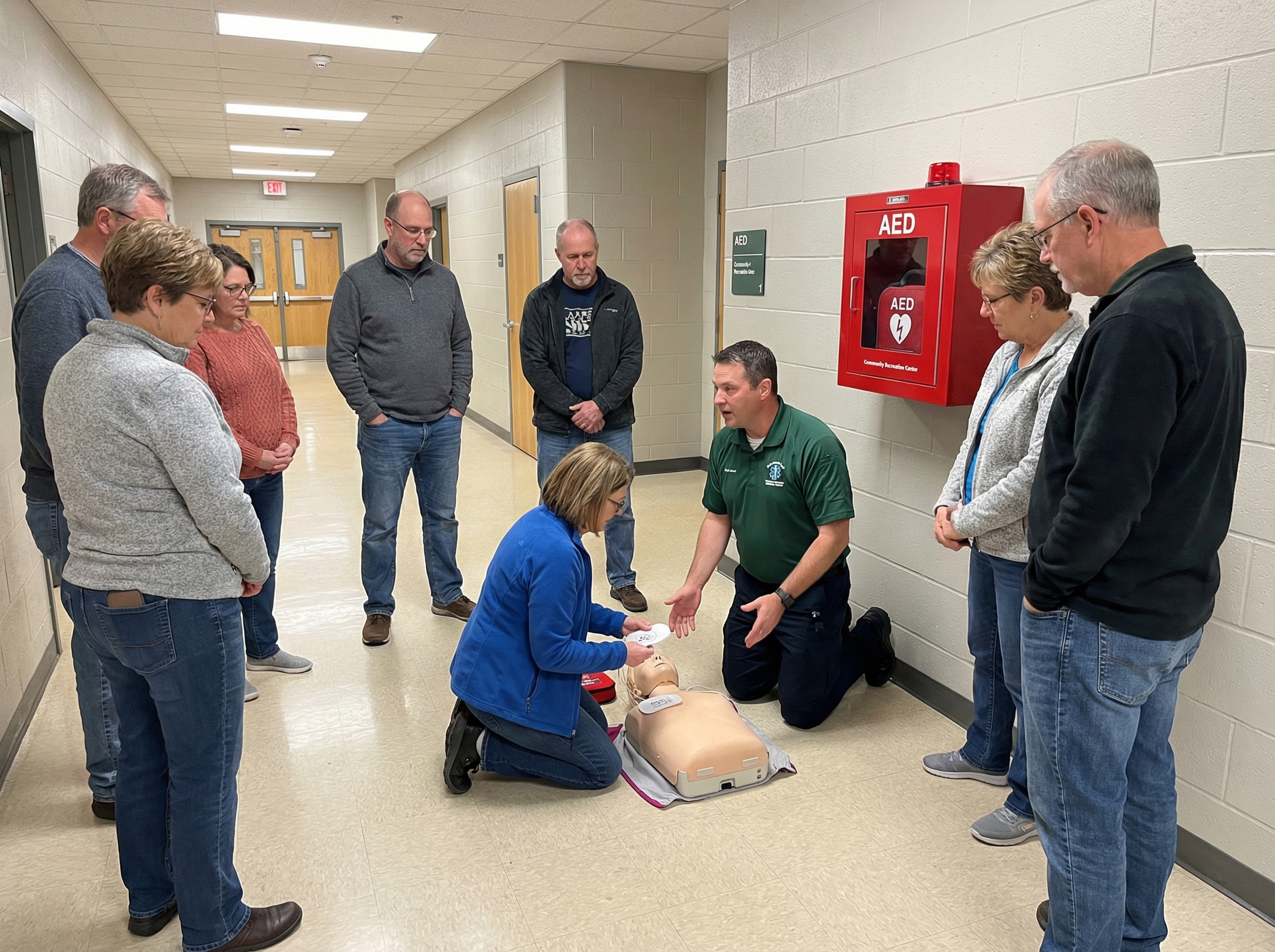
Community members learning to use an AED at a neighborhood public access defibrillation training session


This guide walks you through every step of establishing a community AED program in your neighborhood, from building your team and selecting equipment to navigating legal requirements and training your residents. Whether you are a concerned citizen, a community association leader, a school administrator, or a local business owner, this resource will give you the framework to turn your neighborhood into a place where sudden cardiac arrest does not have to be a death sentence.


Understanding Public Access Defibrillation and Why It Works

A Public Access Defibrillation program is a coordinated community effort that makes AEDs available in accessible public locations and ensures that trained bystanders can deploy them before emergency medical services arrive. The underlying science is straightforward: for every minute that passes without defibrillation during ventricular fibrillation, the chance of survival decreases by roughly 7-10%. EMS response times average 8-12 minutes in most urban and suburban areas, and considerably longer in rural communities. By the time paramedics arrive, survival odds have already fallen dramatically.


When a bystander uses an AED within the first few minutes of collapse, survival rates can reach 40-75%. Research published in Circulation confirms that PAD programs with well-placed AEDs and trained lay responders significantly increase survival compared to relying on EMS alone. Defibrillation by nondispatched lay first responders was associated with a median survival rate of 53%, making community-based training and AED access one of the highest-impact public health investments a neighborhood can make.


To understand the full potential of AEDs as lifesaving tools, it helps to explore how these devices work and what makes them so effective. The Ultimate Guide to AEDs for Adults and Children provides an excellent foundation for anyone looking to deepen their understanding before launching a community program.


Step 1: Build Your Core Program Team

No community initiative succeeds without committed people behind it. Your first task is assembling a small but dedicated team that will carry the program from concept to reality and sustain it over time. The ideal team includes a program coordinator to manage logistics, a medical advisor or local EMS contact to provide clinical oversight, a training coordinator to organize CPR and AED instruction, and community outreach volunteers to build awareness and buy-in.


Your local fire department or EMS agency is one of the most valuable partners you can engage from day one. Most agencies actively support PAD programs because they reduce the burden on emergency responders and dramatically improve patient outcomes. Reach out to the EMS director or fire chief, explain your goals, and ask for guidance on integrating your program with their dispatch protocols. Many agencies will agree to be notified when AEDs are registered in their coverage area, which allows dispatchers to direct callers to the nearest device during an emergency call.


Community physicians, cardiologists, and nurse practitioners are also excellent advisors. They can help you select appropriate equipment, validate your training approach, and lend credibility to your outreach materials. If your neighborhood has an HOA or civic association, that governance structure can provide organizational backing, shared funding, and built-in communication channels to residents.


Step 2: Conduct a Site Assessment and Identify AED Locations

Strategic AED placement is the cornerstone of an effective PAD program. The guiding principle is the three-minute rule: an AED should be retrievable and deployable within three minutes of a cardiac arrest event. This means placing devices close enough to high-traffic and high-risk areas that a bystander can retrieve the device and return to the victim before that critical window closes.


Begin your site assessment by mapping your neighborhood and identifying locations where large numbers of people gather or where high-risk individuals are likely to be present. Prime locations include community recreation centers, swimming pools, fitness facilities, parks with athletic fields, playgrounds, senior centers, houses of worship, community clubhouses, and busy retail areas. Pay special attention to locations where physical exertion occurs, since exercise significantly elevates cardiac arrest risk.


When evaluating specific placement spots within a building or outdoor area, look for high-visibility wall-mounted locations near building entrances, along main corridors, and adjacent to areas of high activity. AED cabinets should be at eye level, brightly colored, clearly labeled, and equipped with audible alarms to deter theft and alert bystanders when the device is removed. Outdoor units must be weather-resistant and temperature-controlled to maintain battery and electrode function.


For neighborhoods with athletic programs, the stakes are especially high. Athletic field emergencies and sudden cardiac death in sports represent a genuine and underappreciated risk, particularly for youth athletes with undiagnosed cardiac conditions. Placing AEDs at every athletic field and gymnasium should be a top priority in your site plan.


Step 3: Select and Acquire Your AEDs

AED technology has advanced dramatically over the past two decades, and modern devices are genuinely designed for use by untrained bystanders. Visual prompts, audio instructions, and real-time CPR coaching guides are now standard features. That said, not all AEDs are equal, and selecting the right device for your program requires evaluating several factors.


Cost considerations: Consumer AEDs range from approximately $1,200 to $2,500 per unit. Factor in ongoing costs for replacement electrode pads (around $50, replaced every two years) and batteries (approximately $100, lasting one to five years). Wall-mounted cabinets add another $200-$500. Some programs reduce costs through grants, fundraising, or corporate sponsorships.


Key features to look for: dual-use capability for adults and children (pediatric pads or a key that reduces energy delivery), clear voice prompts in multiple languages, CPR coaching with metronome feedback, long battery life, and Wi-Fi connectivity for remote monitoring. Programs serving diverse communities should prioritize multilingual devices.


Many communities qualify for grants from the American Heart Association, local foundations, civic organizations, and state health departments to offset AED acquisition costs. The CDC's Public Access Defibrillation State Law resources can help you understand what financial incentives and regulatory guidance may be available in your state.


For programs that will serve children and infants — schools, daycares, playgrounds — understanding how AEDs are adapted for pediatric use is essential. AEDs for Infants and Children: A Lifesaving Guide covers the critical differences between adult and pediatric AED use and helps program coordinators make informed equipment decisions.


Step 4: Navigate Legal Requirements and Program Registration

One of the most common concerns among community leaders starting PAD programs is legal liability. The reassuring reality is that all 50 states have enacted Good Samaritan laws that provide civil liability protection to lay rescuers who use an AED in good faith during a cardiac emergency. You and your program volunteers can act confidently knowing the law is on your side.


Beyond Good Samaritan protection, PAD programs typically need to meet several regulatory requirements that vary by state. According to StatPearls on EMS Public Access to Defibrillation, common state requirements include AED registration with local EMS or a health department, physician oversight or medical direction for the program, documented training of anticipated responders, a written emergency response plan, and a maintenance and inspection protocol for all devices.


Practical legal steps for your program:


  • Research your state's specific PAD statutes using the CDC state law database or resources from the American Heart Association
  • Identify a licensed physician willing to serve as medical director for your program
  • Register every AED with your local EMS agency so dispatchers can direct callers to devices during emergencies
  • Draft a written emergency response plan that outlines roles, communication protocols, and post-event reporting procedures
  • Establish a maintenance calendar with documented monthly visual inspections and biannual functional testing


Understanding how AEDs function in public emergency scenarios also prepares your team for coordinating with first responders. Emergency Response in Public Places: Managing Cardiac Emergencies and AED Locations is an outstanding resource for PAD program leaders who want to understand the full continuum of care from bystander response through advanced cardiac life support intervention.


Step 5: Design and Deliver a Community Training Program

An AED sitting unused in a cabinet during a cardiac arrest is no better than no AED at all. Training is what transforms equipment investment into actual lives saved. Your community training program should achieve two goals: ensure that a sufficient number of residents can confidently perform CPR and use an AED, and create a culture where people feel empowered and obligated to act rather than standing back and waiting for someone else to respond.


Basic Life Support (BLS) certification provides the ideal training foundation for your anticipated responders. BLS courses cover high-quality CPR technique, AED operation, rescue breathing, choking response, and team-based resuscitation protocols. For community members who are not healthcare professionals, a CPR and AED course at minimum provides the core competencies needed to respond effectively during the critical minutes before EMS arrives.


Affordable, accessible training is key to achieving the broad community coverage your program needs. Online certification platforms have made it easier than ever for community members to complete BLS training at their own pace without taking time off work or traveling to a training center. Affordable ACLS offers a BLS certification course developed by board-certified emergency medicine physicians, available 100% online with immediate certification, unlimited retakes, and a money-back guarantee — all at a price point that makes broad community training financially accessible. Visit www.affordableacls.com to explore training options that fit your program's needs.


When planning your training program, aim to certify at minimum one trained responder per 50 residents, with a goal of reaching 10-15% of your neighborhood population. Organize group training sessions at community events, HOA meetings, school events, and houses of worship. Make training a recurring part of community programming rather than a one-time event, since certifications require renewal and community membership changes over time.


It is also worth remembering that CPR skills have value in countless non-emergency settings and everyday situations. Exploring the role of CPR skills in non-emergency settings makes the case for broad community training that extends well beyond formal first-responder roles, reinforcing the culture of preparedness that sustains a successful PAD program.


Step 6: Develop Your Emergency Response Plan

Every PAD program needs a documented emergency response plan that everyone involved understands and can execute under pressure. A good emergency response plan is simple, clear, and practiced regularly. When a cardiac arrest occurs, there is no time to think through logistics — the response should be automatic.


Core components of your emergency response plan:


  • Recognize the emergency: An unresponsive victim with absent or abnormal breathing triggers immediate action
  • Call 9-1-1 immediately: Dispatch must be activated in parallel with bystander CPR and AED retrieval
  • Assign roles clearly: One person calls 911, one starts CPR, one retrieves the AED, and one guides EMS to the scene
  • Apply the AED as soon as it arrives: Power on, follow voice prompts, deliver shock if advised, resume CPR immediately after shock
  • Transfer care to EMS: Provide a concise verbal handoff including time of collapse, interventions performed, and number of shocks delivered
  • Document the event: Record all actions taken for quality improvement and program reporting


Practice matters enormously. Schedule tabletop drills and live scenario exercises at least twice per year so your trained responders stay sharp and comfortable with the response sequence. Even a brief 30-minute refresher at a community meeting substantially reinforces retention and confidence. Knowing what to do when a neighbor collapses in a public space is a skill every community member benefits from developing. Resources like what to do if someone collapses while you are grocery shopping help normalize that sense of readiness among everyday residents.


Step 7: Establish an Ongoing Maintenance and Quality Improvement Protocol

A community AED program is not a set-it-and-forget-it investment. AEDs require routine maintenance to remain functional, and programs require continuous quality improvement to remain effective. Neglecting maintenance is not just costly — it is dangerous. An AED that fails during a cardiac arrest because of a dead battery or expired pads creates false confidence and delays critical intervention.


Monthly visual inspection checklist for every device:
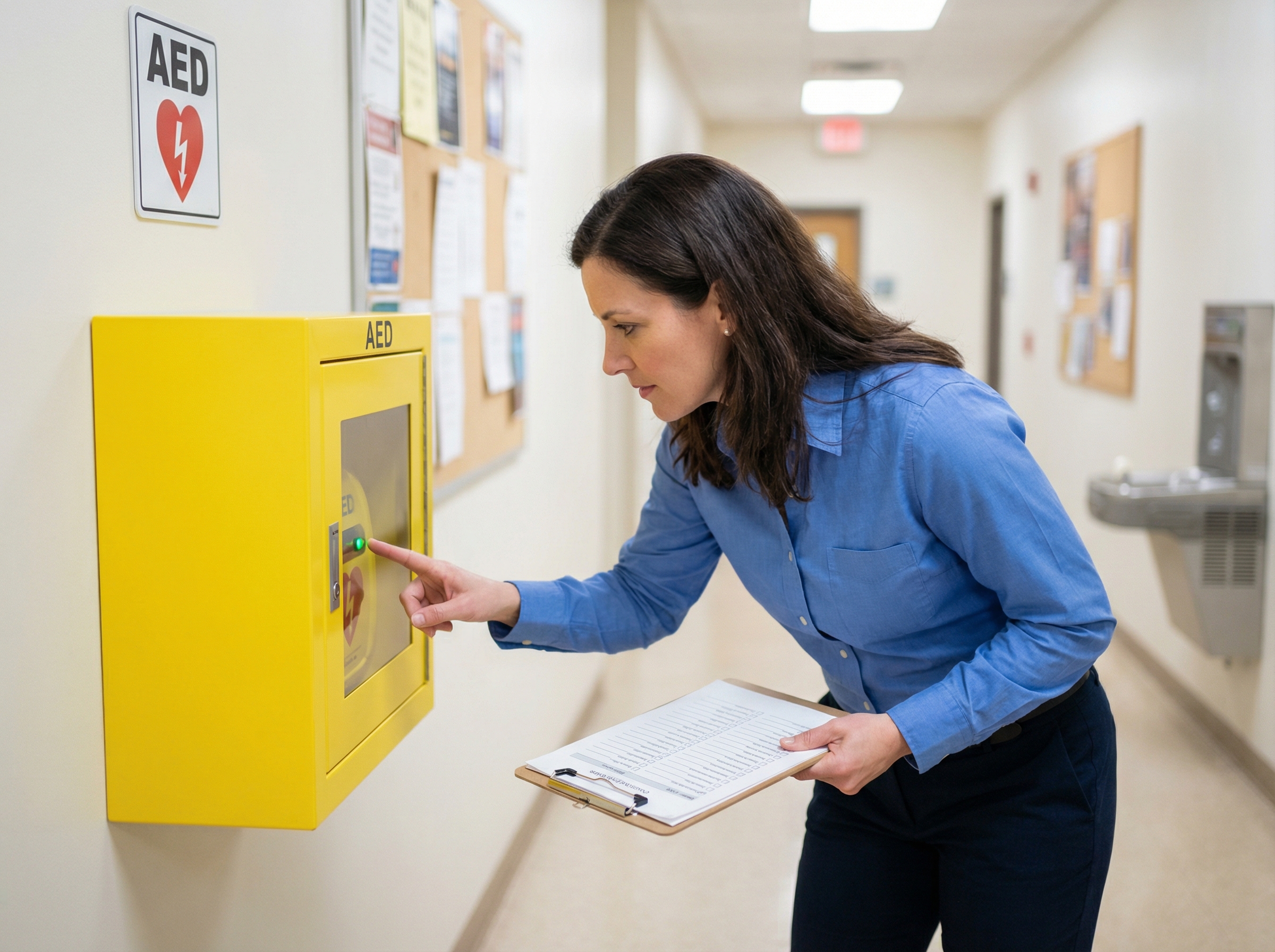
Community AED program coordinator performing monthly device inspection and maintenance log documentation


  • Confirm the AED indicator light is green or shows a ready status
  • Check electrode pad expiration dates and replace if expired or within 90 days of expiration
  • Verify battery charge level and replace per manufacturer guidelines
  • Confirm the cabinet is unlocked, accessible, and fully stocked with spare pads and any required accessories
  • Check that signage is visible and the location is unobstructed
  • Document the inspection in a written log kept with or near the device


After any cardiac arrest event in which your AED is deployed, conduct a thorough after-action review. Examine the AED event log (most modern devices record detailed data on CPR quality and shock delivery), debrief responders, and identify any breakdowns in your plan. Submit data to your EMS medical director for quality review. These feedback loops are how programs improve over time and how you measure the real-world impact of your initiative.


Step 8: Build Community Awareness and Sustain Engagement

Even the best-equipped PAD program will underperform if community members do not know where AEDs are located, how to use them, or why it matters. Sustained community outreach and education are what transform a program from a collection of devices into a genuine culture of cardiac emergency preparedness.


Create a comprehensive AED location map and distribute it widely — post it in community common areas, include it in HOA communications, and publish it on neighborhood social media groups or community platforms. Make sure every resident can identify the nearest AED to their home. Some PAD programs integrate with smartphone apps and community dispatch systems that notify trained responders when a cardiac arrest occurs nearby, dramatically accelerating response times.


Community engagement also means reaching the most vulnerable populations in your neighborhood. Older adults face the highest statistical risk for cardiac arrest, and engaging senior living communities, senior centers, and retirement-age residents is critical. Families with members who have known cardiac conditions should be aware of the nearest AED and have a household cardiac emergency plan in place. Resources like how to prepare your family for cardiac emergencies provide accessible, actionable guidance that complements your broader neighborhood program.


Schools deserve special attention in your outreach strategy. CPR and AED training in schools reaches young people at an age when they can internalize lifesaving skills for decades. Programs that include school-based CPR education have been shown to expand community-level bystander response rates over time. If your neighborhood includes schools, coordinate with administrators to integrate PAD awareness into emergency preparedness planning and consider making AED training a component of health or physical education curricula.


Funding Your Community AED Program

Cost is one of the most common barriers that prevents communities from launching PAD programs, but there are more funding pathways than most people realize. With a modest amount of research and outreach, most communities can acquire their initial AEDs and cover ongoing maintenance costs without placing the full financial burden on a single source.


Funding sources to explore:


  • Government grants: Many states offer AED grant programs through departments of health or EMS offices. Check with your state health department for currently available funding cycles.
  • Nonprofit and foundation grants: The American Heart Association, American Red Cross, and local community foundations frequently offer grants for cardiac preparedness initiatives.
  • Corporate sponsorships: Local businesses, regional employers, and healthcare systems often sponsor community AED programs as part of corporate social responsibility initiatives. A well-prepared pitch with data on community impact can be very persuasive.
  • HOA and civic association budgets: Homeowner associations with established budgets may be willing to allocate funds for AED acquisition as a meaningful community safety investment.
  • Community fundraising: Crowdfunding platforms, charity events, and community drives can supplement other funding sources, especially for smaller neighborhood programs just getting started.


When building your funding case, lead with data. Present local cardiac arrest statistics, the survival rate improvements associated with PAD programs, and the relatively modest per-unit cost relative to the lives that can be saved. The human and financial return on investment for a well-run community AED program is compelling, and most community stakeholders respond strongly to that evidence-based case.


Connecting Your Program to the Bigger Picture

Your neighborhood PAD initiative does not exist in isolation. It is part of a broader chain of survival that runs from community preparedness through advanced medical care. Understanding how bystander response connects to the larger emergency care ecosystem helps your team appreciate their role and motivates continued engagement over the long term.


The American Heart Association's CPR facts and statistics make clear that bystander CPR and early defibrillation are the two interventions with the most powerful impact on survival before professional responders arrive. Every minute matters, and every trained community member is a potential lifesaver. Connecting your PAD program to local EMS, hospital systems, and regional cardiac care networks amplifies that impact and creates the feedback loops that drive continuous improvement across your community.


The AHA has set an ambitious goal of doubling out-of-hospital cardiac arrest survival rates by 2030. Community PAD programs are among the most impactful tools available to help reach that target. When your neighborhood implements a well-designed, well-maintained, and well-publicized AED program with trained responders, you are directly contributing to that national mission — one AED cabinet, one trained neighbor, one life at a time.


Take the First Step Today

Launching a community AED program is one of the most meaningful public health contributions a private citizen or community organization can make. The steps are manageable, the resources are available, and the potential to save lives is real and proven. You do not need special medical credentials, a large budget, or institutional backing to get started. You need commitment, a core team, and a clear plan.


Start by building your team and mapping your neighborhood. Reach out to local EMS for guidance and partnership. Research your state's legal requirements and register your program. Acquire your first AEDs and place them strategically. Train your neighbors. Run your drills. Build the culture of preparedness that your community deserves — because when it matters most, a prepared neighbor is the most powerful emergency resource you have.


Training is the backbone of any successful PAD program. Affordable ACLS offers online BLS certification developed by board-certified emergency medicine physicians — self-paced, immediately valid, and designed to equip rescuers with the skills they need when seconds count. Whether you are training yourself, your core response team, or your entire neighborhood, accessible certification makes the difference between a bystander who hesitates and a rescuer who acts. Visit www.affordableacls.com or call 866-655-2157 to learn more about BLS and CPR training options that fit your community program's needs.


Cardiac arrest does not wait for a convenient moment. But when your neighborhood is prepared, it does not have to be a tragedy either.


ACLS Blogs

Community AED Programs: How to Launch a Public Access Defibrillation Initiative in Your Neighborhood

Why Your Neighborhood Needs a Public Access Defibrillation Program

Every year, approximately 350,000 out-of-hospital cardiac arrests occur in the United States, and nearly 90% of them are fatal. Those are staggering numbers, but here is the part that should stop you in your tracks: survival rates in public settings are more than double those in residential locations, largely because bystanders in public places are more likely to have access to an AED and the training to use it. According to the Cardiac Arrest Registry to Enhance Survival (CARES), survival to hospital discharge was 21.1% for cardiac arrests occurring in public places versus just 8.9% for those in residential settings.


That gap is not a coincidence. It is a direct result of organized Public Access Defibrillation (PAD) programs that strategically place Automated External Defibrillators in high-traffic community locations, train bystanders to use them, and coordinate with local emergency medical services. The great news is that you do not need to be a medical professional to launch one of these initiatives. What you need is a plan, community support, and a clear understanding of how PAD programs work.

Community members learning to use an AED at a neighborhood public access defibrillation training session


This guide walks you through every step of establishing a community AED program in your neighborhood, from building your team and selecting equipment to navigating legal requirements and training your residents. Whether you are a concerned citizen, a community association leader, a school administrator, or a local business owner, this resource will give you the framework to turn your neighborhood into a place where sudden cardiac arrest does not have to be a death sentence.


Understanding Public Access Defibrillation and Why It Works

A Public Access Defibrillation program is a coordinated community effort that makes AEDs available in accessible public locations and ensures that trained bystanders can deploy them before emergency medical services arrive. The underlying science is straightforward: for every minute that passes without defibrillation during ventricular fibrillation, the chance of survival decreases by roughly 7-10%. EMS response times average 8-12 minutes in most urban and suburban areas, and considerably longer in rural communities. By the time paramedics arrive, survival odds have already fallen dramatically.


When a bystander uses an AED within the first few minutes of collapse, survival rates can reach 40-75%. Research published in Circulation confirms that PAD programs with well-placed AEDs and trained lay responders significantly increase survival compared to relying on EMS alone. Defibrillation by nondispatched lay first responders was associated with a median survival rate of 53%, making community-based training and AED access one of the highest-impact public health investments a neighborhood can make.


To understand the full potential of AEDs as lifesaving tools, it helps to explore how these devices work and what makes them so effective. The Ultimate Guide to AEDs for Adults and Children provides an excellent foundation for anyone looking to deepen their understanding before launching a community program.


Step 1: Build Your Core Program Team

No community initiative succeeds without committed people behind it. Your first task is assembling a small but dedicated team that will carry the program from concept to reality and sustain it over time. The ideal team includes a program coordinator to manage logistics, a medical advisor or local EMS contact to provide clinical oversight, a training coordinator to organize CPR and AED instruction, and community outreach volunteers to build awareness and buy-in.


Your local fire department or EMS agency is one of the most valuable partners you can engage from day one. Most agencies actively support PAD programs because they reduce the burden on emergency responders and dramatically improve patient outcomes. Reach out to the EMS director or fire chief, explain your goals, and ask for guidance on integrating your program with their dispatch protocols. Many agencies will agree to be notified when AEDs are registered in their coverage area, which allows dispatchers to direct callers to the nearest device during an emergency call.


Community physicians, cardiologists, and nurse practitioners are also excellent advisors. They can help you select appropriate equipment, validate your training approach, and lend credibility to your outreach materials. If your neighborhood has an HOA or civic association, that governance structure can provide organizational backing, shared funding, and built-in communication channels to residents.


Step 2: Conduct a Site Assessment and Identify AED Locations

Strategic AED placement is the cornerstone of an effective PAD program. The guiding principle is the three-minute rule: an AED should be retrievable and deployable within three minutes of a cardiac arrest event. This means placing devices close enough to high-traffic and high-risk areas that a bystander can retrieve the device and return to the victim before that critical window closes.


Begin your site assessment by mapping your neighborhood and identifying locations where large numbers of people gather or where high-risk individuals are likely to be present. Prime locations include community recreation centers, swimming pools, fitness facilities, parks with athletic fields, playgrounds, senior centers, houses of worship, community clubhouses, and busy retail areas. Pay special attention to locations where physical exertion occurs, since exercise significantly elevates cardiac arrest risk.


When evaluating specific placement spots within a building or outdoor area, look for high-visibility wall-mounted locations near building entrances, along main corridors, and adjacent to areas of high activity. AED cabinets should be at eye level, brightly colored, clearly labeled, and equipped with audible alarms to deter theft and alert bystanders when the device is removed. Outdoor units must be weather-resistant and temperature-controlled to maintain battery and electrode function.


For neighborhoods with athletic programs, the stakes are especially high. Athletic field emergencies and sudden cardiac death in sports represent a genuine and underappreciated risk, particularly for youth athletes with undiagnosed cardiac conditions. Placing AEDs at every athletic field and gymnasium should be a top priority in your site plan.


Step 3: Select and Acquire Your AEDs

AED technology has advanced dramatically over the past two decades, and modern devices are genuinely designed for use by untrained bystanders. Visual prompts, audio instructions, and real-time CPR coaching guides are now standard features. That said, not all AEDs are equal, and selecting the right device for your program requires evaluating several factors.


Cost considerations: Consumer AEDs range from approximately $1,200 to $2,500 per unit. Factor in ongoing costs for replacement electrode pads (around $50, replaced every two years) and batteries (approximately $100, lasting one to five years). Wall-mounted cabinets add another $200-$500. Some programs reduce costs through grants, fundraising, or corporate sponsorships.


Key features to look for: dual-use capability for adults and children (pediatric pads or a key that reduces energy delivery), clear voice prompts in multiple languages, CPR coaching with metronome feedback, long battery life, and Wi-Fi connectivity for remote monitoring. Programs serving diverse communities should prioritize multilingual devices.


Many communities qualify for grants from the American Heart Association, local foundations, civic organizations, and state health departments to offset AED acquisition costs. The CDC's Public Access Defibrillation State Law resources can help you understand what financial incentives and regulatory guidance may be available in your state.


For programs that will serve children and infants — schools, daycares, playgrounds — understanding how AEDs are adapted for pediatric use is essential. AEDs for Infants and Children: A Lifesaving Guide covers the critical differences between adult and pediatric AED use and helps program coordinators make informed equipment decisions.


Step 4: Navigate Legal Requirements and Program Registration

One of the most common concerns among community leaders starting PAD programs is legal liability. The reassuring reality is that all 50 states have enacted Good Samaritan laws that provide civil liability protection to lay rescuers who use an AED in good faith during a cardiac emergency. You and your program volunteers can act confidently knowing the law is on your side.


Beyond Good Samaritan protection, PAD programs typically need to meet several regulatory requirements that vary by state. According to StatPearls on EMS Public Access to Defibrillation, common state requirements include AED registration with local EMS or a health department, physician oversight or medical direction for the program, documented training of anticipated responders, a written emergency response plan, and a maintenance and inspection protocol for all devices.


Practical legal steps for your program:


  • Research your state's specific PAD statutes using the CDC state law database or resources from the American Heart Association
  • Identify a licensed physician willing to serve as medical director for your program
  • Register every AED with your local EMS agency so dispatchers can direct callers to devices during emergencies
  • Draft a written emergency response plan that outlines roles, communication protocols, and post-event reporting procedures
  • Establish a maintenance calendar with documented monthly visual inspections and biannual functional testing


Understanding how AEDs function in public emergency scenarios also prepares your team for coordinating with first responders. Emergency Response in Public Places: Managing Cardiac Emergencies and AED Locations is an outstanding resource for PAD program leaders who want to understand the full continuum of care from bystander response through advanced cardiac life support intervention.


Step 5: Design and Deliver a Community Training Program

An AED sitting unused in a cabinet during a cardiac arrest is no better than no AED at all. Training is what transforms equipment investment into actual lives saved. Your community training program should achieve two goals: ensure that a sufficient number of residents can confidently perform CPR and use an AED, and create a culture where people feel empowered and obligated to act rather than standing back and waiting for someone else to respond.


Basic Life Support (BLS) certification provides the ideal training foundation for your anticipated responders. BLS courses cover high-quality CPR technique, AED operation, rescue breathing, choking response, and team-based resuscitation protocols. For community members who are not healthcare professionals, a CPR and AED course at minimum provides the core competencies needed to respond effectively during the critical minutes before EMS arrives.


Affordable, accessible training is key to achieving the broad community coverage your program needs. Online certification platforms have made it easier than ever for community members to complete BLS training at their own pace without taking time off work or traveling to a training center. Affordable ACLS offers a BLS certification course developed by board-certified emergency medicine physicians, available 100% online with immediate certification, unlimited retakes, and a money-back guarantee — all at a price point that makes broad community training financially accessible. Visit www.affordableacls.com to explore training options that fit your program's needs.


When planning your training program, aim to certify at minimum one trained responder per 50 residents, with a goal of reaching 10-15% of your neighborhood population. Organize group training sessions at community events, HOA meetings, school events, and houses of worship. Make training a recurring part of community programming rather than a one-time event, since certifications require renewal and community membership changes over time.


It is also worth remembering that CPR skills have value in countless non-emergency settings and everyday situations. Exploring the role of CPR skills in non-emergency settings makes the case for broad community training that extends well beyond formal first-responder roles, reinforcing the culture of preparedness that sustains a successful PAD program.


Step 6: Develop Your Emergency Response Plan

Every PAD program needs a documented emergency response plan that everyone involved understands and can execute under pressure. A good emergency response plan is simple, clear, and practiced regularly. When a cardiac arrest occurs, there is no time to think through logistics — the response should be automatic.


Core components of your emergency response plan:


  • Recognize the emergency: An unresponsive victim with absent or abnormal breathing triggers immediate action
  • Call 9-1-1 immediately: Dispatch must be activated in parallel with bystander CPR and AED retrieval
  • Assign roles clearly: One person calls 911, one starts CPR, one retrieves the AED, and one guides EMS to the scene
  • Apply the AED as soon as it arrives: Power on, follow voice prompts, deliver shock if advised, resume CPR immediately after shock
  • Transfer care to EMS: Provide a concise verbal handoff including time of collapse, interventions performed, and number of shocks delivered
  • Document the event: Record all actions taken for quality improvement and program reporting


Practice matters enormously. Schedule tabletop drills and live scenario exercises at least twice per year so your trained responders stay sharp and comfortable with the response sequence. Even a brief 30-minute refresher at a community meeting substantially reinforces retention and confidence. Knowing what to do when a neighbor collapses in a public space is a skill every community member benefits from developing. Resources like what to do if someone collapses while you are grocery shopping help normalize that sense of readiness among everyday residents.


Step 7: Establish an Ongoing Maintenance and Quality Improvement Protocol

A community AED program is not a set-it-and-forget-it investment. AEDs require routine maintenance to remain functional, and programs require continuous quality improvement to remain effective. Neglecting maintenance is not just costly — it is dangerous. An AED that fails during a cardiac arrest because of a dead battery or expired pads creates false confidence and delays critical intervention.


Monthly visual inspection checklist for every device:

Community AED program coordinator performing monthly device inspection and maintenance log documentation


  • Confirm the AED indicator light is green or shows a ready status
  • Check electrode pad expiration dates and replace if expired or within 90 days of expiration
  • Verify battery charge level and replace per manufacturer guidelines
  • Confirm the cabinet is unlocked, accessible, and fully stocked with spare pads and any required accessories
  • Check that signage is visible and the location is unobstructed
  • Document the inspection in a written log kept with or near the device


After any cardiac arrest event in which your AED is deployed, conduct a thorough after-action review. Examine the AED event log (most modern devices record detailed data on CPR quality and shock delivery), debrief responders, and identify any breakdowns in your plan. Submit data to your EMS medical director for quality review. These feedback loops are how programs improve over time and how you measure the real-world impact of your initiative.


Step 8: Build Community Awareness and Sustain Engagement

Even the best-equipped PAD program will underperform if community members do not know where AEDs are located, how to use them, or why it matters. Sustained community outreach and education are what transform a program from a collection of devices into a genuine culture of cardiac emergency preparedness.


Create a comprehensive AED location map and distribute it widely — post it in community common areas, include it in HOA communications, and publish it on neighborhood social media groups or community platforms. Make sure every resident can identify the nearest AED to their home. Some PAD programs integrate with smartphone apps and community dispatch systems that notify trained responders when a cardiac arrest occurs nearby, dramatically accelerating response times.


Community engagement also means reaching the most vulnerable populations in your neighborhood. Older adults face the highest statistical risk for cardiac arrest, and engaging senior living communities, senior centers, and retirement-age residents is critical. Families with members who have known cardiac conditions should be aware of the nearest AED and have a household cardiac emergency plan in place. Resources like how to prepare your family for cardiac emergencies provide accessible, actionable guidance that complements your broader neighborhood program.


Schools deserve special attention in your outreach strategy. CPR and AED training in schools reaches young people at an age when they can internalize lifesaving skills for decades. Programs that include school-based CPR education have been shown to expand community-level bystander response rates over time. If your neighborhood includes schools, coordinate with administrators to integrate PAD awareness into emergency preparedness planning and consider making AED training a component of health or physical education curricula.


Funding Your Community AED Program

Cost is one of the most common barriers that prevents communities from launching PAD programs, but there are more funding pathways than most people realize. With a modest amount of research and outreach, most communities can acquire their initial AEDs and cover ongoing maintenance costs without placing the full financial burden on a single source.


Funding sources to explore:


  • Government grants: Many states offer AED grant programs through departments of health or EMS offices. Check with your state health department for currently available funding cycles.
  • Nonprofit and foundation grants: The American Heart Association, American Red Cross, and local community foundations frequently offer grants for cardiac preparedness initiatives.
  • Corporate sponsorships: Local businesses, regional employers, and healthcare systems often sponsor community AED programs as part of corporate social responsibility initiatives. A well-prepared pitch with data on community impact can be very persuasive.
  • HOA and civic association budgets: Homeowner associations with established budgets may be willing to allocate funds for AED acquisition as a meaningful community safety investment.
  • Community fundraising: Crowdfunding platforms, charity events, and community drives can supplement other funding sources, especially for smaller neighborhood programs just getting started.


When building your funding case, lead with data. Present local cardiac arrest statistics, the survival rate improvements associated with PAD programs, and the relatively modest per-unit cost relative to the lives that can be saved. The human and financial return on investment for a well-run community AED program is compelling, and most community stakeholders respond strongly to that evidence-based case.


Connecting Your Program to the Bigger Picture

Your neighborhood PAD initiative does not exist in isolation. It is part of a broader chain of survival that runs from community preparedness through advanced medical care. Understanding how bystander response connects to the larger emergency care ecosystem helps your team appreciate their role and motivates continued engagement over the long term.


The American Heart Association's CPR facts and statistics make clear that bystander CPR and early defibrillation are the two interventions with the most powerful impact on survival before professional responders arrive. Every minute matters, and every trained community member is a potential lifesaver. Connecting your PAD program to local EMS, hospital systems, and regional cardiac care networks amplifies that impact and creates the feedback loops that drive continuous improvement across your community.


The AHA has set an ambitious goal of doubling out-of-hospital cardiac arrest survival rates by 2030. Community PAD programs are among the most impactful tools available to help reach that target. When your neighborhood implements a well-designed, well-maintained, and well-publicized AED program with trained responders, you are directly contributing to that national mission — one AED cabinet, one trained neighbor, one life at a time.


Take the First Step Today

Launching a community AED program is one of the most meaningful public health contributions a private citizen or community organization can make. The steps are manageable, the resources are available, and the potential to save lives is real and proven. You do not need special medical credentials, a large budget, or institutional backing to get started. You need commitment, a core team, and a clear plan.


Start by building your team and mapping your neighborhood. Reach out to local EMS for guidance and partnership. Research your state's legal requirements and register your program. Acquire your first AEDs and place them strategically. Train your neighbors. Run your drills. Build the culture of preparedness that your community deserves — because when it matters most, a prepared neighbor is the most powerful emergency resource you have.


Training is the backbone of any successful PAD program. Affordable ACLS offers online BLS certification developed by board-certified emergency medicine physicians — self-paced, immediately valid, and designed to equip rescuers with the skills they need when seconds count. Whether you are training yourself, your core response team, or your entire neighborhood, accessible certification makes the difference between a bystander who hesitates and a rescuer who acts. Visit www.affordableacls.com or call 866-655-2157 to learn more about BLS and CPR training options that fit your community program's needs.


Cardiac arrest does not wait for a convenient moment. But when your neighborhood is prepared, it does not have to be a tragedy either.


blogs

More articles for you

all articles

Start Today!

Get certified at your own pace, on your schedule, from the comfort of your home.