ACLS Blogs

PALS Renewal Guide 2026: Timeline, Cost, and Requirements

Why PALS Renewal Deserves Its Own Plan

If you work with pediatric patients, whether in a pediatric intensive care unit, a children's emergency department, or as a school nurse managing medically complex students, your Pediatric Advanced Life Support certification is not something you check off once and forget. Like most life support credentials, PALS certification runs on a two-year cycle, and the renewal process looks meaningfully different from the initial certification course you completed the first time around. Pediatric clinicians juggling irregular shifts, credentialing deadlines, and the reality that children in cardiac arrest present differently than adults need a renewal plan that fits their world, not a generic reminder email that treats every certification the same way.


This guide walks through exactly how the PALS renewal timeline works, what a renewal course actually requires compared to initial certification, how to build a timing strategy that protects your credentialing file, what really happens if your certification lapses, and where the real costs of renewal show up beyond a course fee. Whether you are renewing for the first time or the fifth, the goal is the same: stay current without letting recertification eat into the clinical hours you would rather spend at the bedside.


The "pediatric clinician" label covers a wider group than it might first seem: PICU and pediatric floor nurses, pediatric hospitalists and residents, pediatric emergency medicine physicians and nurse practitioners, respiratory therapists working pediatric units, EMS providers who regularly transport children, and school nurses responsible for medically complex students. Each of these roles has a slightly different relationship to PALS, some hold it as a strict condition of employment with hard scheduling consequences for a lapse, others carry it as a recommended credential that strengthens a resume, but the underlying renewal mechanics, the two-year cycle, the narrower scope of a renewal course, and the lack of an official grace period, are the same across all of them.

Pediatric nurse reviewing PALS certification renewal timeline on a laptop


The PALS Two-Year Cycle: How Renewal Timing Actually Works

PALS certification, like ACLS and BLS, is valid for two years from the date printed on your certificate, not from the calendar year or your hire date. That distinction matters more than it sounds. Two clinicians who took the same initial PALS course in the same month but received their certificates a few days apart will have different renewal deadlines, and most credentialing systems track the certificate date, not the training date. The first step in any renewal strategy is confirming the exact expiration date on your current certificate rather than estimating it from memory.


The two-year cycle is not arbitrary. Pediatric cardiac arrest patterns and the evidence supporting resuscitation care continue to evolve, and periodic retraining is how clinicians stay aligned with the current standard rather than the standard from several years ago. A recent clinical review summarizing updates to pediatric advanced life support notes that recommendations around post-arrest care, medication timing, and airway management have shifted meaningfully in recent guideline cycles, which is exactly the kind of change a renewal course exists to catch. The full guideline set is maintained by the American Heart Association at its Pediatric Advanced Life Support guidelines hub, which is worth bookmarking regardless of where you complete your renewal course.


A common misconception is that there is an official grace period after expiration, a few extra weeks where the certification is still technically considered valid while you get around to renewing. In practice, once a PALS certification lapses, you are no longer considered currently certified, and many credentialing offices flag the gap immediately rather than waiting to see if you renew soon. Our guide to recertification timing breaks down why "close enough" thinking around expiration dates tends to create more paperwork than it saves.


The Renewal Window Before Expiration

Most pediatric clinicians have a window, typically the weeks leading up to their certificate's expiration date, where they can complete a renewal-specific course rather than repeating the full initial certification curriculum. This window exists because renewal courses are built to refresh and update existing knowledge, not to teach pediatric assessment from the ground up. Missing that window is what turns a quick renewal into a much longer initial certification course, which is why the checklist below starts well before the deadline rather than on it.


  • Confirm your exact expiration date from your current certificate, not your original training completion date
  • Identify whether your employer requires renewal to be completed before, or exactly on, the expiration date
  • Start the renewal course while your existing certification is still active, so you are never working without current credentials


What PALS Renewal Actually Requires vs. Initial Certification

Initial PALS certification is built to teach the full pediatric assessment framework from scratch: the pediatric assessment triangle, a systematic primary and secondary survey approach, respiratory and shock recognition, and the complete set of pediatric arrhythmia and cardiac arrest algorithms. It is comprehensive because it assumes no prior PALS background, which is exactly right for a clinician taking the course for the first time.


A PALS renewal course starts from a different assumption: that you already have the foundational framework and simply need your knowledge and skills refreshed against the current standard of care. Renewal content is built around what has changed since your last certification, updated algorithm sequences, revised medication guidance, and the specific scenarios most likely to trip up a clinician who has not run a pediatric code recently. The most recent American Heart Association and American Academy of Pediatrics guideline update revised several pediatric algorithms and updated recommendations around post-arrest blood pressure targets and epinephrine timing in shockable rhythms, which is exactly the kind of update a renewal course exists to cover. You can review the current sequence any time using our pediatric cardiac arrest algorithm reference.


Renewal also re-tests the pediatric-specific judgment calls that make PALS different from its adult counterpart in the first place: weight-based and length-based medication dosing rather than fixed adult doses, recognizing that children compensate for shock longer than adults before decompensating suddenly, and navigating family presence during a resuscitation in a way that rarely comes up in an adult code. None of that changes between certification cycles as dramatically as the algorithms do, but a renewal course is also the moment most clinicians actually revisit it, since day-to-day pediatric units do not run codes often enough for the reasoning to stay sharp on its own.


What a Renewal Course Still Tests

  • Updated cardiac arrest and peri-arrest algorithms for shockable and non-shockable rhythms
  • Pediatric-specific medication dosing and administration routes
  • Recognition of respiratory failure and shock before progression to arrest
  • Team dynamics and closed-loop communication during a pediatric resuscitation


Because renewal content is scoped around updates rather than first-time instruction, it is designed to be completed in far less time than initial certification, which matters for clinicians who cannot disappear from the floor for an extended course. If your expiration date is approaching, the PALS recertification course is built specifically for this situation: self-paced, focused on what actually changed, and available whenever your schedule allows rather than tied to a fixed class date.


Building a Timing Strategy That Protects Your Credentialing File

The biggest renewal mistakes are rarely about course content. They are about timing. Pediatric units, PICUs, and children's emergency departments often have stricter internal deadlines than the certification itself technically requires, because credentialing offices need processing time to update personnel files before a scheduled audit or accreditation review.


A 90/60/30 Day Approach

A simple structure works across most pediatric units, regardless of specialty:


  • 90 days out: Confirm your exact expiration date and check your employer's internal renewal deadline, which is often earlier than the certificate date itself
  • 60 days out: Complete your renewal course while you still have buffer time for a retake on any section if needed
  • 30 days out: Submit your updated certificate to your credentialing office and confirm it has actually been logged, not just received


This kind of structured approach is exactly what our broader certification renewal timeline guide walks through in more detail, and the same logic applies whether you are renewing PALS, ACLS, or both at once.


Clinicians who hold both ACLS and PALS, common in pediatric emergency medicine and PICU roles that also cover adult family members or young adult patients, face an added wrinkle: the two certifications rarely expire on the same date, since they are usually earned at different points in a career. Tracking both expiration dates on a single calendar, rather than relying on separate reminder emails from separate systems, is the easiest way to avoid discovering a lapse in one credential while confidently renewing the other.


What Happens If Your PALS Certification Lapses

Life happens. Parental leave, a facility transfer, an extended illness, or simply a missed reminder can push a renewal past the expiration date. Understanding what actually happens next helps you respond without unnecessary panic.


There is generally no official grace period once a PALS certification expires. From the moment your certificate lapses, most employers and credentialing systems consider you not currently certified for pediatric resuscitation, even if you were fully certified a week earlier. Depending on your role, this can affect scheduling eligibility, participation on code teams, or your standing during an accreditation review. Our detailed breakdown of what happens when a life support certification expires applies the same logic to PALS: the sooner a lapse is addressed, the fewer complications it creates.
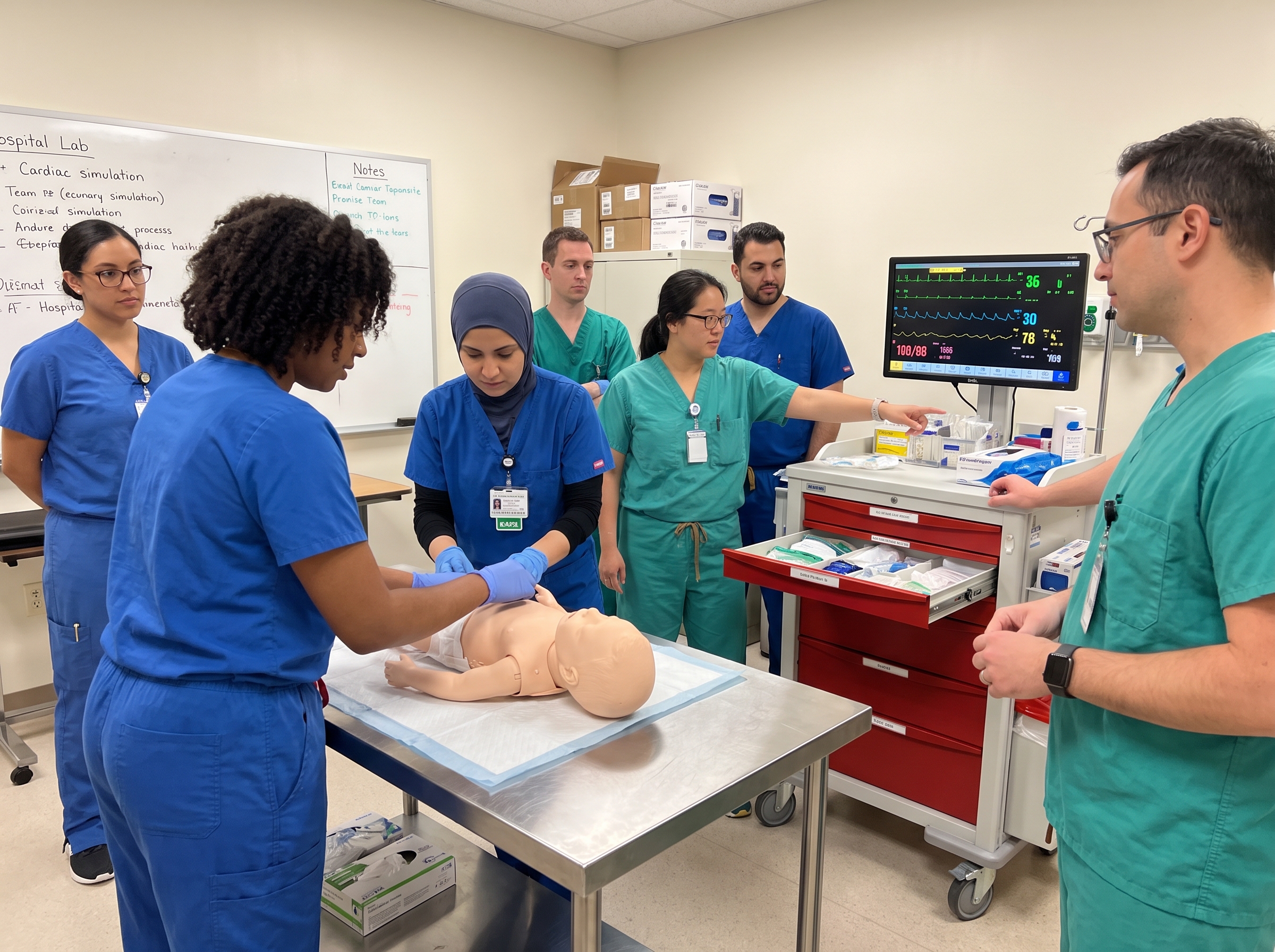
Pediatric healthcare team practicing resuscitation on an infant mannequin in a simulation lab


Getting Back on Track After a Lapse

The practical fix for a lapsed PALS certification is simply to complete certification again as soon as possible. Depending on how long the lapse has lasted, some clinicians can still complete a renewal-style course, while others may need to complete the fuller initial certification content again if enough time has passed. Either way, a self-paced online course removes the biggest obstacle to getting back on track quickly: waiting for the next scheduled class date. A course that lets you start immediately, save progress, and retake sections without an extra charge means a lapse turns into a delay measured in hours, not weeks.


The Real Cost of PALS Renewal (Beyond the Course Itself)

When clinicians think about the cost of PALS renewal, they usually think first of the course fee. The bigger costs, the ones that actually show up in a busy pediatric clinician's life, are almost always hidden ones tied to timing rather than price.


The Hidden Costs of Waiting

  • Scheduling restrictions if a lapsed certification pulls you off code team rotation or certain unit assignments until you recertify
  • Rushed studying under deadline pressure, which tends to produce a weaker refresh of skills than a course completed with time to spare
  • Administrative time spent chasing paperwork, resubmitting certificates, or explaining a credentialing gap to a manager or compliance office
  • Lost flexibility, since last-minute renewal often means fitting a course into whatever hours remain rather than choosing when to study


Our article on the hidden costs of delaying certification renewal covers this pattern in more depth, and it applies just as directly to PALS as it does to ACLS. The course fee is rarely the expensive part of renewal. The scramble is.


Employer Coverage and Reimbursement

Many healthcare employers cover or reimburse certification renewal costs for pediatric staff, particularly in roles where PALS is a condition of employment, such as pediatric nursing, pediatric emergency medicine, or PICU staffing. Coverage policies vary widely by facility, and reimbursement is not always automatic just because a role requires the credential. If your position requires PALS, it is worth confirming your employer's specific reimbursement process well before your renewal deadline rather than assuming it will be handled the same way it was last time. Our guide to employer reimbursement for certification courses walks through how to request coverage, what documentation employers typically ask for, and how to avoid paying out of pocket for something your facility already budgets for.


How Online PALS Renewal Fits a Pediatric Clinician's Schedule

Pediatric clinicians rarely have predictable blocks of free time. Shifts run long, PICU census swings unpredictably, and school nurses often cover multiple buildings in a single week. A renewal course that requires a fixed class date competes directly with the schedule you are already trying to protect. A self-paced online PALS certification and recertification option lets you work through modules between patients, during a break, or at home after a shift, saving progress and returning whenever your schedule allows without losing your place. Unlimited retakes on the exam remove the anxiety of a single testing window, and a digital certificate available immediately on completion means there is no waiting for a card to arrive in the mail before you can update your credentialing file.


Staying current matters clinically, not just administratively. Pediatric cardiac arrest is comparatively rare, and its presentation, most often progressing from respiratory failure or shock rather than a primary cardiac event, is different enough from adult arrest that skills genuinely decay without periodic refreshing. A nationwide cohort study of pediatric cardiac arrest outcomes found that survival to discharge varies significantly by setting, and in-hospital survival for children has meaningfully improved over the past two decades as resuscitation science and team-based response have advanced, according to American Heart Association research. Renewal is not just a compliance requirement checked against a credentialing file. It is one of the places that kind of improvement actually comes from at the bedside.


A Quick PALS Renewal Checklist

Before your next PALS expiration date arrives, run through this short checklist:


  • Confirm the exact expiration date on your current certificate
  • Check your employer's internal deadline, which may be earlier than the certificate expiration itself
  • Confirm whether your employer reimburses or covers renewal costs, and what documentation they require
  • Start your renewal course with enough buffer time for a retake if needed
  • Review updated algorithms and guideline changes rather than assuming nothing has changed since your last certification
  • Submit your new certificate to credentialing and confirm it has been logged, not just received


The Takeaway for Pediatric Clinicians

PALS renewal does not have to be a scramble every two years. The clinicians who handle it best treat it as a scheduled part of their credentialing routine rather than a deadline that sneaks up on them: they know their expiration date, they understand what a renewal course actually covers compared to initial certification, they build in buffer time, and they know exactly what to do if a lapse happens anyway. Whether you have months until your next expiration date or you are already past it, the path forward is the same: confirm where you stand, choose a renewal course that fits your schedule rather than the other way around, and get back to focusing on the pediatric patients who are the reason you got certified in the first place.


ACLS Blogs

PALS Renewal Guide 2026: Timeline, Cost, and Requirements

Why PALS Renewal Deserves Its Own Plan

If you work with pediatric patients, whether in a pediatric intensive care unit, a children's emergency department, or as a school nurse managing medically complex students, your Pediatric Advanced Life Support certification is not something you check off once and forget. Like most life support credentials, PALS certification runs on a two-year cycle, and the renewal process looks meaningfully different from the initial certification course you completed the first time around. Pediatric clinicians juggling irregular shifts, credentialing deadlines, and the reality that children in cardiac arrest present differently than adults need a renewal plan that fits their world, not a generic reminder email that treats every certification the same way.


This guide walks through exactly how the PALS renewal timeline works, what a renewal course actually requires compared to initial certification, how to build a timing strategy that protects your credentialing file, what really happens if your certification lapses, and where the real costs of renewal show up beyond a course fee. Whether you are renewing for the first time or the fifth, the goal is the same: stay current without letting recertification eat into the clinical hours you would rather spend at the bedside.


The "pediatric clinician" label covers a wider group than it might first seem: PICU and pediatric floor nurses, pediatric hospitalists and residents, pediatric emergency medicine physicians and nurse practitioners, respiratory therapists working pediatric units, EMS providers who regularly transport children, and school nurses responsible for medically complex students. Each of these roles has a slightly different relationship to PALS, some hold it as a strict condition of employment with hard scheduling consequences for a lapse, others carry it as a recommended credential that strengthens a resume, but the underlying renewal mechanics, the two-year cycle, the narrower scope of a renewal course, and the lack of an official grace period, are the same across all of them.

Pediatric nurse reviewing PALS certification renewal timeline on a laptop


The PALS Two-Year Cycle: How Renewal Timing Actually Works

PALS certification, like ACLS and BLS, is valid for two years from the date printed on your certificate, not from the calendar year or your hire date. That distinction matters more than it sounds. Two clinicians who took the same initial PALS course in the same month but received their certificates a few days apart will have different renewal deadlines, and most credentialing systems track the certificate date, not the training date. The first step in any renewal strategy is confirming the exact expiration date on your current certificate rather than estimating it from memory.


The two-year cycle is not arbitrary. Pediatric cardiac arrest patterns and the evidence supporting resuscitation care continue to evolve, and periodic retraining is how clinicians stay aligned with the current standard rather than the standard from several years ago. A recent clinical review summarizing updates to pediatric advanced life support notes that recommendations around post-arrest care, medication timing, and airway management have shifted meaningfully in recent guideline cycles, which is exactly the kind of change a renewal course exists to catch. The full guideline set is maintained by the American Heart Association at its Pediatric Advanced Life Support guidelines hub, which is worth bookmarking regardless of where you complete your renewal course.


A common misconception is that there is an official grace period after expiration, a few extra weeks where the certification is still technically considered valid while you get around to renewing. In practice, once a PALS certification lapses, you are no longer considered currently certified, and many credentialing offices flag the gap immediately rather than waiting to see if you renew soon. Our guide to recertification timing breaks down why "close enough" thinking around expiration dates tends to create more paperwork than it saves.


The Renewal Window Before Expiration

Most pediatric clinicians have a window, typically the weeks leading up to their certificate's expiration date, where they can complete a renewal-specific course rather than repeating the full initial certification curriculum. This window exists because renewal courses are built to refresh and update existing knowledge, not to teach pediatric assessment from the ground up. Missing that window is what turns a quick renewal into a much longer initial certification course, which is why the checklist below starts well before the deadline rather than on it.


  • Confirm your exact expiration date from your current certificate, not your original training completion date
  • Identify whether your employer requires renewal to be completed before, or exactly on, the expiration date
  • Start the renewal course while your existing certification is still active, so you are never working without current credentials


What PALS Renewal Actually Requires vs. Initial Certification

Initial PALS certification is built to teach the full pediatric assessment framework from scratch: the pediatric assessment triangle, a systematic primary and secondary survey approach, respiratory and shock recognition, and the complete set of pediatric arrhythmia and cardiac arrest algorithms. It is comprehensive because it assumes no prior PALS background, which is exactly right for a clinician taking the course for the first time.


A PALS renewal course starts from a different assumption: that you already have the foundational framework and simply need your knowledge and skills refreshed against the current standard of care. Renewal content is built around what has changed since your last certification, updated algorithm sequences, revised medication guidance, and the specific scenarios most likely to trip up a clinician who has not run a pediatric code recently. The most recent American Heart Association and American Academy of Pediatrics guideline update revised several pediatric algorithms and updated recommendations around post-arrest blood pressure targets and epinephrine timing in shockable rhythms, which is exactly the kind of update a renewal course exists to cover. You can review the current sequence any time using our pediatric cardiac arrest algorithm reference.


Renewal also re-tests the pediatric-specific judgment calls that make PALS different from its adult counterpart in the first place: weight-based and length-based medication dosing rather than fixed adult doses, recognizing that children compensate for shock longer than adults before decompensating suddenly, and navigating family presence during a resuscitation in a way that rarely comes up in an adult code. None of that changes between certification cycles as dramatically as the algorithms do, but a renewal course is also the moment most clinicians actually revisit it, since day-to-day pediatric units do not run codes often enough for the reasoning to stay sharp on its own.


What a Renewal Course Still Tests

  • Updated cardiac arrest and peri-arrest algorithms for shockable and non-shockable rhythms
  • Pediatric-specific medication dosing and administration routes
  • Recognition of respiratory failure and shock before progression to arrest
  • Team dynamics and closed-loop communication during a pediatric resuscitation


Because renewal content is scoped around updates rather than first-time instruction, it is designed to be completed in far less time than initial certification, which matters for clinicians who cannot disappear from the floor for an extended course. If your expiration date is approaching, the PALS recertification course is built specifically for this situation: self-paced, focused on what actually changed, and available whenever your schedule allows rather than tied to a fixed class date.


Building a Timing Strategy That Protects Your Credentialing File

The biggest renewal mistakes are rarely about course content. They are about timing. Pediatric units, PICUs, and children's emergency departments often have stricter internal deadlines than the certification itself technically requires, because credentialing offices need processing time to update personnel files before a scheduled audit or accreditation review.


A 90/60/30 Day Approach

A simple structure works across most pediatric units, regardless of specialty:


  • 90 days out: Confirm your exact expiration date and check your employer's internal renewal deadline, which is often earlier than the certificate date itself
  • 60 days out: Complete your renewal course while you still have buffer time for a retake on any section if needed
  • 30 days out: Submit your updated certificate to your credentialing office and confirm it has actually been logged, not just received


This kind of structured approach is exactly what our broader certification renewal timeline guide walks through in more detail, and the same logic applies whether you are renewing PALS, ACLS, or both at once.


Clinicians who hold both ACLS and PALS, common in pediatric emergency medicine and PICU roles that also cover adult family members or young adult patients, face an added wrinkle: the two certifications rarely expire on the same date, since they are usually earned at different points in a career. Tracking both expiration dates on a single calendar, rather than relying on separate reminder emails from separate systems, is the easiest way to avoid discovering a lapse in one credential while confidently renewing the other.


What Happens If Your PALS Certification Lapses

Life happens. Parental leave, a facility transfer, an extended illness, or simply a missed reminder can push a renewal past the expiration date. Understanding what actually happens next helps you respond without unnecessary panic.


There is generally no official grace period once a PALS certification expires. From the moment your certificate lapses, most employers and credentialing systems consider you not currently certified for pediatric resuscitation, even if you were fully certified a week earlier. Depending on your role, this can affect scheduling eligibility, participation on code teams, or your standing during an accreditation review. Our detailed breakdown of what happens when a life support certification expires applies the same logic to PALS: the sooner a lapse is addressed, the fewer complications it creates.

Pediatric healthcare team practicing resuscitation on an infant mannequin in a simulation lab


Getting Back on Track After a Lapse

The practical fix for a lapsed PALS certification is simply to complete certification again as soon as possible. Depending on how long the lapse has lasted, some clinicians can still complete a renewal-style course, while others may need to complete the fuller initial certification content again if enough time has passed. Either way, a self-paced online course removes the biggest obstacle to getting back on track quickly: waiting for the next scheduled class date. A course that lets you start immediately, save progress, and retake sections without an extra charge means a lapse turns into a delay measured in hours, not weeks.


The Real Cost of PALS Renewal (Beyond the Course Itself)

When clinicians think about the cost of PALS renewal, they usually think first of the course fee. The bigger costs, the ones that actually show up in a busy pediatric clinician's life, are almost always hidden ones tied to timing rather than price.


The Hidden Costs of Waiting

  • Scheduling restrictions if a lapsed certification pulls you off code team rotation or certain unit assignments until you recertify
  • Rushed studying under deadline pressure, which tends to produce a weaker refresh of skills than a course completed with time to spare
  • Administrative time spent chasing paperwork, resubmitting certificates, or explaining a credentialing gap to a manager or compliance office
  • Lost flexibility, since last-minute renewal often means fitting a course into whatever hours remain rather than choosing when to study


Our article on the hidden costs of delaying certification renewal covers this pattern in more depth, and it applies just as directly to PALS as it does to ACLS. The course fee is rarely the expensive part of renewal. The scramble is.


Employer Coverage and Reimbursement

Many healthcare employers cover or reimburse certification renewal costs for pediatric staff, particularly in roles where PALS is a condition of employment, such as pediatric nursing, pediatric emergency medicine, or PICU staffing. Coverage policies vary widely by facility, and reimbursement is not always automatic just because a role requires the credential. If your position requires PALS, it is worth confirming your employer's specific reimbursement process well before your renewal deadline rather than assuming it will be handled the same way it was last time. Our guide to employer reimbursement for certification courses walks through how to request coverage, what documentation employers typically ask for, and how to avoid paying out of pocket for something your facility already budgets for.


How Online PALS Renewal Fits a Pediatric Clinician's Schedule

Pediatric clinicians rarely have predictable blocks of free time. Shifts run long, PICU census swings unpredictably, and school nurses often cover multiple buildings in a single week. A renewal course that requires a fixed class date competes directly with the schedule you are already trying to protect. A self-paced online PALS certification and recertification option lets you work through modules between patients, during a break, or at home after a shift, saving progress and returning whenever your schedule allows without losing your place. Unlimited retakes on the exam remove the anxiety of a single testing window, and a digital certificate available immediately on completion means there is no waiting for a card to arrive in the mail before you can update your credentialing file.


Staying current matters clinically, not just administratively. Pediatric cardiac arrest is comparatively rare, and its presentation, most often progressing from respiratory failure or shock rather than a primary cardiac event, is different enough from adult arrest that skills genuinely decay without periodic refreshing. A nationwide cohort study of pediatric cardiac arrest outcomes found that survival to discharge varies significantly by setting, and in-hospital survival for children has meaningfully improved over the past two decades as resuscitation science and team-based response have advanced, according to American Heart Association research. Renewal is not just a compliance requirement checked against a credentialing file. It is one of the places that kind of improvement actually comes from at the bedside.


A Quick PALS Renewal Checklist

Before your next PALS expiration date arrives, run through this short checklist:


  • Confirm the exact expiration date on your current certificate
  • Check your employer's internal deadline, which may be earlier than the certificate expiration itself
  • Confirm whether your employer reimburses or covers renewal costs, and what documentation they require
  • Start your renewal course with enough buffer time for a retake if needed
  • Review updated algorithms and guideline changes rather than assuming nothing has changed since your last certification
  • Submit your new certificate to credentialing and confirm it has been logged, not just received


The Takeaway for Pediatric Clinicians

PALS renewal does not have to be a scramble every two years. The clinicians who handle it best treat it as a scheduled part of their credentialing routine rather than a deadline that sneaks up on them: they know their expiration date, they understand what a renewal course actually covers compared to initial certification, they build in buffer time, and they know exactly what to do if a lapse happens anyway. Whether you have months until your next expiration date or you are already past it, the path forward is the same: confirm where you stand, choose a renewal course that fits your schedule rather than the other way around, and get back to focusing on the pediatric patients who are the reason you got certified in the first place.


blogs

More articles for you

all articles

Start Today!

Get certified at your own pace, on your schedule, from the comfort of your home.