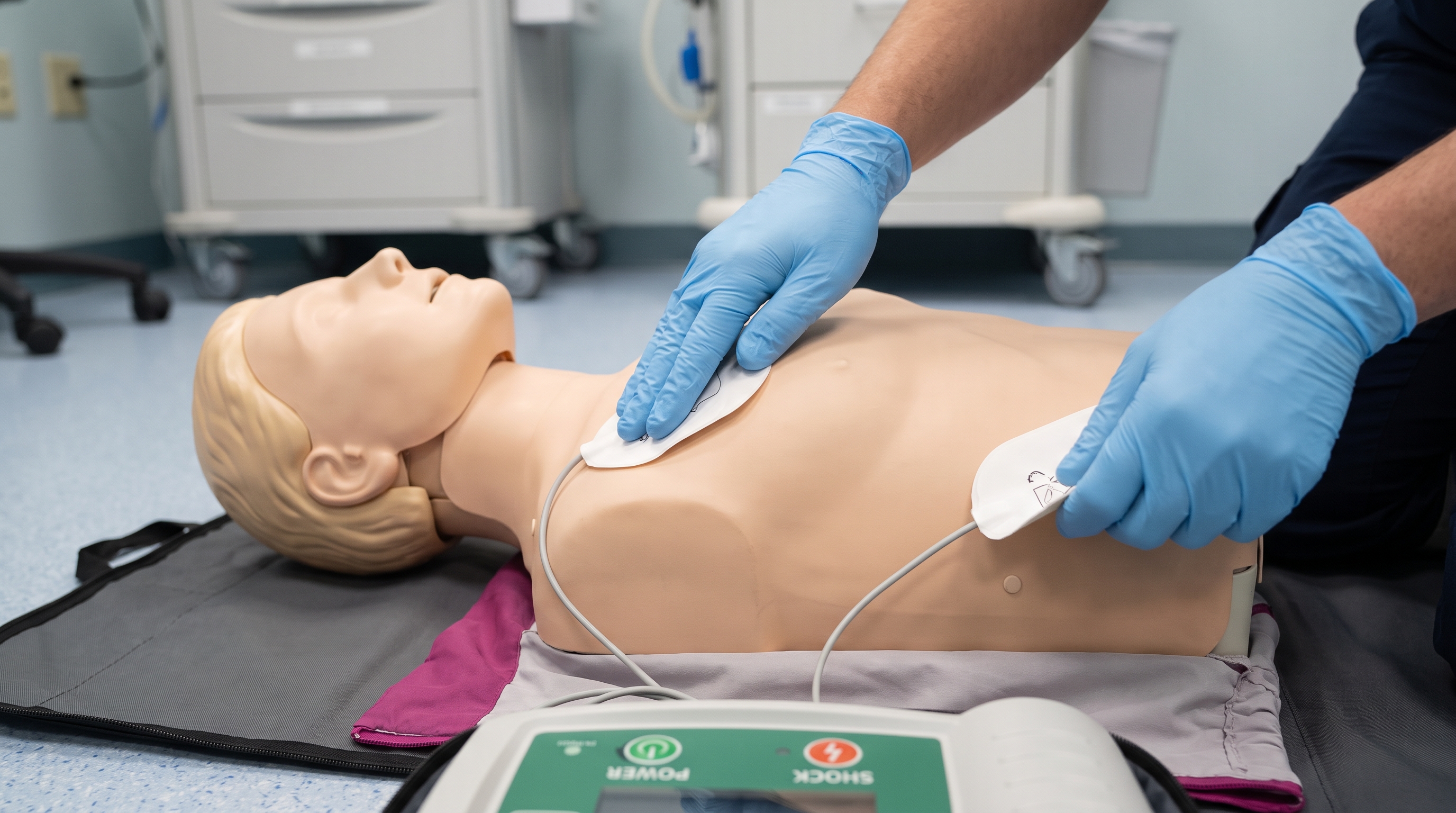
BLS Practice Test: 15 Questions with Answer Rationales and a Skills-Check Guide

A BLS Practice Test Built Around Real Decisions

Most people who fail a BLS exam do not fail because they never heard of chest compressions. They fail on the details: the ratio when a second rescuer arrives, how deep to push on an infant, whether the first move for a choking adult is abdominal thrusts or back blows. This guide gives you a BLS practice test with 15 scenario-style questions, a full rationale for every answer, and a hands-on skills-check checklist you can run on any firm surface at home.

If you want advice on how to schedule your studying and review your misses, our earlier piece on using practice tests effectively for online BLS certification covers the method. This article is different. It is the question set itself, written to current AHA standards, so you can find your weak spots before exam day. When you are ready for more drills, the free practice tests on our site let you keep going.

One note on numbers. Every compression rate, depth, and ratio below follows current American Heart Association guidance, including the 2025 AHA adult basic life support guideline and the 2025 AHA and American Academy of Pediatrics pediatric basic life support guideline. Always confirm that your own course or employer is teaching the same version.

How to Take This Practice Test

Cover the rationales and answer each question in under a minute, the way you would on a timed module. Write your answers down. Then read the rationale for every question, including the ones you got right, because a lucky guess teaches you nothing.

Score yourself by category rather than by total. Missing three questions on infant CPR is a very different problem from missing one question each in five areas. The question groups are:

  • Questions 1-5: adult high-quality CPR and the chain of survival
  • Questions 6-8: AED use
  • Questions 9-10: team-based resuscitation and two-rescuer CPR
  • Questions 11-13: child and infant BLS
  • Questions 14-15: choking and rescue breathing

If you are brand new to the material, skim our BLS certification exam preparation guide first, then return here to test yourself.

Section 1: Adult High-Quality CPR (Questions 1-5)

Question 1

You find an adult who is unresponsive and not breathing normally, with no one else nearby. After checking the scene and confirming unresponsiveness, what is the best next step?

  • A. Begin rescue breathing only
  • B. Activate emergency response, get an AED, and check for breathing and a pulse for no more than 10 seconds
  • C. Give 2 minutes of CPR before calling for help
  • D. Wait to see if normal breathing returns

Answer: B. Rationale: A fast call for help and an AED are the foundation of the adult sequence. Check breathing and a pulse at the same time and spend no more than 10 seconds doing it. Agonal gasping is not normal breathing, and treating it as breathing is a classic way to delay CPR. Our article on recognizing agonal breathing explains why this mistake is so common.

Question 2

What is the recommended compression rate for an adult in cardiac arrest?

  • A. 60 to 80 per minute
  • B. 80 to 100 per minute
  • C. 100 to 120 per minute
  • D. 120 to 140 per minute

Answer: C. Rationale: AHA guidance calls for a manual compression rate of 100 to 120 per minute. Faster is not better. Rates above that range tend to cut compression depth and leave less time for the heart to refill. Slower rates reduce the blood flow you are trying to create.

Question 3

For an average-sized adult, what compression depth should you aim for?

  • A. About 1 inch (2.5 cm)
  • B. About 1.5 inches (4 cm)
  • C. At least 2 inches (5 cm) but not more than about 2.4 inches (6 cm)
  • D. As deep as possible, with no upper limit

Answer: C. Rationale: The adult target is at least 2 inches (5 cm), while avoiding excessive depth beyond roughly 2.4 inches (6 cm). Both ends of that range matter on the exam. "At least 2 inches" is the part people remember, but the upper limit is a frequent distractor.

Question 4

Which action best describes allowing full chest recoil?

  • A. Resting the heel of your hand on the chest between compressions
  • B. Lifting your hands completely off the sternum after each compression
  • C. Releasing pressure fully after each compression without leaning, while keeping your hands in position
  • D. Pausing for one second after every compression

Answer: C. Rationale: Leaning on the chest keeps the chest from fully re-expanding, which limits venous return to the heart. You release all pressure but keep your hands in contact with the chest so your hand position does not drift. Lifting off entirely is unnecessary and risks losing your landmark.

Question 5

Why does the BLS algorithm stress minimizing interruptions in chest compressions?

  • A. Coronary and cerebral perfusion drop quickly when compressions stop and take time to rebuild when they restart
  • B. It keeps the rescuer from becoming fatigued
  • C. AEDs only work during compressions
  • D. It is required only for the first minute

Answer: A. Rationale: Every pause resets the pressure you built up, and the heart needs several compressions to get perfusion back. That is why pauses for pulse checks, rhythm analysis, shocks, and ventilation are kept as short as possible. If you want the full sequence behind this idea, our walkthrough of the BLS adult cardiac arrest algorithm lays it out step by step.
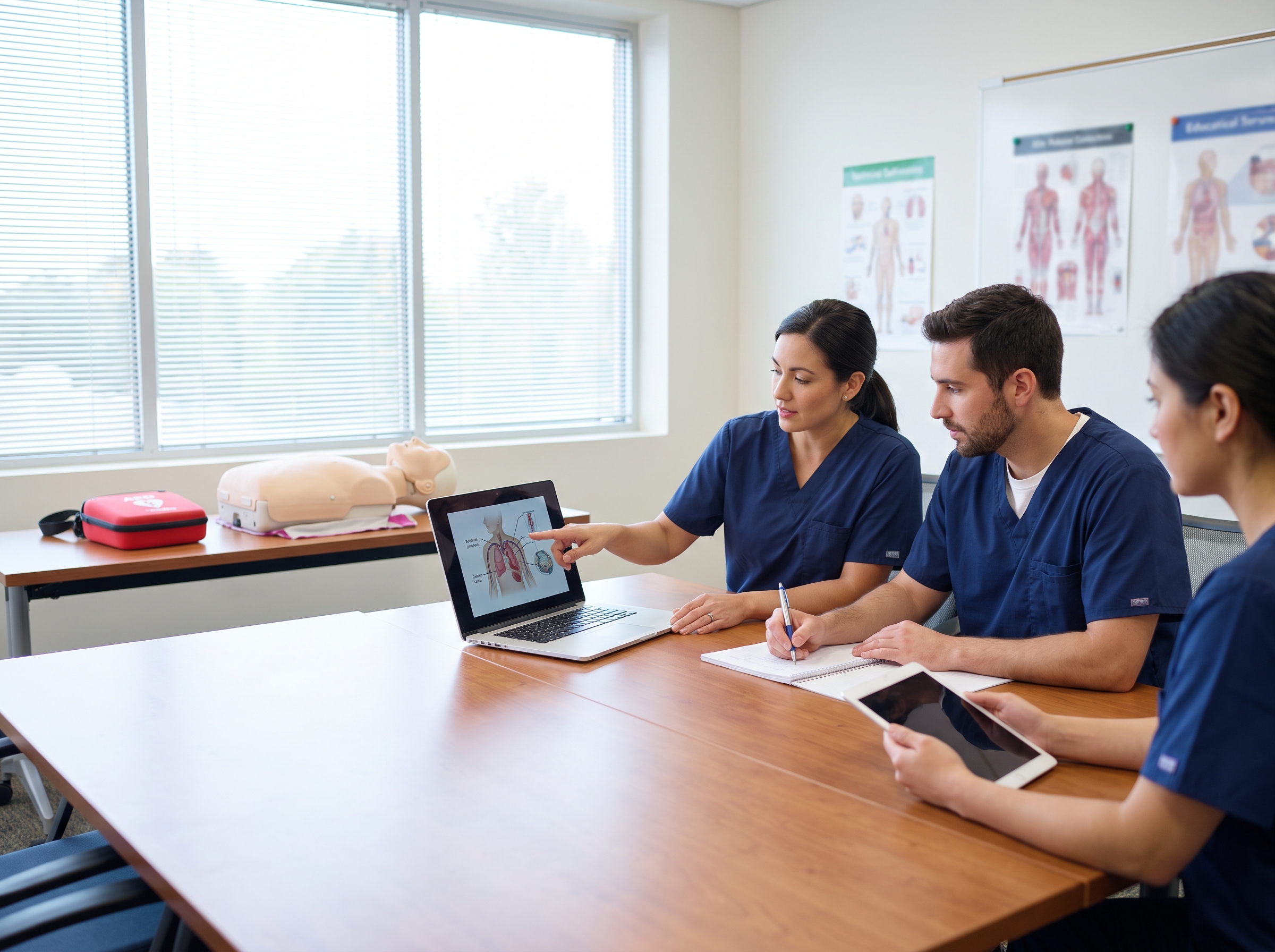
Healthcare providers preparing for a BLS practice test

Section 2: AED Use (Questions 6-8)

Question 6

An AED arrives while you are performing compressions. What should you do first?

  • A. Stop CPR and wait for the AED to prompt you
  • B. Continue compressions while the AED is powered on and the pads are applied to the bare chest
  • C. Remove the patient's clothing only after the first shock
  • D. Charge the AED before applying the pads

Answer: B. Rationale: Turn the AED on, follow its prompts, and attach the pads to a bare, dry chest while compressions continue. The compressions only stop when the device is analyzing the rhythm or delivering a shock. Bare skin matters, because pads placed over clothing will not make proper contact.

Question 7

Just before the AED delivers a shock, what must you do?

  • A. Continue compressions until the shock is delivered
  • B. Make sure everyone, including you, is clear of the patient, then deliver the shock
  • C. Check the pulse for 30 seconds
  • D. Remove the pads

Answer: B. Rationale: Nobody should be touching the patient during rhythm analysis or the shock. Say "clear" aloud and look to confirm. Then deliver the shock when prompted. Resume compressions immediately afterward, starting with chest compressions, not a pulse check.

Question 8

After the AED delivers a shock, what do you do?

  • A. Check for a pulse for a full minute
  • B. Immediately restart chest compressions and continue until the AED prompts you again or the patient shows signs of life
  • C. Remove the pads and move the patient
  • D. Wait for the next shock prompt without compressing

Answer: B. Rationale: After a shock, the heart may have no effective pumping action even if the rhythm has changed. Restarting compressions right away keeps blood moving. Follow AED prompts, which typically cycle through about 2 minutes of CPR between analyses. Leave the pads on and keep the AED powered on.

Section 3: Team-Based and Two-Rescuer CPR (Questions 9-10)

Question 9

Two rescuers are performing CPR on an adult without an advanced airway. What is the compression-to-ventilation ratio?

  • A. 15:2
  • B. 30:2
  • C. 5:1
  • D. 10:1

Answer: B. Rationale: The adult ratio is 30 compressions to 2 breaths whether there are one or two rescuers. This is the answer people most often confuse with the pediatric ratio below. For a deeper look at how two rescuers split the work, see our guide to the two-rescuer BLS technique for adults.

Question 10

When should rescuers switch the person performing compressions?

  • A. Every 10 minutes
  • B. About every 2 minutes, or sooner if the compressor is fatigued, with the switch done in under 10 seconds
  • C. Only when the compressor asks
  • D. After every shock only

Answer: B. Rationale: Compression quality drops with fatigue, often before the rescuer notices. Rotating roughly every 2 minutes, ideally during the planned rhythm check, protects depth and rate. Plan the switch in advance so the pause stays as short as possible.

Section 4: Child and Infant BLS (Questions 11-13)

Question 11

Two rescuers are performing CPR on an infant or child. Which compression-to-ventilation ratio applies?

  • A. 30:2
  • B. 15:2
  • C. 10:1
  • D. 5:2

Answer: B. Rationale: A single rescuer uses 30:2 for any age, but two healthcare rescuers use 15:2 for infants and children, because ventilation problems are a more common cause of arrest in this group. Keep this one straight and save yourself a missed question. Our CPR ratios by age quick reference shows exactly where the ratio changes.

Question 12

What compression depth should you aim for in an infant?

  • A. About one third of the front-to-back diameter of the chest, roughly 1.5 inches (4 cm)
  • B. At least 2 inches (5 cm)
  • C. About 1 inch (2.5 cm) at all ages
  • D. Whatever depth the AED indicates

Answer: A. Rationale: Pediatric depth is based on the size of the chest, about one third of the front-to-back diameter, which is roughly 1.5 inches (4 cm) in an infant and about 2 inches (5 cm) in a child. The rate stays at 100 to 120 per minute. For infants, the 2025 guideline supports either the one-hand technique or the two-thumb encircling-hands technique, which is preferred for two rescuers.

Question 13

A child has a pulse but is not breathing adequately. What should you provide?

  • A. Chest compressions only
  • B. Rescue breathing at a rate of about 1 breath every 2 to 3 seconds
  • C. Rescue breathing at 1 breath every 6 seconds
  • D. No treatment until the child stops breathing altogether

Answer: B. Rationale: For infants and children with a pulse, rescue breathing is given at about 1 breath every 2 to 3 seconds, which is 20 to 30 breaths per minute, and the pulse is rechecked about every 2 minutes. If the heart rate drops below 60 per minute with signs of poor perfusion despite oxygenation and ventilation, start compressions. The slower 1 breath every 6 seconds applies to adults. Pediatric emergencies are a major focus of the exam, and the BLS pediatric cardiac arrest algorithm for multiple rescuers walks through the complete sequence.

Section 5: Choking and Rescue Breathing (Questions 14-15)

Question 14

An adult is conscious and cannot speak, cough, or breathe. Under current AHA guidance, what is the correct approach?

  • A. Abdominal thrusts only, repeated until the object is out
  • B. Cycles of 5 back blows followed by 5 abdominal thrusts until the object is expelled or the person becomes unresponsive
  • C. Blind finger sweeps
  • D. Give water to flush it down

Answer: B. Rationale: The 2025 guidance changed this sequence. Adults with severe airway obstruction now receive back blows first, alternating with abdominal thrusts. This is exactly the kind of recent change that older study materials get wrong. A literature review on the evolution of foreign body airway obstruction guidelines traces how the recommendations have shifted. If the person becomes unresponsive, lower them to the ground, call for help, and begin CPR. Never perform blind finger sweeps.

Question 15

An adult has a pulse but is not breathing normally. What is the recommended rescue breathing rate?

  • A. 1 breath every 6 seconds (10 breaths per minute)
  • B. 1 breath every second
  • C. 1 breath every 15 seconds
  • D. 30 breaths per minute

Answer: A. Rationale: Adults with a pulse who are not breathing normally get 1 breath every 6 seconds. Give each breath over about 1 second, just enough to see the chest rise. Recheck the pulse about every 2 minutes. Over-ventilating pushes air into the stomach and reduces venous return, so gentle and steady wins.
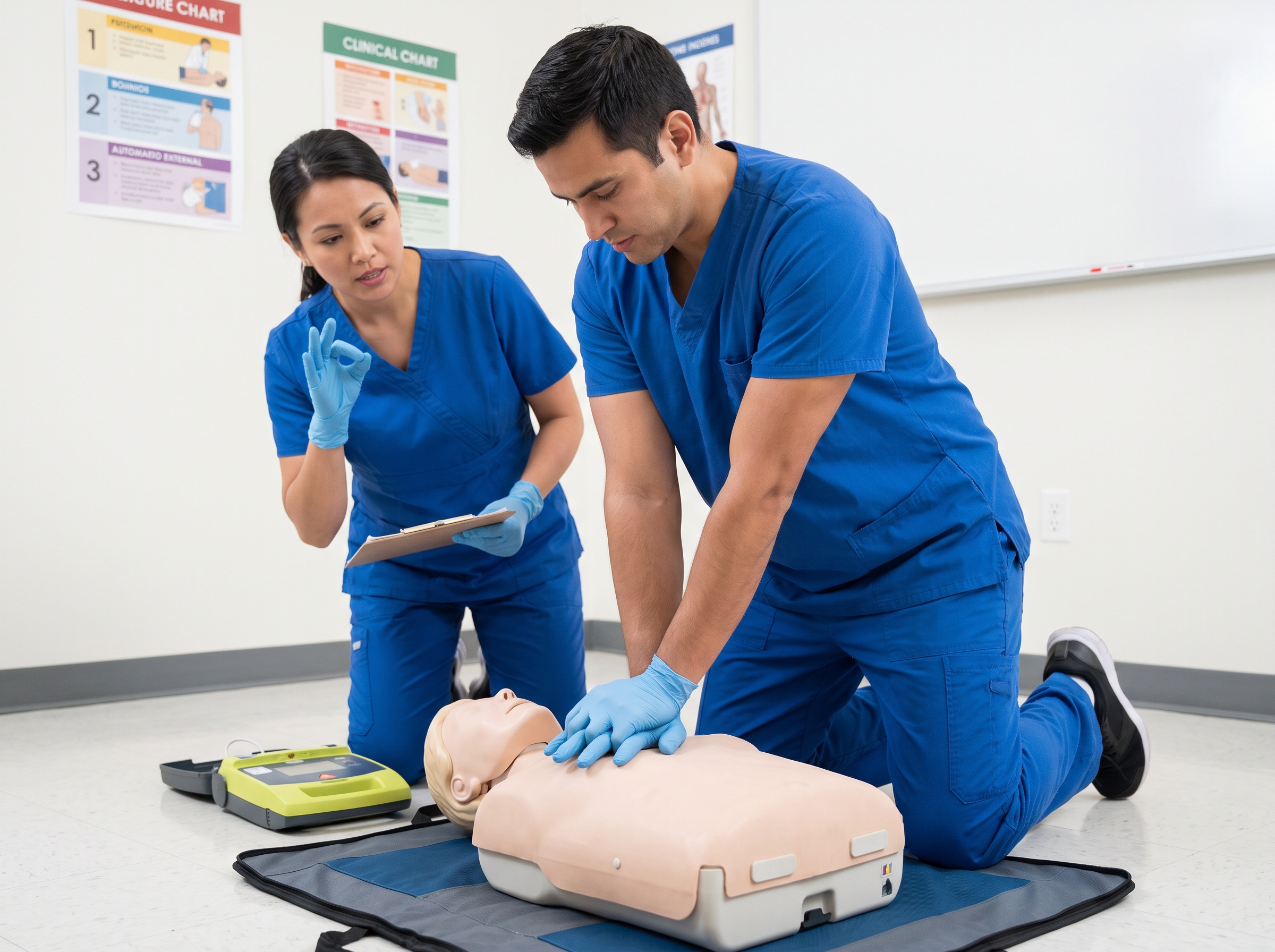
BLS skills practice with chest compressions on a manikin

Scoring Your Results

Count correct answers by section rather than relying on a single total. As a rough guide, a miss in any section tells you where to focus:

  • Missed Questions 1-5: revisit the adult sequence, especially rate, depth, recoil, and compression fraction
  • Missed Questions 6-8: practice AED steps out loud, including "clear" and the post-shock restart
  • Missed Questions 9-10: rehearse roles and the 2-minute rotation
  • Missed Questions 11-13: build a one-page table of adult, child, and infant differences
  • Missed Questions 14-15: re-read the current choking sequence, since this is the area where guidance has recently changed

One more point on mistakes: wrong answers on a practice test are cheap. The same errors in a real resuscitation are not. Treat every miss as a free lesson.

The BLS Skills-Check Guide

Many BLS courses also expect you to demonstrate skills, and even in a fully online format, physically rehearsing the motions makes the written answers stick. You do not need a manikin. A firm pillow or a rolled towel on a hard floor works for pacing and posture, and a folded jacket can stand in for an infant. Whether you pursue a hands-on requirement is up to your employer, so check what yours requires before you enroll. Our comparison of online BLS courses and live AHA classes can help you sort that out.

Adult CPR Skills Checklist

  • Check the scene for safety and tap and shout to check responsiveness
  • Call for help and send someone for an AED, or activate the emergency response system yourself
  • Check breathing and a pulse together in 10 seconds or less
  • Place the heel of one hand on the lower half of the breastbone, with your other hand on top
  • Compress at 100 to 120 per minute, at least 2 inches (5 cm) deep, with full recoil
  • Give 2 breaths after every 30 compressions, with each breath lasting about 1 second and producing visible chest rise
  • Use the AED as soon as it arrives and restart compressions right after each shock

Practice on a surface at about knee height, because the 2025 adult guideline describes performing compressions with the patient's torso at approximately the level of the rescuer's knees.

Infant CPR Skills Checklist

  • Tap the foot and shout to check responsiveness, then check breathing
  • Check the brachial pulse on the inside of the upper arm for no more than 10 seconds
  • Use two thumbs with the hands encircling the chest, or one hand, centered on the lower half of the breastbone
  • Compress about one third of the chest depth, about 1.5 inches (4 cm), at 100 to 120 per minute
  • Use 30:2 alone or 15:2 with two rescuers
  • Give small puffs of air, just enough to make the chest rise

Choking Skills Checklist

  • Confirm severe obstruction: the person cannot cough, speak, or breathe
  • For an adult or child, give cycles of 5 back blows and 5 abdominal thrusts
  • For an infant, alternate 5 back blows and 5 chest thrusts, with no abdominal thrusts
  • If the person becomes unresponsive, call for help and begin CPR, and look in the mouth for an object before giving breaths

For a broader view of how these skills fit together, our post on why BLS and CPR certification are not the same thing explains what BLS expects of healthcare providers beyond basic CPR.

Five Mistakes That Cost People Points

  • Mixing up ratios. Adults are always 30:2. Two-rescuer pediatric CPR is 15:2.
  • Using adult depth for infants. Pediatric depth is about one third of chest depth.
  • Studying from outdated notes. Choking guidance has changed, so check the date on any cheat sheet you borrow.
  • Forgetting the post-shock restart. Compressions resume at once.
  • Skipping rationales. Knowing why an answer is correct protects you from trick wording.

The AHA also publishes a summary of what changed in the 2025 guidelines executive summary, a good place to check anything in your notes that looks unfamiliar.

Your Next Steps

Retake this test in a few days without looking at the rationales. If you score well and your hands-on rehearsal feels smooth, you are in good shape. For more questions on any topic, return to the free practice tests, then move on to the course itself.

When you are ready to certify or renew, the online BLS certification course is self-paced, you can retake the exam at no extra charge until you pass, and a digital certificate is available as soon as you finish. Courses are built on current AHA and ILCOR guidelines and were developed by practicing, board certified emergency medicine physicians. Practice first, pass confidently, and walk into your next shift ready.

BLS Practice Test: 15 Questions with Answer Rationales and a Skills-Check Guide

Most people miss BLS exam questions on the details: ratios, depths, and the newest choking sequence. This guide gives you 15 scenario-style practice questions with full rationales and a hands-on skills-check.

A BLS Practice Test Built Around Real Decisions

Most people who fail a BLS exam do not fail because they never heard of chest compressions. They fail on the details: the ratio when a second rescuer arrives, how deep to push on an infant, whether the first move for a choking adult is abdominal thrusts or back blows. This guide gives you a BLS practice test with 15 scenario-style questions, a full rationale for every answer, and a hands-on skills-check checklist you can run on any firm surface at home.

If you want advice on how to schedule your studying and review your misses, our earlier piece on using practice tests effectively for online BLS certification covers the method. This article is different. It is the question set itself, written to current AHA standards, so you can find your weak spots before exam day. When you are ready for more drills, the free practice tests on our site let you keep going.

One note on numbers. Every compression rate, depth, and ratio below follows current American Heart Association guidance, including the 2025 AHA adult basic life support guideline and the 2025 AHA and American Academy of Pediatrics pediatric basic life support guideline. Always confirm that your own course or employer is teaching the same version.

How to Take This Practice Test

Cover the rationales and answer each question in under a minute, the way you would on a timed module. Write your answers down. Then read the rationale for every question, including the ones you got right, because a lucky guess teaches you nothing.

Score yourself by category rather than by total. Missing three questions on infant CPR is a very different problem from missing one question each in five areas. The question groups are:

  • Questions 1-5: adult high-quality CPR and the chain of survival
  • Questions 6-8: AED use
  • Questions 9-10: team-based resuscitation and two-rescuer CPR
  • Questions 11-13: child and infant BLS
  • Questions 14-15: choking and rescue breathing

If you are brand new to the material, skim our BLS certification exam preparation guide first, then return here to test yourself.

Section 1: Adult High-Quality CPR (Questions 1-5)

Question 1

You find an adult who is unresponsive and not breathing normally, with no one else nearby. After checking the scene and confirming unresponsiveness, what is the best next step?

  • A. Begin rescue breathing only
  • B. Activate emergency response, get an AED, and check for breathing and a pulse for no more than 10 seconds
  • C. Give 2 minutes of CPR before calling for help
  • D. Wait to see if normal breathing returns

Answer: B. Rationale: A fast call for help and an AED are the foundation of the adult sequence. Check breathing and a pulse at the same time and spend no more than 10 seconds doing it. Agonal gasping is not normal breathing, and treating it as breathing is a classic way to delay CPR. Our article on recognizing agonal breathing explains why this mistake is so common.

Question 2

What is the recommended compression rate for an adult in cardiac arrest?

  • A. 60 to 80 per minute
  • B. 80 to 100 per minute
  • C. 100 to 120 per minute
  • D. 120 to 140 per minute

Answer: C. Rationale: AHA guidance calls for a manual compression rate of 100 to 120 per minute. Faster is not better. Rates above that range tend to cut compression depth and leave less time for the heart to refill. Slower rates reduce the blood flow you are trying to create.

Question 3

For an average-sized adult, what compression depth should you aim for?

  • A. About 1 inch (2.5 cm)
  • B. About 1.5 inches (4 cm)
  • C. At least 2 inches (5 cm) but not more than about 2.4 inches (6 cm)
  • D. As deep as possible, with no upper limit

Answer: C. Rationale: The adult target is at least 2 inches (5 cm), while avoiding excessive depth beyond roughly 2.4 inches (6 cm). Both ends of that range matter on the exam. "At least 2 inches" is the part people remember, but the upper limit is a frequent distractor.

Question 4

Which action best describes allowing full chest recoil?

  • A. Resting the heel of your hand on the chest between compressions
  • B. Lifting your hands completely off the sternum after each compression
  • C. Releasing pressure fully after each compression without leaning, while keeping your hands in position
  • D. Pausing for one second after every compression

Answer: C. Rationale: Leaning on the chest keeps the chest from fully re-expanding, which limits venous return to the heart. You release all pressure but keep your hands in contact with the chest so your hand position does not drift. Lifting off entirely is unnecessary and risks losing your landmark.

Question 5

Why does the BLS algorithm stress minimizing interruptions in chest compressions?

  • A. Coronary and cerebral perfusion drop quickly when compressions stop and take time to rebuild when they restart
  • B. It keeps the rescuer from becoming fatigued
  • C. AEDs only work during compressions
  • D. It is required only for the first minute

Answer: A. Rationale: Every pause resets the pressure you built up, and the heart needs several compressions to get perfusion back. That is why pauses for pulse checks, rhythm analysis, shocks, and ventilation are kept as short as possible. If you want the full sequence behind this idea, our walkthrough of the BLS adult cardiac arrest algorithm lays it out step by step.

Healthcare providers preparing for a BLS practice test

Section 2: AED Use (Questions 6-8)

Question 6

An AED arrives while you are performing compressions. What should you do first?

  • A. Stop CPR and wait for the AED to prompt you
  • B. Continue compressions while the AED is powered on and the pads are applied to the bare chest
  • C. Remove the patient's clothing only after the first shock
  • D. Charge the AED before applying the pads

Answer: B. Rationale: Turn the AED on, follow its prompts, and attach the pads to a bare, dry chest while compressions continue. The compressions only stop when the device is analyzing the rhythm or delivering a shock. Bare skin matters, because pads placed over clothing will not make proper contact.

Question 7

Just before the AED delivers a shock, what must you do?

  • A. Continue compressions until the shock is delivered
  • B. Make sure everyone, including you, is clear of the patient, then deliver the shock
  • C. Check the pulse for 30 seconds
  • D. Remove the pads

Answer: B. Rationale: Nobody should be touching the patient during rhythm analysis or the shock. Say "clear" aloud and look to confirm. Then deliver the shock when prompted. Resume compressions immediately afterward, starting with chest compressions, not a pulse check.

Question 8

After the AED delivers a shock, what do you do?

  • A. Check for a pulse for a full minute
  • B. Immediately restart chest compressions and continue until the AED prompts you again or the patient shows signs of life
  • C. Remove the pads and move the patient
  • D. Wait for the next shock prompt without compressing

Answer: B. Rationale: After a shock, the heart may have no effective pumping action even if the rhythm has changed. Restarting compressions right away keeps blood moving. Follow AED prompts, which typically cycle through about 2 minutes of CPR between analyses. Leave the pads on and keep the AED powered on.

Section 3: Team-Based and Two-Rescuer CPR (Questions 9-10)

Question 9

Two rescuers are performing CPR on an adult without an advanced airway. What is the compression-to-ventilation ratio?

  • A. 15:2
  • B. 30:2
  • C. 5:1
  • D. 10:1

Answer: B. Rationale: The adult ratio is 30 compressions to 2 breaths whether there are one or two rescuers. This is the answer people most often confuse with the pediatric ratio below. For a deeper look at how two rescuers split the work, see our guide to the two-rescuer BLS technique for adults.

Question 10

When should rescuers switch the person performing compressions?

  • A. Every 10 minutes
  • B. About every 2 minutes, or sooner if the compressor is fatigued, with the switch done in under 10 seconds
  • C. Only when the compressor asks
  • D. After every shock only

Answer: B. Rationale: Compression quality drops with fatigue, often before the rescuer notices. Rotating roughly every 2 minutes, ideally during the planned rhythm check, protects depth and rate. Plan the switch in advance so the pause stays as short as possible.

Section 4: Child and Infant BLS (Questions 11-13)

Question 11

Two rescuers are performing CPR on an infant or child. Which compression-to-ventilation ratio applies?

  • A. 30:2
  • B. 15:2
  • C. 10:1
  • D. 5:2

Answer: B. Rationale: A single rescuer uses 30:2 for any age, but two healthcare rescuers use 15:2 for infants and children, because ventilation problems are a more common cause of arrest in this group. Keep this one straight and save yourself a missed question. Our CPR ratios by age quick reference shows exactly where the ratio changes.

Question 12

What compression depth should you aim for in an infant?

  • A. About one third of the front-to-back diameter of the chest, roughly 1.5 inches (4 cm)
  • B. At least 2 inches (5 cm)
  • C. About 1 inch (2.5 cm) at all ages
  • D. Whatever depth the AED indicates

Answer: A. Rationale: Pediatric depth is based on the size of the chest, about one third of the front-to-back diameter, which is roughly 1.5 inches (4 cm) in an infant and about 2 inches (5 cm) in a child. The rate stays at 100 to 120 per minute. For infants, the 2025 guideline supports either the one-hand technique or the two-thumb encircling-hands technique, which is preferred for two rescuers.

Question 13

A child has a pulse but is not breathing adequately. What should you provide?

  • A. Chest compressions only
  • B. Rescue breathing at a rate of about 1 breath every 2 to 3 seconds
  • C. Rescue breathing at 1 breath every 6 seconds
  • D. No treatment until the child stops breathing altogether

Answer: B. Rationale: For infants and children with a pulse, rescue breathing is given at about 1 breath every 2 to 3 seconds, which is 20 to 30 breaths per minute, and the pulse is rechecked about every 2 minutes. If the heart rate drops below 60 per minute with signs of poor perfusion despite oxygenation and ventilation, start compressions. The slower 1 breath every 6 seconds applies to adults. Pediatric emergencies are a major focus of the exam, and the BLS pediatric cardiac arrest algorithm for multiple rescuers walks through the complete sequence.

Section 5: Choking and Rescue Breathing (Questions 14-15)

Question 14

An adult is conscious and cannot speak, cough, or breathe. Under current AHA guidance, what is the correct approach?

  • A. Abdominal thrusts only, repeated until the object is out
  • B. Cycles of 5 back blows followed by 5 abdominal thrusts until the object is expelled or the person becomes unresponsive
  • C. Blind finger sweeps
  • D. Give water to flush it down

Answer: B. Rationale: The 2025 guidance changed this sequence. Adults with severe airway obstruction now receive back blows first, alternating with abdominal thrusts. This is exactly the kind of recent change that older study materials get wrong. A literature review on the evolution of foreign body airway obstruction guidelines traces how the recommendations have shifted. If the person becomes unresponsive, lower them to the ground, call for help, and begin CPR. Never perform blind finger sweeps.

Question 15

An adult has a pulse but is not breathing normally. What is the recommended rescue breathing rate?

  • A. 1 breath every 6 seconds (10 breaths per minute)
  • B. 1 breath every second
  • C. 1 breath every 15 seconds
  • D. 30 breaths per minute

Answer: A. Rationale: Adults with a pulse who are not breathing normally get 1 breath every 6 seconds. Give each breath over about 1 second, just enough to see the chest rise. Recheck the pulse about every 2 minutes. Over-ventilating pushes air into the stomach and reduces venous return, so gentle and steady wins.

BLS skills practice with chest compressions on a manikin

Scoring Your Results

Count correct answers by section rather than relying on a single total. As a rough guide, a miss in any section tells you where to focus:

  • Missed Questions 1-5: revisit the adult sequence, especially rate, depth, recoil, and compression fraction
  • Missed Questions 6-8: practice AED steps out loud, including "clear" and the post-shock restart
  • Missed Questions 9-10: rehearse roles and the 2-minute rotation
  • Missed Questions 11-13: build a one-page table of adult, child, and infant differences
  • Missed Questions 14-15: re-read the current choking sequence, since this is the area where guidance has recently changed

One more point on mistakes: wrong answers on a practice test are cheap. The same errors in a real resuscitation are not. Treat every miss as a free lesson.

The BLS Skills-Check Guide

Many BLS courses also expect you to demonstrate skills, and even in a fully online format, physically rehearsing the motions makes the written answers stick. You do not need a manikin. A firm pillow or a rolled towel on a hard floor works for pacing and posture, and a folded jacket can stand in for an infant. Whether you pursue a hands-on requirement is up to your employer, so check what yours requires before you enroll. Our comparison of online BLS courses and live AHA classes can help you sort that out.

Adult CPR Skills Checklist

  • Check the scene for safety and tap and shout to check responsiveness
  • Call for help and send someone for an AED, or activate the emergency response system yourself
  • Check breathing and a pulse together in 10 seconds or less
  • Place the heel of one hand on the lower half of the breastbone, with your other hand on top
  • Compress at 100 to 120 per minute, at least 2 inches (5 cm) deep, with full recoil
  • Give 2 breaths after every 30 compressions, with each breath lasting about 1 second and producing visible chest rise
  • Use the AED as soon as it arrives and restart compressions right after each shock

Practice on a surface at about knee height, because the 2025 adult guideline describes performing compressions with the patient's torso at approximately the level of the rescuer's knees.

Infant CPR Skills Checklist

  • Tap the foot and shout to check responsiveness, then check breathing
  • Check the brachial pulse on the inside of the upper arm for no more than 10 seconds
  • Use two thumbs with the hands encircling the chest, or one hand, centered on the lower half of the breastbone
  • Compress about one third of the chest depth, about 1.5 inches (4 cm), at 100 to 120 per minute
  • Use 30:2 alone or 15:2 with two rescuers
  • Give small puffs of air, just enough to make the chest rise

Choking Skills Checklist

  • Confirm severe obstruction: the person cannot cough, speak, or breathe
  • For an adult or child, give cycles of 5 back blows and 5 abdominal thrusts
  • For an infant, alternate 5 back blows and 5 chest thrusts, with no abdominal thrusts
  • If the person becomes unresponsive, call for help and begin CPR, and look in the mouth for an object before giving breaths

For a broader view of how these skills fit together, our post on why BLS and CPR certification are not the same thing explains what BLS expects of healthcare providers beyond basic CPR.

Five Mistakes That Cost People Points

  • Mixing up ratios. Adults are always 30:2. Two-rescuer pediatric CPR is 15:2.
  • Using adult depth for infants. Pediatric depth is about one third of chest depth.
  • Studying from outdated notes. Choking guidance has changed, so check the date on any cheat sheet you borrow.
  • Forgetting the post-shock restart. Compressions resume at once.
  • Skipping rationales. Knowing why an answer is correct protects you from trick wording.

The AHA also publishes a summary of what changed in the 2025 guidelines executive summary, a good place to check anything in your notes that looks unfamiliar.

Your Next Steps

Retake this test in a few days without looking at the rationales. If you score well and your hands-on rehearsal feels smooth, you are in good shape. For more questions on any topic, return to the free practice tests, then move on to the course itself.

When you are ready to certify or renew, the online BLS certification course is self-paced, you can retake the exam at no extra charge until you pass, and a digital certificate is available as soon as you finish. Courses are built on current AHA and ILCOR guidelines and were developed by practicing, board certified emergency medicine physicians. Practice first, pass confidently, and walk into your next shift ready.

blogs

More articles for you

all articles

Start Today!

Get certified at your own pace, on your schedule, from the comfort of your home.